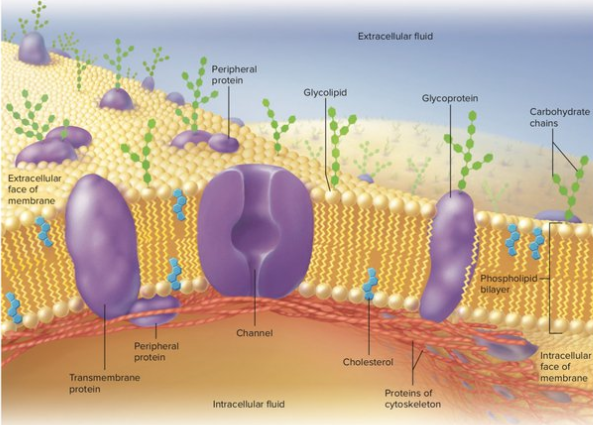
Membrane structure
Membrane importance
separate cell contents from environment
separate different areas within the cell or within the organelle
compartmentalisation
site of chemical reactions
mitochondria, chloroplast, cytoplasm
allow chemical gradients to be maintained
sites of cell signalling
cells communicate with each other via receptors on membranes
Plasma membranes
made of:
phospholipids
proteins
cholesterol
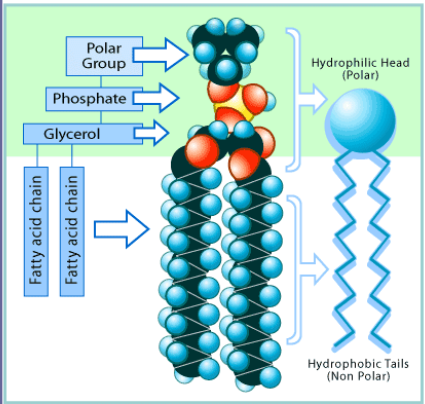
Phospholipids
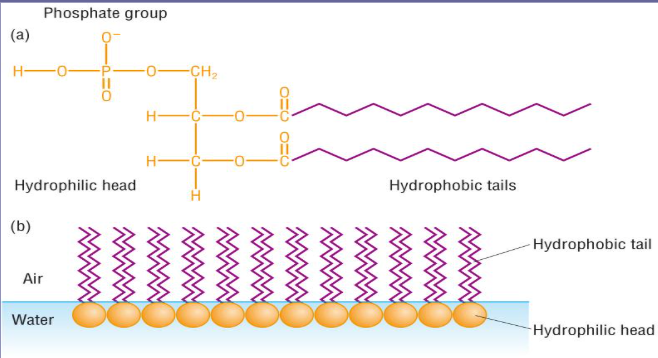
hydrophilic heads
attracted to water
polar
hydrophobic tails
not attracted to water
non polar
phospholipids are important structural components of cell membranes
phospholipids are modified so that a phosphate group replaces one of three fatty acids normally found on a lipid
Phospholipid bilayer
phospholipids can pack together to form a phospholipid bilayer
fatty acid tails inside away from water
hydrophilic heads away from aqueous environment
Proteins
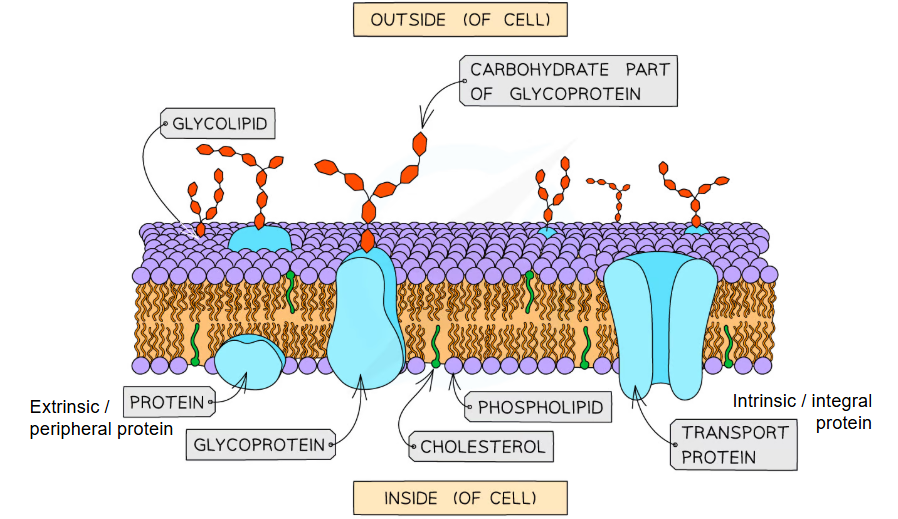
found throughout the membrane
able to move
intrinsic/integral proteins
span entire bilayer
external/peripheral proteins
smaller proteins on one side of bilayer only
Protein function
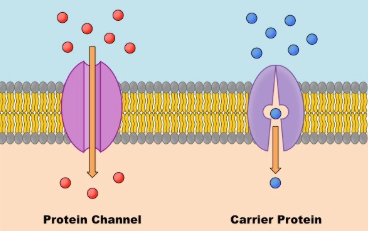
transport
channel proteins
provide hydrophilic channels for ions and polar molecules to pass through the membrane
carrier proteins
active transport
can act as enzymes
receptors/cell signalling
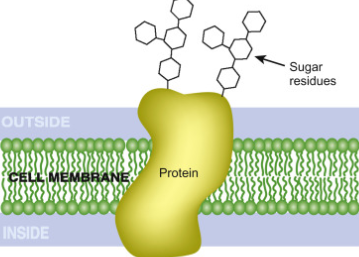
glycoproteins and glycolipids
Glycoproteins
intrinsic proteins with carbohydrate side chains attached
cell adhesion
cell signalling
Glycolipids
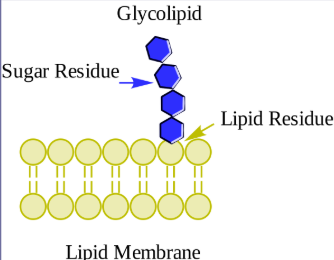
lipids with glycoproteins attached
act as antigens
cells of the immune system can use them to recognise self and non self cells
Cholesterol
often present
lipids like steroid
has polar and non polar regions
reduces membrane permeability
increases membrane stability
Fluid mosaic model
fluid
individual phospholipids and proteins can move around freely within the layer
mosaic
made of pieces