Genetic 3 Genetic Diseases
Recognize the clinical features of the following chromosomal disorders
Trisomy 21
Also known as Down syndrome.
Extra copy of chromosome 21.
—Caused by three copies of long chromosome 21:
Trisomy 21: 93-96%= 47, 21 (most common)
Robertsonian translocation: 2-5% 14:21, 21:21, 13:21, 15:21, 22:21 (unrelated to maternal age)
Mosaicism- 2-4% =-1.92 47, 21/46 (milder phenotype)
Overall risk: 1/800
Risk increase with maternal age: The older the mother, the higher the risk.
Mother's Age | Risk |
|---|---|
24 years | 1 in 1400 (low) |
30 years | 1 in 900 |
35 years | 1 in 385 |
40 years | 1 in 100 (high) |
Pregnant women can have tests to estimate the chance that the baby has Down syndrome.
Blood screening tests: AFP, Quad screen, and NIPT
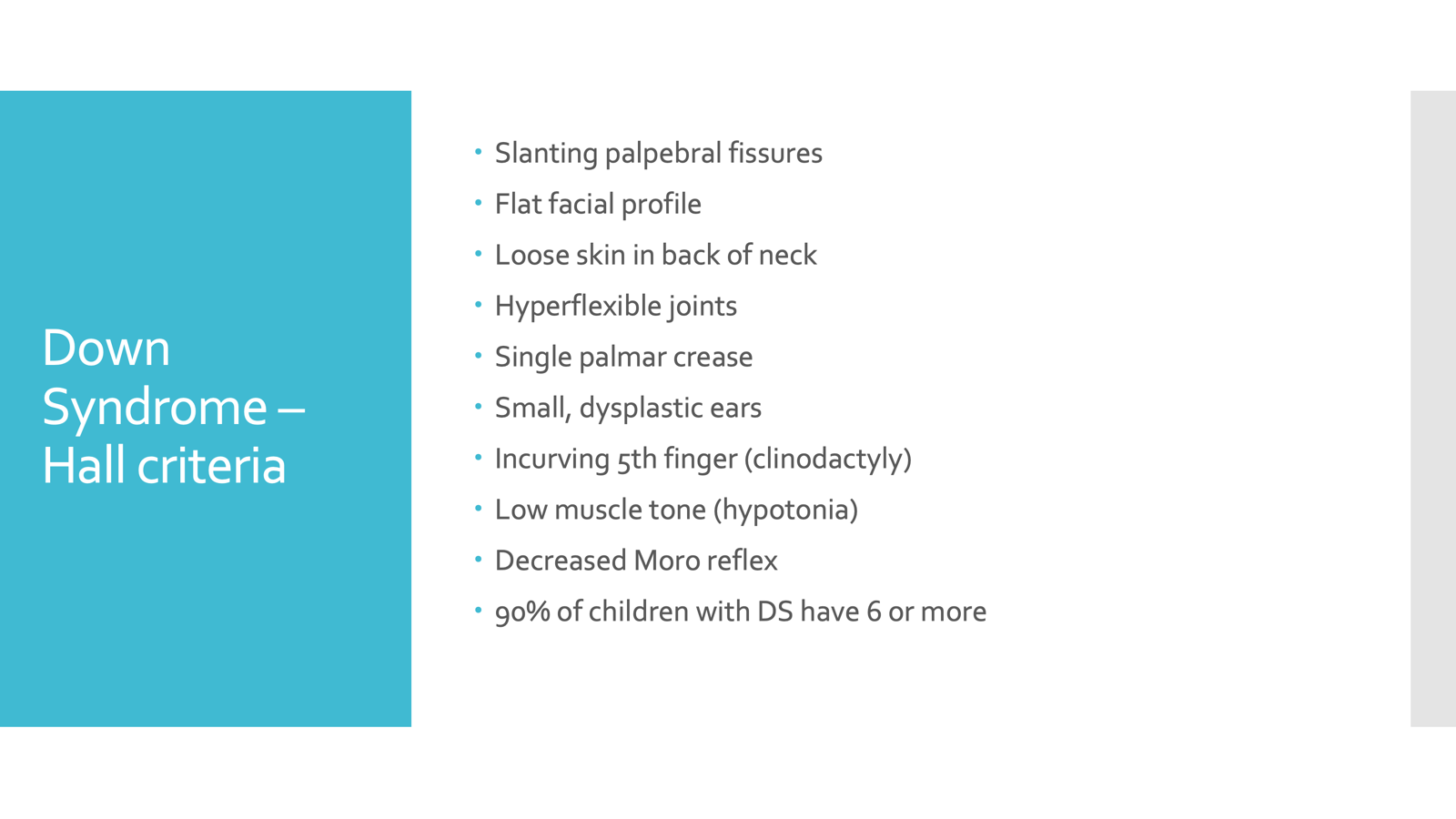
Children with Down syndrome commonly have up-slanting eyes, epicanthal folds, a flat nasal bridge, an open mouth with a protruding tongue, and hypotonia. These characteristic facial features help clinicians recognize the condition.
—Single palmer crease (Clinodactyly)
— Small, dysplastic ears
— Bursfield spots
Associated problems:
Intellectual impairment (near 100%)
Cardiac malformations (40-50%) —children need detailed cardiac evaluation.
Duodenal atresia- a congenital condition where a portion of the small intestine is narrowed or blocked, often requiring surgical intervention to ensure proper digestion.
Hirshsprung disease- a congenital condition affecting the large intestine, leading to problems with passing stool due to a lack of nerve cells in the bowel.
Hypothyroidism —a condition where the thyroid gland does not produce enough thyroid hormones, leading to various developmental issues and metabolic dysregulation.
Leukemia-
Alzheimer's disease.
Down syndrome survival:
— Many babies with Down syndrome do not survive the pregnancy.
As pregnancy progresses, the number of fetuses with Down syndrome decreases because some are lost before birth.
Decreased in-utero survival- babies with Down syndrome have a lower chance of surviving in the womb compared with babies without Down syndrome.
Increased rate of spontaneous abortion- Down syndrome → Higher miscarriage risk.
Only 25% of conceptuses survive to birth- A conceptus is a fertilized egg/embryo/fetus.
Neonatal mortality associated with cardiac malformations.
Adults develop early Alzheimer disease-
UNBALANCED TRANSLOCATION:
You do NOT need an entire extra chromosome 21 to develop Down syndrome. Even an extra copy of the important part (21q22, the "critical region") can cause many of the classic Down syndrome features.
-Partial trisomy 21- Extra piece of chromosome 21 → Partial trisomy (unbalanced translocation).
-Critical region- The most important part of chromosome 21 that causes Down syndrome features.
-Trisomy of 21q22 causes heart defects, facial features, intellectual deficits.
-Observation of parts of Down syndrome phenotype allow mapping of region of 21 containing genes causing phenotype.
Down Syndrome risks:
-Diagnostic tests for down syndrome risk: amniocentesis or chorionic villus sampling (CVS).
-Prenatal diagnosis is offered if risk is greater than 1 in 200.
High risks individual:
-Maternal age (older women are at high risk)
-Translocation carriers
-Maternal Screening tests
Recurrence risks:
Higher risks for older women
Recurrence risk for translocation increased if parent is a translocation carrier
10 - 15% if mother is a carrier
2 – 5% if father is a carrier
Mosaic Down syndrome does not increase the risk of future pregnancies because it occurs as a random error after fertilization.
DOWN SYNDROME- TREATMENT
—Cardiac evaluation (echocardiogram) even if asymptomatic.
—Thyroid hormone screening
—Hearing screening
—Dietary counseling
—Educational intervention
—Family Support
MATERNAL SCREENING TESTS
Triple/Quad screen/AFP (maternal serum)
-AFP screen for neural tube defects (spina bifida)
-Low AFP associated with Down syndrome risk
-Triple/Quad screen more accurate
-Screening test, not diagnostic
High resolution ultrasound
-Increased nuchal lucency in DS fetuses
-Not diagnostic
NIPT – Non Invasive Prenatal Testing
-Test of fetal DNA in maternal blood
-Chromosomal analysis – trisomies
-Screening test
Must be confirmed with diagnostic testing
Trisomy 18- Trisomy 18 (Edwards syndrome) is caused by an extra chromosome 18 and is characterized by growth restriction, clenched hands with overlapping fingers, heart defects, a prominent occiput, and severe intellectual disability.
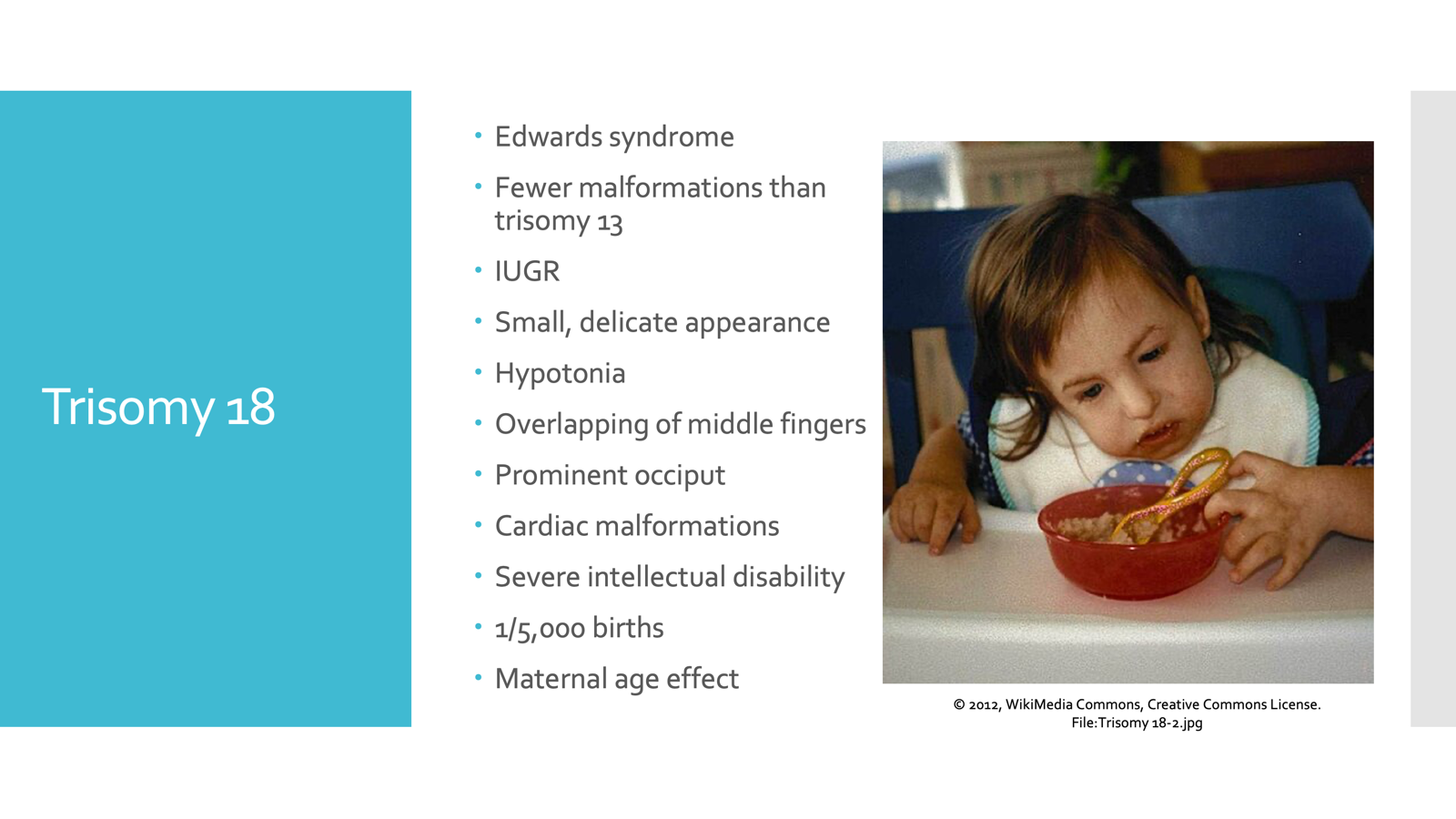
— Rocker-buttom feet; Overlapping fingers
Trisomy 13
-Trisomy 13 (Patau syndrome) is a condition where a baby has 3 copies of chromosome 13 instead of 2.
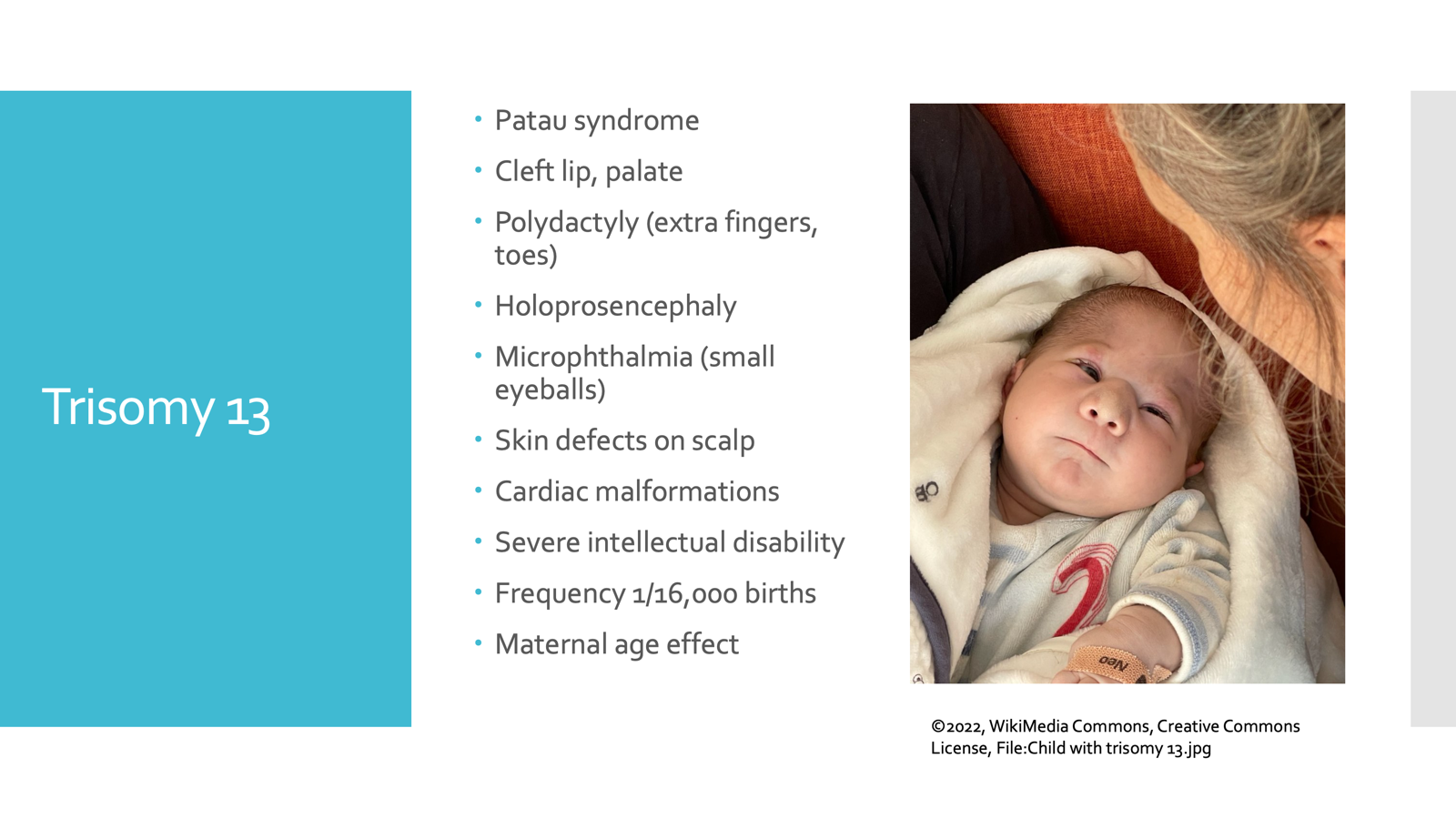
— Holoprosencephaly, Polydactyl, Cleft/Lip palate
Trisomy 13, 18= lethal trisomies
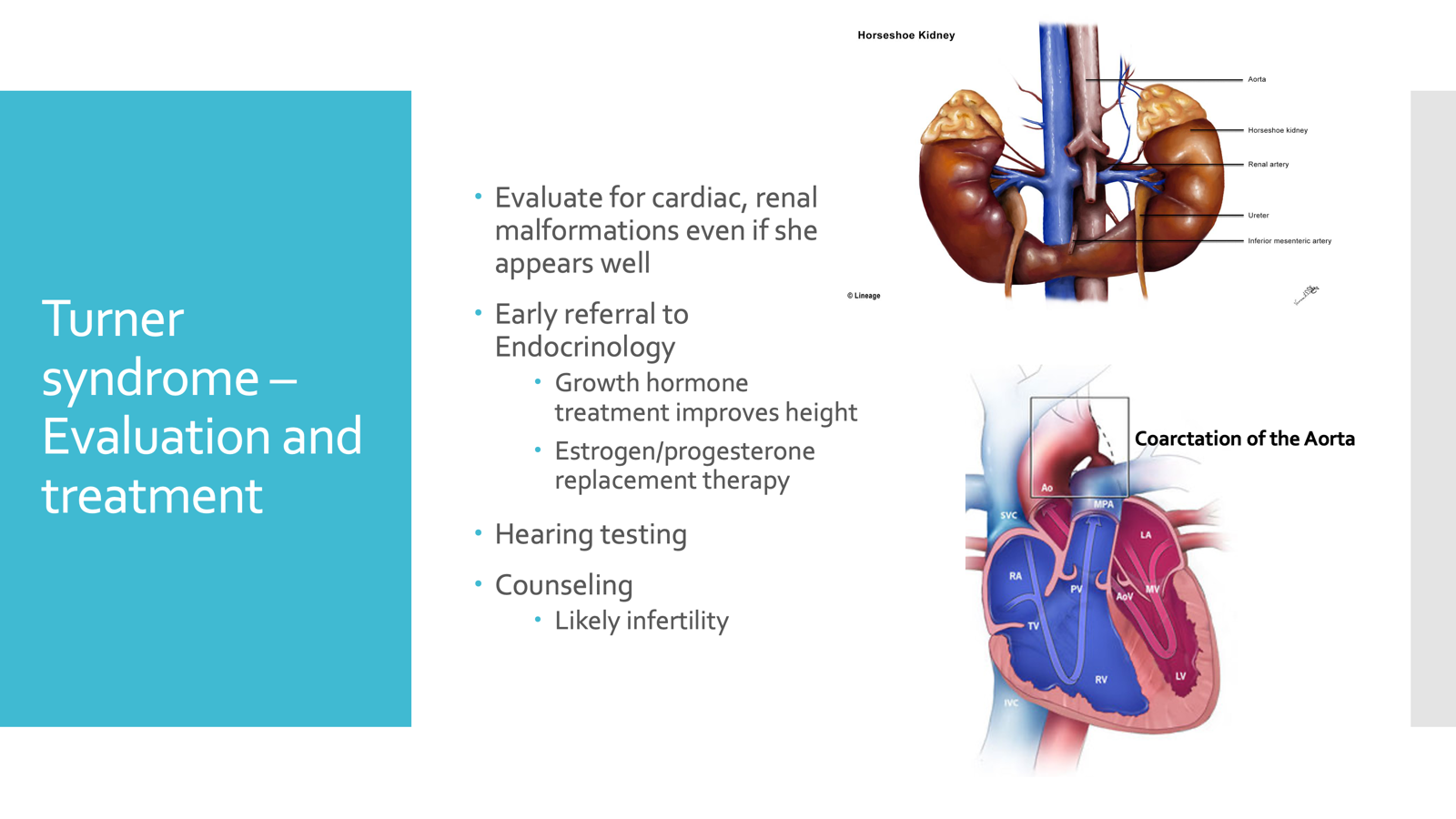
Turner syndrome- Turner syndrome is a female with only one X chromosome (45,X), causing short stature, infertility from ovarian failure, and congenital abnormalities such as coarctation of the aorta, bicuspid aortic valve and horseshoe kidney.
—Early ovarian failure.
—Short stature (SHOX gene)
—Cystic hygroma on back of the neck (broad webbed neck)
—1/2,500 girls (more frequent prenatally)
—Broad Chest
—Normal inteligence
—May demonstrate X-linked genetic traits (like males).
—Lack secondary sex characteristics
—Wide arm
Klinefelter syndrome- Klinefelter syndrome is a male with an extra X chromosome (47,XXY), causing tall stature, small testes, low testosterone, gynecomastia, and infertility.
—Normal intelligence (more in borderline)
— 1/500-1/1,000 males
Treatment: Treatment for Klinefelter syndrome includes testosterone replacement, infertility evaluation, monitoring for breast cancer, and family/genetic support.
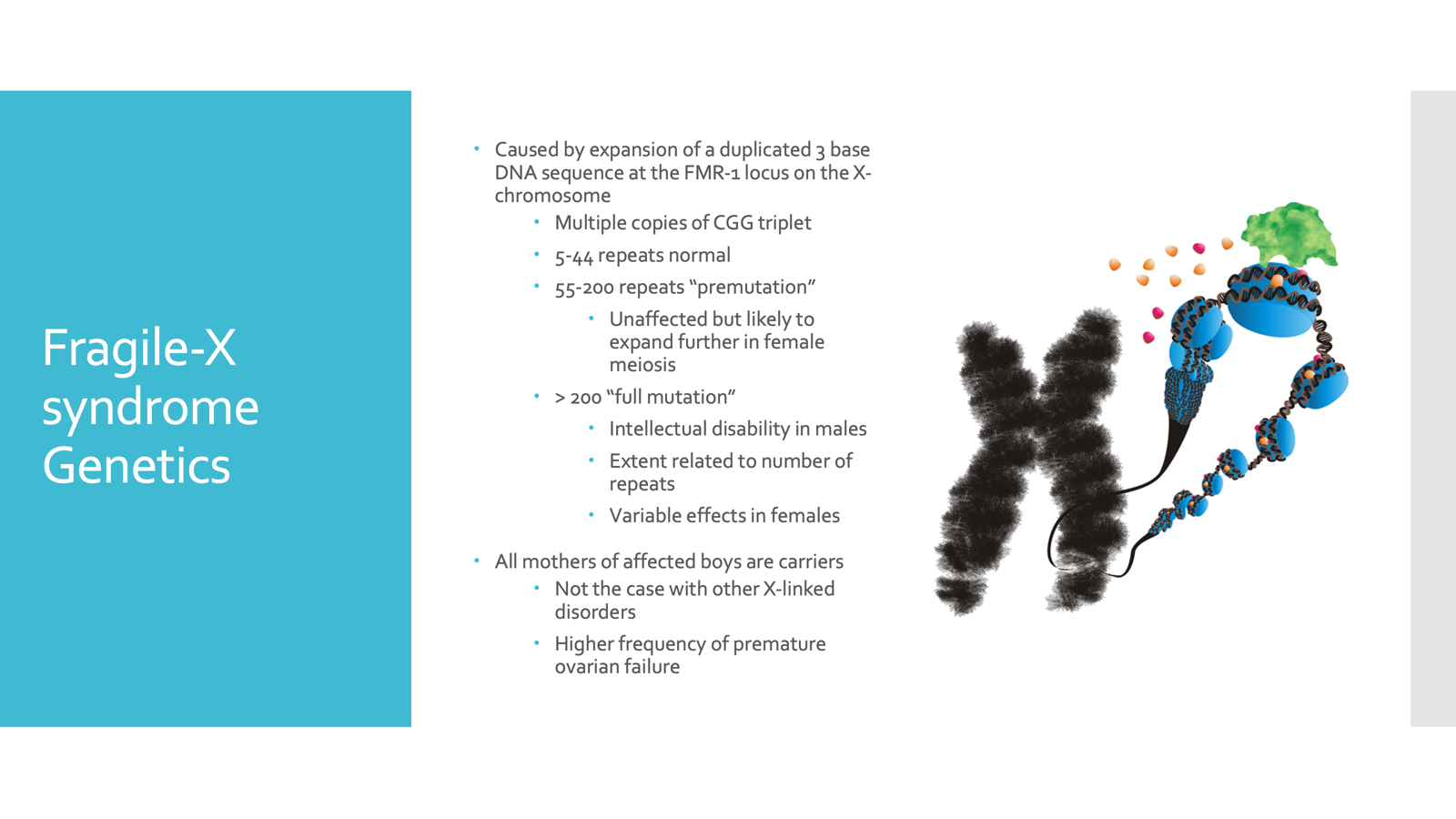
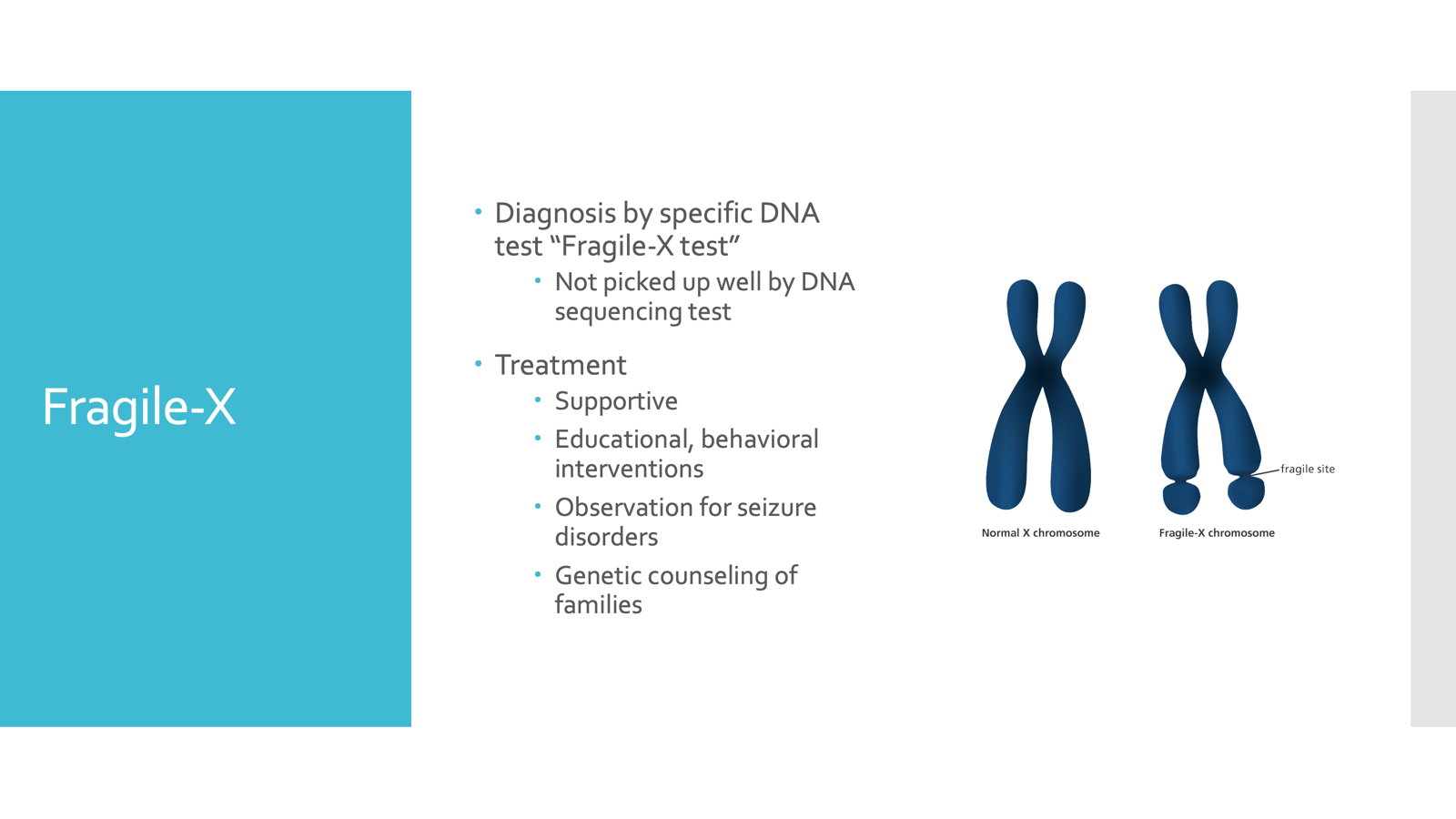
Fragile X- X-linked disorder (Male disorder) caused by a CGG repeat expansion in the FMR1 gene, leading to intellectual disability, speech delay, ADHD, a long face, large ears, loose joints, and large testes after puberty.
Normal at birth
Most common genetic cause of intellectual disability in boys: 1/5,000
Recognize the clinical features of cancer predisposition syndromes
BRCA1
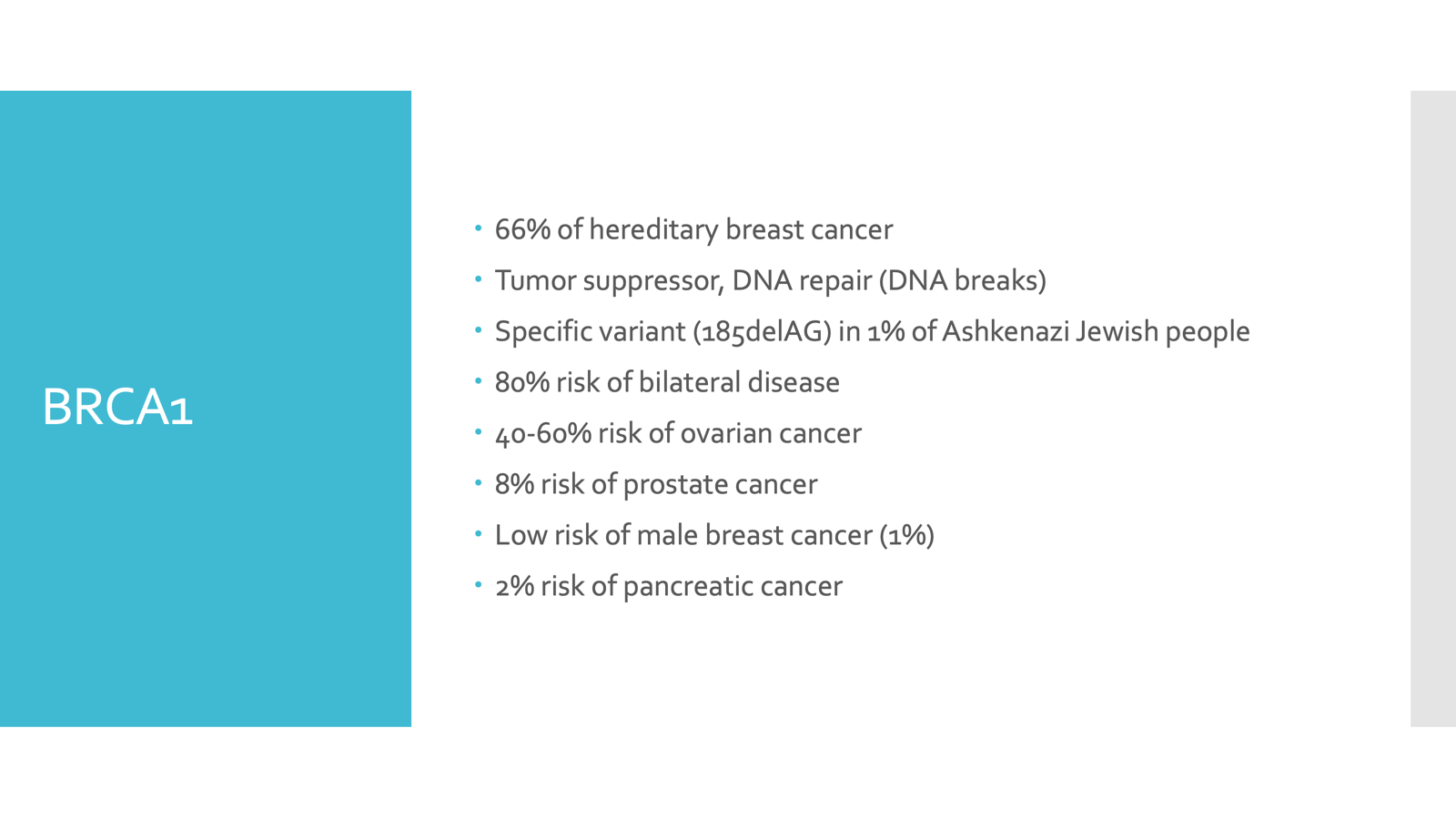
BRCA1 is a tumor suppressor gene that repairs DNA damage, and mutations increase the risk of breast, ovarian, prostate, pancreatic, and male breast cancers.
BRCA2-
BRCA2 is a tumor suppressor gene that repairs DNA, and mutations increase the risk of breast, ovarian, prostate, pancreatic, and especially male breast cancers. '
BRCA1 → More ovarian cancer
BRCA2 → More male breast & prostate cancer
Feature | BRCA1 | BRCA2 |
|---|---|---|
Function | DNA repair | DNA repair |
Breast cancer | ↑↑ | ↑↑ |
Ovarian cancer | Higher risk | Lower than BRCA1 |
Prostate cancer | ↑ | Higher risk ⭐ |
Male breast cancer | Low (~1%) | Higher (~5%) ⭐ |
Pancreatic cancer | Low | Slightly higher |
HNPCC- Lynch syndrome (HNPCC) is an autosomal dominant disorder caused by mutations in DNA mismatch repair genes, leading to a high risk of colon cancer and endometrial cancer, along with increased risks of ovarian, stomach, pancreatic, urinary tract, and prostate cancers.
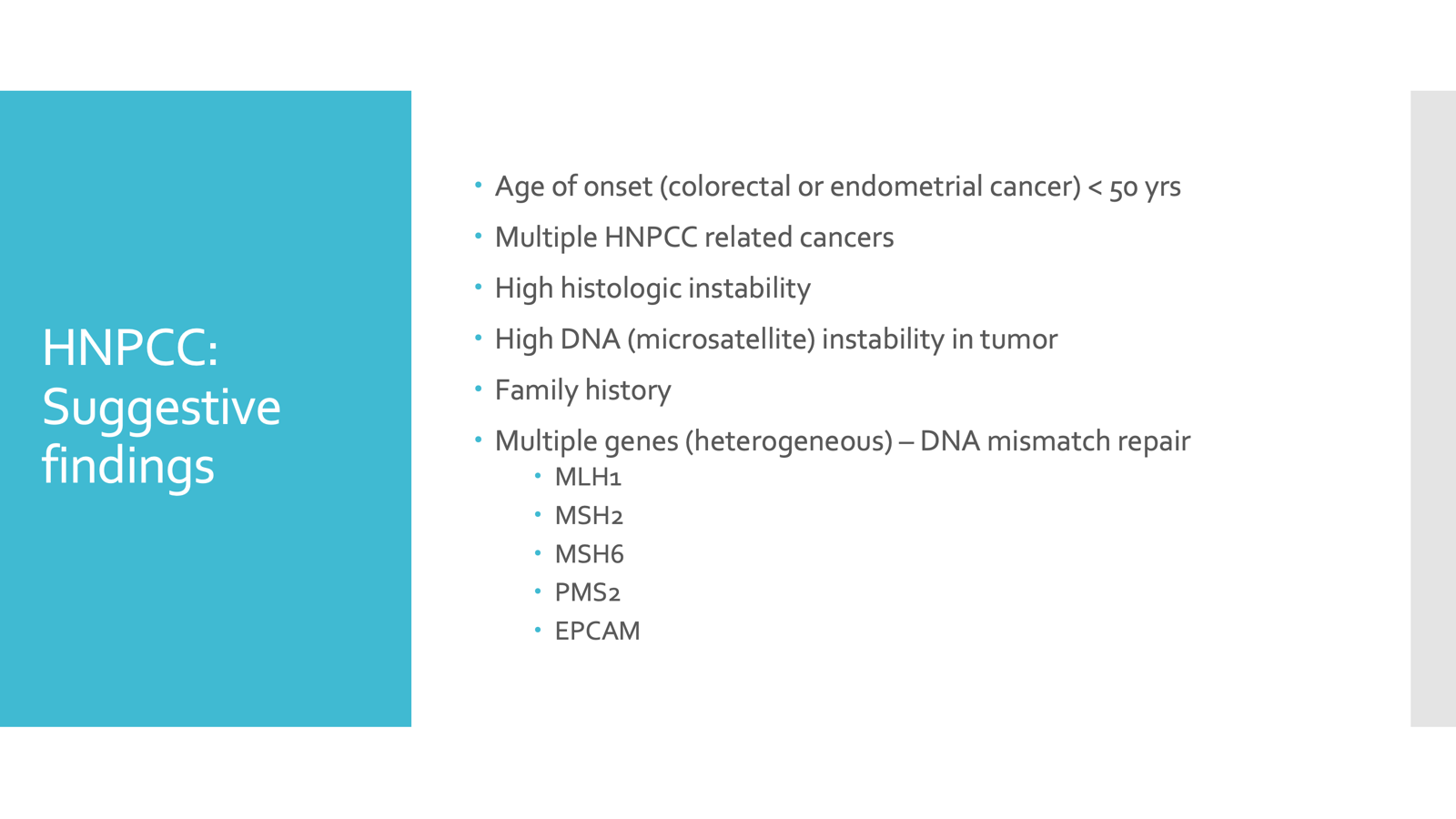
Treatment: Colonoscopy every 1-2 years after age 20.
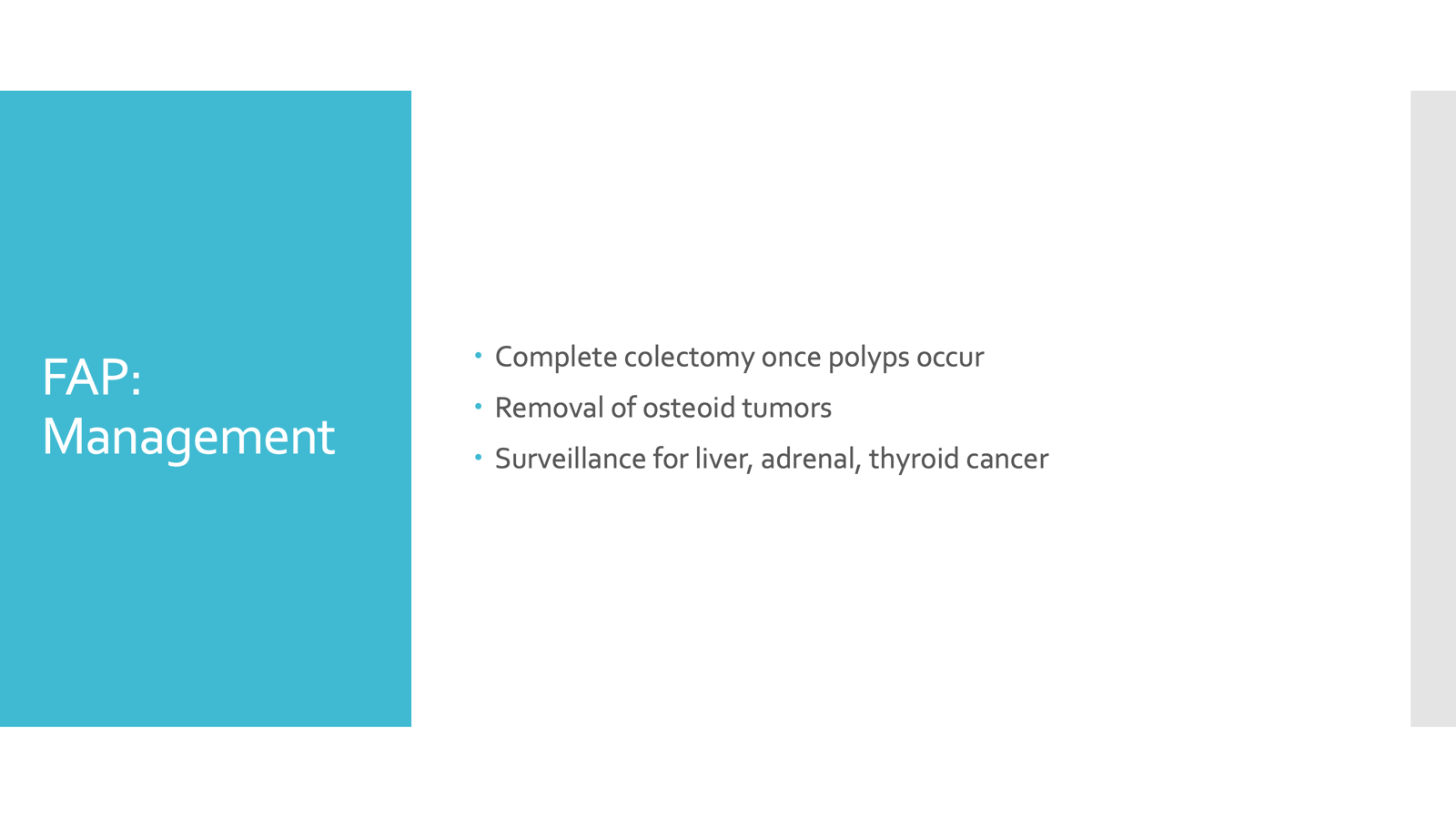
Full colectomy after cancer occurs
Prophylactic hysterectomy and salpingo-oophorectomy after childbearing
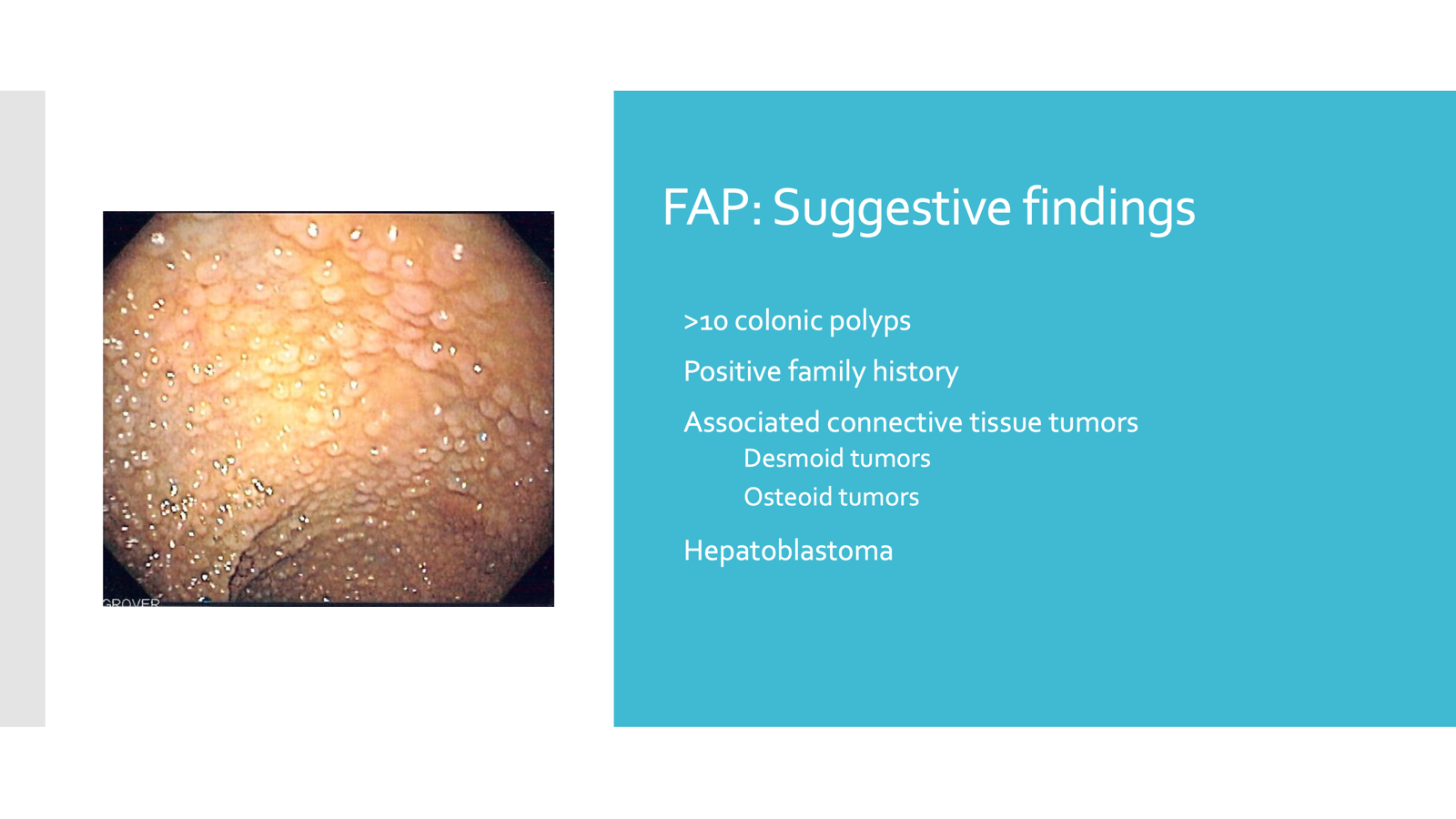
FAP- FAP is an autosomal dominant disorder caused by an APC tumor suppressor gene mutation, resulting in hundreds to thousands of colon polyps and an almost 100% risk of colon cancer if left untreated.
Increased liver cancer (hepatomablasts) risk.
Identify different ways to manage and/or treat genetic disease.
S = Supportive care
P = Product replacement
R = Replacement of enzymes
D = Dietary restriction
T = Toxic substance removal
O = Organ transplant
G = Gene therapy
—Genetic disorders can be managed by treating symptoms, replacing missing products or enzymes, avoiding harmful substances, removing toxic buildup, replacing damaged organs, or correcting the defective gene with gene therapy.
Down syndrome → Flat face, hypotonia, AV septal defect
Edwards syndrome → Overlapping fingers
Patau syndrome → Polydactyly + cleft lip
Turner syndrome → 45,X + short stature
Klinefelter syndrome → 47,XXY + gynecomastia
Fragile X → Large ears + large testes
BRCA1 → Breast + ovarian cancer
BRCA2 → Male breast + prostate cancer
HNPCC (Lynch Syndrome) → Few/no polyps + early colon/endometrial cancer
FAP → Hundreds of polyps + APC mutation + ~100% colon cancer risk
Disease
Most Tested Clue
Down syndrome
Flat face, hypotonia, single palmar crease
Edwards syndrome
Overlapping fingers
Patau syndrome
Polydactyly + cleft lip
Turner syndrome
45,X + short female + infertility
Klinefelter syndrome
47,XXY + tall male + gynecomastia
Fragile X
Large ears + long face + large testes
BRCA1
Breast + ovarian cancer
BRCA2
Breast + male breast + prostate cancer
HNPCC
Colon cancer before age 50, few/no polyps
FAP
Hundreds to thousands of colon polyps
Disorder | Chromosome | Classic Features | Easy Memory Trick |
|---|---|---|---|
Trisomy 21 (Down syndrome) | 47,+21 | Flat face, upward-slanting eyes, hypotonia, single palmar crease, congenital heart defects, intellectual disability | 21 = "Down" |
Trisomy 18 (Edwards syndrome) | 47,+18 | Clenched hands with overlapping fingers, prominent occiput, heart defects, severe intellectual disability | 18 = Folded fingers ✋ |
Trisomy 13 (Patau syndrome) | 47,+13 | Polydactyly, cleft lip/palate, holoprosencephaly, microphthalmia, heart defects | 13 = Extra digits 🖐 |
Turner syndrome | 45,X | Female, short stature, infertility, streak ovaries, coarctation of the aorta, horseshoe kidney | Missing X = Short girl |
Klinefelter syndrome | 47,XXY | Tall male, small testes, infertility, gynecomastia, low testosterone | Extra X = Tall guy |
Fragile X syndrome | FMR1 (CGG repeat) | Intellectual disability, long face, large ears, large testes, ADHD/autism | BIG = Big ears, Intellectual disability, Gonads (large testes) |
Syndrome | Gene | What It Does | High-Yield Clinical Features | Easy Memory Trick |
|---|---|---|---|---|
BRCA1 | BRCA1 | Tumor suppressor; DNA repair | Breast cancer, ovarian cancer, prostate cancer, pancreatic cancer | BRCA1 = Breast + Ovarian |
BRCA2 | BRCA2 | Tumor suppressor; DNA repair | Breast cancer, male breast cancer, prostate cancer, pancreatic cancer | BRCA2 = Male breast + Prostate |
HNPCC (Lynch syndrome) | MLH1, MSH2, MSH6, PMS2, EPCAM | DNA mismatch repair | Early colon cancer, endometrial cancer, ovarian cancer, few/no polyps | Lynch = Colon + Uterus |
FAP | APC | Tumor suppressor | Hundreds to thousands of colon polyps, ~100% colon cancer risk if untreated | FAP = Full of Polyps |
Disease | Most Tested Clue |
|---|---|
Down syndrome | Flat face, hypotonia, single palmar crease |
Edwards syndrome | Overlapping fingers |
Patau syndrome | Polydactyly + cleft lip |
Turner syndrome | 45,X + short female + infertility |
Klinefelter syndrome | 47,XXY + tall male + gynecomastia |
Fragile X | Large ears + long face + large testes |
BRCA1 | Breast + ovarian cancer |
BRCA2 | Breast + male breast + prostate cancer |
HNPCC | Colon cancer before age 50, few/no polyps |
FAP | Hundreds to thousands of colon polyps |
Chromosomal Disorders
21 = Down syndrome → Flat face, hypotonia
18 = Edwards → Folded (overlapping) fingers
13 = Patau → Extra fingers (polydactyly)
45,X = Turner → Short female
47,XXY = Klinefelter → Tall male
Fragile X = BIG
Big ears
Intellectual disability
Gonads (large testes)
Cancer Syndromes
BRCA1 = Breast + Ovarian
BRCA2 = Male Breast + Prostate
Lynch = Colon + Uterus (Endometrium)
FAP = Full of Polyps