Polymers
large molecule created by linking smaller individual molecules caled monomers
“many units” of something
ex: ethylene and polyehtylene
Carbon connects the monomers together
The reaction to create a polymer is polymerization
Chain Growth Polymer
this is the type of polymer created by the addition of one monomer to another
General repeat unit for polyvinyl chloride
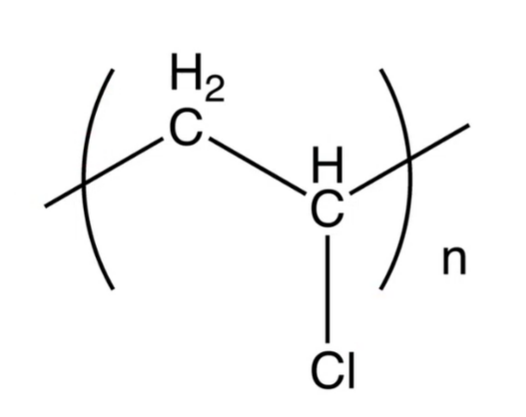
Parenthesis lets us no the “connections” for one unit of the monomer
when this monomer is eventually repeated n times it forms monomer
Step-Growth polymers (Condensation reaction)
again monomers are combined together, but when combining they have to release a byproduct which is more often than not water
Ester group: When an oxygen molecule is bonded to another oxygen atom O-C=O
Physical properties of Polymers
Depends on how tightly packed/connected the polymer is
Branching polymers create non-crystalline, amorphus solids.
basically even if they are bonded, the physical bond is just branching and not tightly connected to one another thus no reinforcement on the carbon
Low density poly X
This is the branching connection
it has low molecule mass, low density, and overall strength. It rips and stretches easily
Weak London dispersion connection
High density poly x
this is when the physical properties are tightly packed
Because of its tight packed nature, it makes its london force (connection) stronger, and thus fibers are stronger
Despite its tight packed nature it is lightweight, it is also water repelent and resist tears because of its strong bond
High molecular mass around millions