AP Environmental Science Unit 4 - Earth Systems and Resources
Plate Tectonics
Tectonic Plates: Slabs of rock or lithosphere floating on top of the mantle
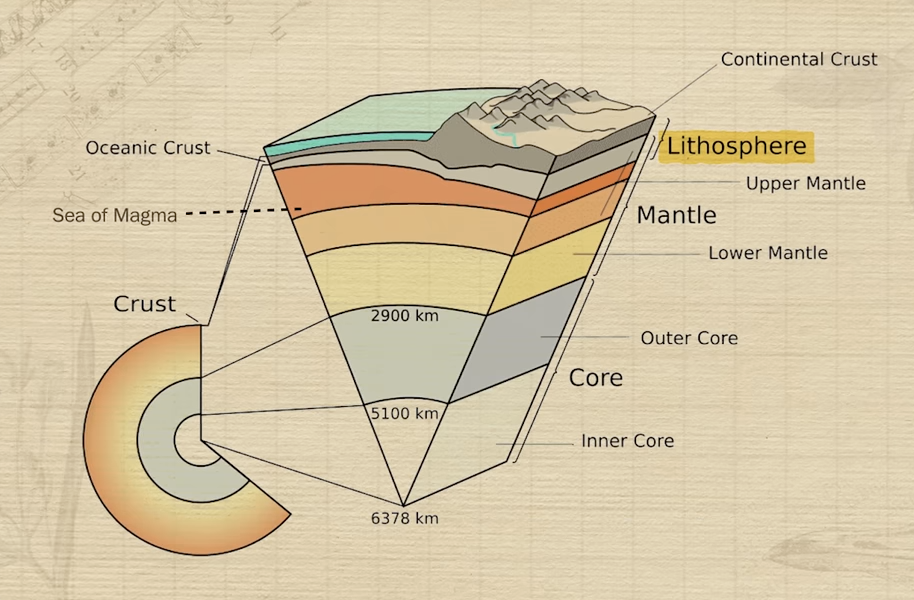
Mantle: molten, magma sea that tectonic plates float atop
Earth’s Core: dense ball of nickel, iron and radioactive elements
gives off heat to mantle making it solid
Divergent Boundary: plates move away from each other
bc of hot portion of mantle where magma pushes to surfaces
magma forces to continental place, creating convergent boundary
Convergent Boundary: two plates collide
more dense
subducted beneath plate
mountain ranges formed bc of it
Transform Boundary: two plates slide past each other in opposite directions
Earth’s Soil
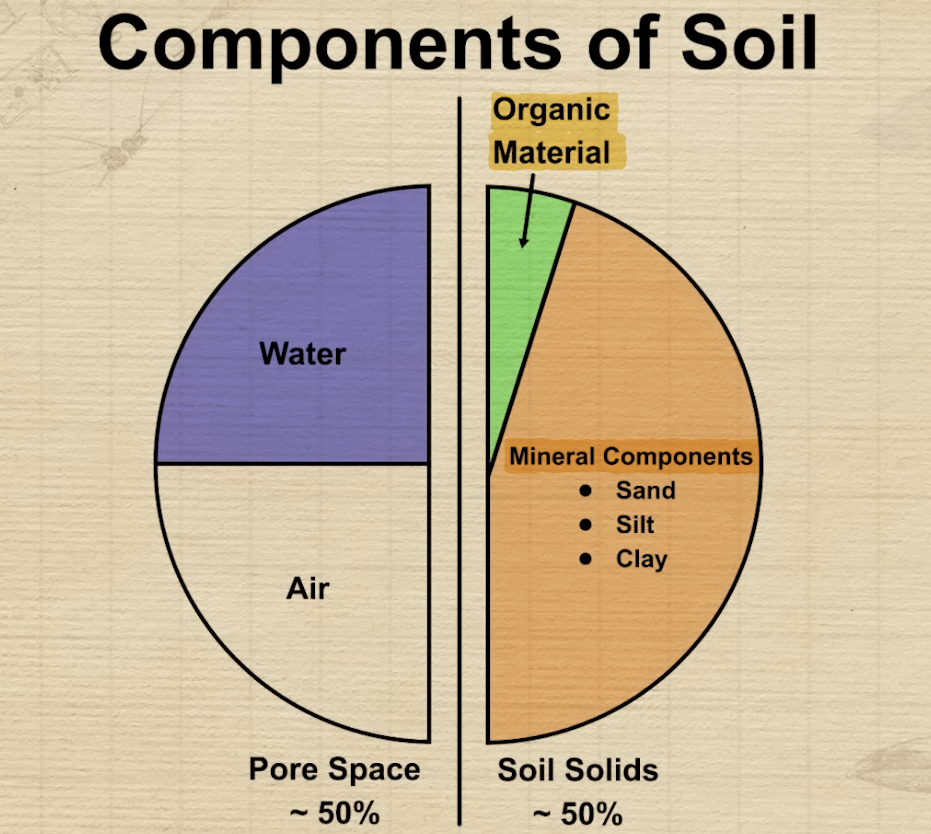
Soil: complex mixture of tiny particles of weathered rocks, such as sad, slit, and clay
consists or organic materials and mineral components in soil solids
sand
silt
clay
consists of water and air in pore space
50% is pore space, 50% is soil solids
Weathering: rain and freeze-thaw cycle breaks rocks into smaller and smaller pieces
inorganic components come from weathering
rocks pieces come from are parents rocks
top layer is organic matter
A horizon is top soil that contains lots of crucial stuff
B horizon less crucial stuff
C horizon
stuff that hasn’t been weathered fr
pretty much just parent rocks
Erosion: movement of rock pieces by the wind and the rain
erosion removes important nutrients
Soil composition and Properties
Soil Texture
Water Holding Capacity
Soil pH
Soil Horizons and Erosion
Soil: loose surface material that covers most land
mixture of minerals, organic matter, living organisms, gases, water
produced from rocks (or parent material) as result from weather
Weathering: describes the breakdown of rocks by physical, chemical or biological processes
particles broken away during weathering transported and deposited as layers of soil on land or layers of sediment underwater
soil has layers called horizons
distinguished by properties
color
texture
mineral content
organic content
vertical arrangement of horizons is soil profile
help distinguish soil types
used to predict soil fertility
generalized soil profile includes four major soil horizons
O, A, B, C
O Horizon (Organic Horizon): made up of mostly organic matter (like leaf litter and decomposed plant material); can be thin, thick or not present at all depending on how soil forms
A Horizon (Topsoil): upper layer of soil where plants have most of roots
high concentration of organic matter and microorganisms
A and O horizons most nutrient rich and productive layers in soil profile
B Horizon (Subsoil): mostly made up of minerals from weathered parent material
usually lighter in color
range from yellow to reddish brown
less fertile than A and O horizons
not capable of producing abundant plant growth
C Horizon: layer of poorly weathered or unweathered rock
high concentration of parent material
generally infertile
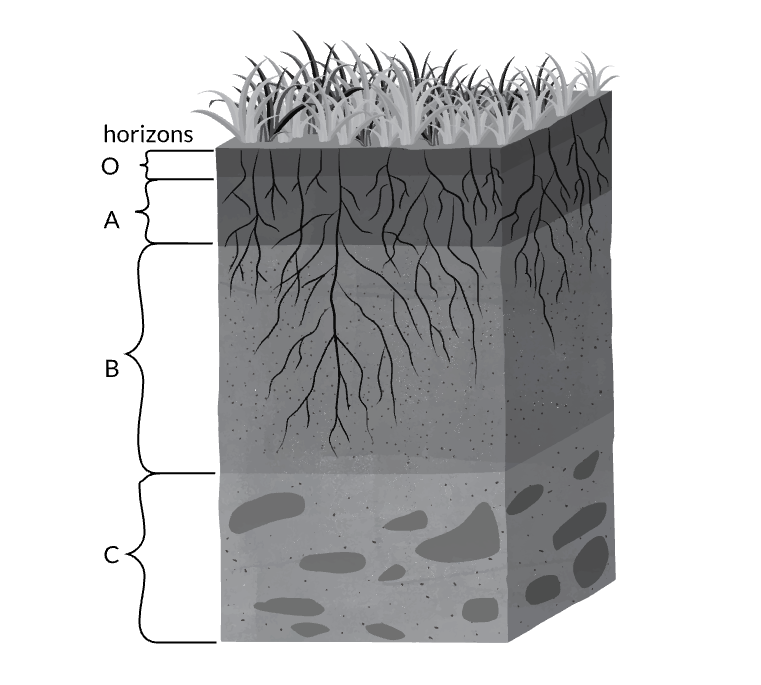
D Horizon: The layer beneath the C horizon, consisting of bedrock that has not undergone significant weathering and typically serves as the foundation for soil development
Soil Erosion: removal of fertile top layers of soil
can be eroded by wind and flowing water
slowed by plants
roots help anchor top layers of soil
can be eroded from human activities
deforestation
agriculture
urbanization
soil provides humans w ecosystem service
help provide clean water for drinking and other things
Earth’s Atmosphere
Earth’s Atmosphere
Atmosphere: mixture of gases surrounding earth
78% Nitrogen
21% Oxygen
1% water vapor, argon, CO2, small amounts of other gases
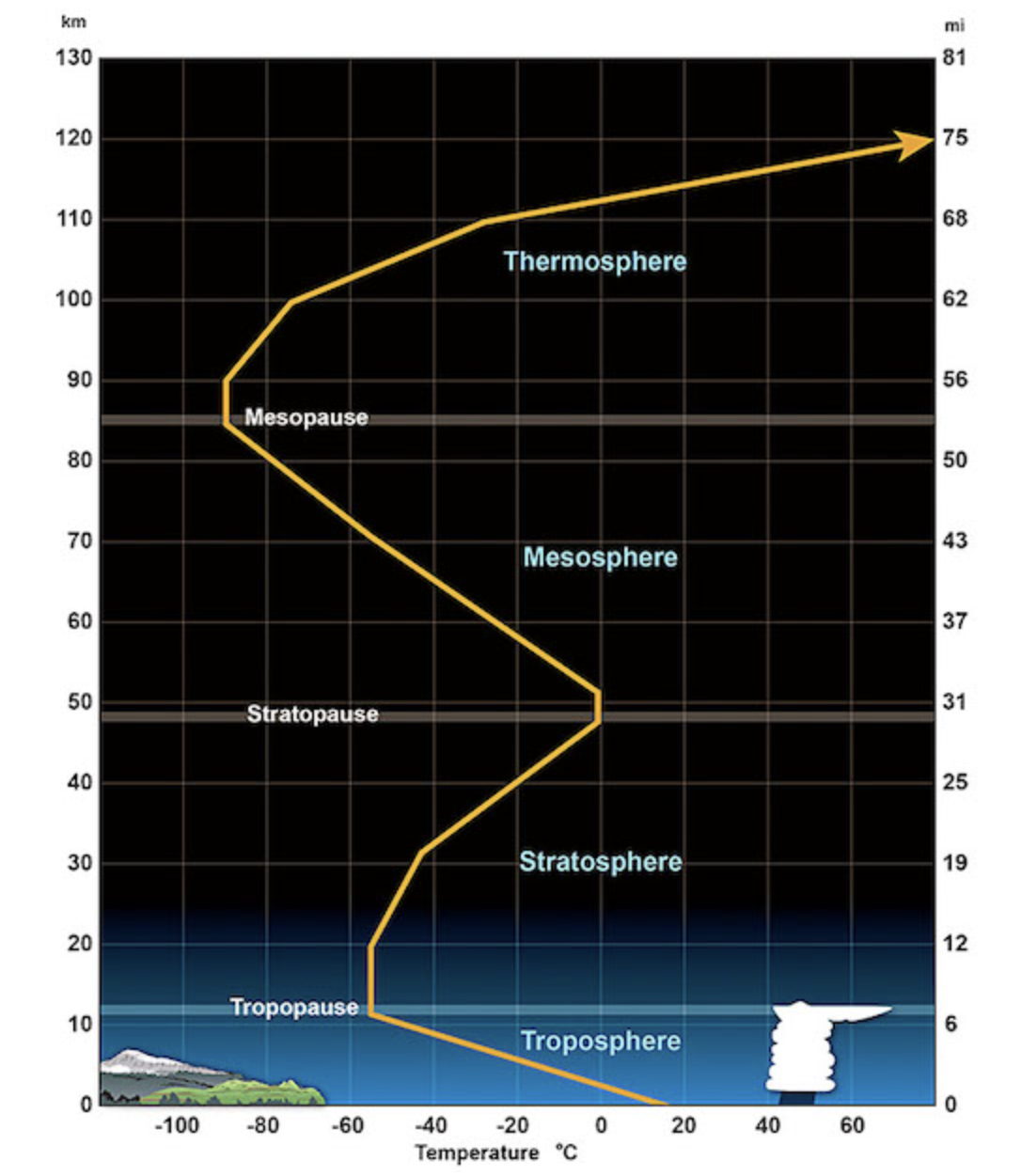
5 layers distinguished by temp gradients
alternate between temp that increases or decreases w altitude
Troposphere
layer closest to Earth
densest layer
contains most air particles
where most of Earth’s weather and cloud formation occurs
heated primarily by energy from sun radiating off Earth’s surface
decrease in pressure occurs w altitude
temp gradient that decreases w altitude
Stratosphere
layer above troposphere
concentrated region of ozone gas called ozone layer
keeps 95% of sun’s harmful UV radiation from reaching Earth’s surface
Ozone molecules absorb UV radiation and release heat
causes temp gradient that increases w altitude
Mesosphere
layer above stratosphere
heated primarily by stratosphere below
temp gradient that decreases w altitude
one of coldest places on Earth
avg temp ~ (- 85ºC / - 120º F)
Thermosphere
layer above mesosphere
low density of gas molecules
molecules absorb highly energetic reaction from sun
temp gradient that increases w altitude
Exosphere
highest layer of EArth’s atmosphere
extremely low density of gas molecules
molecules often escape into space