AP Bio.docx

 AP Bio Unit 6 - Gene Expression and Regulation
6. I = DNA and RNA Structure
&replication
 and
and RNA processing
16. 4- Translation
- 6. 5 - Regulation of Gene Expression
16 . 6-Gene Expression and Cell Specialization
6 . 7 -Mutations
6. 8-Biotechnolog
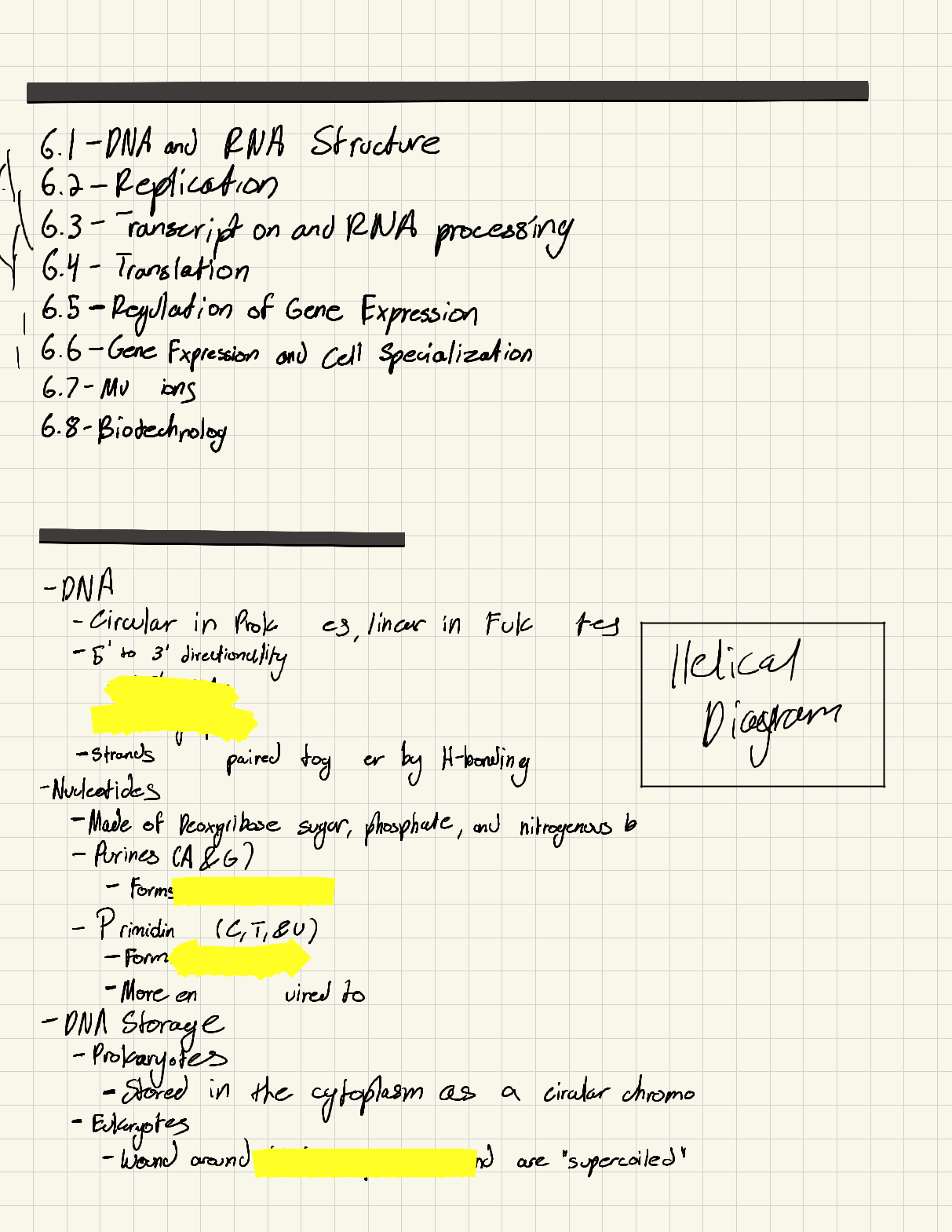
6.1 - DNA and RNA Structure
- DNA
circular | in | liner | in |
| |||||||||||||||
-Sto 3 | Prokuyotes, |
| |||||||||||||||||
- | : | directionality | |||||||||||||||||
5' | Phosphate | together by | H-bonding | Diagram | |||||||||||||||
- | -strands | are | paired | ||||||||||||||||
- | 3 : | O | group | ||||||||||||||||
Nucleotides | |||||||||||||||||||
- Madeof | Deoxyribose | sugar, phosphate , | and | nitrogenous | base | ||||||||||||||
-Purines | (A &6) | ||||||||||||||||||
-Forms | 2 | A-bonds | |||||||||||||||||
- | Pyrimidines | (C, | T, & r) | ||||||||||||||||
- | Forms 3 1- | ||||||||||||||||||
- More energy | required | to brock | |||||||||||||||||
- DN | Storage | ||||||||||||||||||
-Prokaryotes | cytoplasm | chromosome | |||||||||||||||||
- | -stored | in | the | as | a circular | ||||||||||||||
Eukaryotes | around | ||||||||||||||||||
- | Wound | histone proteins | and | are "supercoiled" | |||||||||||||||
 & Attend ucsc and I
Love ex life.
- | Telomeres | |||||
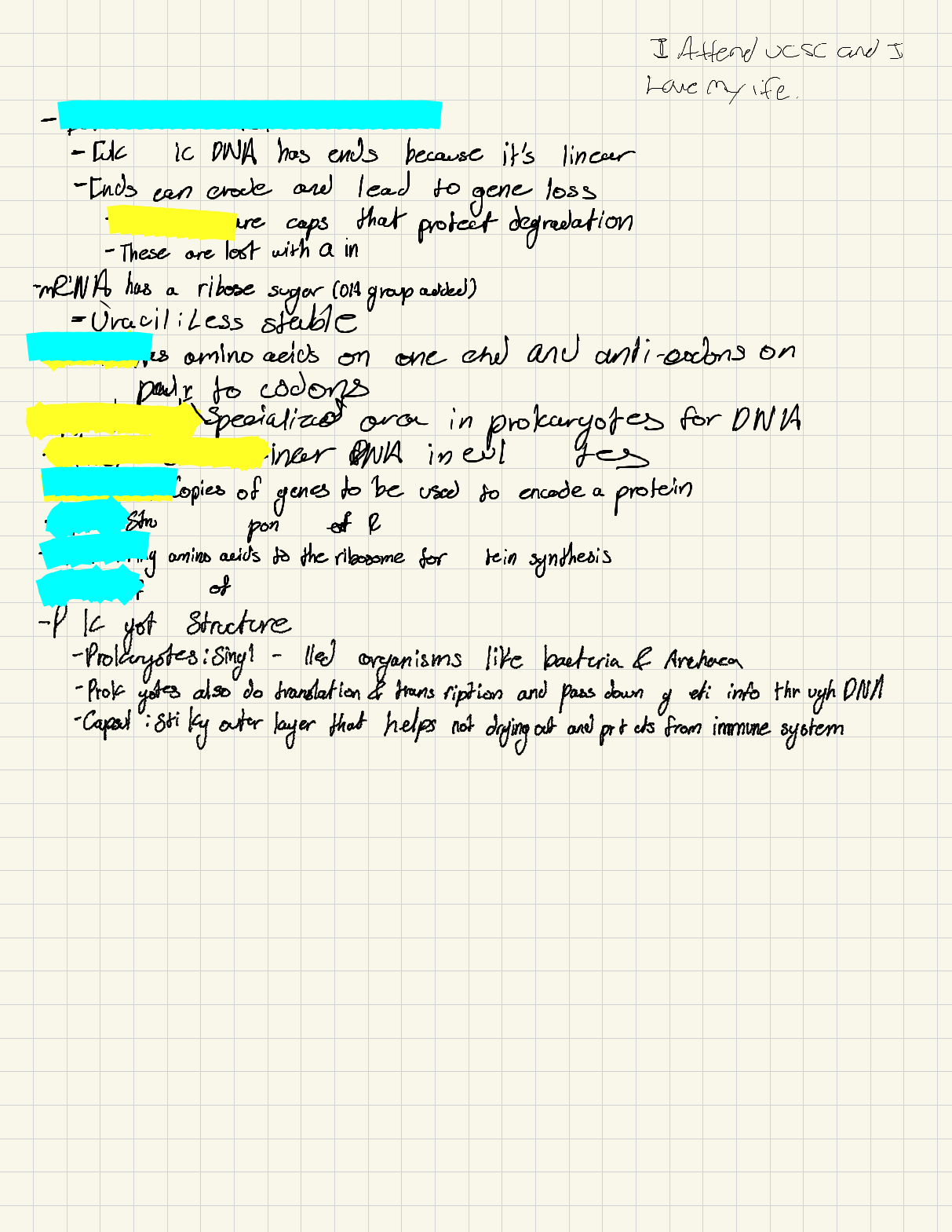
- | Eukaryotic | DNA | has ends | because it's | linear | |
- | crode | and | lead to gene | loss | ||
- Telomeresare | caps | that protect degradation | ||||
- These are lost with aging
-mRINAhas a | ribose | sugar | 1016 | grap | added | |||
- | ||||||||
-> Uracil : Less | stable | and anti-codons on other | ||||||
- tRNA : Has | amino acids | on one and | ||||||
that pair to | codons | |||||||
- Netcoldj:specializedover in | prokaryofes for DWA | |||||||
- chromosomes : Liner&D in evkiyotes | ||||||||
- mRNA: Copies of genes to beused | to encode a protein | |||||||
- rRNA: Structural componentsof | END | |||||||
- tRNA : Bringamino acids to the ribosome for protein | synthesis | |||||||
- microRNA :Regulators of other genes | ||||||||
- P | Structure | |||||||
Prokuyotes : sing | like | bacteria & Archaea | ||||||
-prok | also do translation & tran | |||||||
· Capsu | that | helps not | drying out and pr | |||||
6.2 - DNA Replication | |||||||
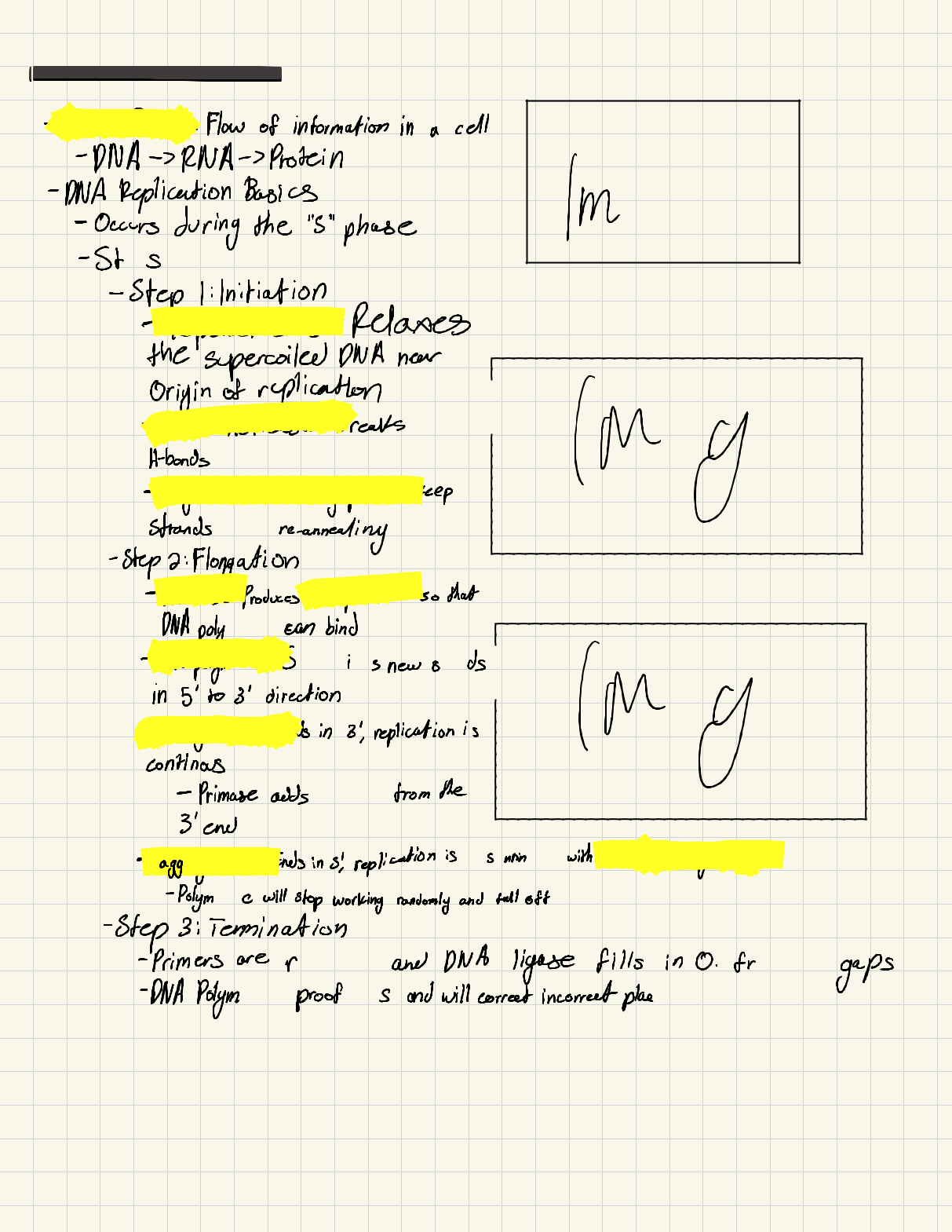
- Central | Dogma :Flow of information in | a cell | |||||
- DNA-RNA-> Protein | Image | ||||||
-DNA Replication Basics | |||||||
- | during the "S" phase | ||||||
-Occurs | |||||||
Step | : | Initiation | |||||
Step 1 | |||||||
- Topoisomerase: Rela | |||||||
the supercoiled DNA new | M | ||||||
Origin | of replication | ||||||
- | DNA | Helicase : Breaks | |||||
H-bonds | |||||||
>-Single stranded binding proteins : keep | |||||||
- | strands | from re-annealing | |||||
Step 2 : | |||||||
-Primase: Produces RNA primers | so that | ||||||
DNA polymerase can bind | |||||||
- DNA polymerase: Synthesizes new strands
in 5' to 3 direction
- Leading strand : Ends in 3 , replication is
continuous | M | |||||||||
>-Primase | adds primers from the | |||||||||
3' end | replication | fragments | ||||||||
- | lagging | strand | : | Ends ins | is | discontinuous with | Okazaki | |||
, | ||||||||||
- Polymerase will stop working randomly and full off
Step 3 : Termination | |
-Primers are | removed and DNA ligase fills in 0 fragment gaps |
DNA Polymerase | profracs and will correct incorrect placements |
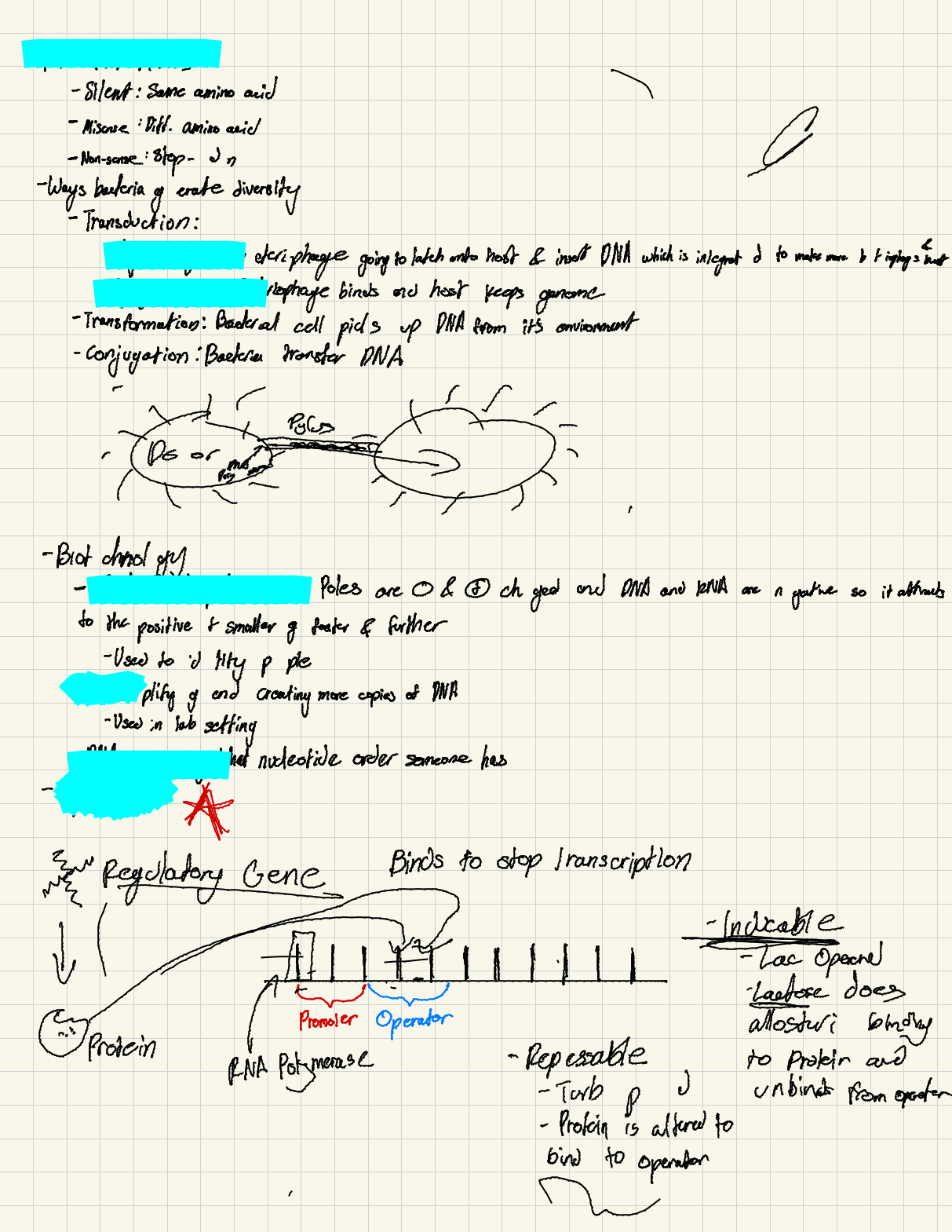 Point mutations
-Silent : Some amino ad | - | ||||||||
-Misense : Diff Amino arid | d | ||||||||
- Non-sense : Stop- | |||||||||
- Waysbacteria g | |||||||||
-Transduction : | B | in | b | ||||||
- | Lysti | : | to lath on to | hosta insert DNA which is | to make more | ||||
best | |||||||||
-Lysogen | Bacteriophage binds | and host | keeps genome | ||||||
- Transformation : Bacte
rial cell picksup DNA from it's environment
Conjugation : Bacteria transfer | DNA | --- | ||||||
- | - | |||||||
& | ||||||||
| in | |||||||
· | Pa | > | ||||||
2 | ent | ⑮ | # | |||||
S | ||||||||
- B | ||||||||
- | DNA and UND are n | |||||||
to the positive+ smaller | ||||||||
- Used to
 id
identify people
- Used to
- PCR : A
mplifyi
ng and creating more copies of DNA Used in lab setting- PNA sequencing : What nucleotide order someone has
- Operon &
regulatory- | Binds to stop |
Gene |
↳ |
| |||||||||
-Inducable | ||||||||||
- | ||||||||||
- | ||||||||||
-Lac Opene | ||||||||||
r | - | Lactose | does | |||||||
⑧Protein | Prom | Operator | Re | allosteri | blany | |||||
- | ||||||||||
RNA Polymerase | to protein and | |||||||||
- |
| unbinds | from operate | |||||||
Turb | ||||||||||
-Protein | is altered | to | ||||||||
bind to operator | ||||||||||
- | zu | |||||||||
& | 1F | |
 ⑰
⑰
S
Ap Bio | Unit | 7 | ||||||||
Introduction | to | evolution | and | natural | selection | |||||
-Evolution : | Variation | is natural in | ,and | certain variations would survive | more | |||||
-Applicable to viruses | species | |||||||||
& bacteria | ||||||||||
Variation | in | a | species | |||||||
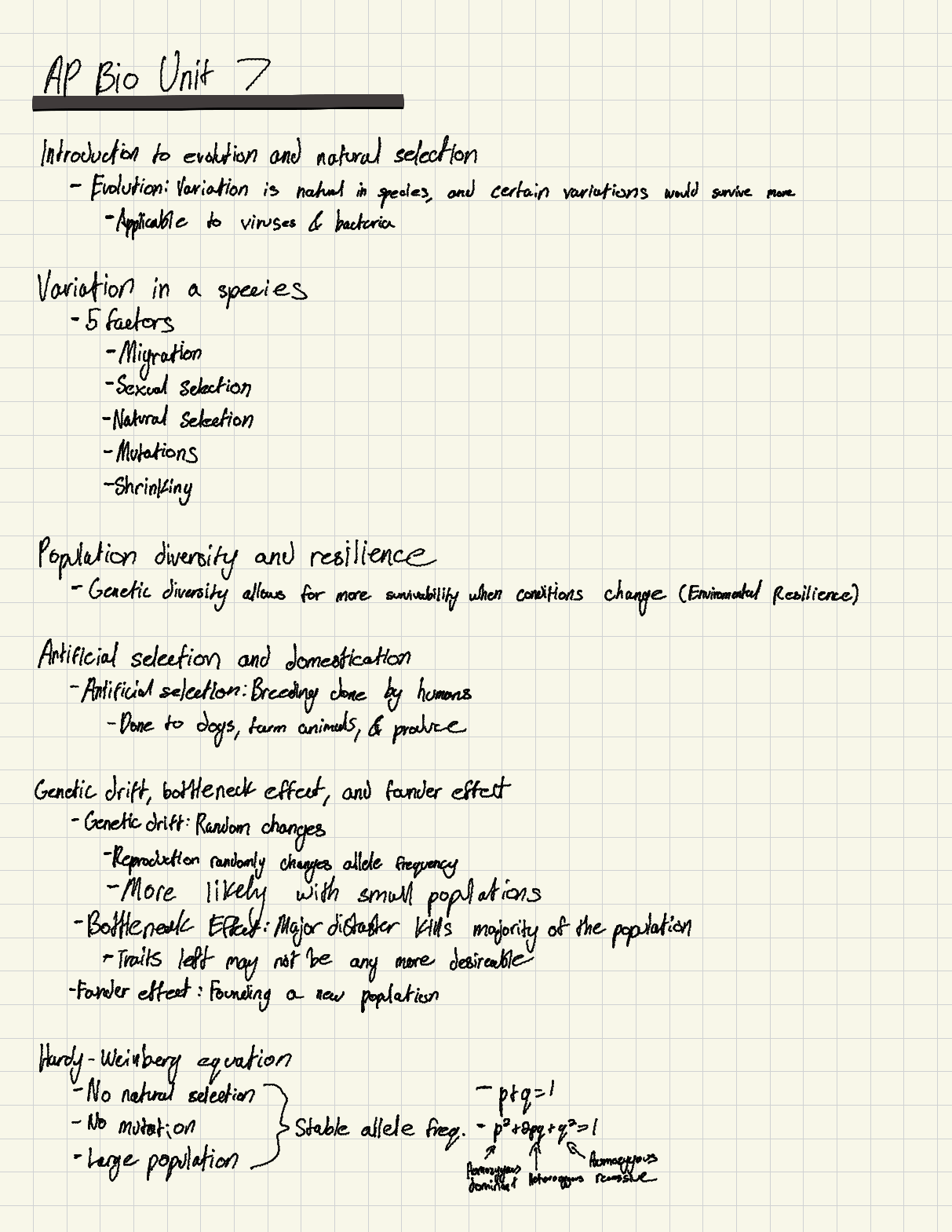 5 factors
- Migration
- Sexual Selection
- Natural Selection
- Mutations
- Shrinking
Population diversity and resilience
- Genetic diversity allows for more survivability when conditions change (Environmental Resilience)
Artificial selection | and | domestication | ||||||||||||||
Antificial selection : Breeding done | by | humans | ||||||||||||||
Done | to | doys | turn animals | I | produce | |||||||||||
, | ||||||||||||||||
, | ||||||||||||||||
Genetic drift | bottleneck effect | and | founder effect | |||||||||||||
, | , | |||||||||||||||
-Genetic drift: | Random changes | |||||||||||||||
- Reproductionrandomly | changes | allele | frequency | |||||||||||||
- | - More | likely: | with | small | populations | |||||||||||
Bottleneak | Effect | Major distaster | kills | majority of the population | ||||||||||||
· Traits | left | may | not be | any | more desirable | |||||||||||
- Fandereffect : Founding | a new | population | ||||||||||||||
Hardy-Weinberg | equation | |||||||||||||||
- Nonatural selection | freg | -+ | = 1 | |||||||||||||
· | No mutation | Estable allele | -p+ app + qu=1 | |||||||||||||
p | q | |||||||||||||||
- | Homyyau | Yerumozygos | ||||||||||||||
large population | ||||||||||||||||
a b | ||||||||||||||||
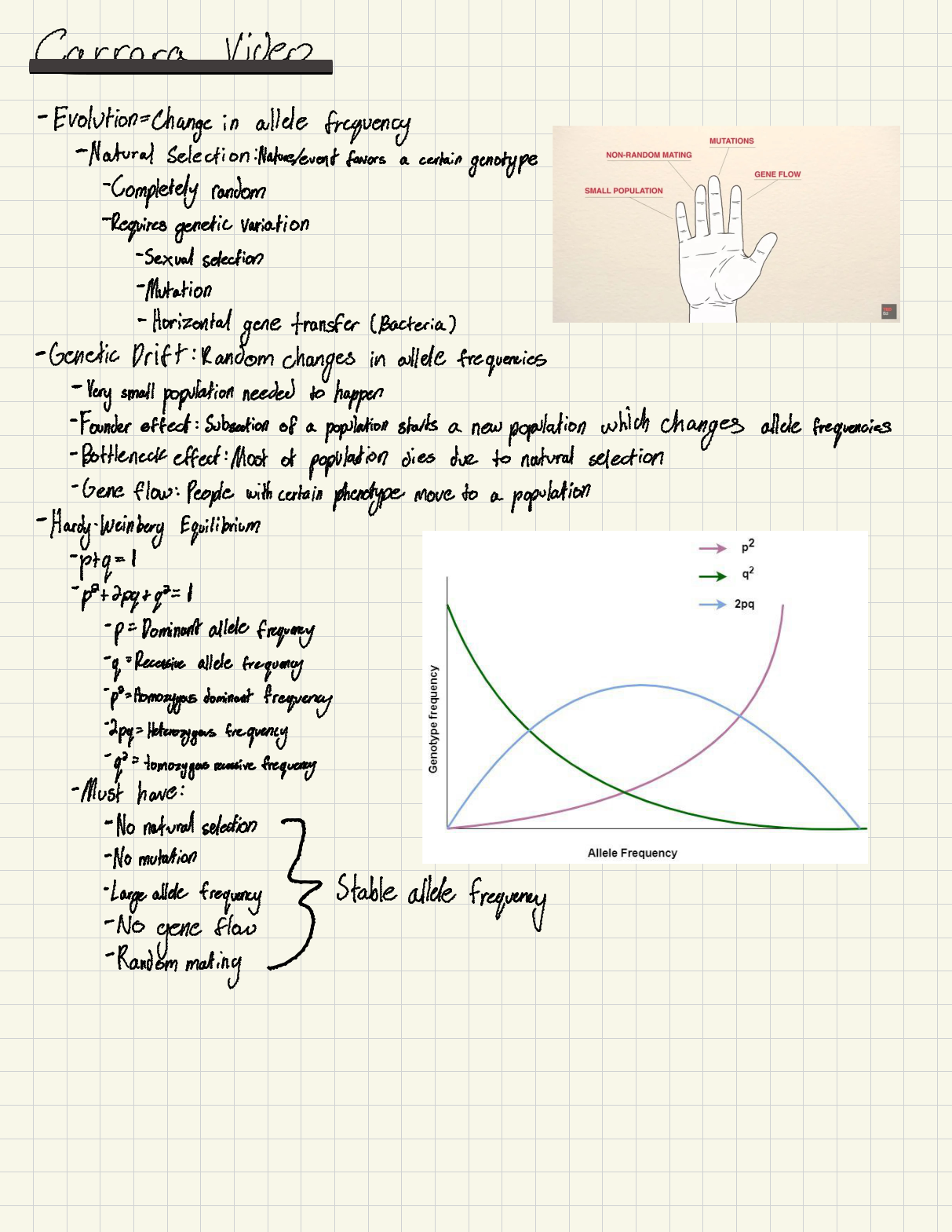
Carrara Video | |
-Evolution= Change in allele frequency | |
- NaturalSelection : Nature/event favors a | certain |
genotype |
- Completely random
- Requires genetic variation
Sexual selection
- Mutation | ||||||||
- Genetic | -Horizontal gene transfer (Bacteria | |||||||
Drift : Random changes in | allele | frequencies | ||||||
-Very | small population needed to happen | which changes allele frequencies | ||||||
Founder effect : Subsection | of a population | starts | a new population | |||||
-Bottleneck effect : Most | of population | dies | due | to natural | selection | |||
-Gene flow : | People with certain phenotype more to | a population | ||||||
- Hardy-Weinberg | Equilibrium | |||||||
- p+ q = 1
- p2+ 2pq + gz= 1
- p = Dominant allele frequency
· q : Recessive | allele frequency |
· pe= Homozygous | dominant frequency |
- 2 py = Heterozygousfrequency | |
-g =  Homozygous recessive frequency - Must have :
- Nonatural selection | 3 | |||||||
- Nomutation | ||||||||
· Largeallele | frequency | Stable allele | frequency | |||||
- No | gene | flow | ||||||
- | ||||||||
Random mating | ||||||||
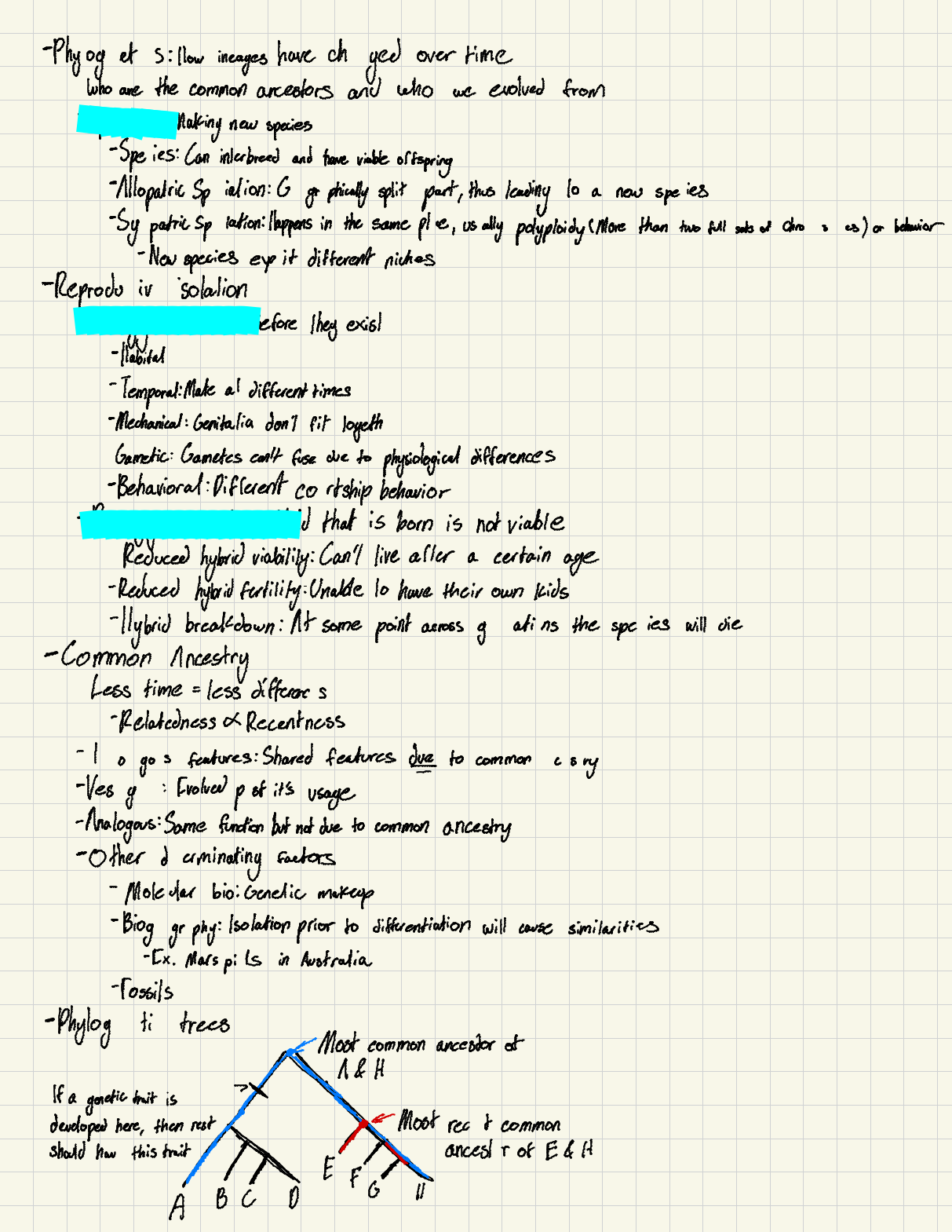
- Phyl
 og
ogenet
ics :How lineages have ch
anged over time
- who are the common ancestors and who we evolved from
- Spe
ciat ion: Making new species
- Spe | have viable o | |||
- | leading | |||
· | Sy | in the same pl | y | |
polyploidy !More than two full sets of chr | ||||
- New species e
xp
loit different niches
- New species e
- Reprodu
c ti
tive isola
isolation
· Prezygotic- |
| ||||
| |||||
-Temporal: Mate a | |||||
Mechanical : Genitalia don | |||||
| physiological | differences | |||
- Behavi | |||||
-Po-s | not viable | ||||
Reduced hybrid viabili | live a | a certain | age | ||
- Reduced | hybrid fertility: Unable | ||||
- | breakdown : | point across | g | the spe | |
- Common |
| ||||
| |||||
- | |||||
- Relatedness & Recentness
- 
Homol
ogous features : Shared features & to common ances
try
- Ves

t ig
ig
ial :
: Evolved past it'susage
- Analogous: Same function but not due to common ancestry
- Other d
et erminating factors
Mole | ||
Biog | ||
| Mar | |
| ||
- Phylog | trees | |
| ria | |
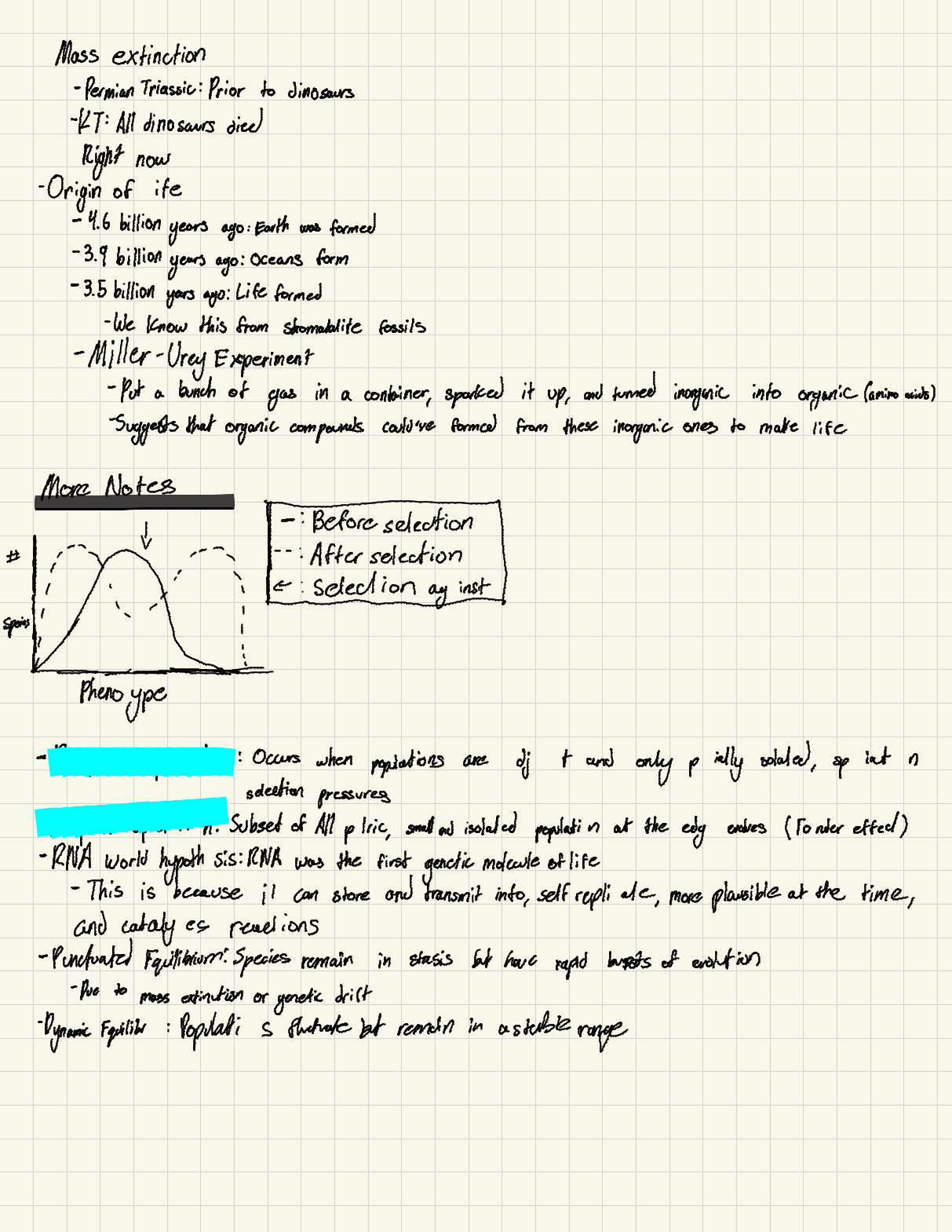
 Mass extinction
- Permian Triassic : Prior to dinosaurs
- KT: All dinosaurs died
 Right now
Origin of  life
life
-4 6 billion | years | ago | : Earthwas | formed | |
3 9 billion years ago : Oceans form
- 3 5 billion years ago : Life formed
We know this | from | stromatalite | fossils | ||||||||
- Miller-UreyExperiment | sparked | turned | |||||||||
-Put a bunch | of | gas in a | container, | it | up, and | inorganic | into | organic lamino arids) | |||
-Suggests that organic compounds | could've | formed | from | these | inorganic | ones to | make | life | |||
More Notes | |||||||||||
B
 :eSele
ctionagainst
Pheno type
type
- P
arapatric Spec iation : Occurs when populations are
 adjacent and only par tially
  isola
isolated, speciat
ion


 selection pressuresduetooccursdifferent
P | S | : Subset of | , | small and | isola | populat | at the | edg | evolves (F | |
· |
-RNA world hypoth | was | the | first | genetic molecule | of life | ||
-This is because i | can | store | and | transmit | into, self | moreplausible at the time , | |
and cataly | |||||||
- Punctuated | remain | in stasis but | have | rapid bursts | of evolution | ||
- Due to mass extinction or genetic dr
ift
Dynamic Equilibri
um : Populati
ons Shutte but remain in a stable range
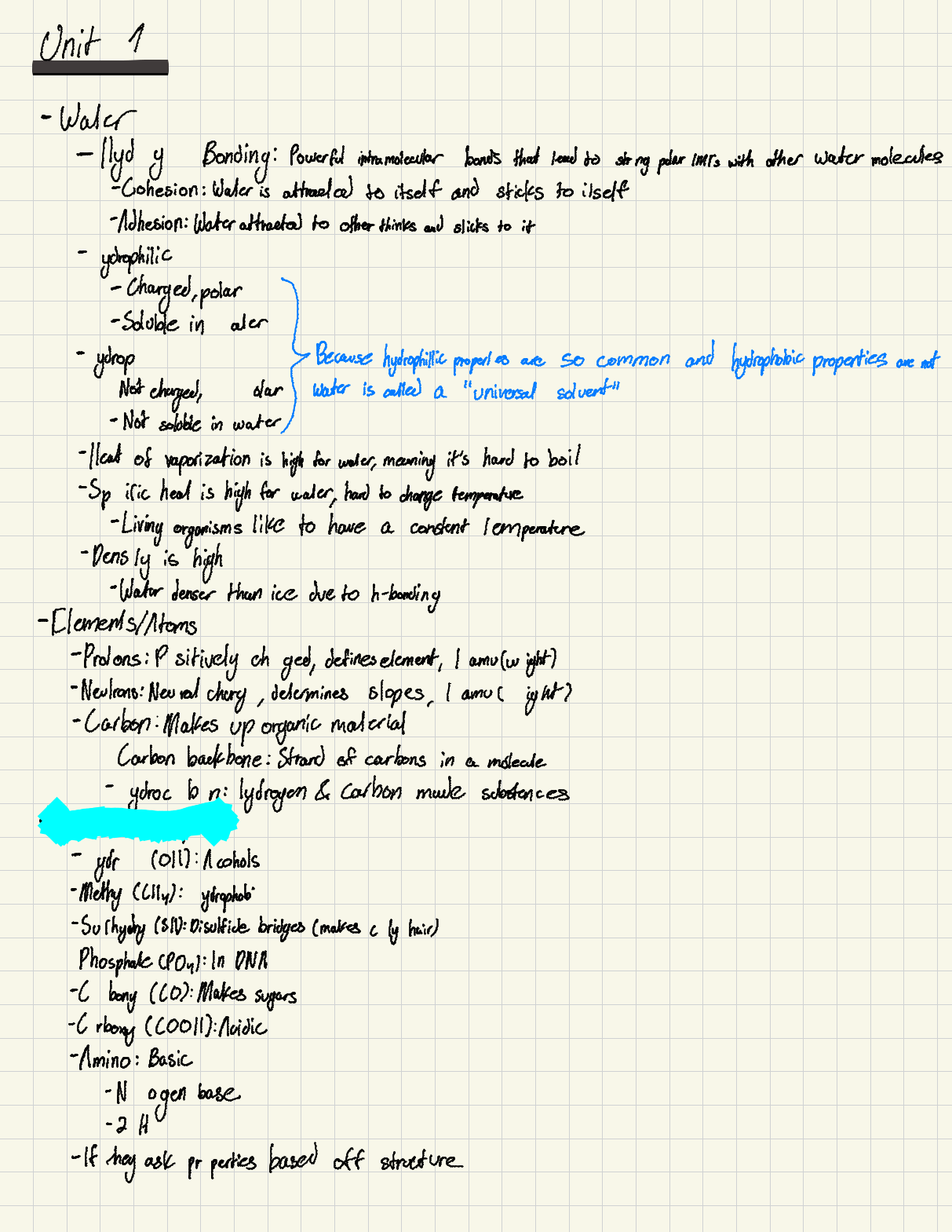 Unit 1
- W
ater
- | Powerful | intramolecular | bonis | that | lead | to str | |
- Cohesion :Wa | attrac | to itself | and | sticks | to | i | |
· | s | to | if | ||||

H ydrophilic
hard


p artewarBecause hydrophilic prope
rt ies are so common and hydrophobic properties are not


 a water is called a "universal solvent
- Not soluble
- | is high for wa | meaning | it's | hard to boil | |||||||
- | Sp | hea | high | for | wa | to | change | temperature | |||
, | |||||||||||
- Living | organisms | like | to have | a constant |
| ||||||
- Dens
ity is high
- Water denser than ice due to h-bonding
Elements/Atoms
- | Pr | : | P | ch | defines element, | I | amu | (w | |
, |
- Neu
trons: Neu
tral charge,determines is
istopes, I am (w eight
eight- Carbon : Makes up organic ma
terial
- Carbon : Makes up organic ma
 Carbon backbone : Strand of carbons in a molecule
- 
H ydroc
ydrocarbon: 
Hydrogen O carbon made substances
Funct ional Groups
- 
H ydr
ydr
ox / (O
/ (OH) : A lcohols
Methyl (C
(CHy) : 
H ydrophob
ic
Su
lthyryl (S
(SH): Disulfide bridges (makes curly hair
 Phospha
te (PO) : In DNA
- C
arbonyl (CO): Makes sugars
- C
- C
arboxyl ((00
((00H):AvidicAmino : Basic- Ni

tr
 ogen base
 - 2H
- Ni
- If they ask p
ask properties based off structure
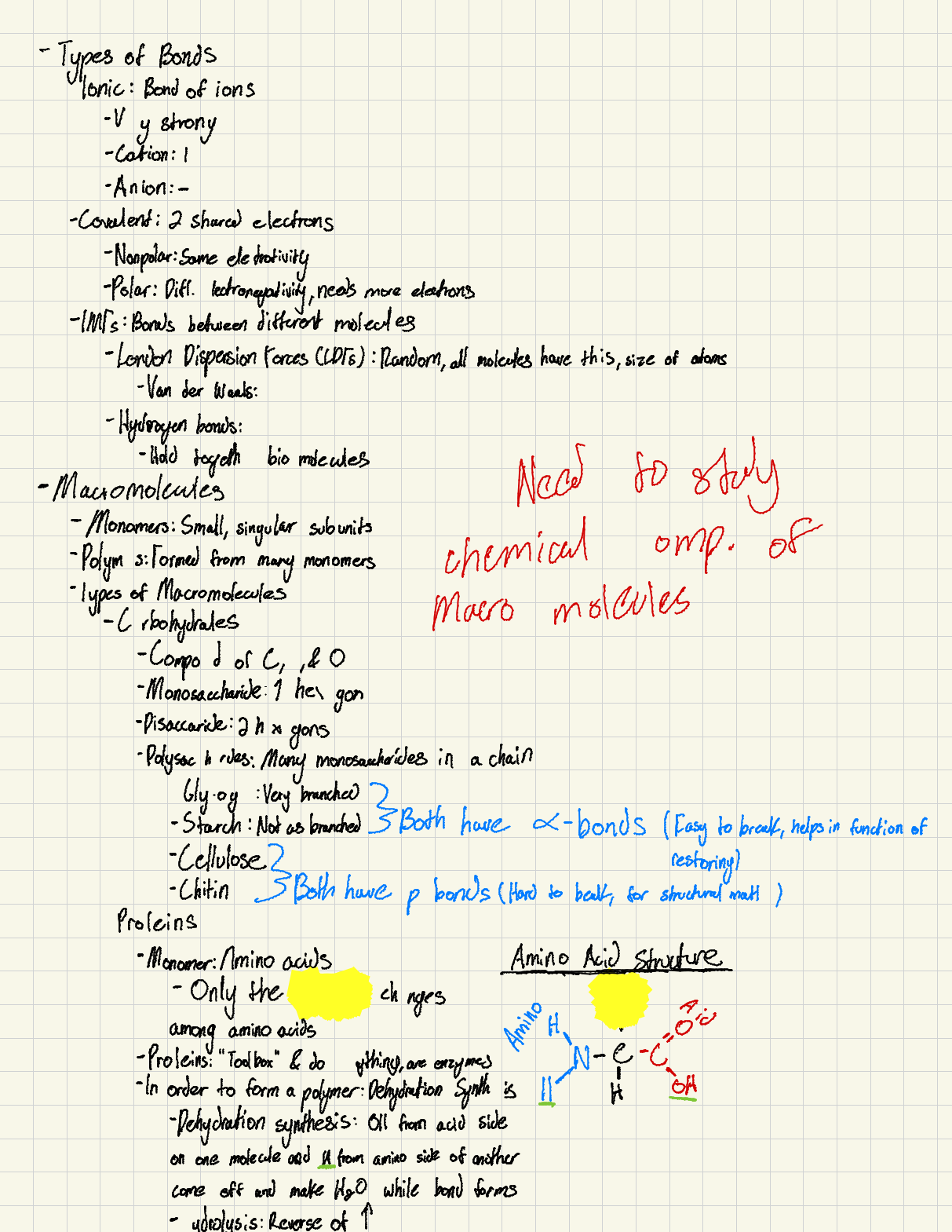
- Types of Bonds
I·onic : Bond of ions
V-ery strong
Cation- : t
- Anion :
Covalent- : I shared electrons
- Nonpolar: Someele | |||||||||
- Polar:Dif |
| needs more | electrons | ||||||
, | |||||||||
- IM | different moled es | ||||||||
- London | Dispersion |
| size of | atoms | |||||
- Van | der Waals: | ||||||||
-Hydrogen bonds : | stay | ||||||||
Hold | togeth | bio molecules | Need | to | |||||
· Macr | |||||||||
- Monomers :Small, singular subunits | chemical |
| |||||||
-Polym | many monomers | ||||||||
· Typesof Macromolecules | Macro moderles | ||||||||
- | C | ||||||||
- Compos
ed of C, 
H , 00
, 00
- Monosaccharide : 1 hexagon
Disaccaride : I hexagons
- Polysac
charises : Many monosaccharides in a chain
| bonds | /E | to break | in functiona | |||||||
-Cellulose | have | ar | to | , helps | |||||||
mate | |||||||||||
3Both | p | be, for | restoring) |
| |||||||
structural | |||||||||||
 Pro
Proteins
- Monomer: | ne | ||||||||||||||
-Only the | R-group |
| Amino# | R | |||||||||||
among | - | A | |||||||||||||
amino | al | * ig | |||||||||||||
- | Pro | & do | N | = | C | C | |||||||||
| # | ||||||||||||||
- Inorder to form a | polymer | : | Dehydration Synth | ||||||||||||
& | |||||||||||||||
Dehydration synthesis | - | side | |||||||||||||
: | O | ||||||||||||||
on one | molecule | and A from | amino side of another | ||||||||||||
- | |||||||||||||||
come | off and | make 100 | while bond | forms | |||||||||||

H ydrolysis: Reverse of
- Lipids |
| ||||||||||
hydroc | Sy | ||||||||||
Made of | |||||||||||
- | - | ||||||||||
- | Resul |
| |||||||||
Phospholipid: Phosphate | attached to - > | ↳ | |||||||||
-Phosphate new is hyd | tall is | ||||||||||
hyd | bi | ||||||||||
Forms | phospholipid | ||||||||||
- | |||||||||||
- S | |||||||||||
- | |||||||||||
Satura | No double bond, allows for | unlimi | hydr | ||||||||
· | Unsatur | reduces amt. | Of | hydrog | that can bond | ||||||
, | |||||||||||
- Transfat: Take plant/fish | unsaturated fa | and | saturate them | ||||||||
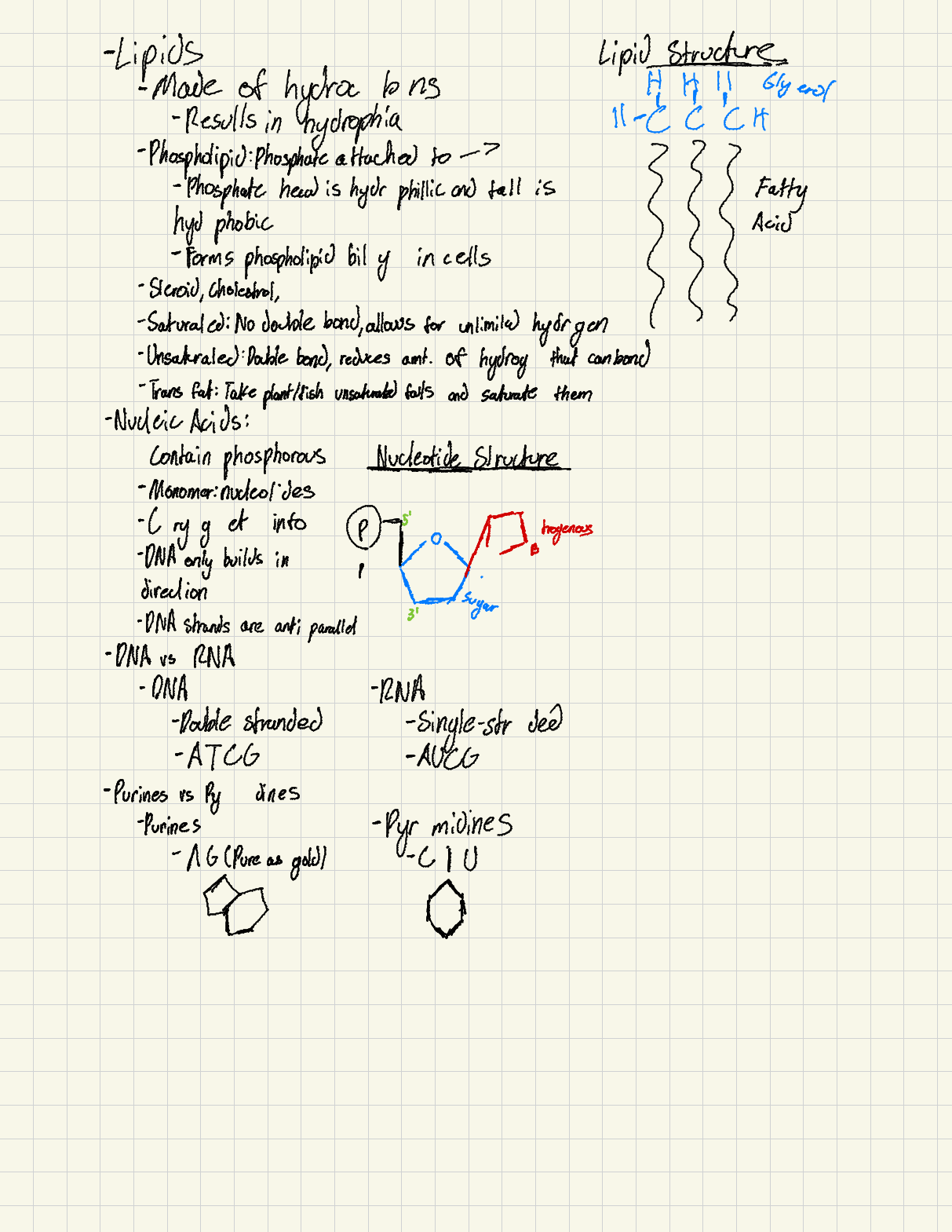 Nucleic Acids :
C-ontain phosphorous Sure
- Monomer: nucle
ot ides
ides - L
arry genet
icinto31p to se
to se - DNA only builds in


 direc
direction
- UNAstrands are anti | 31 |
- DNA us RNA
DNA | - RNA | ||
- | single-str | ||
- Doubl | - | ||
ATCG | - AUCG | ||
- Purines us Py

ram idines
- | Pyra | |
- Purines | · | as |
* | · |
Un
it 2 Ap Bio
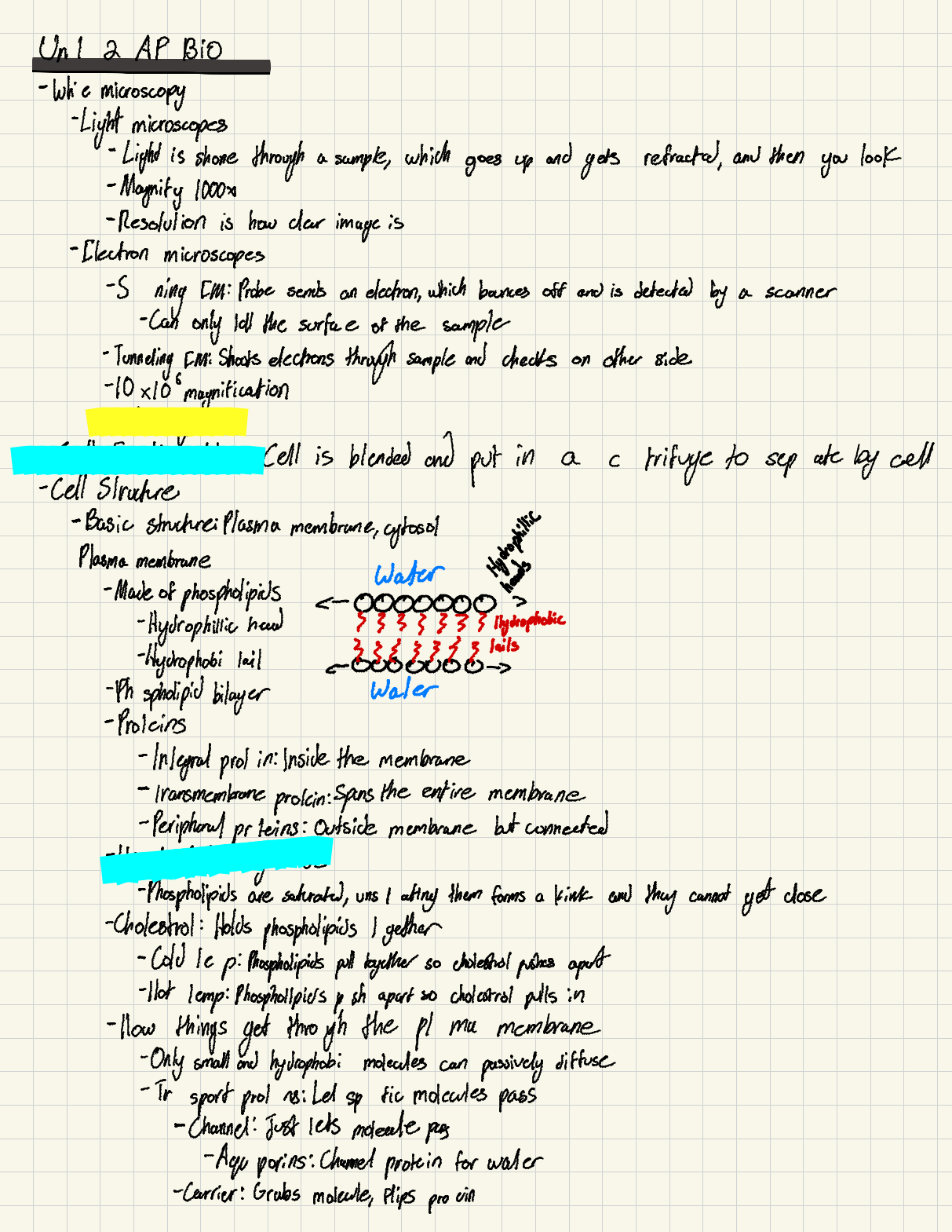
- Whi

te microscopy
Light- | microscopes | which | retracted and then | ||||||||||
Light | is | shone | through | a | goes up | and | yets | you | look | ||||
sample, | , | ||||||||||||
- Magnify | 1000X | how dar image is | |||||||||||
-Resolu | |||||||||||||
Electron microscopes
- S |
| Probe | sends | an | electron, which | bounces off | and is detected by | a scanner | |||||||||||||||||||
Can | only |
| the surfa | of the | sample | ||||||||||||||||||||||
- 10x10°magnification | through | sample and checks | |||||||||||||||||||||||||
- | Tunneling | Shoots | electrons | on | other | side | |||||||||||||||||||||
- Cell | kills | organism | blended and | cell | |||||||||||||||||||||||
| Cell is | put | in | a | c | to | sep | by | |||||||||||||||||||
- CellS | |||||||||||||||||||||||||||
Water | Ayuroville | ||||||||||||||||||||||||||
- | |||||||||||||||||||||||||||
- Basicstructure: Plasma | membrane, cytosol | ||||||||||||||||||||||||||
| |||||||||||||||||||||||||||
Made of phospholipids | <- 0000000 - | ||||||||||||||||||||||||||
Hydrophilic need | 3333333 | ||||||||||||||||||||||||||
- Hydrophob | - b | ||||||||||||||||||||||||||
Ph | W | ||||||||||||||||||||||||||
-Pr | pro | Inside | |||||||||||||||||||||||||
- | In | : | the membrane | ||||||||||||||||||||||||
-Transmembrane pro | membrane | ||||||||||||||||||||||||||
- Periptural pr | but connected | ||||||||||||||||||||||||||
- Unsaturated | fatty acids | yet close | |||||||||||||||||||||||||
- Phospholipidsare saluated, uns | them forms a | kink | and | they cannot | |||||||||||||||||||||||
- Cholestrol: | Holds | phospholipids |
| ||||||||||||||||||||||||
-Cold | pull | together so | cholestral pushes | apart | |||||||||||||||||||||||
- | p | cholestral pulls | in | ||||||||||||||||||||||||
- | things | yet | thro | membrane | |||||||||||||||||||||||
Only | small and | hydrophob | molecules can | passively | diffuse | ||||||||||||||||||||||
-Transport protei ns: Le
t spec ific molecules pass
- Channel : Just lets molecule pass
- Aqu
aporins: Channel protein for water
- Aqu
- Currier : Grubs molewle, flips pro

tein
 Dif
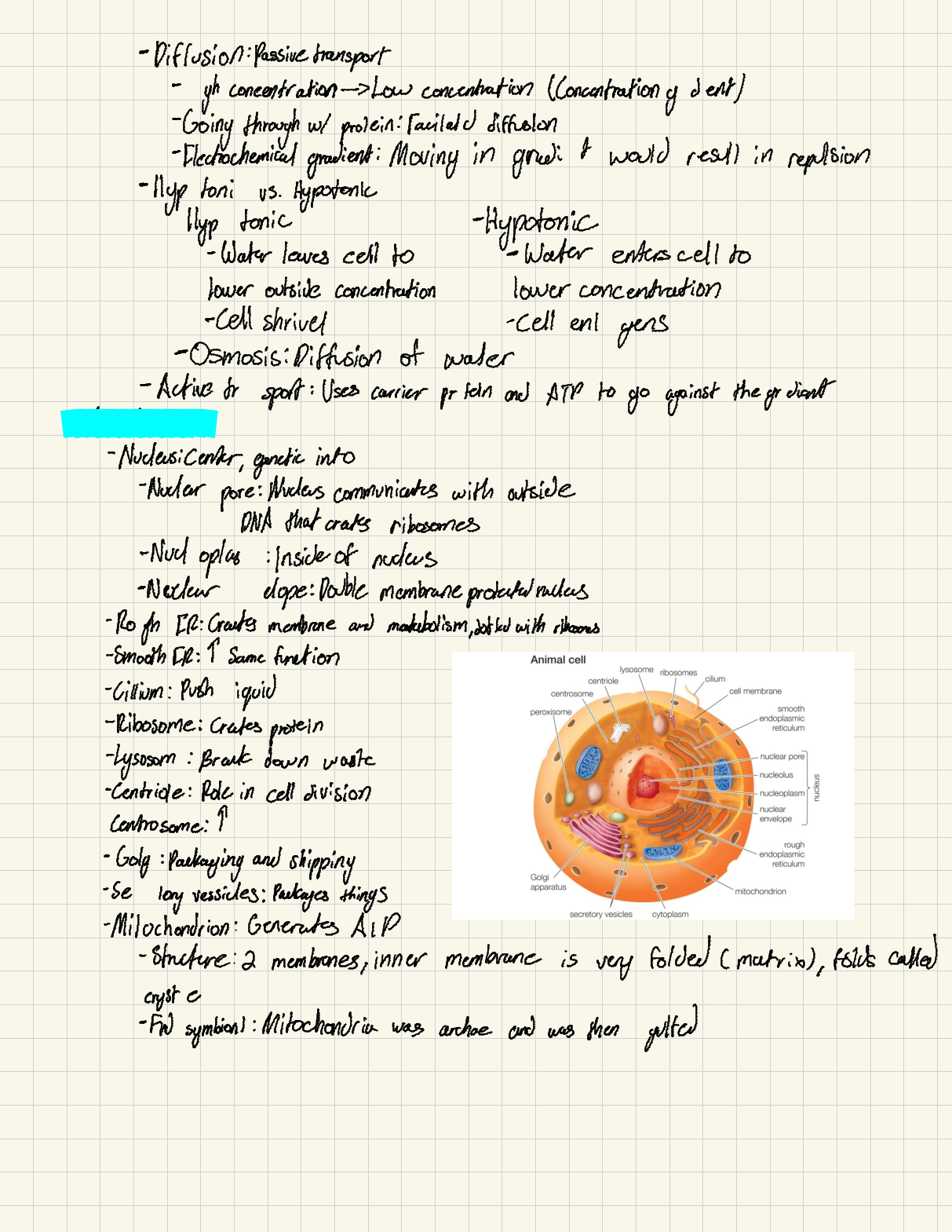
Diffusion : Passive transport
H igh
igh concentration -> How concentration (Concentration g
radient
- Going through wh pro | would resu | ||||
| grad | ||||
· | us . Hypotonk | · Hypotonic | |||
- | |||||
-Water leves cell to | - Water | enters cell to | |||
lower | outside concentration | lower concentration | |||
- Cell | shrivel | - cellen | |||
- Osmosis : Diffusionof | wa | ||||
-Active tr | pr | and PTP | to go against the g | ||
- AnimalCell | |||||
NudeusiCenter, genetic into
- Nuclar pore : Nucleus communicates with outside


 DNA that crates ribosomesNucleolus:
- Nucl
eoplasm: Inside ofaucers
- Nuclear | membrane protectomies |
-Ro | metabolism, cot |
- Smooth
ER : ↑ Same function
- Smooth
- Lillium : Push
 liquid
 - Ribosome : Creates protein
- lysosome: Break down waste
Centride : Role in cell division
 Centrosome: ↑
Golgi : Packaging and shipping
Secr
etory vessicles : Packages things
- Mi | very folded (mutris), folds called | |||
-Structure : 2 membranes, inner | membrane | is | ||
crys | then | |||
- | archae and | was |
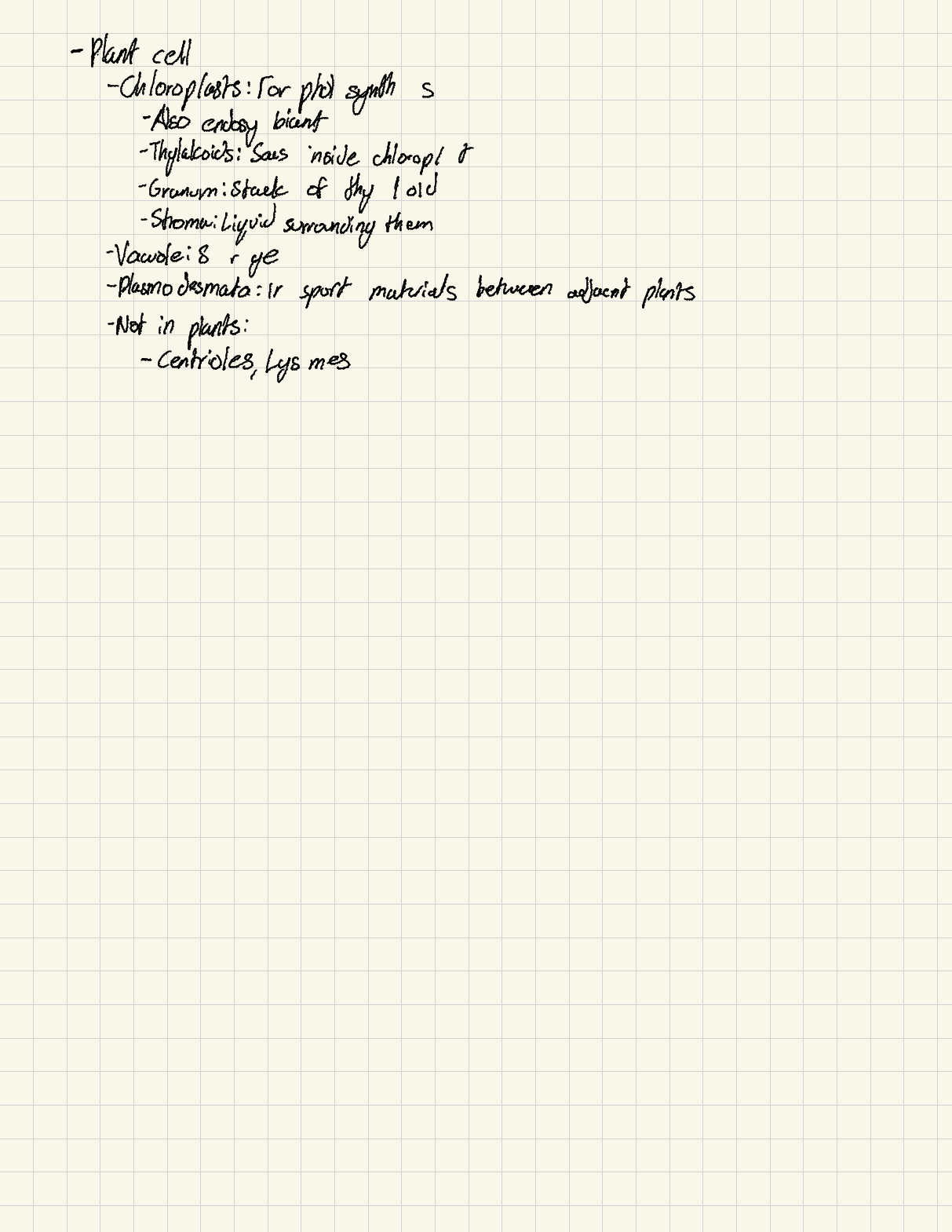 plant cell
- Chloroplasts :
For photosynthes is
is- Also endos
ymbiant
- Also endos
- Thylakoids:Says
 inside chlorop
last
- Chloroplasts :
- Granum : stack of thy
lakoid
- Stroma: Liquid surrounding them
- Vaudei S

torage
- Plasmo desmata : Transport materials between adjuent plants
- Not in plants:
- Centrioles, Lys
omes
- Centrioles, Lys
Un | & |
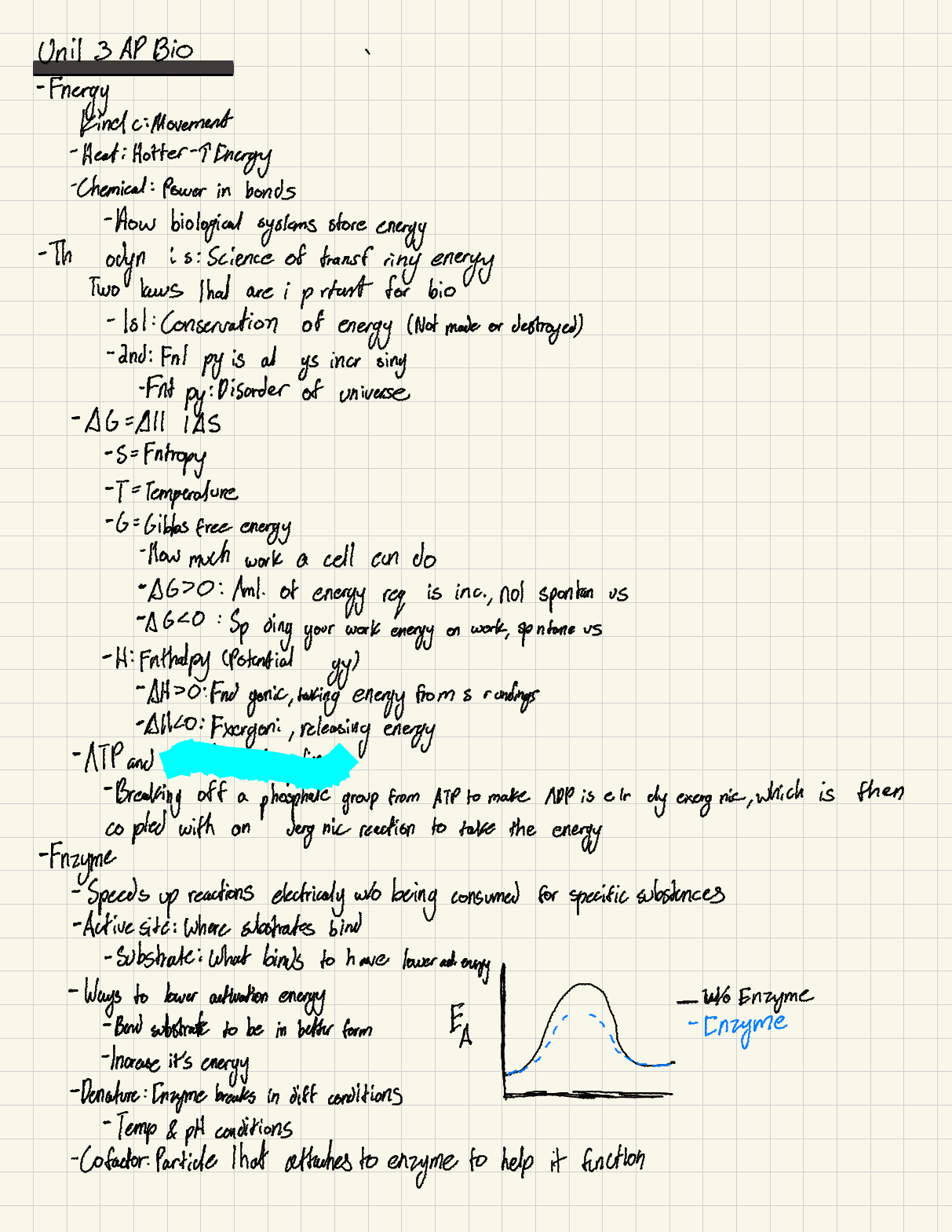
Energy- Kine
ti c: Movement
- Kine
- Heat : Hotter
=Energy
- Chemical : | Power | in | bonds | |||||||||||||||||||||
- How | biological | sys | store | energy | ||||||||||||||||||||
· The- | of | trans | energy | |||||||||||||||||||||
Two | les | bio | ||||||||||||||||||||||
- | 1s | Conservation | of | energy (Not made or destroyed | ||||||||||||||||||||
and : |
| al | incr | |||||||||||||||||||||
| : | Disorder | of | universe | ||||||||||||||||||||
- | AG | |||||||||||||||||||||||
= A | ||||||||||||||||||||||||
- S = | ||||||||||||||||||||||||
- T =Temper | ||||||||||||||||||||||||
- 6 = Gibbsfree | energy | |||||||||||||||||||||||
H | cell | can do | ||||||||||||||||||||||
work | a | |||||||||||||||||||||||
· | A60 : | is inc , no | ||||||||||||||||||||||
- | ||||||||||||||||||||||||
A640 : | Sp | work | on work | |||||||||||||||||||||
- H : | your | energy | , sp | |||||||||||||||||||||
- | (potential | |||||||||||||||||||||||
AH-0: | taking energy from s | |||||||||||||||||||||||
- A |
| releasing | energy | |||||||||||||||||||||
· |
|
| ||||||||||||||||||||||
Reac | ||||||||||||||||||||||||
- Breaking | off a | phospha | group | from | ATP to make |
| ||||||||||||||||||
co | an |
| to | take | the | energy | ||||||||||||||||||
- | being | |||||||||||||||||||||||
-Speeds up reactions | electrically who | consumed | for specific substances | |||||||||||||||||||||
- Active site : | Where substrates | bind | ||||||||||||||||||||||
-substrate: | What bings | to | have lower ad | energy | ||||||||||||||||||||
-Ways | to | lower | actuation | |||||||||||||||||||||
energy | ||||||||||||||||||||||||
- Band | substrate | to | be | in | better | form | -- | |||||||||||||||||
- Increaseit's | energy | Eye | ||||||||||||||||||||||
- | Denature | : | ||||||||||||||||||||||
| in diff | conditions | - | |||||||||||||||||||||
-Temp & pl conditions | ||||||||||||||||||||||||
Cofactor: | Particle |
| attaches to enzyme to | help | it function | |||||||||||||||||||
- | regulation | |||||||||||||
- C | inhibition : Moleule | binds to | actie side | |||||||||||
- Non | the | body | and closes site/causes conformation | change | ||||||||||
- | Allosteric | : | "I does | more things | ||||||||||
- |
| A |
| A | to | make B when there's too | much B it | |||||||
, | ||||||||||||||
will then
then  inhibit
 Enzyme A
- Respiration
· | Using oxygen | to breakdown | to | make ATP | ||||
ghro | ||||||||
- | ||||||||
GH0j | ||||||||
| Chlor | |||||||
i stil | ||||||||
↓ Membrane | ||||||||
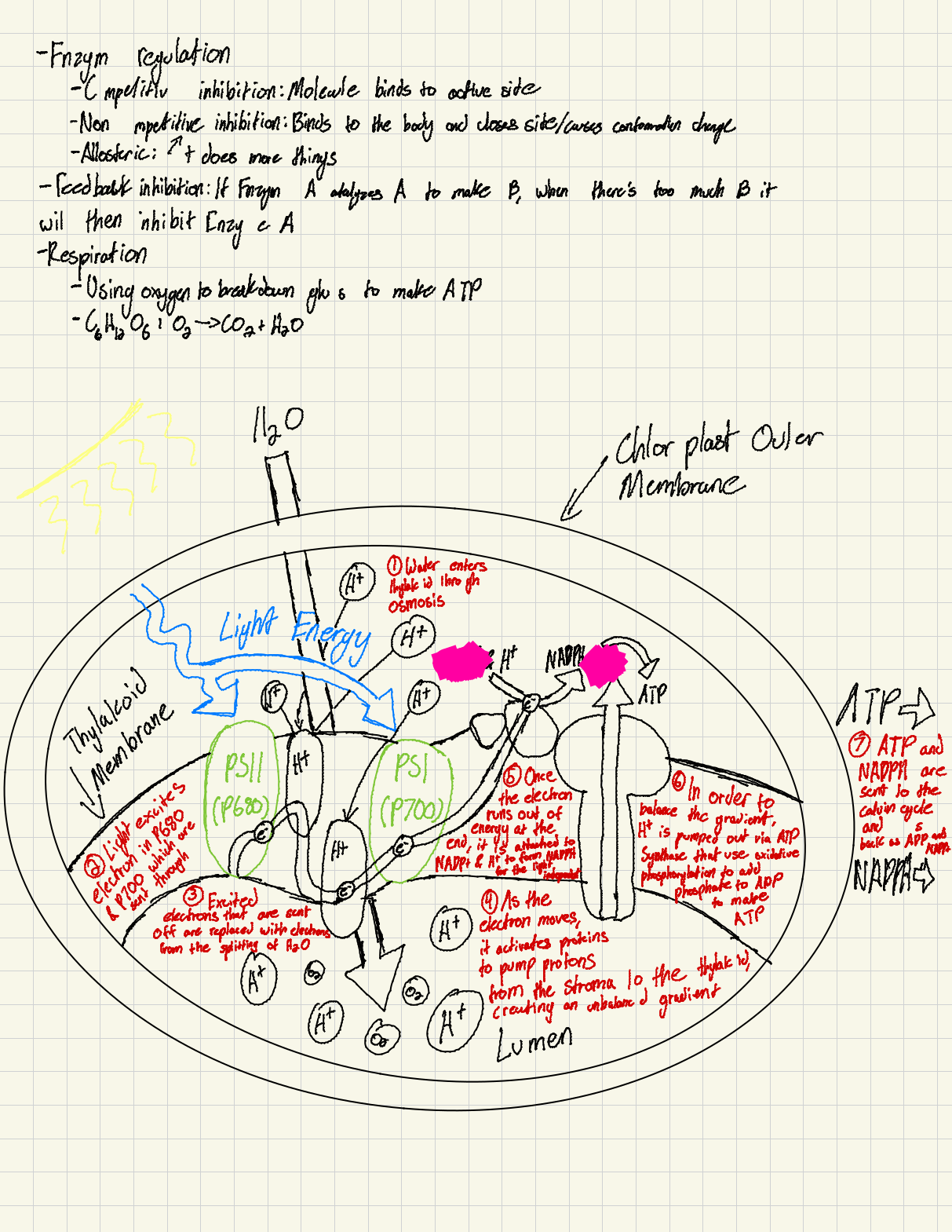
① Water enters | ||||||||
| ||||||||
Y osmosis | ||||||||
| ||||||||
⑦ ATP and | ||||||||
NADP | ||||||||
sent | ||||||||
| ||||||||
Calv | ||||||||
the | NAP | |||||||
|
| - | ||||||
of H20 | it activates proteins | |||||||
# | X | |||||||
to pump protons |
| |||||||
the stroma | ||||||||
·Lumenanunbalanc | ||||||||
from | ||||||||
| Cellular | |||
| ||||
| ||||
+ | 2 NADA | |||
2 pyruvate> | ||||
* | ac | |||
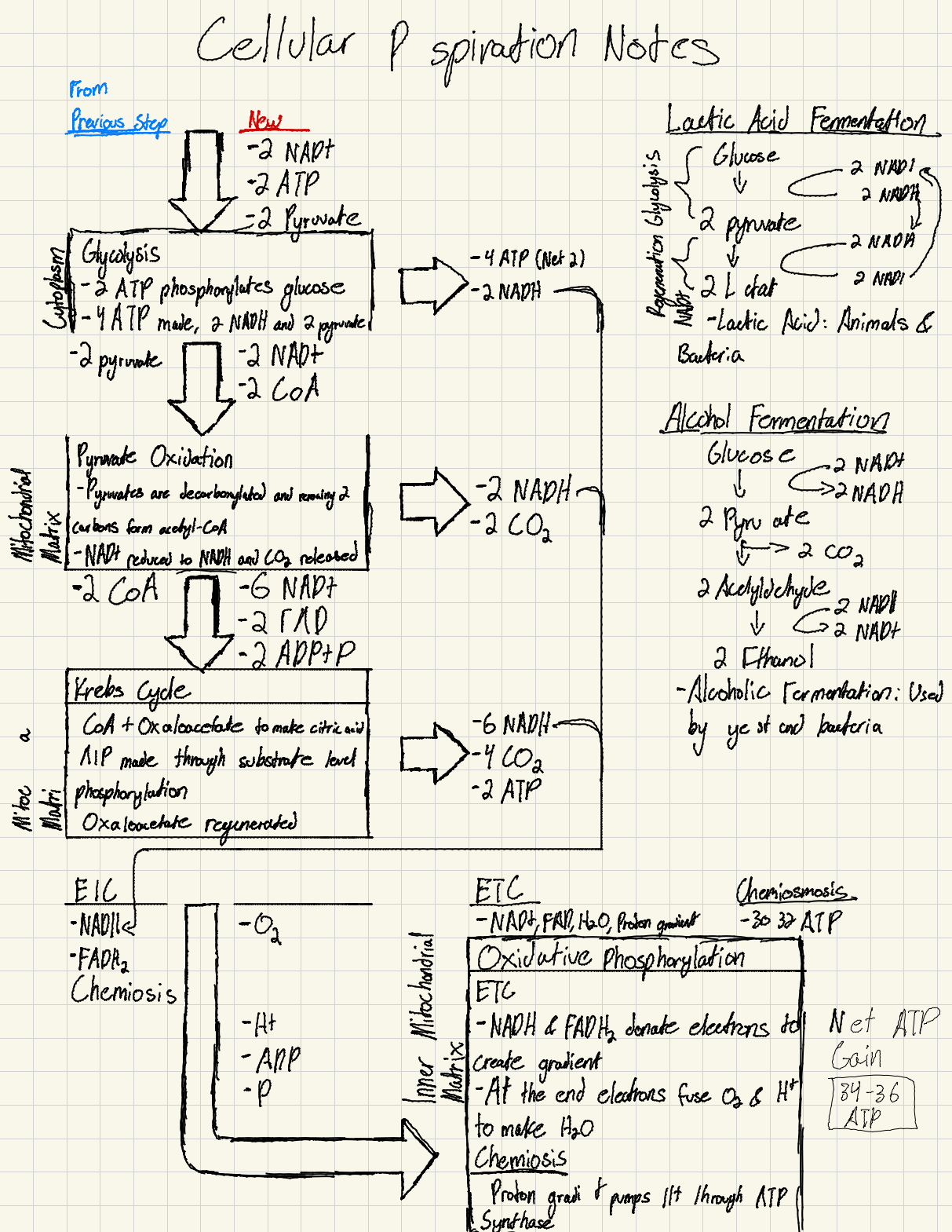
⑤ - Lactic | Acid : Animals & | |||
↓ | Bacteria | |||
| ||||
| ||||
2 NAD | ||||
↓ | GNADH | |||
2 Pyr | ||||
#2 CO2 | ||||
2 Ace | ||||
-2 | ||||
-2 | ↓ | G | ||
· | Alcoholic | |||
by ye | and bacteria | |||
2 ATP | ||||
- | a | |||
Chemiosmosis | ||||
- | ||||
- 30 | ||||
> | a | |||
- |
| |||
I | ||||
| ||||
- | ||||
 Unit 8
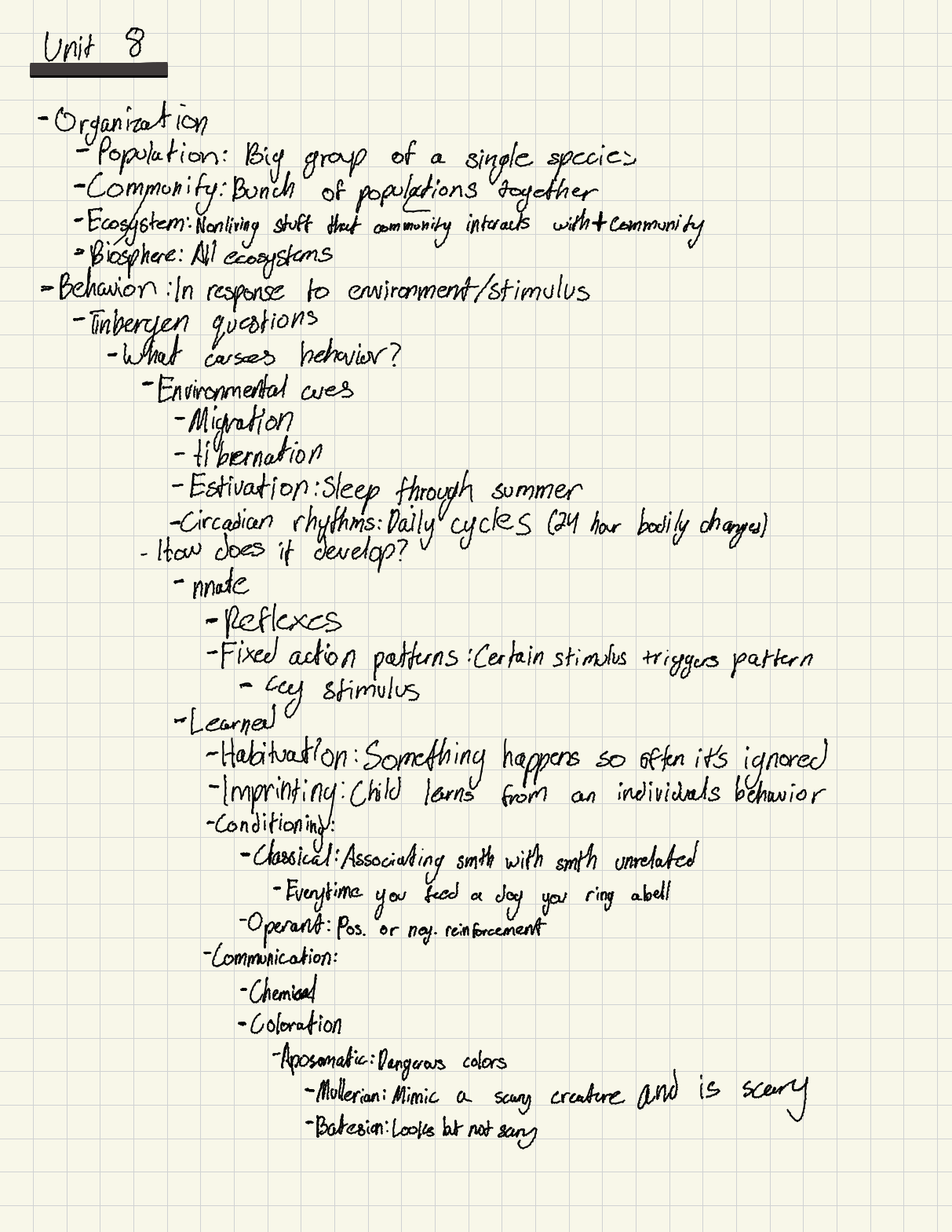
-Organization | ||||||||||
Population : | Big | group | of a | single | species | |||||
· | ||||||||||
- | ||||||||||
Community: Bunch | of populations together | |||||||||
· | Ecosystem: | Nonliving stuff that community | interacts | withCommunity | ||||||
- | Biosphere: All ecosystems | |||||||||
- | Behavior : In | response | to environment/stimulus | |||||||
- Tinbergen- | questions | |||||||||
What | cases | hehwier? | ||||||||
- Environmental wes
- Migration
 Hibernation
-Estivation : sleep through | summer | changes | |||
- Circadian | rhythms: Daily | cycles (24 hour bodily | |||
How does | it develop? | ||||
 Innate
- Reflexes
- Fixed action patterns : Certain stimulus triggers pattern
 key stimulus
- Learned
- Habituation : Somethinghappens so | often it's | ignored |
· |
-Imprinting: | : | Child larns | from | an | individuals behavior | |
Conditioning· | ||||||
Classical: Associating smth | with smth | unrelated | ||||
- Everytime you feed a day you ring a bell
Operant: Pos or ney reinforcement
- Communication :
- Chemical
Coloration-
- Aposomatic : Dangerous | colors | creature and | is | scary | ||
· Babesion: Looksbut not | ||||||
- Mullerian : Mimic | a | scary | ||||
sary | ||||||
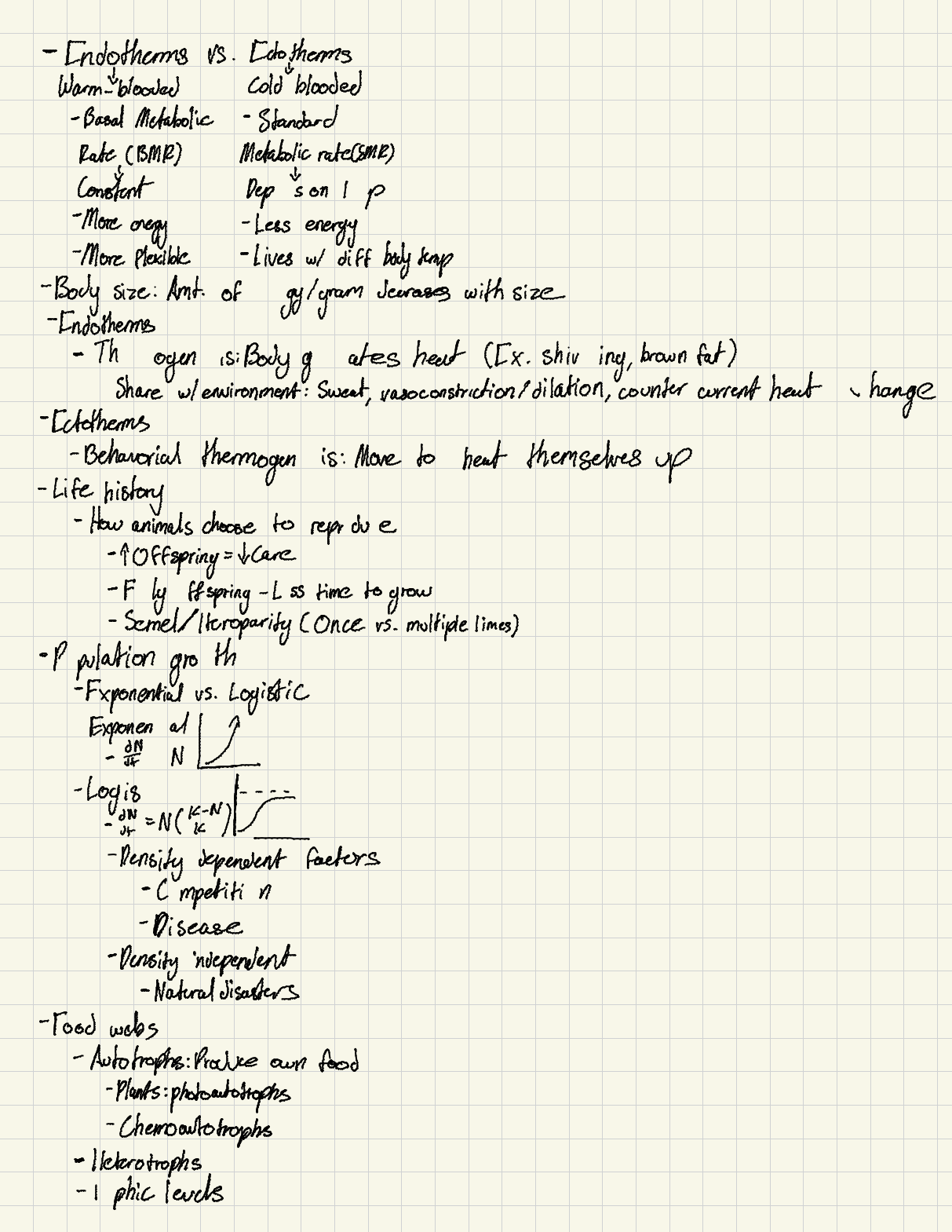
Endotherms vs.Ectothers
↓ | ↓ | ||||
cold | |||||
Warm-blooded | |||||
-Basal | Metabolic | -Standard | |||
Rate (BMR) | Metabolic rate(SMR) | ||||
↓ | Dep | ||||
Constant | |||||
- More | enagy | -Less | energy | body ump | |
-More | flexible | -Lives | wh diff | ||
- Body size : Amt. of
energy/gram decrases with size- Endothers
-Th | fat) |
| |||
- | Sweat vaso cons | , counter | current heat | ||
Share w/environment : | |||||
, | |||||
Behavorial | thermogen | to heat themselves up | ||
Life | history | |||
-How animals choose to | repr | |||
-↑ Offspring = ↓Care | ||||
- | time to grow | |||
SemelHeroparity (Once vs | multiple | |||
- P
opulationExponential us . Logisticgrowth
E

 xp
xp

Pensity dependent factors
- C
ompetition
- C
- Disease
- Density
 independent
- Natural disasters
Food webs- Aut
otrophs: Produce own food
- Aut
plants : photoautotrophs
Chemoautotrophs
HeterotrophsTrophic levels
- | ||||||
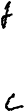
Communities | ||||||
Int | ||||||
C | ||||||
Occurs when | niches ov | : 2 species cannot | have same niche, better one wins | |||
·Competitive | exclusion | principle | ||||
-Predation ( | . | |||||
/-) | ||||||
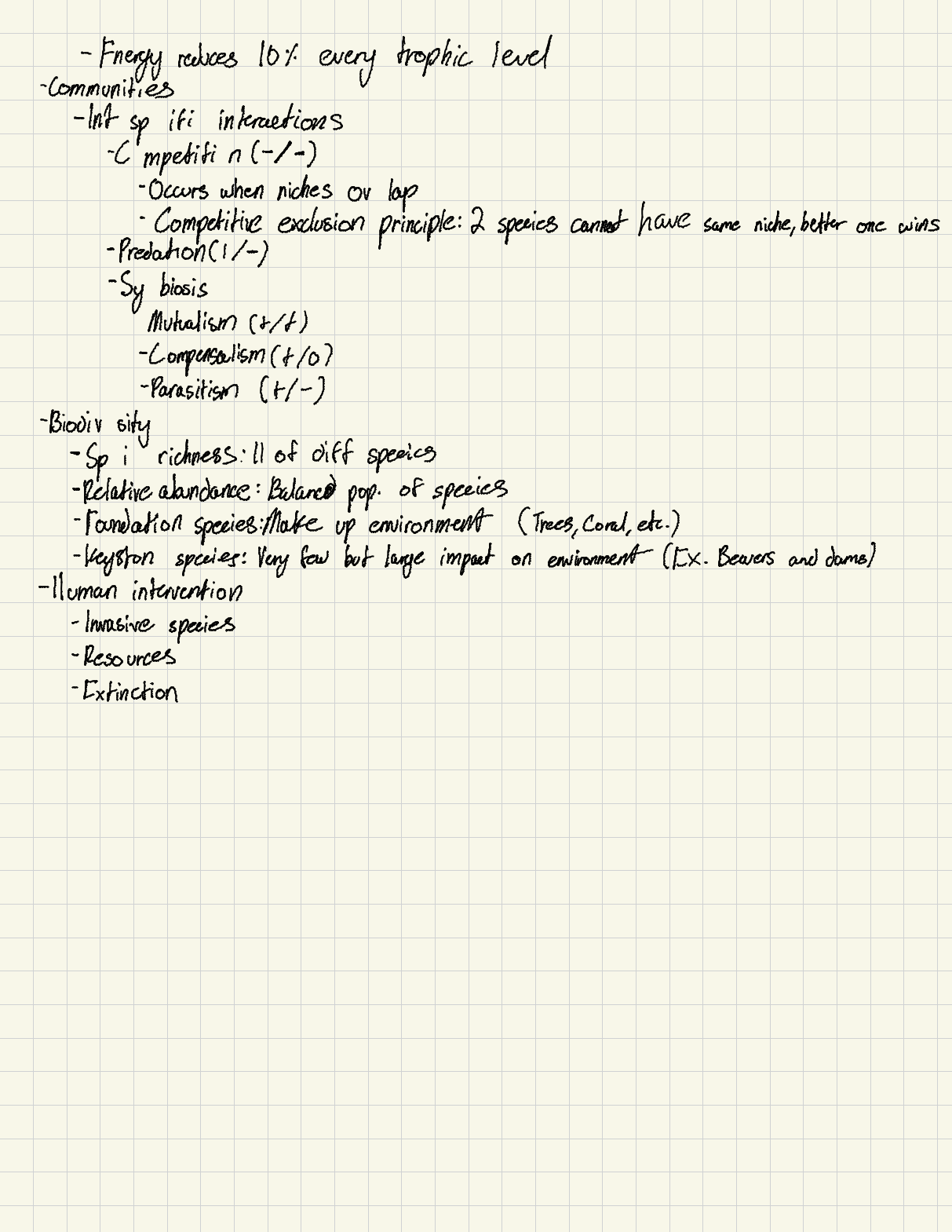 Sy
Symbiosis
 Mutualism ( +/6)
- Compensalism (+ /0)
Parasitism ( +-)
- Biodiv | richness |
| of | diff species | |||||||||
- | Sp | : | |||||||||||
- Relativeabundance : | Balaned | pop, of species | (Trees, | , | ) | ||||||||
| environment | etc. | |||||||||||
: | Coral | ||||||||||||
keyston | but large impact | on environment ( | |||||||||||
| |||||||||||||
- Invasive species Resources
Extinction
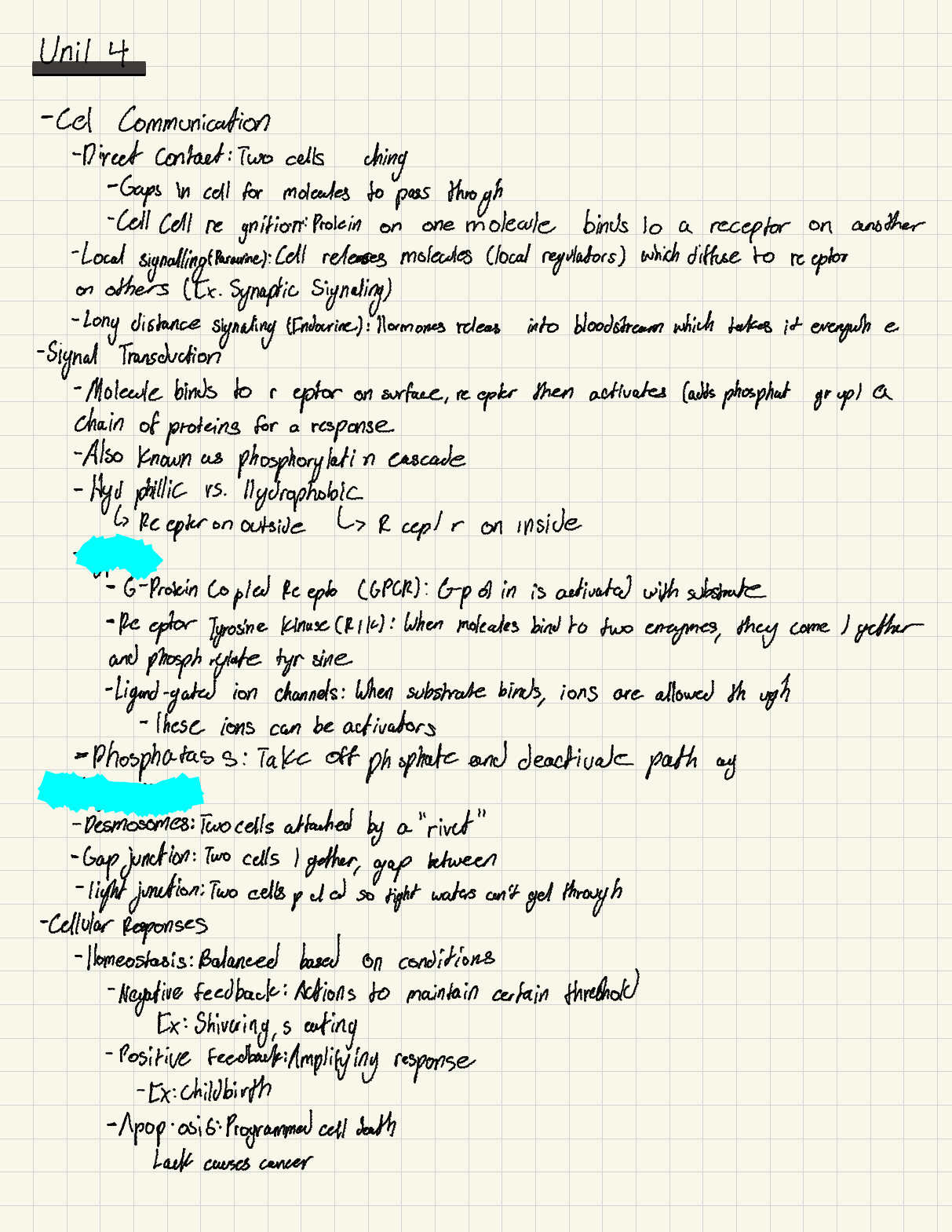 Un
Unit 4
- Cell
 Communication
 - Direct Contact : Two cells
tou ching
ching
- | Gaps in cell for | moleules | to pass | thro | ||||||
- | ||||||||||
Cell | on | one molecule | binds | on another | ||||||
- LocalSignalling(Paraine): | Cell | releases | molecules (local regulators) which diffuse to | re | ||||||
on | others (EX Synaptic | Signaling | ||||||||
- Long | distance signaling | ( | releas into | bloodstream which takes it everyw | ||||||
Signal | Transduction | |||||||||
- Molecule binds to
receptor on surface, receptor then activates (abis phosphategroup a
chain | of proteins for a | response |
- Also | known as phosphorylati | |
-Hyd | ||
↳ Re | ↳ R | |
- Types
-G-Protein Co | Re | is | activated | with substrate | ||||
- Re | Kinuse (R | When molecules | bind to | two enzymes, | they come | |||
and phosp | tyr | th | ||||||
- Ligand-gatedion | channels : When | substrate binds, | ions | are | allowed | |||
- These ions can be activators
- Phosphatas
es : Take off phosphate and deactivate pathway
C-ell Junctions
Desmosomes : | Two cells | attached | by a "rivet" |
-Gapjunction: | Two cells |
| gap between |
- |
Tightjunction: Two cells p | can't ge | ||||
- CellularResponses | based | ||||
- | on | conditions | |||
NegativeFeedback : | Actions | to | maintain | certain threshold | |
- Ex : Shivering, s
weating
Positive Feedback: Amplifying response
Ex:Childbirth
Apop
tosis: Programmed cell death
 Lack cusses cancer
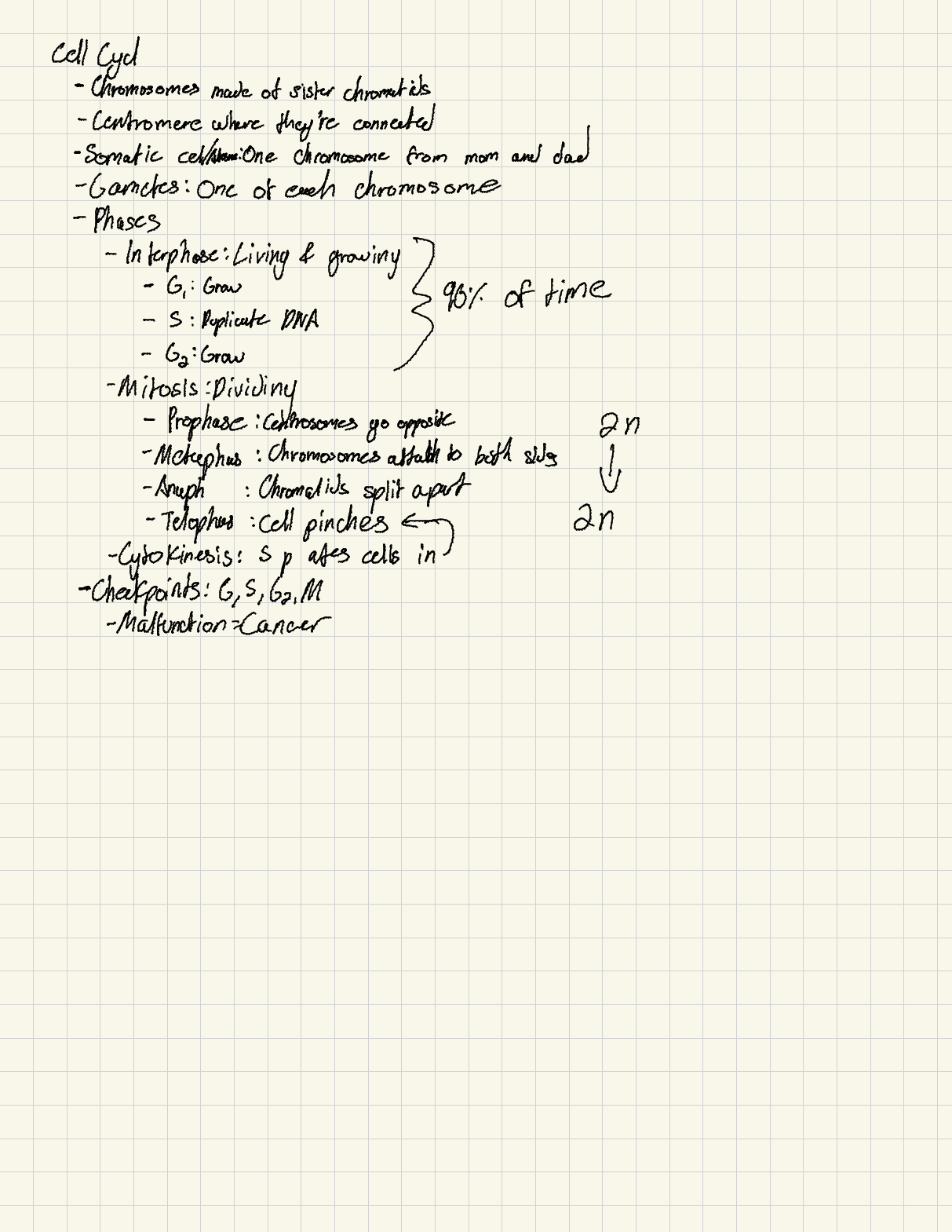 C
Cle
- Chromosomes made of sister chromatits
Centromere where they're connected
- Somatic cellati:One chromosome from mom and dad
- Gameles : One of each chromosome
- phases
Interphose : Livinga growing | ||||||||||
: | Grow | 3 | time | |||||||
G : | % of | |||||||||
- | 90 | |||||||||
Poplicate DNA | ||||||||||
-Gy : Grow | ||||||||||
- | Dividing | |||||||||
Mitosls : | ||||||||||
Prophase : Centrosomesgo opposite | 2n | |||||||||
- Motephus | side | ↓ | ||||||||
- Anup | split apart | |||||||||
Telopha | : cell pinches | 24 | ||||||||
- | ||||||||||
- Cytokinesis : S
eparates
- Cytokinesis : S
- Checkpoints: G, 5 , 62. M
- Malfunction :Cancer
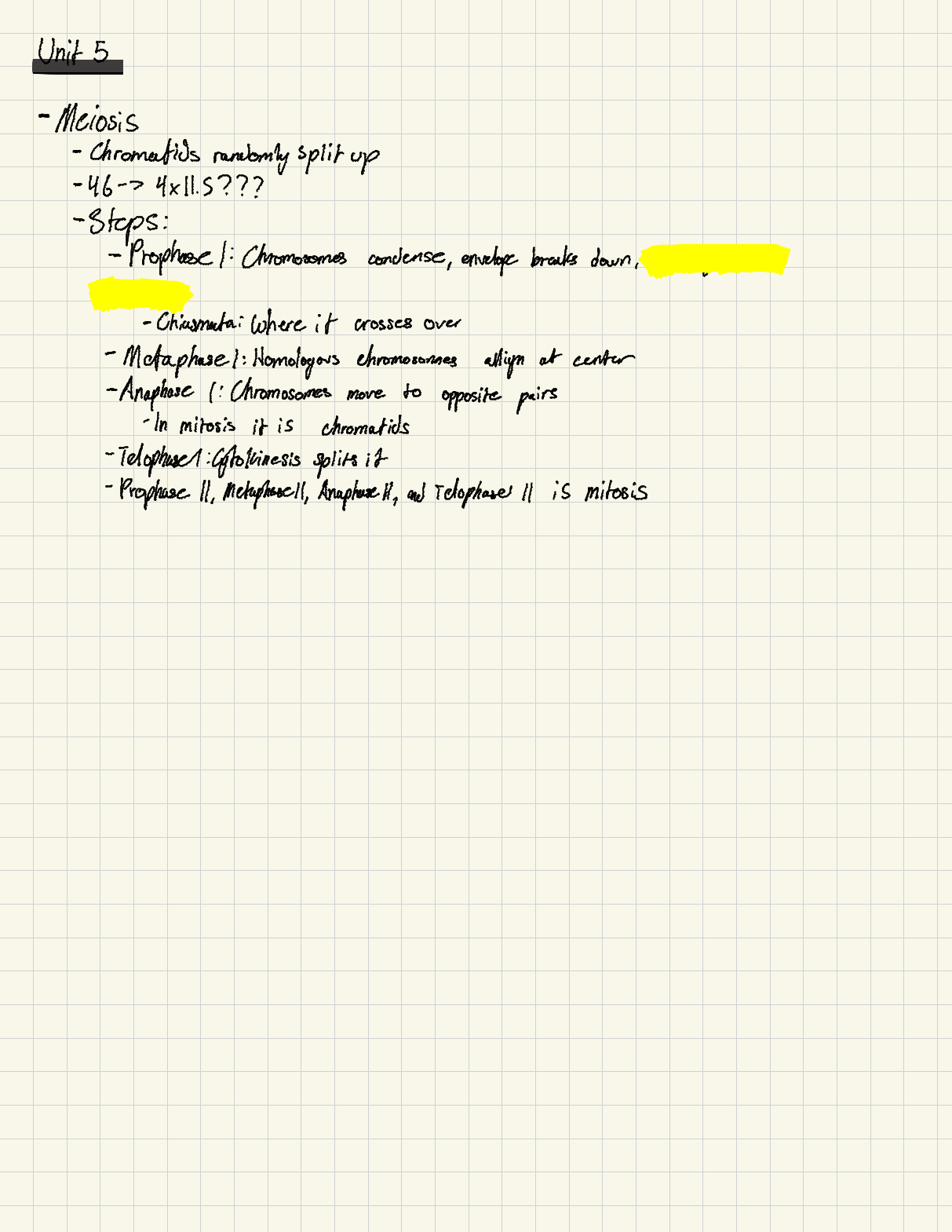 Unit 5
- Meiosis
- chromatics randomly split up
- 46-> 4xII S ???
Steps- :
- Prophase / : Chromosomes condense, envelope breaks down , crossingover
occurs
- Chiusmata : Where if crosses over
-Metaphase : Komologous | chromosomes allign | at center | |||||||||
- Anaphase1 : Chromosomes | more | to | opposite pairs | ||||||||
- In mirosis it is | chromatids | ||||||||||
Telophase : Cytokinesis splits if | , | Teophase | |||||||||
Prophase | 11 | . Metaphase | , Anaphase | 11 | is mitosis | ||||||
/1 | and | 11 | |||||||||
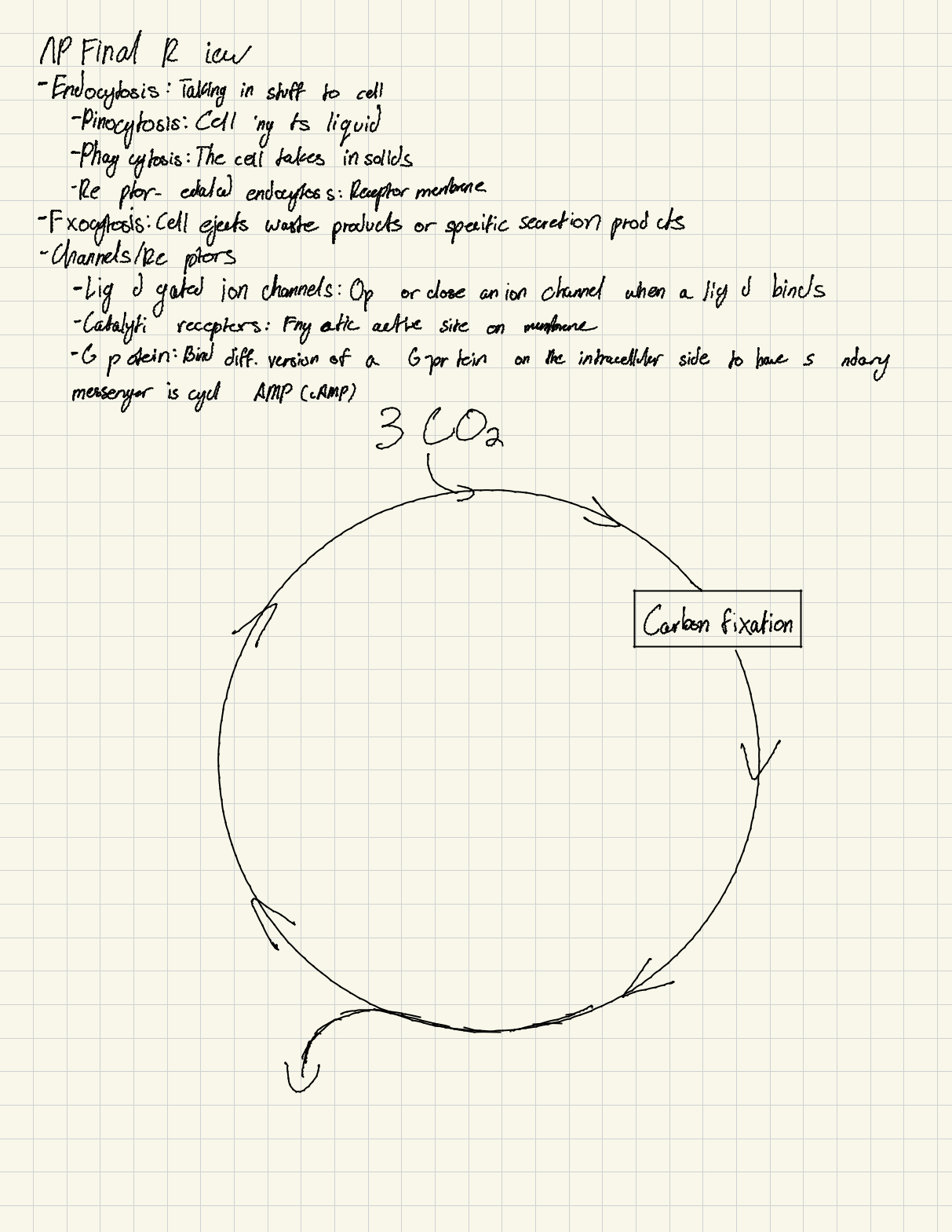 final
final
- Pinocytosis: Cell
 ing
inge sts liquid
Phagocytosis : The cell takes in solids-
- Re
ceptor-mediated endocytosis : Receptor membane
- Exocytosis: Cell ejects waste products or specific secretion products - Channels/Receptors
- Lig | ion | channels : Op | or close | an ion | channel when | a lig | binds | ||
- Catalyt | active site | on | numbine | ||||||
- G | diff. | version of | a | G-pr | on | the intraceler | side to | have s | |
messenger is cycl
ic AMP (cAMP)
3202
↳
&1↓2
Carbon fixation
v
M
L
=- =
U⑮
UnitAddition- | |||||||||
4 | Review | ||||||||
to respond to env ch | |||||||||
- | Cell communication primary use is | ||||||||
- | path | Signal | |||||||
Signal | transduction | : | from cell surface | made to cellular | response | ||||
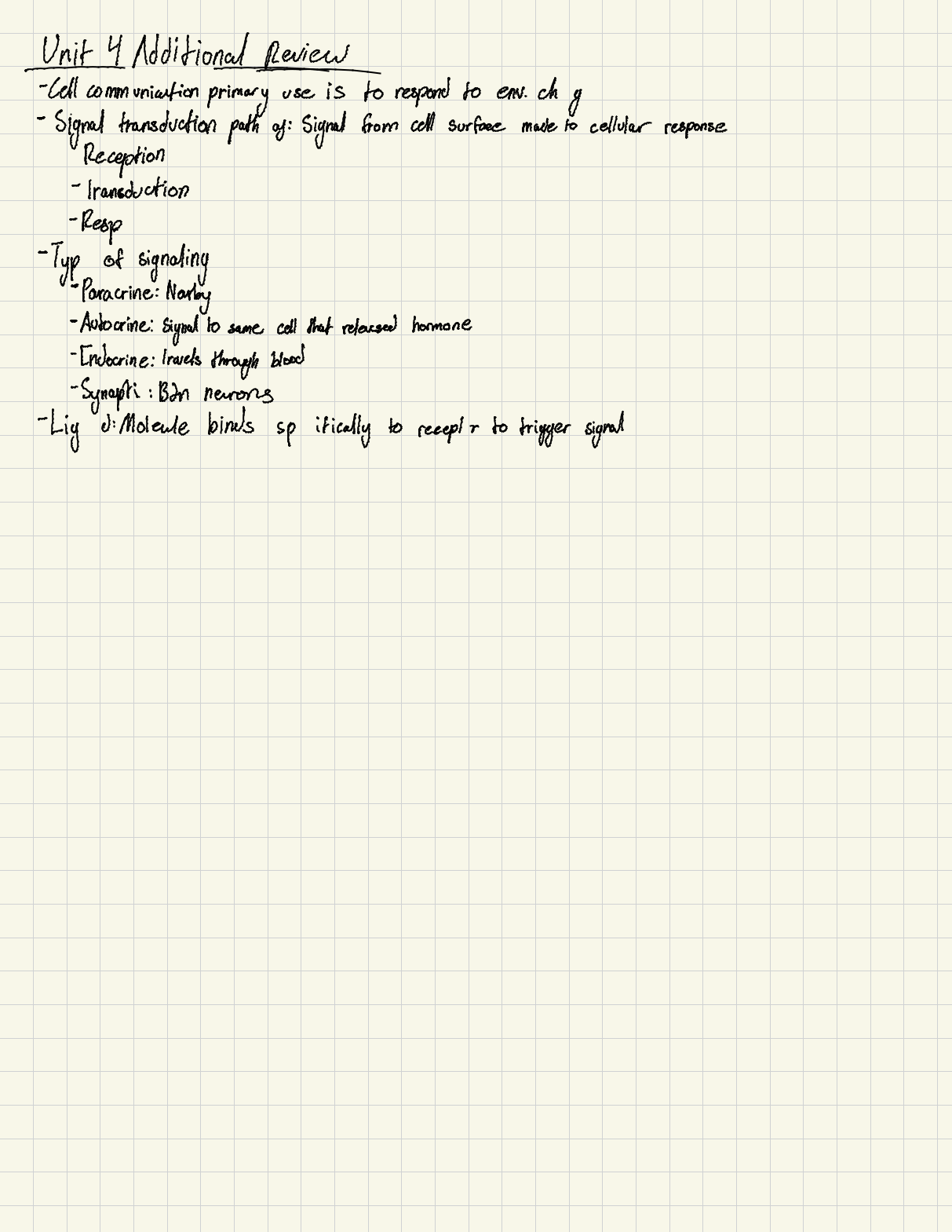
- Reception
- Transduction
- Res
po n
n
se
Typ- |
| ||
Paracrine: Narby | |||
- Autocrine:Signalto same | cell that released | hormone | |
| |||
Synapti | |||
- Lig | sp | recep | |
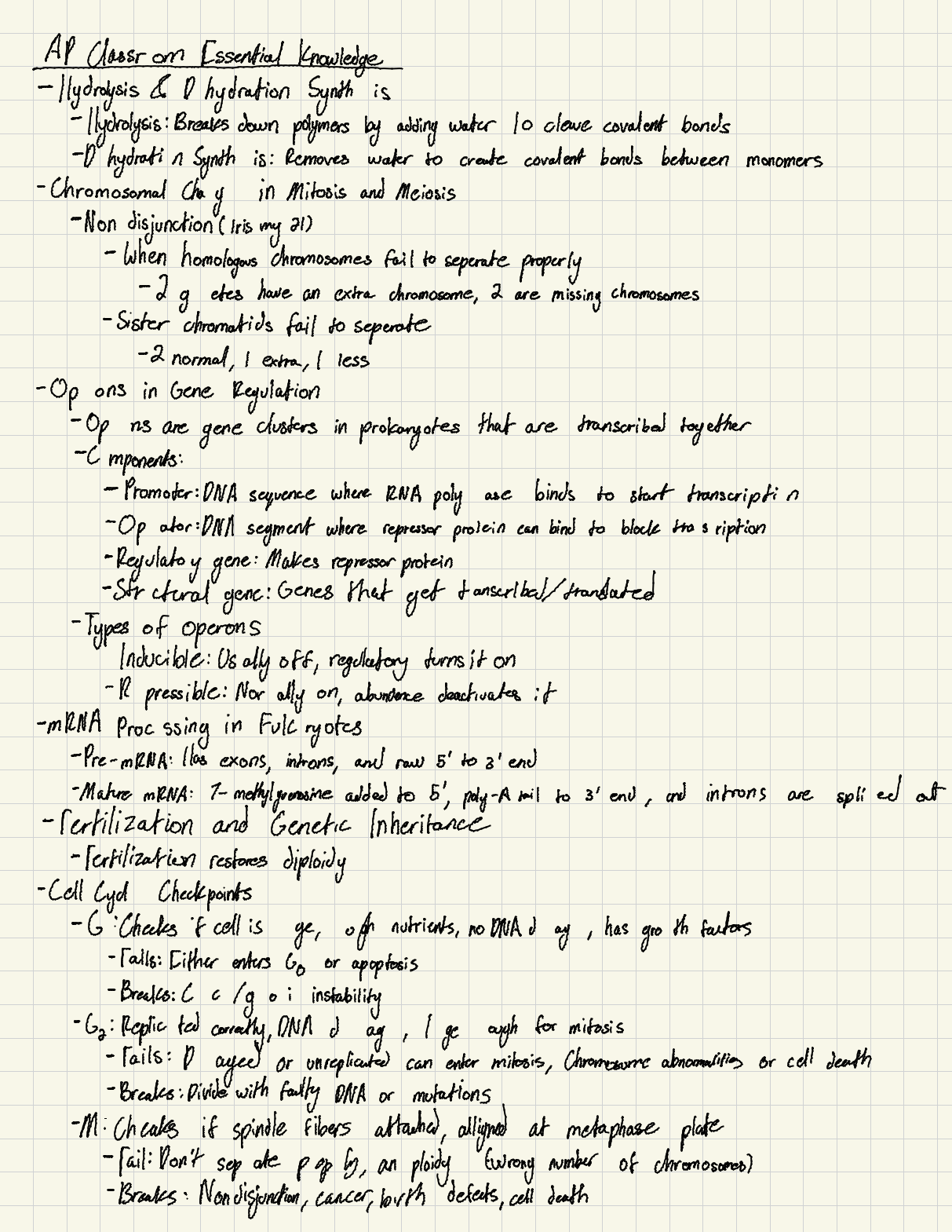
Knowledge | |||||||||||||
# | |||||||||||||
essroom | |||||||||||||
-> | Synth | ||||||||||||
- | Breaks down | polymers | by | adding | water |
| |||||||
-D | water to | create | covalent | bonds between monomers | |||||||||
Chromosomal | Ch | and | Meiosis | ||||||||||
- Non | 2 | ||||||||||||
-When | homologous chromosomes | fail to | separate | properly | |||||||||
-I | g | have an | extra | chromosome, | I | are | missing | chromosomes | |||||
Sister chromatics fail to separate | |||||||||||||
2 normal, | I | extra, I | less | ||||||||||
-Op | Gene | Regulation | that are transcribed together | ||||||||||
-Op | clusters | in | prokaryotes | ||||||||||
- C
omponents:
-Promoter : DNA | sequence | where | RNA | poly | binds | to | start | transcripti | |
- Op | where | repressor pro | can bind | to | block tra | ||||
- Regulato
ry gene : Makes repressor protein
- Regulato
- Str
uctural gene : Genes that get transcribedtranslated
- Types of operons
- | Inducible | : | Us | off, | regulatory | turns it on | ||||||||||||||
-R | abundance | deac | ||||||||||||||||||
- mRNAProc | in | |||||||||||||||||||
Pre-mRNA | : |
| exons | introns | and | raw | I' | to | ||||||||||||
- | ||||||||||||||||||||
, | , | spl | ||||||||||||||||||
· MaturemRNA : | T-methyl | added | to | 5' | poly-A | tail | to send | ,and introns | are | |||||||||||
· | and | yuanosine | , | |||||||||||||||||
Genet | Inheritance | |||||||||||||||||||
- | restores | diploidy | ||||||||||||||||||
- Cell Cyc
leCheckpoints
- G : Checks
  if cell is
  l
large, enough nutrients, no DNA damage , has growth factors
Fails:Either enters Go or apoptosis
Breaks: | C | ||||||||||||||||
G : Replic | correctly, | DN | d | l | for | mitosis | abnormalities or cell death | ||||||||||
- |
|
| or | unreplicated | can | enter | mitosis, | Chromosome | |||||||||
- | |||||||||||||||||
Breaks : Divide with faulty | DNA | or | mutations | ||||||||||||||
- M: Cheaks | if spindle | ribers | attached, | allighed | at | metaphase | plate | ||||||||||
| p | an | (wrong | number of chromosomes | |||||||||||||
Breaks | : | Nondisjunction | , | cancer b | detects | cell | beath | ||||||||||
, | , | ||||||||||||||||
 Humeie
t
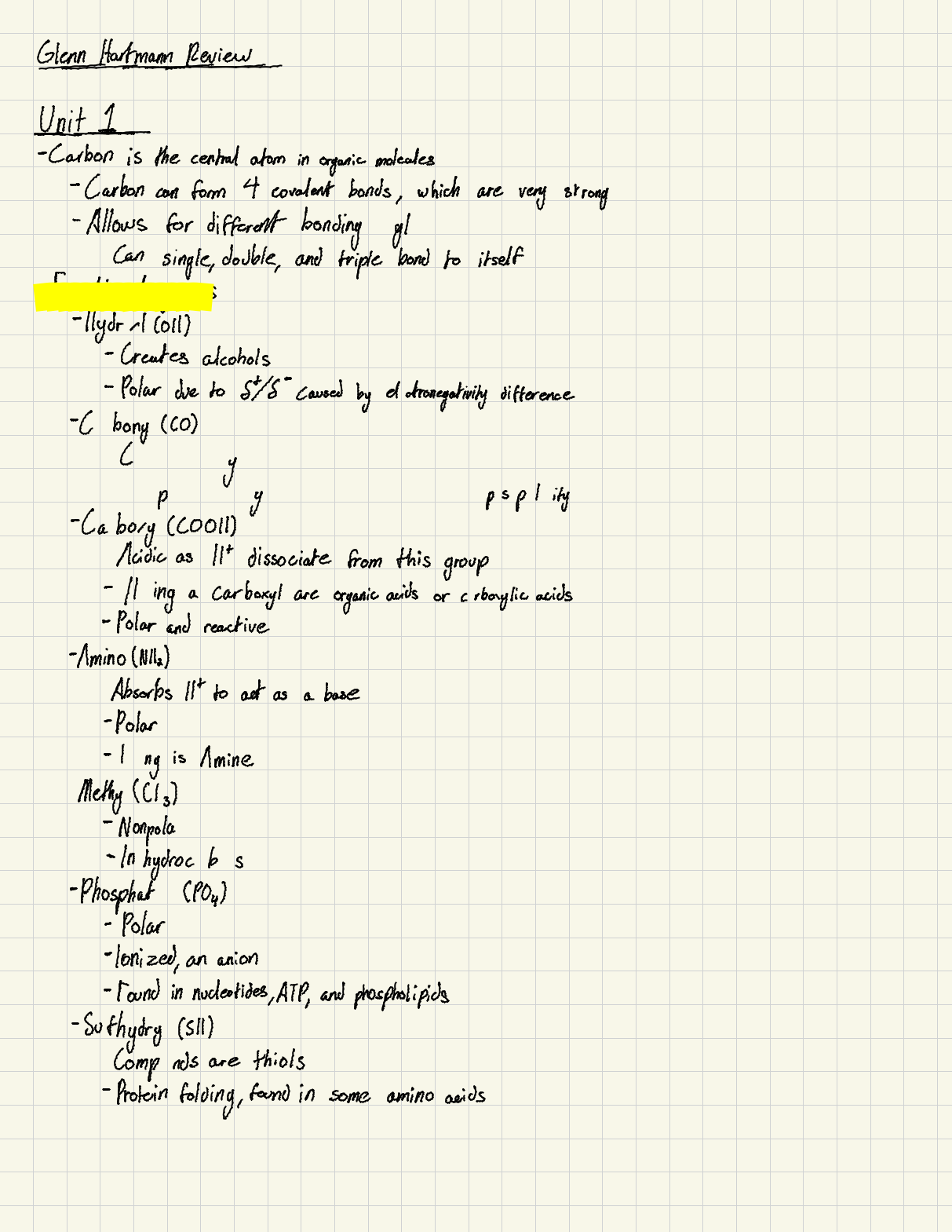
is the central stom in organic molrales
- Carbon can form 4 covalent bonds, which are very strong
Allows | for different | bonding |
| |||||
| single | double | and | triple | bond | to itself | ||
| , | , | ||||||
groups | ||||||||
- | (O | |||||||
- Creates alcohols
Polar due | to | SYS* caused by | el | |
Carbonyl (CO)
(CO)
Contained by Ketones
Group is weakly polar
- Car bo
boxyl (COO
(COOH)
and 


 as
as 

















 Aldehydes













 double bond


disrup
ts polarity
- AcidicasI | from | this | group |
- | organic | acids | or c |
- Polar and reactive
- Amino (NHal
 AbsorbsItt to act as a base
Polar
- 
Having is
is Amine
 Methyl
 (C
(CH 3)
3)
- Nonpol
ar- In hydroc
arbons
- In hydroc
- Nonpol
- Phosphat
es(PO4)- Polar
- lonized, an anion
Found in nucleotides, ATP, and phospholipids
- Polar
Su lfhydryl
 (S
(SH)
- Compo

unds are thiols
Protein folding, found in some amino acids
- Chemical c
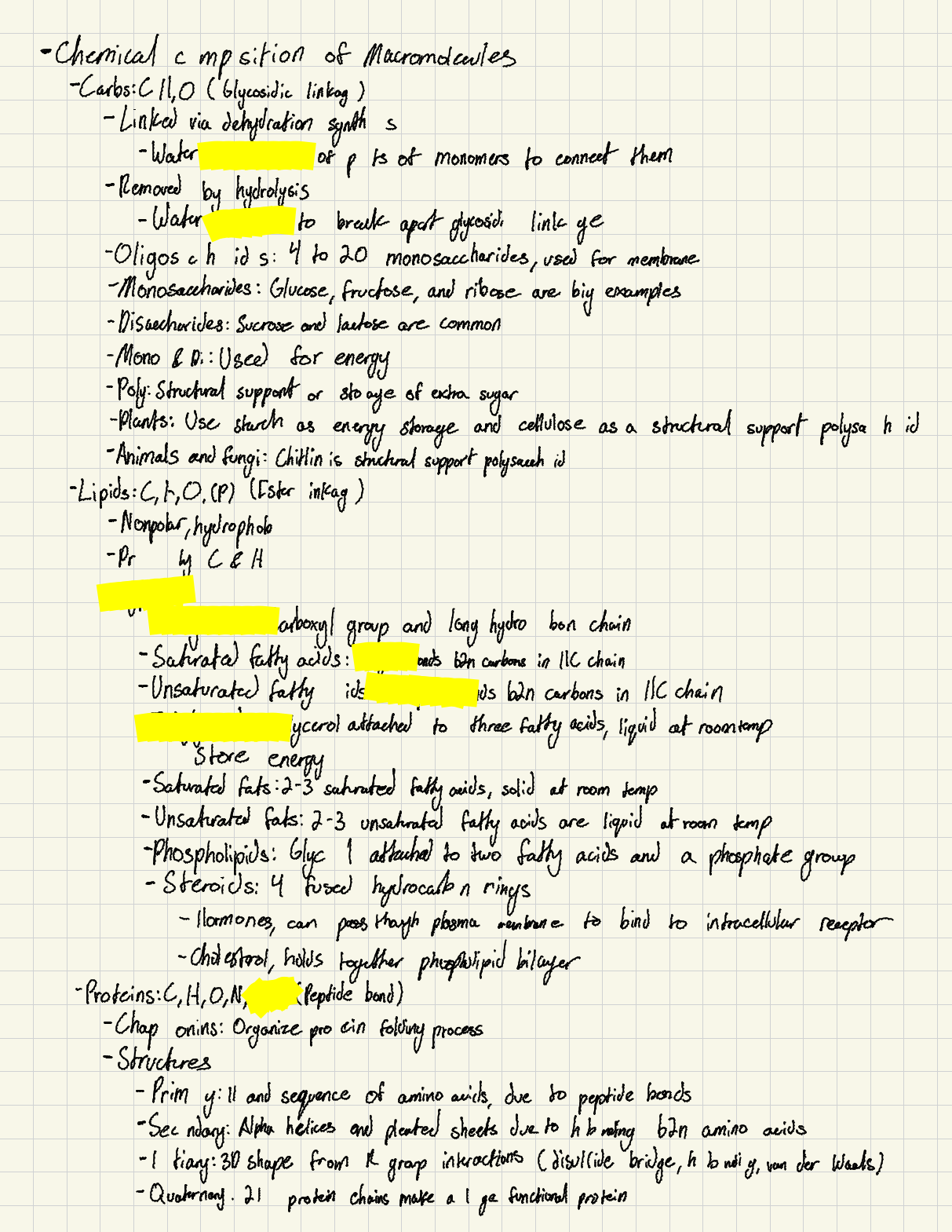
omposition of Macromolecules
- Carbs : C
H, 0 (Glycosidic linkage)
- Linked via dehydration synth
es is
is
Water | taken | out | of p | to connect them | ||
-Removed | by | hydrolysis | ||||
-Water | inserted | to | break apart glycosid | link | ||
Oligosa | 4 to | 20 monosaccharides, used | for membrane | ||||||||
Monosaccharides | Glucose | , | fructose, and ribose are | big examples | |||||||
- | : | ||||||||||
Disaccharides : Sucrose and | lactose | are common | |||||||||
Mono & Di : Used | for | energy | |||||||||
Poly: Structural | support or | ||||||||||
sto | as a structural support polysa | ||||||||||
- | Plants: Use | starch as | energy | storage and cellulose | |||||||
- | |||||||||||
Animals and | Sungi | : | Chillin | is structural support polysacch | |||||||
- Lipids: C, H
 , 0, (P) (
Ester linkag
e) - Nonpolar, hydrophob

ic
Pri
marily C & I
C & I
Types | Carboxyl group | |||||||||||||||||||
-Fatty acids : | and | long | hydro | |||||||||||||||||
-Saturated fatty acids : | Single | bonds | ban carbons | in | ||||||||||||||||
Unsaturated fattyaci | bonds | ban | carbons | in |
| |||||||||||||||
Triglyc | Glycerol | to | fally | , | liquid | ot room temp | ||||||||||||||
: | attached | three | acids | |||||||||||||||||
-Storeenergysaturated | fally wids , | solid | at roome | a | ||||||||||||||||
-Unsaturated | fats: 2-3 | unsaturated | fatty | acids are liquid | at room temp | |||||||||||||||
| attached to two | fally | acids | and | a phosphate group | |||||||||||||||
-Steroids: | 4 | fused | hydrocarb | rings | bind | |||||||||||||||
- | can | pass though playma | membrane | to | to | intracellular | receptor | |||||||||||||
, | ||||||||||||||||||||
- Cholesterd, holds together phospholipid bilager
Proteins: C, H, O, N, (5) (Peptide bond)
Chaperonins: Organize pro
tein folding process
- Structures
Prim | : | and | sequence | of | amino aids | due | to | peptide | bands | |||||
pleated | , | |||||||||||||
Sec | helices | and | sheets | due hbo | ban | amino | auds | |||||||
- | to | |||||||||||||
- T | R group | interactions | (disul | h- | van der Waals) | |||||||||
-Quaternary : | I | protein chains make | a | functional protein | ||||||||||
 - What happ
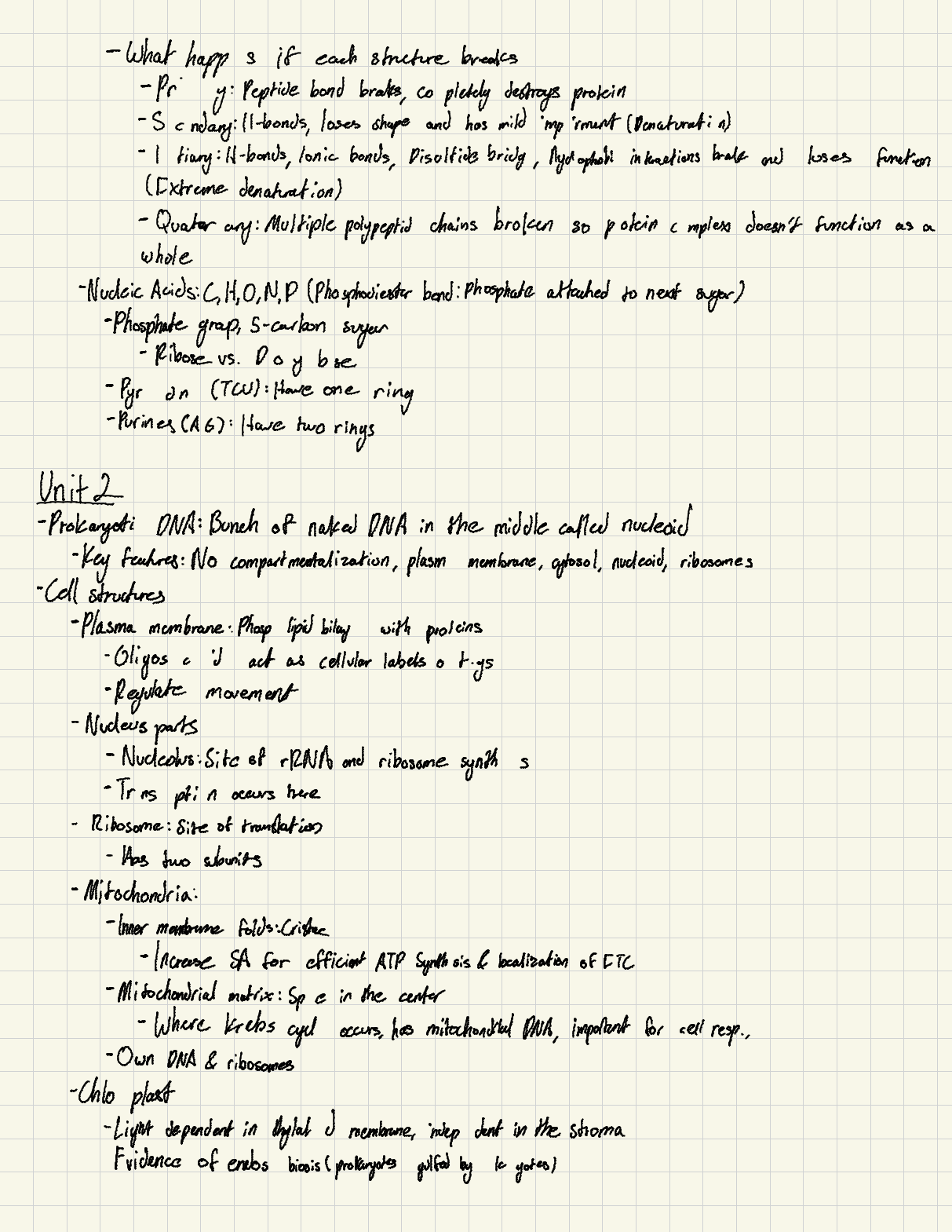
ens if each structure breaks
- Pri
mary : Peptide bond braks, completely destroys protein
- S
econdary: It-bonds, loses shape and has mild imp
impa irment (Denaturati
on)
T | , | , | bridg | and | function | |||
: It-bonds | lonic bonds | Disulfide | brak | luses | ||||
(Extreme denaturation
- Quater
nary : Multiple polypeptidechains broken so protein complex doesn't function as a
whole | ||||||||||
Nucleic Acids: C H | 0 | , | N p | (Phosphodiester | bond : Phosphate | attached to | next | sugar) | ||
, | , | , | ||||||||
- Phosphate group, 5-carbon sugar
- Ribose vs. D
eoxyr ib
ibose
- Ribose vs. D
- Pyr

im id
id
ines(TCU) : Have one ring- Purines (16) : Have two rings
Unit | nucleoid | ||||
- Prokaryot | |||||
key featres | : | No | compartmentalization, plasm | nudeoid, ribosomes | |
- Cell structures
- Plasma membrane : Phosp

holipid bilayerwith proteins
- Plasma membrane : Phosp
Oligosacch
ari d
des act as cellular labels ortays
- Regulate
smovement
Nucleus parts
- Nucleolus : Site of rRNA and ribosome synthes is
is
- Transcr ipti
iption occurs here
Ribosome : Size of translation
Has two subunits
Mitochondria:
- Inner membrune folds : Cristal
-Increase | SD for officient ATP Synth | of | ||
-Mitochondrial | matrix : Sp | in the | center | |
-Where | Krebs cyc | occus, | has mitochondral DNA, | important for cell resp |
- Own DNA & ribosomes
- Chlo

roplast
- Light dependent in Thylako id membrane,
  indep
independent in the stroma
 Evidence of endosy
mbiosis (prokaryotes engulfed by eukaryotes
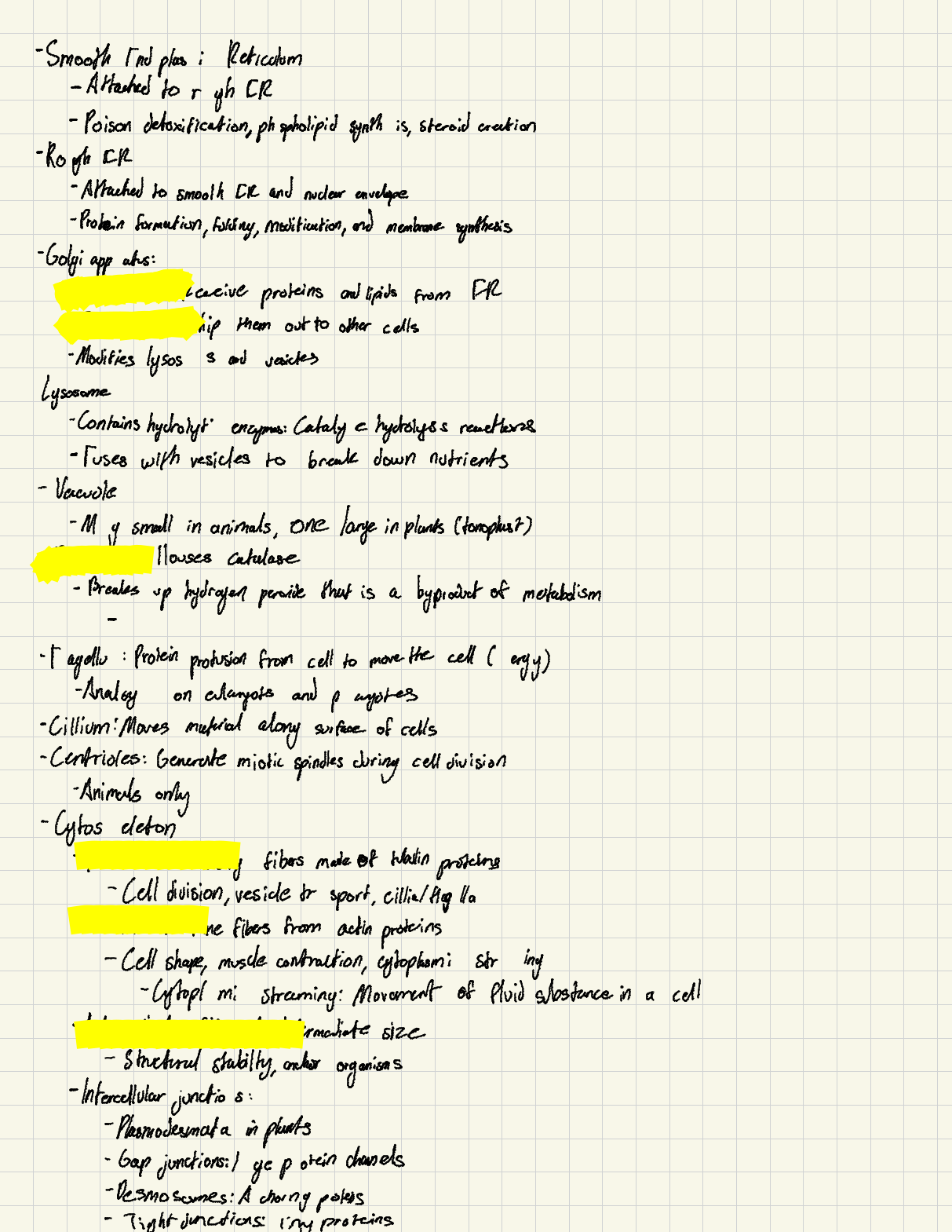
Smooth | ||||
Attached to r | ||||
-Poison detoxification | synth | steroid | cration | |
, ph | ||||
, |
- Ro
ughER- Attached to Smo
othER and nuclear envelope
- Attached to Smo
Protein | formation | modific | membrane | synthesis | |||
Golgi app | , folding, | ||||||
- Lisfaces : | Receive proteins | and lipids from | |||||
-Trans | faces : | Ship | them out to | other | cells | ||
Modifies | lysos | andresides | |||||
-Lysosome
- Contains hydrolyt

icenzyme: Catalyze hydrolysi s reactions
- Fuses with resides to break down nutrients
- Vacuole
- Many small in animals , one large in plants (tonoplast)
- Peroxisome:
Houses calulase
-Breaks | up | hydrogen pero | that is a | byproduct | of metabolism | |
= |
Fl agolu
agolum: Protein profusion from cell to more the cell (energy)
Analogous on clarofs and pro karyotes
- Cillium : Moves material along surface of cells
Centrioles : Generate miotic spindes during cell division
Animals only
- Cytos

keleton
- Cytos
Microtubules : | whilin proteins | |||||
Cell division, reside tr | CilliaH | |||||
Microfilaments : | from activ | proteins | ||||
Cell shape | muscle | contraction | str | |||
cytoplasm | ||||||
, | , | |||||
Cytop | fluid substance in a cell | |||||
- Intermediate filaments : Intermediate size
- Structural stabilty, anchor organisms
- Intermediate filaments : Intermediate size
- Intercellular junctio
ns :- Plasmodesmata in plants
- Gap junctions:
Large protein channels - Desmosumes : A
nchor ing p
ing profess
Tight junctions: Tiny proteins
· Cellular | structures | used | to maximize e | |
- Roothairs : This | extensions of root, ↑SA | |||
- Alvedi : | Thin | lungs | ||
-Villi | , small | sacs in | ||
and microvill: | in small intestine | |||
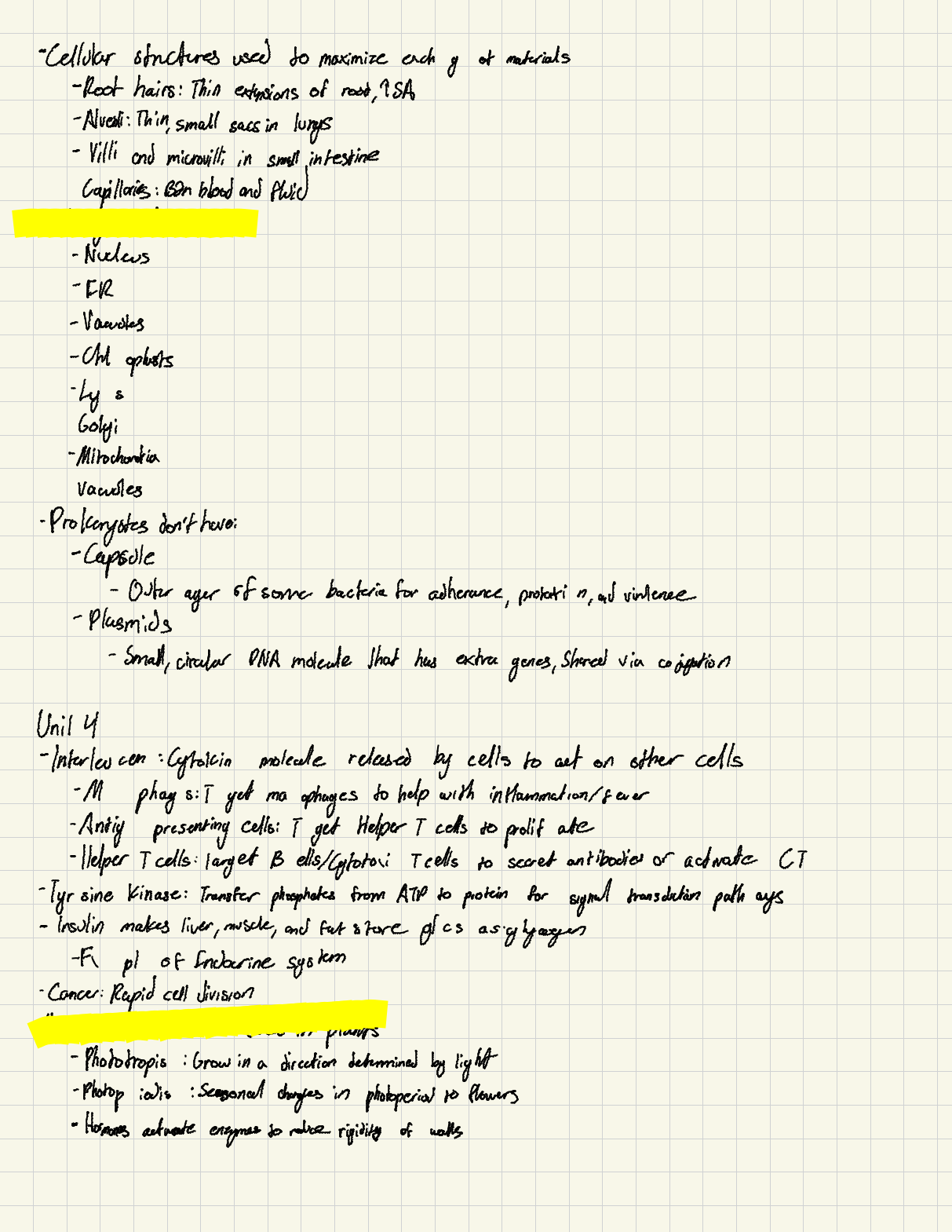
 Capillaries : Ben blood and slid
Eukaryotes don't have
Nuders
ER
- Varotes
Chlorophets
Lysosomes
 Goly;
Goly;
- Mitochondria
 vacuoles
Prokaryotes don't have:
- Capsule
Outer  layer of some bacteria for adherance , protect
ion, and virulence
- Plasmids
- Small, circular DNA moleule
that has extra genes, shared via conjugation
- Small, circular DNA moleule
Uniteco kens
kens : Cytokin
e molecule released by cells to act on other cells
- M
acrophages: Target macrophages to help with inflammation/f ever
Antig | cells : T | Helper T cells | to proli | |||||||||||||
- | T cells : | Target | B | to | secret | antib | ||||||||||
-Tyr | Transfer | phosphates | from | ATP to protein | for | s | ||||||||||
·Insulin makes liver musche and fut store | gl | as | glycogen | |||||||||||||
, | , | |||||||||||||||
- | ||||||||||||||||
-Cancer: Rapid cell div | ||||||||||||||||
| and chemical | eves in plants | ||||||||||||||
by light | ||||||||||||||||
- | Phototropis | : Grow in a | direction determined | |||||||||||||
- Photo | changes in | photoperior to | flowers | |||||||||||||
-Hormones | act | enzymes to reduce rigidity | of walls | |||||||||||||
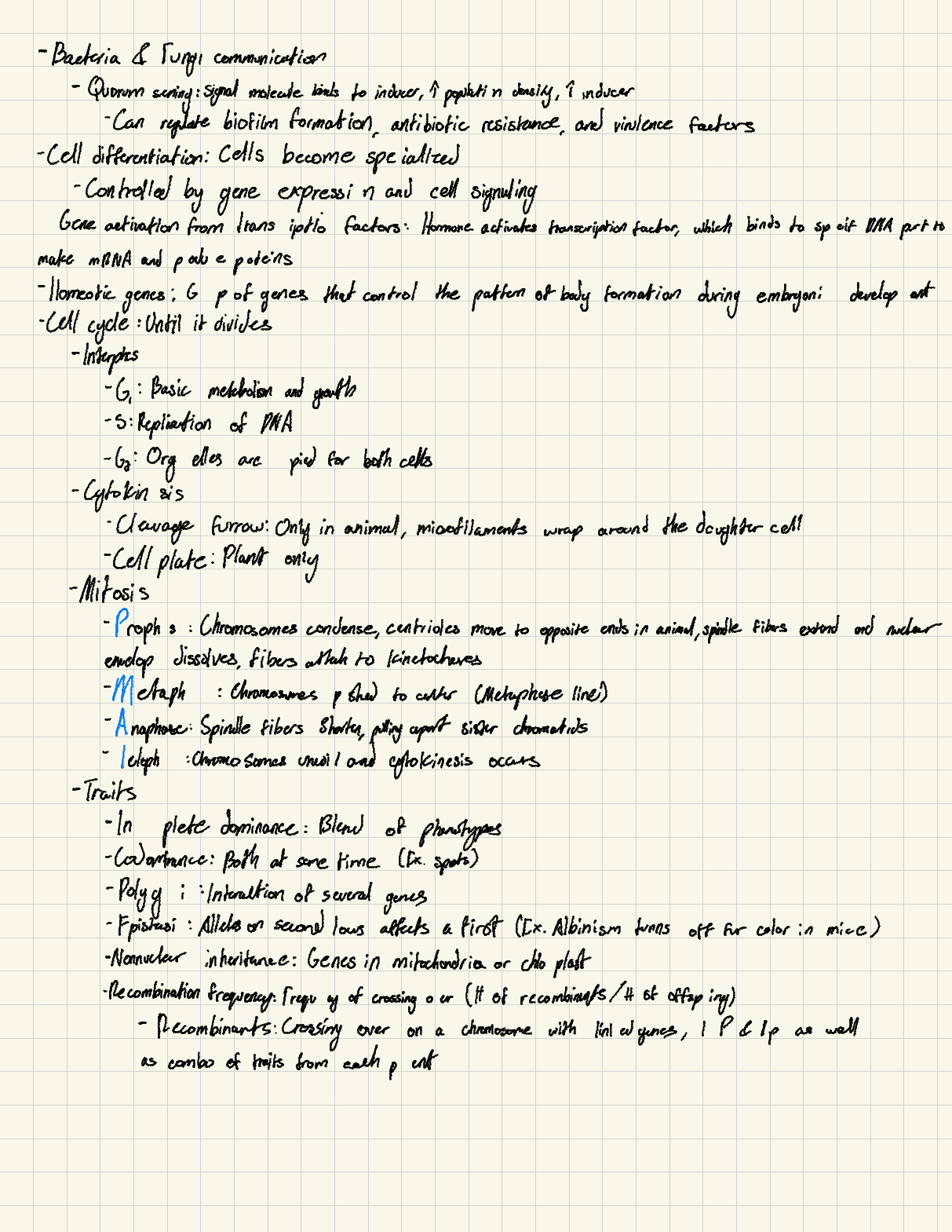 Bacteria &
 Fungi communication
-Quorum sening : signal molecule | kinds to inducer, | ↑ populat | ↑ inducer | ||||||||||
Can | regulate | biofilm | formation | antibiotic | resistance | and virulence | factors | ||||||
, | , | ||||||||||||
- Celldifferentiation : Cells | become spe | ||||||||||||
-Controlled | by | gene | expressi | and | cell | signaling | |||||||
- | from | which | binds to sp | ||||||||||
make mPNA and p | |||||||||||||
| G | that control | the | pattern of body formation | during | embryon | |||||||
- Cellcycle : Until | it | divides | |||||||||||
- Interpha | growth | ||||||||||||
6. : Basic | metabolism | and | |||||||||||
- S : Replication of PNA
G Org | are |
| for | both cells | |
: | |||||
- Cytokin
esis
Clarage furrow: Only in animal, microfilaments wrap around the daughter cell
Cell plate : Plant only
- Mitosis
- Proph
ase: Chromosomes condense, centrioles more to opposite ends in animal, spindle fibers extend and nuclar
enelop | fibers allah to | kinetocheres | ||||||
: | Chromosomes | p | to | wher | (Meluphee line | |||
naphose Spindle | , pulling | apart | ||||||
Metaph | ribers | Shorten | sister chromat | |||||
Teloph | cytokinesis | occus | ||||||
- Traits
-In | of phanotypes | |
- Cabominance:Both at same time | ( | sports) |
Polyg | genes | |
- | affects | a first ( |
- Nonnuclar inheritance : Genes in mitochondria or chlo

roplast
Recombination frequency: | of crossin | ( | offsp | ||||||||||
· | Recombinants : | Crossing | over | on a | chromosome | with | lin | ,I P | & | 1p | as well | ||
each |
| ||||||||||||
as | combo of traits from | ||||||||||||
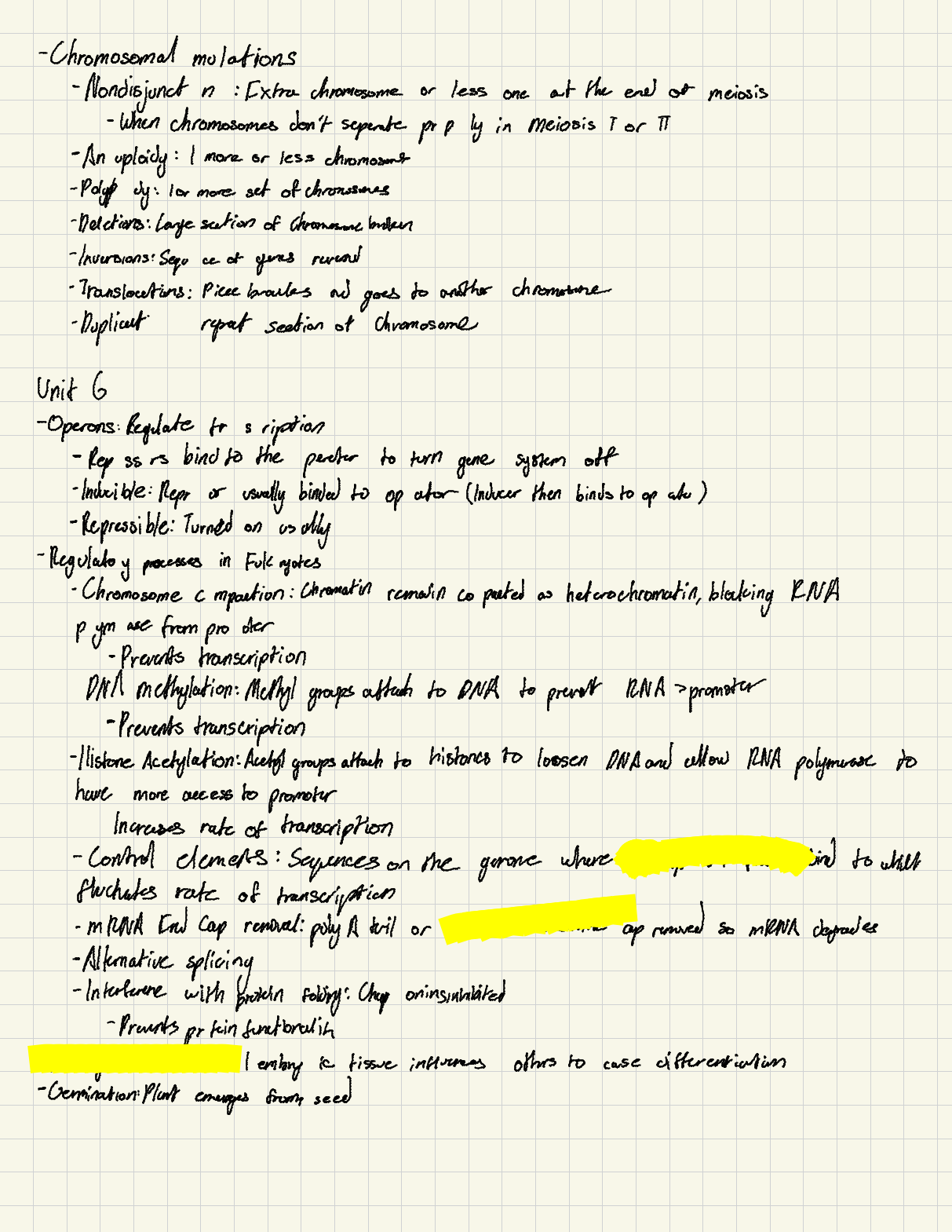 Chromosomal m
utations
- Nondisjuncti

ons:Extra chromosome or less one at the end of meiosis
When chromosomes | don't separate pr | ||||
An | or | less chromosons | |||
· | : | more | |||
- Polyp

lo idy : /or more set of chronosmes
Deletions : Large section of chromosome backen
Inversi | genes | reves | |||
- | Translations : Piece | bracks | and | goes to another | chromosome |
- Duplicati

onsreport section of chromosome
unitens:Regulate transcription
- Rep

ressors bind to theoperater to turn gene system off
Inducible : Repres sor usually binded to o
perator (Inducer then binds to operator
- Repressible: Turned on u
sually
Regulatory processes in Eukaryotes
Chromosome compaction : chromatin remain compacted as heterochromatin, blocking RNA
po lym
lymerase from promoter
- Prevents transcription
-DNA methylation: Methyl groups allat to DNA to prevent RNA- promoter
- Prevents transcription
| histones to loosen ANA and allow | RNA polymense to | ||||
have more | access | to | promoter | |||
| of | transcription | factors bind to which | |||
-Control | elemens : Sequences on | the gerone where transcription | ||||
suchales | rate | of | transcription | |||
- MENA
End Cap removal: poly A toil or modified banine up removed so mRNA depades
- Alternative | splicing | solving : | Cha | |||
Interferent | with protin | |||||
Prevents pr | others to case differentiation | |||||
| ||||||
- | emerges | from seed | ||||
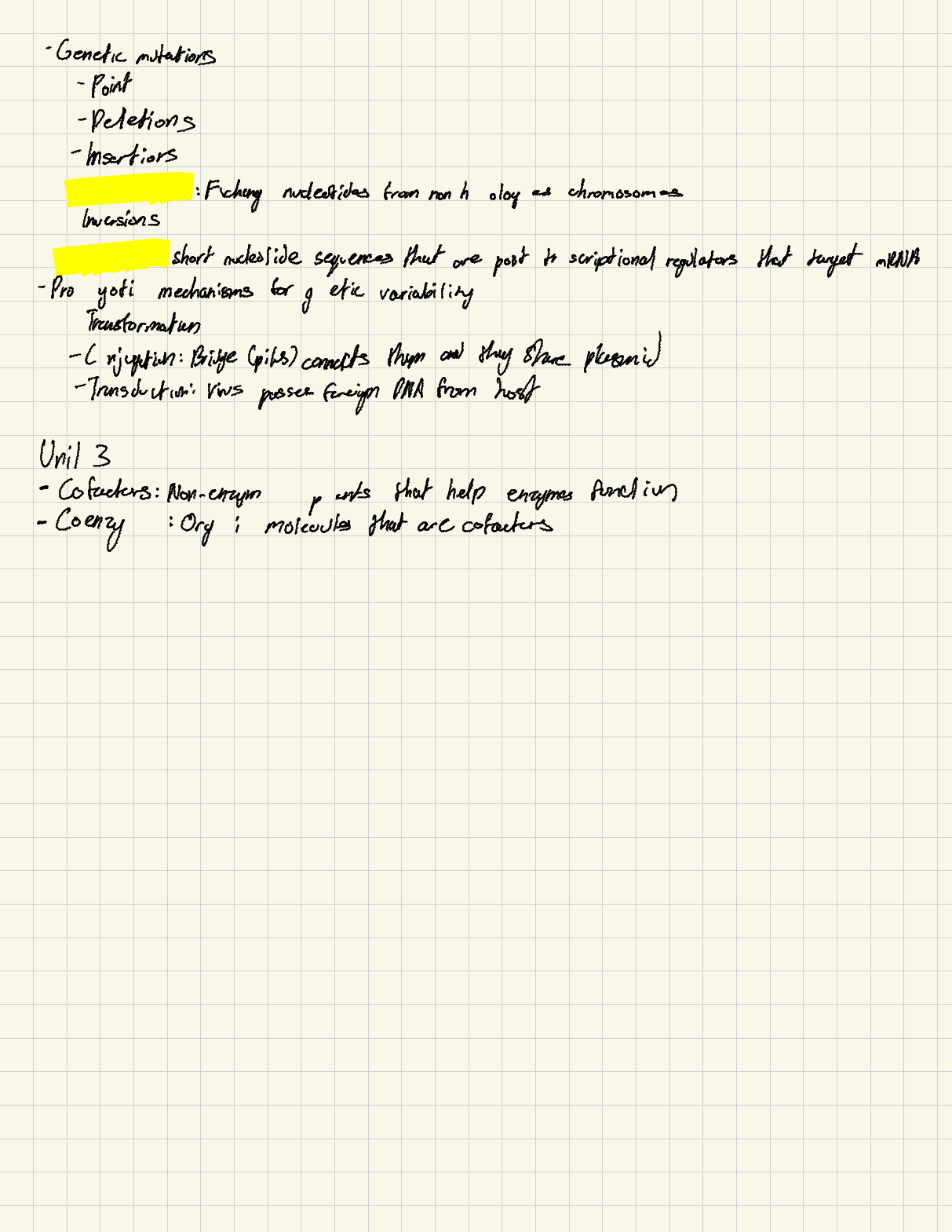 Genet
Genetic mutations
Point
- Pelletions
- Insertions
- Translocations :
Exchangenucleotides from non homologues chromosomes
 Inversions
-microRNAs : short nucleotide sequences that are post transcriptional regulators thatCaryet mRNA
- Pro

karyoticmechanisms for genetic variability
 Transformation
- Conjugation : Bridge (pils) connects the and they share plasmic
- Transducti
on: Virus passes Greign DNA from host
Unit: Non-enzyme comp
onents that help enzymes fencina
- Coenzymes : Organic molecules that are cofacters