Vergil's Aeneid: The Tragic Queen, The Underworld, and the War for Italy
Book 4: The Tragedy of Dido and Aeneas
This book represents the greatest threat to Fatum (Fate) and the Roman mission. It centers on the conflict between personal desire (amor) and religious/social duty (pietas).
The Rise of Passion
From the moment Cupid (disguised as Ascanius) infects Dido, the Queen of Carthage, she is consumed by a "hidden fire" (caeco igni). She breaks her vow of remaining a Univira (a woman who loves only one man, her deceased husband Sychaeus) to pursue Aeneas.
- The Cave Scene: Driven by Juno (who wants to prevent Rome) and Venus (who wants Aeneas safe), Dido and Aeneas seek shelter in a cave during a storm. Dido calls this "marriage" (coniugium); Vergil notes she uses this word to "cover her guilt" (culpam).
- Rumor (Fama): Personified as a swift, terrifying monster with eyes and tongues under every feather, Rumor spreads the news to King Iarbas, a suitor rejected by Dido.
The Intervention and Departure
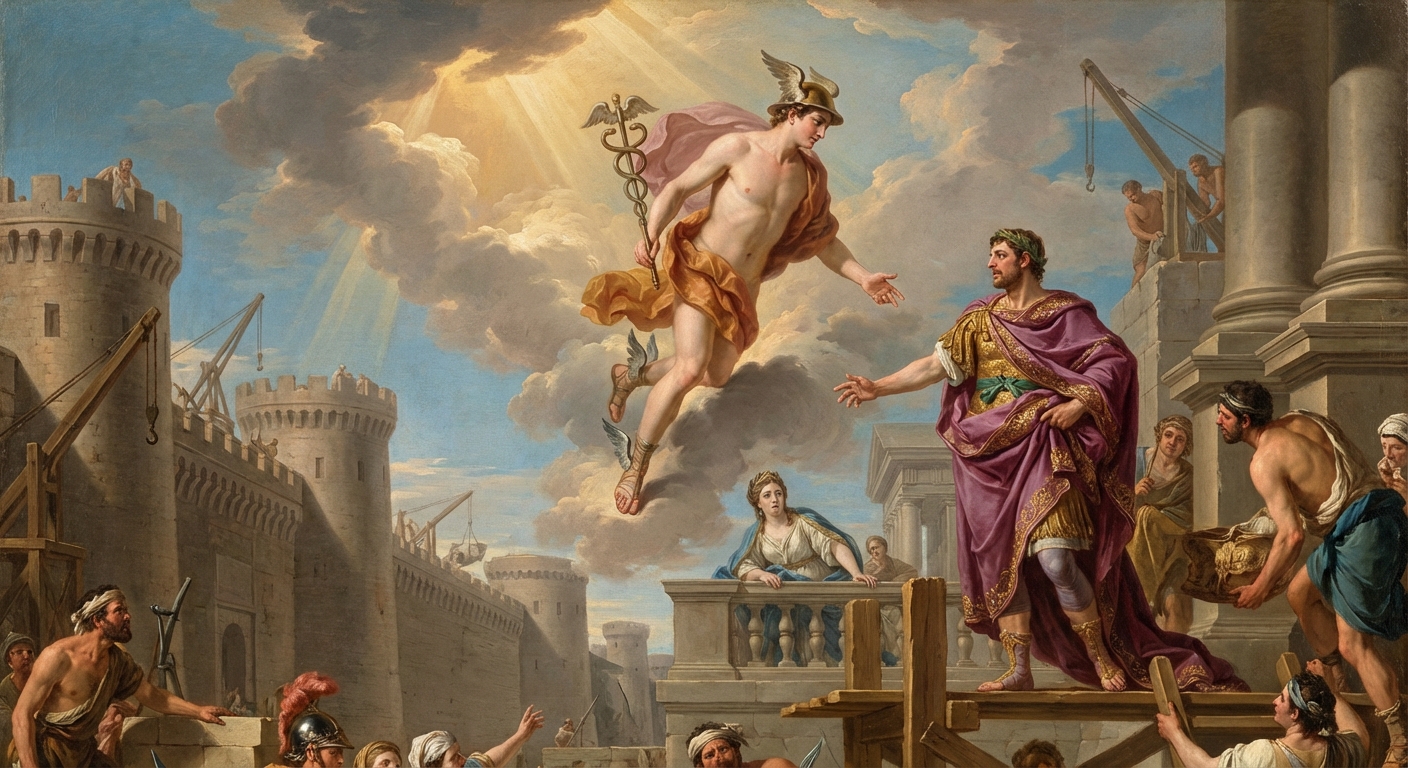
Iarbas prays to Jupiter, who sends Mercury to remind Aeneas of his destiny. This is a critical moment for the definition of a Roman hero.
- The Rebuke: Mercury finds Aeneas building Carthage, wearing Tyrian purple (Dido's colors). He asks if Aeneas has forgotten his own son, Ascanius (Iulus), and the destiny of Italy.
- Aeneas' Reaction: He burns to flee (ardet abire). His defense to Dido is famous: "Italiam non sponte sequor" (I do not pursue Italy of my own free will). This epitomizes Pietas—submitting to the will of the gods despite personal suffering.
The Death of Dido
Unable to accept Aeneas' departure, Dido commits suicide on a pyre built with Aeneas' armor and their bed. Her death serves two purposes:
- Tragedy: It humanizes the cost of the Roman Empire.
- Aetiology: Before dying, she curses Aeneas, praying for an "avenger" (ultor) to rise from her bones. This is a historical prophecy foretelling Hannibal and the Punic Wars between Rome and Carthage.
Book 6: The Underworld (Katabasis)
Book 6 is the pivot point of the epic. Aeneas descends as a Trojan survivor and emerges as a Roman proto-founder. This journey is known as a Katabasis.
The Golden Bough and the Sibyl
Aeneas arrives in Cumae and meets the Sibyl, a prophetess of Apollo. To enter the Underworld and visit his father Anchises, he must find the Golden Bough hidden in a dark forest.
- Significance: The bough acts as a passport to the underworld. Its resistance (or lack thereof) indicates fate's approval. For Aeneas, it hesitates slightly (cunctantem), introducing ambiguity about his readiness.
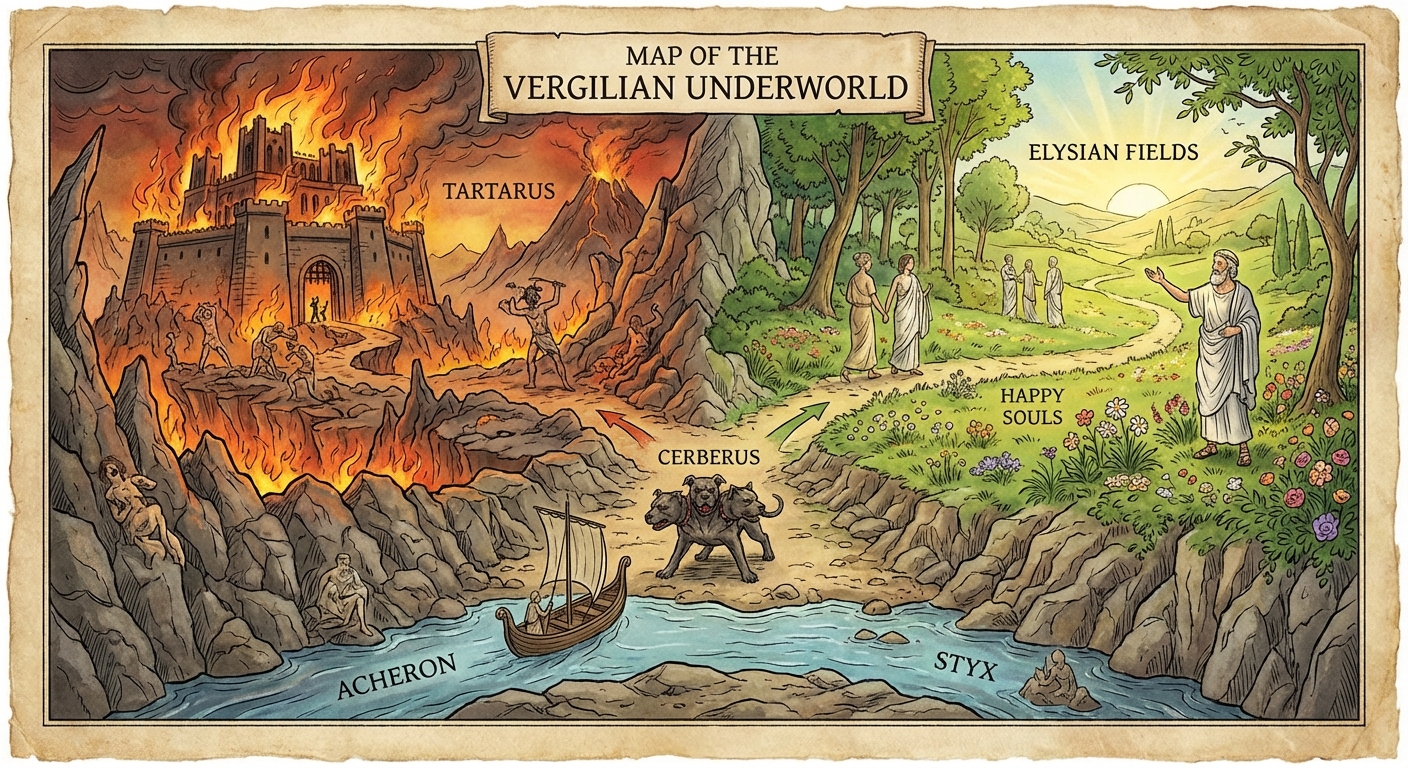
Geography of the Underworld
Aeneas passes various figures, including:
- Palinurus: His helmsman who died unburied (shows the importance of burial rites).
- Dido: Aeneas weeps and claims he left unwillingly. Dido says nothing, turns away, and returns to the shade of Sychaeus. This is the final severance of his past emotional ties.
- Tartarus vs. Elysium: Sinners are punished in Tartarus, while the blessed (including war heroes and priests) dwell in Elysium.
The Parade of Heroes
The climax of Book 6 is the meeting with Anchises. He explains the transmigration of souls (metempsychosis) and shows Aeneas his future descendants waiting to be born.
- The Roman Destiny: Anchises points out Romulus, the Caesars, and Augustus himself. This is explicit Augustan Propaganda, linking the Julian family to the gods.
- The Mission Statement: Anchises delivers the ultimate definition of Roman identity:
> "To spare the conquered and battle down the proud." (Parcere subiectis et debellare superbos)
Books 7, 11, and 12: War in Italy
The second half of the Aeneid corresponds to the Iliad (War), just as the first half corresponded to the Odyssey (Wanderings).
Book 7: The Causes of War
Aeneas arrives in Latium. King Latinus welcomes him and offers his daughter, Lavinia, in marriage (fulfilling a prophecy). However, Juno interferes again.
- Alecto: Juno summons a Fury, Alecto, to infect Queen Amata and Turnus (Lavinia's original suitor) with Furor (madness/rage).
- The Gates of War: When Latinus refuses to declare war, Juno physically bursts open the Gates of War, officially starting the conflict between the Trojans/Arcadians and the Latins/Rutulians.
Book 11: The Tragedy of War
This book highlights the devastating cost of war, mirroring the sorrow of Book 4.
- Pallas: The young son of Evander (Aeneas' ally) is killed by Turnus. Turnus takes Pallas' sword belt as a trophy—a fatal mistake fueled by hubris.
- Camilla: The Volscian warrior maiden (an Amazon-like figure) dominates the battlefield but is killed due to her distraction by shiny armor (symbolizing greed/materialism). Her death strips the Latins of their last great defender besides Turnus.
Book 12: The Final Duel
The war boils down to single combat between Aeneas and Turnus.
- Juno’s Compromise: Jupiter and Juno finally agree: Aeneas will win, but the Trojan name will disappear. The people will be called Latins and speak Latin (explaining why Romans aren't called Trojans). Juno lets go of her anger.
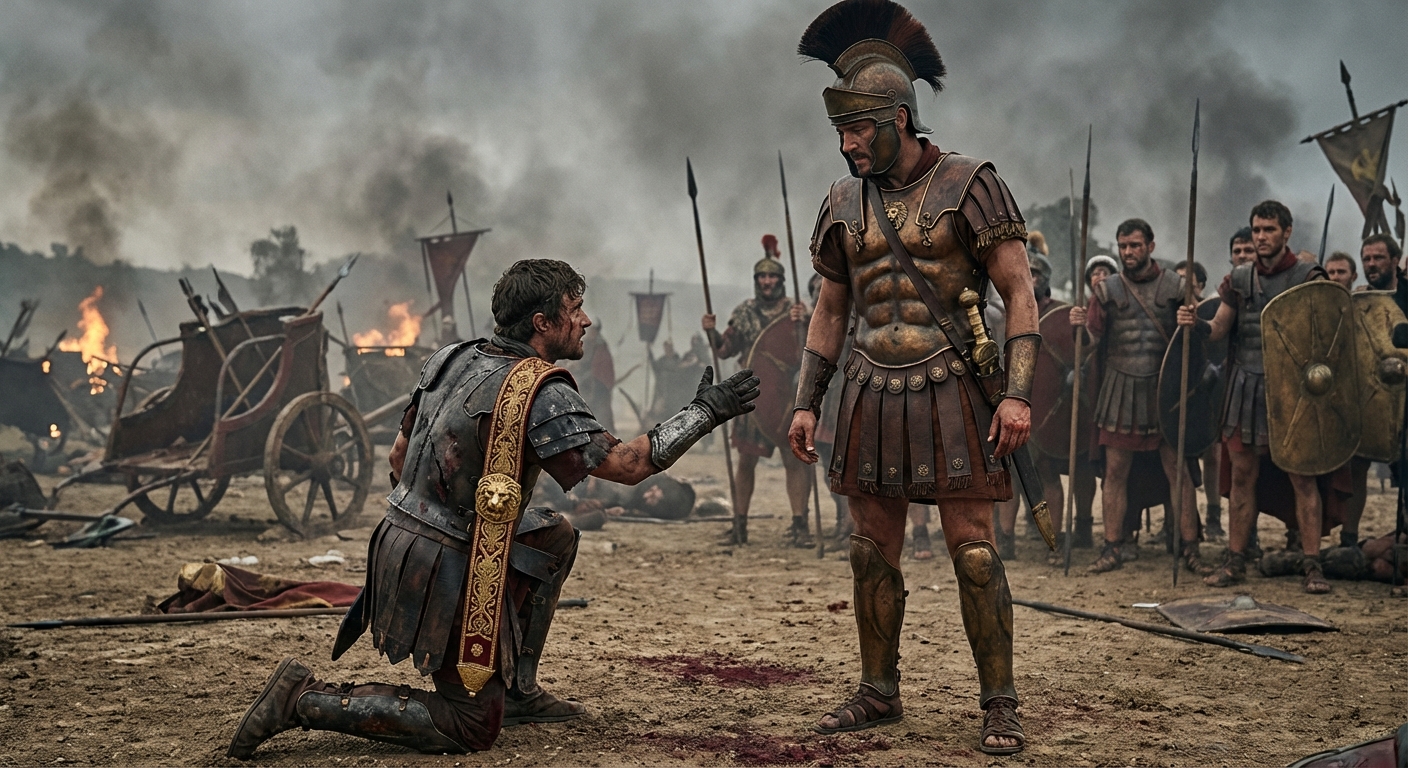
- The Death of Turnus: Aeneas wounds Turnus. Turnus begs for mercy (clementia), asking to be returned to his father. Aeneas considers sparing him—adhering to Anchises' advice to "spare the conquered."
- The Turning Point: Aeneas sees Pallas' belt on Turnus' shoulder. Overcome by a mixture of duty to Pallas and personal rage (furiis accensus), Aeneas kills Turnus. The epic ends abruptly with Turnus' soul fleeing to the underworld in anger.
Themes of Fate, Duty, and Roman Identity
Pietas vs. Furor
This is the central tension of the epic.
- Pietas: Duty to the gods, state, and family. Aeneas is pius because he sacrifices his own happiness (Dido, comfort) for the future of Rome.
- Furor: Ungovernable rage or passion. Dido (love), Turnus (bloodlust), and Amata (madness) represent Furor. The final question of the epic: When Aeneas kills Turnus in a fit of rage, has he succumbed to Furor, or is he executing justice?
Fatum (Fate)
In the Aeneid, Fate is immutable. Jupiter acts as the administrator of Fate. While the outcome (Rome will be founded) is fixed, the path can be delayed or made more difficult by the gods (specifically Juno).
Roman Identity
Vergil constructs a national identity that balances Civilization (laws, walls, religion) with Martial Strength. The "Later Books" emphasize that peace is only established through necessary violence, a reflection of the Pax Romana established by Augustus after the civil wars.
Common Mistakes & Pitfalls
- Misunderstanding Aeneas' Departure: Students often think Aeneas leaves Dido because he doesn't love her. Correction: He does love her (he struggles to speak, he weeps in the Underworld), but his Pietas compels him to leave. The tragedy is that verify duty overrides desire.
- Confusing the Sides: In the final war, it is NOT Greeks vs. Trojans. It is Trojans + Arcadians (Evander) vs. Latins + Rutulians (Turnus).
- The Ending's Ambiguity: Don't view the ending as a simple "Good Guy Wins." Vergil leaves it ambiguous. Aeneas violates the concept of clementia (mercy) by killing a surrendering foe. This invites debate: Is the Roman Empire founded on justice or violence?
- Dido as Villain: While she opposes Aeneas, Dido is a sympathetic victim of divine manipulation (Venus and Juno), not a villain. She is a tragic hero in her own right.