Lecture 13: The Spanish-American War, The Resumption of the Revolution, The Malolos Republic, and the Philippine-American War (1898-1899)
1st slide
The revolution for independence was taking place in Cuba. The revolution for independence in Spain by the Cubans in which United States was siding with the Cubans because they prefer not to have a European empire at their doorstep.
One of the US Navy ships was parked at the Havana Harbor, which is the warship maine. Then, explosion happened and over 200 American sailors died.
The press, referred as mosquito press was a purveyor of fake news. They released a headline that it was the work of the enemy, marking the start of the war.
But subsequent investigation showed that the explosion was actually an accident
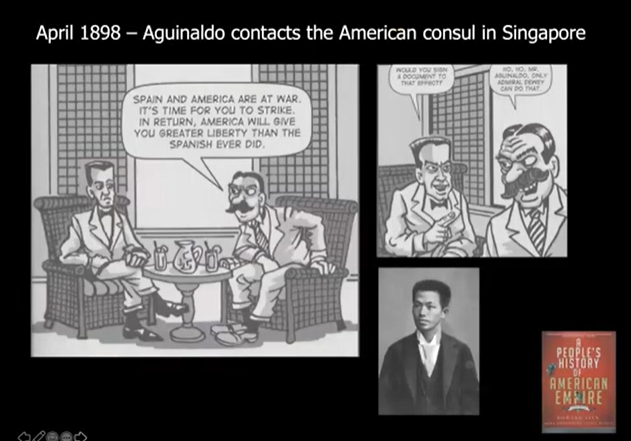
Now that the war started, that became an opportunity for the United States to expand their imperial activity in the Far East.
Soon after the Spanish-American started, American official Edward Pratt got in touch with Emilio Aguinaldo indicating that the United States would side with the Philippines in case Aguinaldo decide to resume the revolution against Spain.
Edward Pratt was reprimanded for having an unauthorized meeting with Aguinaldo.
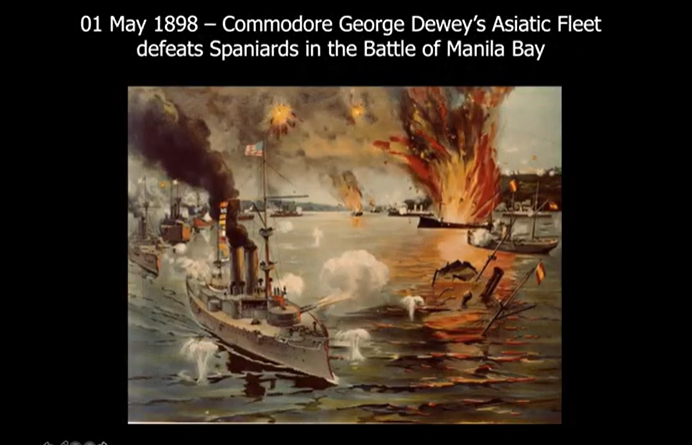
The Spaniards had more modern warships but they were halfway across the world in Europe.
With the defeat of the Spanish Armada in the Philippines marked the opportunity for Aguinaldo to resume his revolution just when the morale of the Spaniards were very low as they are already losing Cuba.
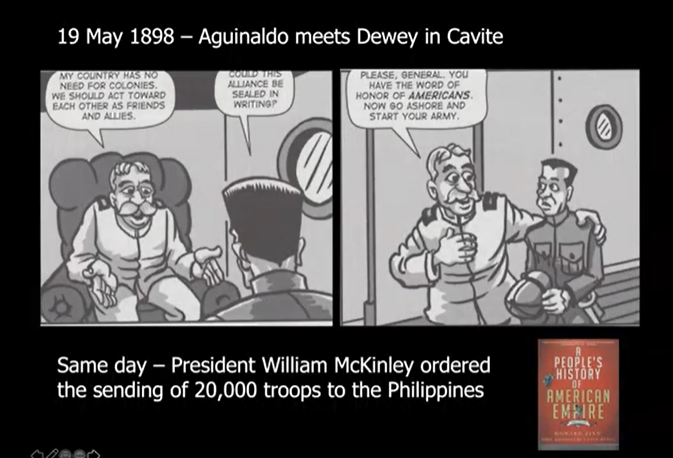
Spaniards were also probably thinking that they would lose Philippines. So, Aguinaldo meet with Dewey in Cavite which without documentation but only the memoirs of Aguinaldo. The United States promised to aid Aguinaldo in his fight against Spain. The Philippines was promised that they had no interest in being an empire with colonies like the European powers.
On the same day the meeting took place, the United States President William McKinley ordered the sending of 20,000 troops in the Philippines. Obviously, the US already had something in their agenda.
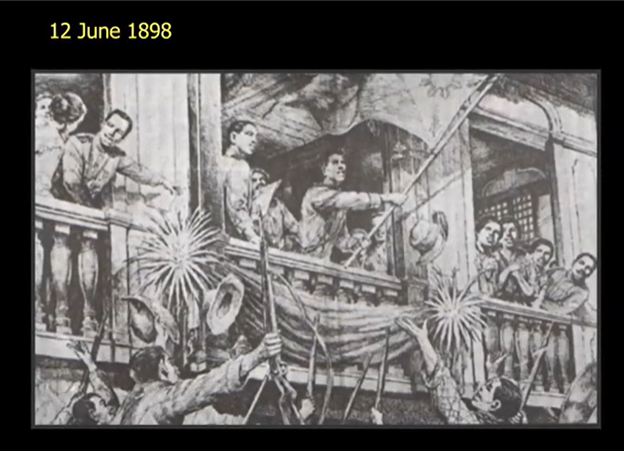
As Aguinaldo resumed his revolution, he had the Spaniards on retreat and on 12th of June, 1898, proclamation of Philippine Independence was made at the window of his home in Kawit, Cavite. This was the first time that the Philippine national anthem was played (Marcha Filipina Magdalo) and the Philippine flag was displayed (sewn by Marcela Mariño de Agoncillo, with the help of her daughter Lorenza Mariño de Agoncillo and Delfina Herbosa de Natividad (Rizal's niece)
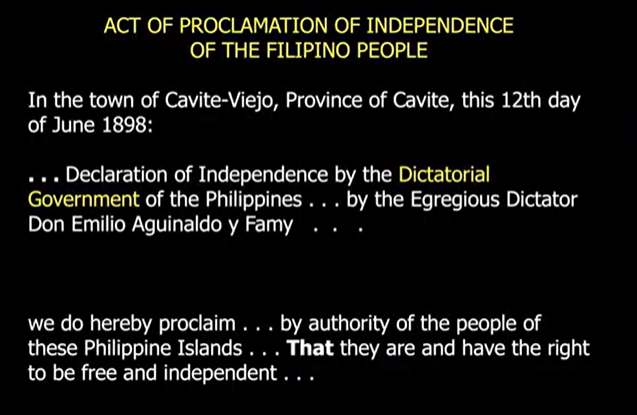
Aguinaldo proclaimed a dictatorial government
Aguinaldo assumed that the US was one of his benefactors when he made the act of claiming independence
US did not officially recognize the Philippine independence because they had an agenda of their own
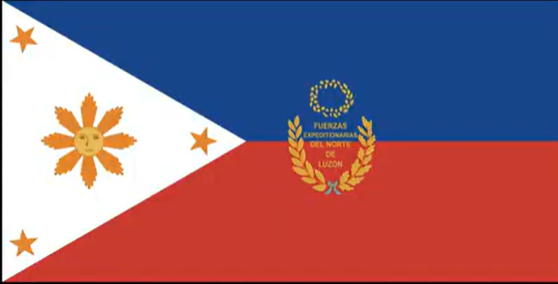
Meaning of the flag
White triangle - signifies the distinctive emblem of the famous Society of the “Katipunan” which by means of its blood impact inspired the masses to rise in revolution;
Three stars - signifies the three principal Islands of the Archipelago—Luzon, Mindanao, and Panay where this revolutionary movement started;
Sun - represents the gigantic steps made by the sons of the country along the path of Progress and Civilization;
Eight rays - signifies the eight provinces—Manila, Cavite, Bulacan, Pampanga, Nueva Ecija, Bataan, Laguna, and Batangas—which declared themselves in a state of war as soon as the first revolt was initiated
The colors Blue, Red, and White - commemorates the flag of the United States of North America, as a manifestation of our profound gratitude towards this Great Nation for its disinterested protection which it lent us and continues lending us.
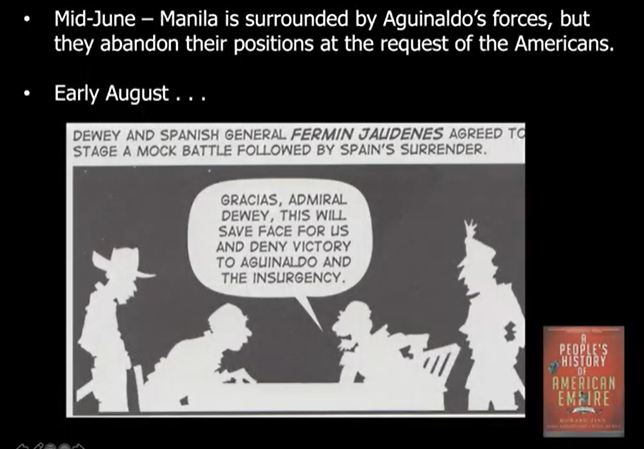
Aguinaldo didn’t know that around the same time, that he was proclaiming independence was that the Americans already has something up their sleeves
In the early August, the US and Spain was discussing how Spain could end this war in the Philippines in way that they would not lose face
Spain at this time were already cornered inside Intramuros, Aguinaldo’s forces alone were already put the Spaniards in the Philippines on the verge of military defeat
The destruction of the Spanish fleet in Manila marked the start of the end but as far as the ground war was concerned, Aguinaldo’s forces were very successful
Spanish soldiers also locked themselves up the inside the church in Paler (?)
As far as Manila is concerned, Spaniards in Manila were cornered, so the Spaniards had no choice but to surrender because it was just a matter of whom, the Americans or Filipinos
Spanish soldiers led by Fermin Jaudenes thought that if they surrendered to the Filipinos, they would be tortured and slaughtered because of all the abuses Filipinos experienced
While surrendering to the Americans would be well-documented and a formal affair
To not lose face, they staged a “mock” battle and deny victory to Aguinaldo
This was in the interest of the US because once Aguinaldo’s forces occupy the seat of power in Manila, they could have a rightful claim to having leadership of an independent nation.
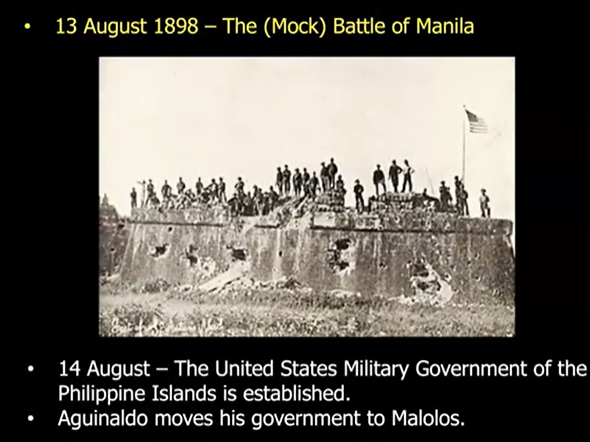
In August 13, 1898, the mock battle of Manila took place between Spain and the United States
Soon afterwards, the military government of the Philippines was established
How did Aguinaldo feel?
He had no choice and was excluded from the occupation of Manila and so he moved his government in Malolos. Here, the formal republic would be established.
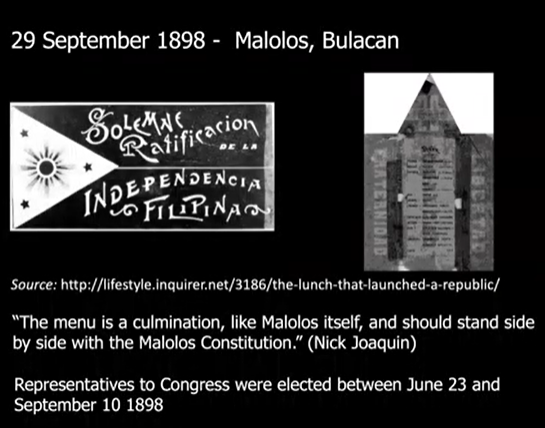
The first celebration of Philippine independence held a grand feast among the elected leaders of the representatives of the Congress who were elected between 23rd of June and 10th of September 1898.
Soon as the independence was declared, the Philippine elites were already selecting representatives of the Congress among themselves. It wasn’t a mass election.
The grand feast represented the status of the members of the Philippine Congress at the time and a reflection of their capability to lead government in a western standard.
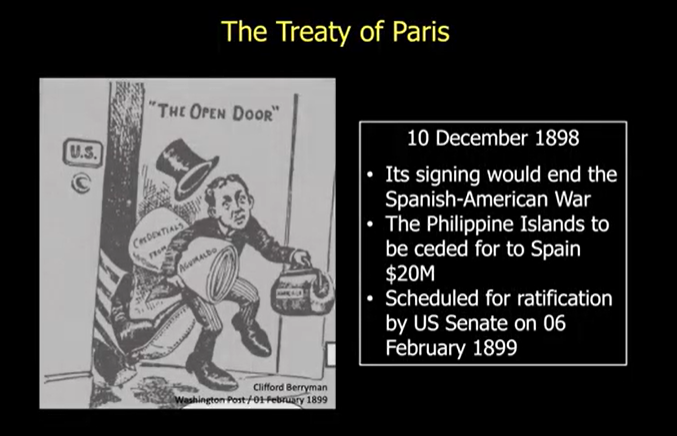
Felipe Agoncillo who had been commissioned by the revolutionary government of Aguinaldo as a minister Plenipotentiary was sent to Paris to take part to the Treaty of Paris which became the Spain and US which would end the Spanish-American war. He wanted to participate to represent the Philippines as an independent nation. Unfortunately, he was not given a seat in Paris.
We had to move to Washington to try to have an audience with William McKinley (pres of US)
The Treaty of Paris was documented to end the Spanish-American war. According to its terms, the Philippines Islands would be ceded from Spain to the US for 20 million US dollars.
It was scheduled for ratification by the US Senate on the 6th of February 1899.
Aguinaldo’s government technically had about two months to prove themselves capable being an independent nation state and to prevent the Treaty of Paris from being ratified by the US senate.
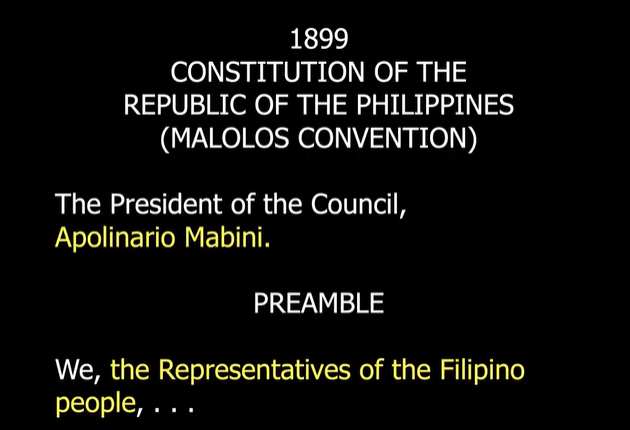
The President of the Council was Apolinario Mabini, he was one of the original members of the La Liga Filipina. Aguinaldo heard about his reputation, intelligence, wisdom, and immediately took Mabini as a consultant because he was operating from this instillment (?) as a “dakilang lumpo”. He was already afflicted with polio, so he was paralyzed from the waist down and couldn’t walk.
He was recuperating Los Banos and he was transported from here to Bulacan to present and act as president of the Council. He was in favor of having a strong president and executive powers. The president should have the power and that a legislative body would make leadership more difficult, especially in the early stages of creating a nation but he was overruled by the members of the Congress who were supposedly representatives of the Filipino people but mostly ilustrados.
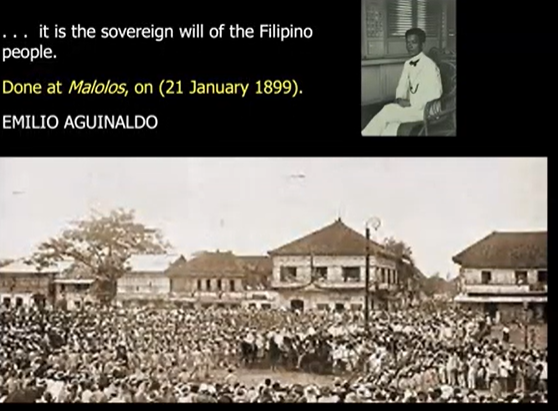
The anniversary is 21st of January 1899, which is about two weeks away from the ratification.
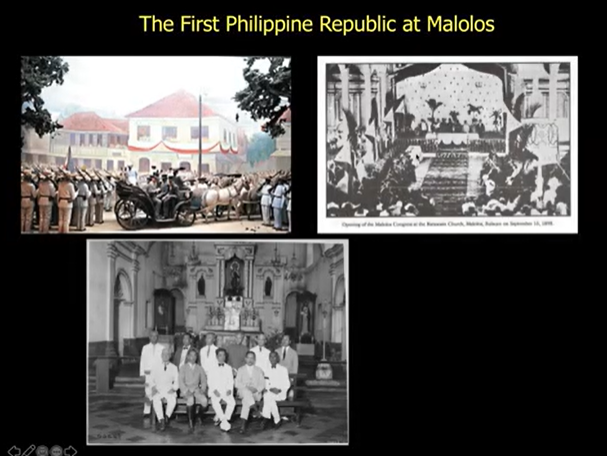
There is a barrier between commoners and representatives.
A lot of the members of Congress were ilustrados who actually had little respect for Aguinaldo. Because Aguinaldo was a member of the principalia but a lot of the members here looked down at him. In the subsequent turns of events, Aguinaldo would eventually be marginalized.
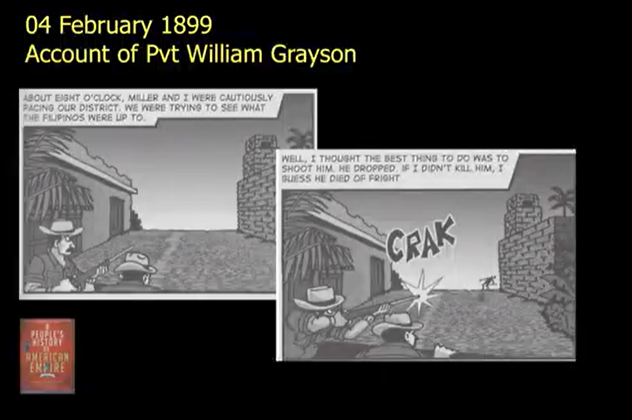
Account of Private William Grayson is a secondary source. This is taking place at the corner of Sociego and Silencio in Sta. Mesa Manila.
They shot the guy and this event would mark the start of the Philippine-American War
The Americans referred us as the “Philippine Insurrection” because the POV of the Americans, they were the ones who established former government over the Philippines and it was the Filipinos who were acting as insurrections or as rebels against the government.
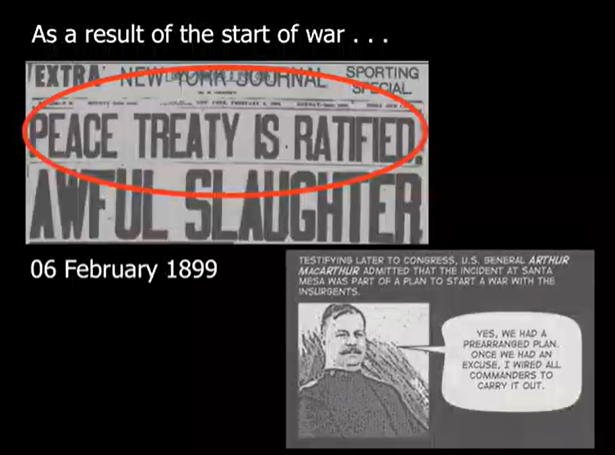
At the start of the war, the Peace Treaty was ratified by the US senate by a margin of one single vote. It was not anonymous because there was a large group of Americans who were anti-imperialists and they were actually part of the so-called “anti-imperialist league”
As the result of the start of war, some of the senators who were probably inclined to reject the Treaty of Paris just ratified it.
Testifying later to Congress, US General Arthur McArthur who would later on become the military governor general of the Philippines admitted that the incident at Santa Mesa was part of a plan to start a war with the insurgents.
The US imperial plan was already in the works, this is considering how the US has acted similarly in places like Vietnam, Iraq, and Afghanistan.
This was their first imperial adventure.
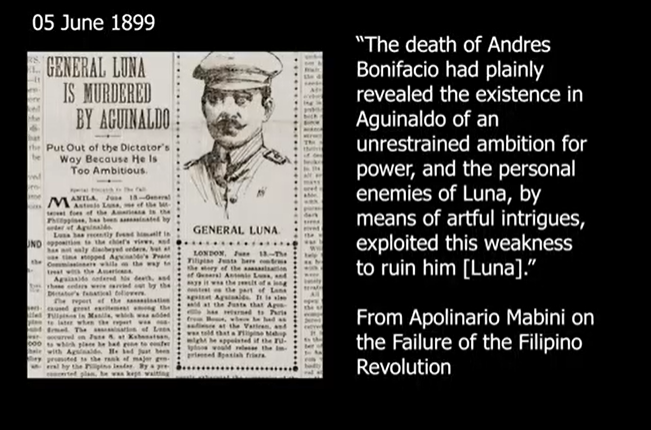
The writings is similar to what is happening to the Philippine politics up to now.
The Philippines was at war with foreign powers, Spain and US but they themselves are fighting with each other.
Aguinaldo claimed that he was a dictator at the start, he made that claim already but would probably have presidents that followed him who also had that mindset of actually wanted to be a dictator, to have power not only for themselves but their families.
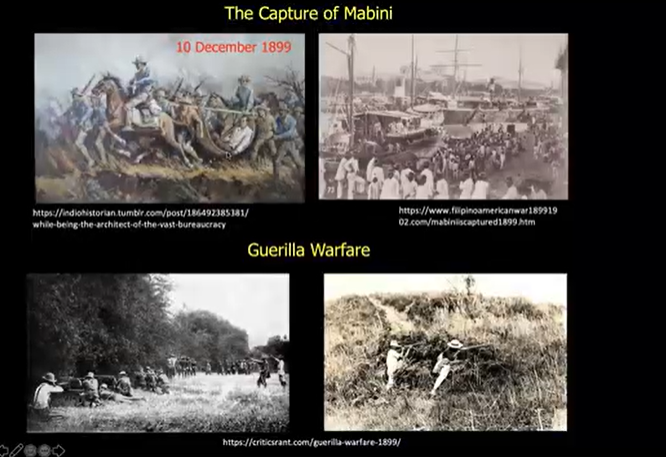
After the death of Antonio Luna, even Apolinario Mabini was captured and was offered his freedom in exchange for a pledge of allegiance to the United States. But, he refused so he was exiled to Guam.
In September 1899, at the recommendation at the advice of Gregorio del Pilar (“batang general”), Filipino revolutionaries started engaging in the warfare. The nature would be hit and run tactics, surprise attacks and there would be no more fronts.
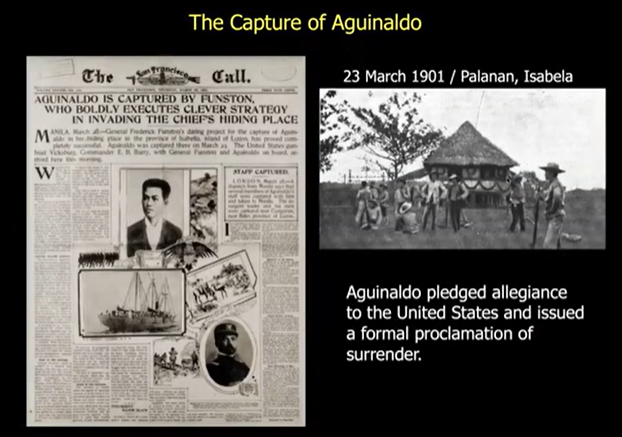
In the 23rd of March 1901, Aguinaldo was captured by forces of Colonel Fredrick Funston. They were celebrating Aguinaldo’s bday the day before.
The Macabebe scouts took the sides of the Americans and pretended to bring American prisoners into Aguinaldo’s camp. It was part of the plan to capture Aguinaldo.
Aguinaldo pledged allegiance to the US and issued a formal proclamation of surrender. He was welcomed to the Malacanang and was given his freedom and issued the proclamation. But some of his generals continued the fight.
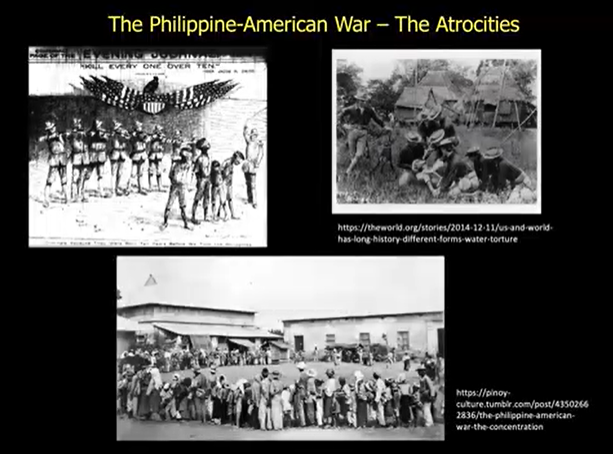
When the war started, the Americans thought that it would be over very quickly because of their superiority in arms but it have already been dragging on and as these wars of this type drag on, atrocities took place because of lowering of morale, desperation, and because of American soldiers getting tired and wanting to go home.
There was a command to kill every Filipinos over the age of 10 by Colonel General Jacob Smith in the aftermath of the Balangiga massacre where Filipino revolutionaries who were in disguise massacred 52 Americans while having breakfast.
Supposedly, Jacob Smith was reprimanded for this, got slapped on the wrist. Americans used torture techniques such as the water cure, which involved submerging individuals in water until they almost drowned, to extract information from suspected insurgents.
One technique used by Filipinos when they captured Americans was that they bury them while their head is over the land, then they will pour sugar on their faces and leave the rest to the ants.
In Batangas, the style made by General Franklin Bell to end the war was to fence in Filipino populations inside the pueblos and everybody outside the reconcentration zone would be considered as insurgents. They would burn the fields and kills carabaos which resulted in famine, hunger, and disease.
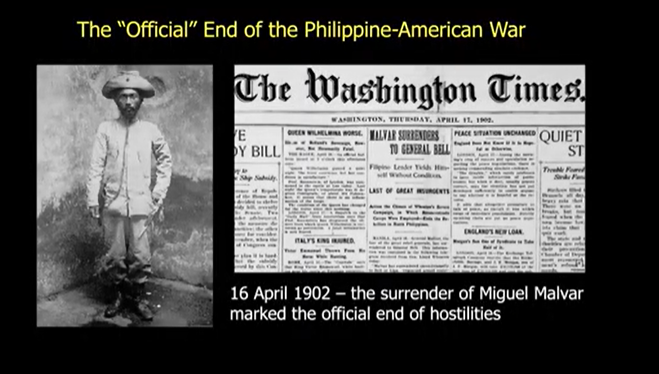
In the 16th of April 1902, Miguel Malvar surrendered to mark the official end of the Philippine-American war. At this point, Americans lost about 4,390 soldiers and at least 20,000 Filipino combatants and among civilians.
Miguel Malvar was actually offered a position in the American government but he refused and retired as a gentleman farmer in the foothills of Mt. Makiling.
Going back to Mindanao, the Bates Treaty was signed between the US and the Sultan of Sulu on 20 August 1899 to respect Moro autonomy. However, not all datus agreed with the Bates Treaty, several notable encounters took place between Filipinos and Americans
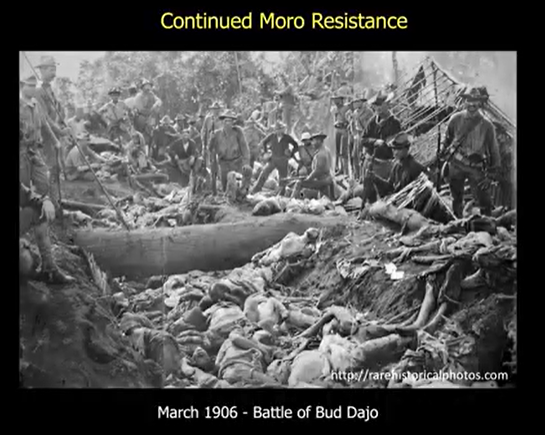
Battle of Bud Dajo
But by this time 1906, there was no longer a US army and the only one participating is the Philippine Constabulary. Filipinos are now helping Americans. Here, atleast 600 Moros were killed.
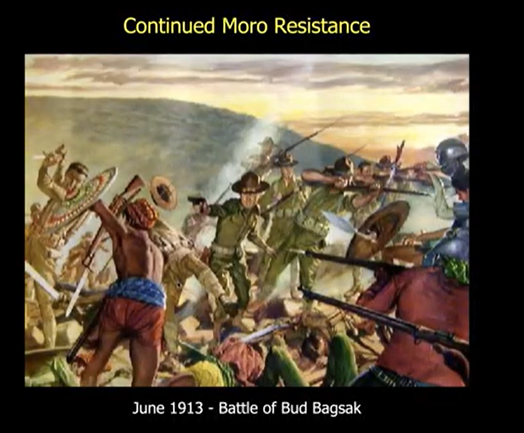
Battle of Bud Bagsak
Moros would attack the Americans with their axe. Americans gunned the Moros but they were strong so they changed their sidearm from the 38 caliber to the 45 caliber.
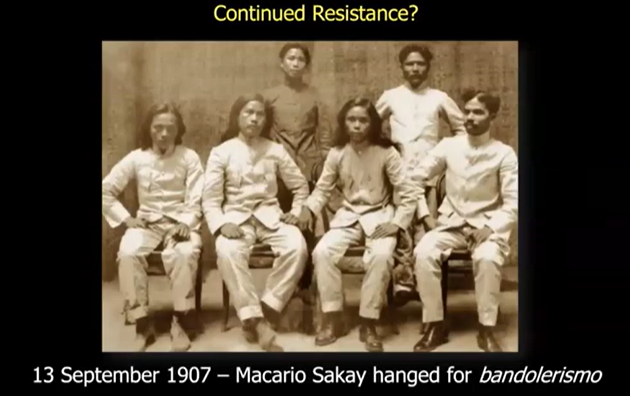
Macario Sakay is supposedly one of a friend of Andres Bonifacio and a ritual member of the Katipunan. Despite the formal surrender of the Philippine revolutionaries to the US, Sakay reformed the Tagalog Republic of Bonifacio and fought Americans along the province of Rizal. But by this time, he was considered a common bandit and not a Filipino revolutionary.
So when he has captured, he was not given a terms of surrender because he was treated as a criminal and was hanged as a bandit but he was fighting for the freedom of the Philippines until the end.
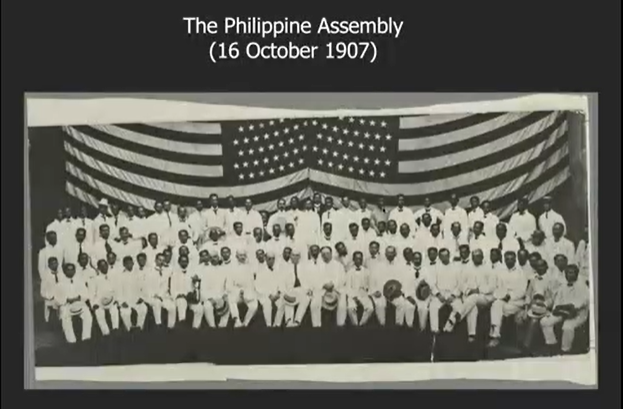
After Sakay’s execution, the Philippine Assembly had already been informed.