Unit 3
Sterlization: The complete removal or destruction of all viable microorganisms. Used on inanimate objects.
Disinfection: The destruction or removal of vegetative pathogens but not bacterial endospores. Usually used only on inanimate objects.
Antisepsis/Degermation: Chemicals applied to body surfaces to destroy or inhibit vegetative pathogens.
Decontamination/Sanitization: The mechanical removal of most microbes. Like wipping down surfaces
-cidial: Killing
-static: To stand still, slow down
Moist heat methods: Steam under pressure, boiling water, pasterurization
Dry heat methods: Incineration, dry oven
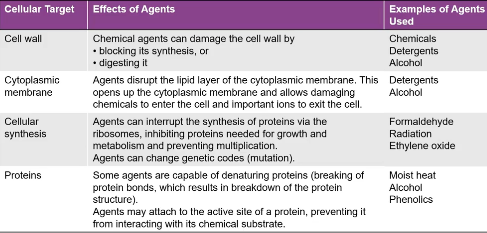
Physical and chemcial cellulart targets
Cell wall, cytoplamis membrane, cellular synthesis, prtoeins
tate the two main goals of antimicrobial treatment and identify the sources for
most currently used antimicrobials.
• List the five major targets of antimicrobial agents and know major examples of
each.
1. Plasma membrane - e.g., polymyxin, vancomycin
2. Cell wall- e.g, penicillin - beta lactam drugs, cephalosporins, vancomycin
3. Nucleic acids – e.g, Quinolones inhibits DNA synthesis; Rifampin inhibits transcription
of mRNA
4. Proteins – e.g., Erythromycin (50s ribosomal unit), Tetracyclines and Aminoglycosides
like gentamicin, streptomycin (30 s ribosomal unit)
5. Metabolic pathways- e.g., folic acid synthesis inhibited by Sulfonamides
• Review the evolution of penicillin antimicrobials, how they work, and how they
compare to cephalosporins.
• Know five cellular or structural mechanisms that microbes use to resist
antimicrobials.
Penicilinlin discorvered by alexander fleming who left an agar plate out and the fungus was killing the bacteria. Most anitbiotics come from fungi.