Metal Cutting Hand Tools
Metal Cutting Tools
Cutting tools come in a variety of types from saws and shear to drills and reamers'
Specific for each use and situation
Most cutting tools are used in specific situations
Care and attention is required when using cutting tools to avoid causing unwanted damage to the material
Types of Cutting Tools
Typical Snips
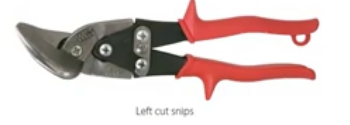
-Left cut snips (figure 1)
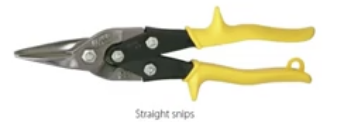
-Straight snips (figure 2)
-Plier-type tool for cutting sheet metal
Hacksaws
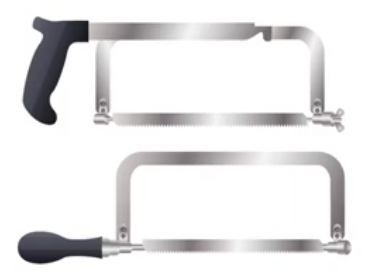
-Hand saw with hardened blade for cutting metal objects
Hand Snips
Made in various configurations of cutting jaws, commonly includes:
Straight
Curved
Hawksbill
Aviation Snips
Used specifically for cutting sheet metal where larger metal cutting tools will not work
Types of Snips
-Straight: Used for cutting relatively straight lines in sheet metal
-Curved: Used for cutting curved lines in metal as well as cutting circles
-Hawksbill: Used for cutting smaller radii circles in sheet metal
-Aviation Snips: A variation of snips used for cutting heat-treated metals. The use of a compound hinge provides greater cutting force for cutting up to .051 thick
Snip Remarks
Snips should never be used to cut heavy sheet metal or wire. Cutting wire will damage the cutting edge
Snips do not remove metal, rather, they create small fractures along the cut edge
Metal pieces should be cut larger and then filed down to the correct size
Hacksaws
Used for cutting metal objects from bolts, supports, and other solid metal objects
Frames come in two configurations:
Pistol grip
Straight grip
Blades come in various lengths, teeth pitch, and style of hardness
Blades
Blades are mounted into the frame handle via a hole on each end of the blade
Blades are installed with the cutting edge away from the frame
Blades are either all hard or flexible
All hard: Entire blade is hardened
Flexible: Only the teeth are hardened
Blade Pitch
-Pitch is the number of teeth per inch (tpi)
14: For softer steel
18: For aluminum and hardened steel
24: For thick-walled pipe, brass, copper, and iron channels
32: For thin-walled tubing and sheet metal
Always keep at least 2 blade teeth on the object when cutting
Hacksaw Procedures
Select correct blade
Mount blade into frame
Adjust tension on blade
Securely mount work in vise
Notch cutting point with file
Start cutting with light and steady pressure on forward stroke
After a few strokes, begin using full length of blade. Slightly increase pressure on forward stroke
When finished, remove metal chips from blade, remove from frame, and store