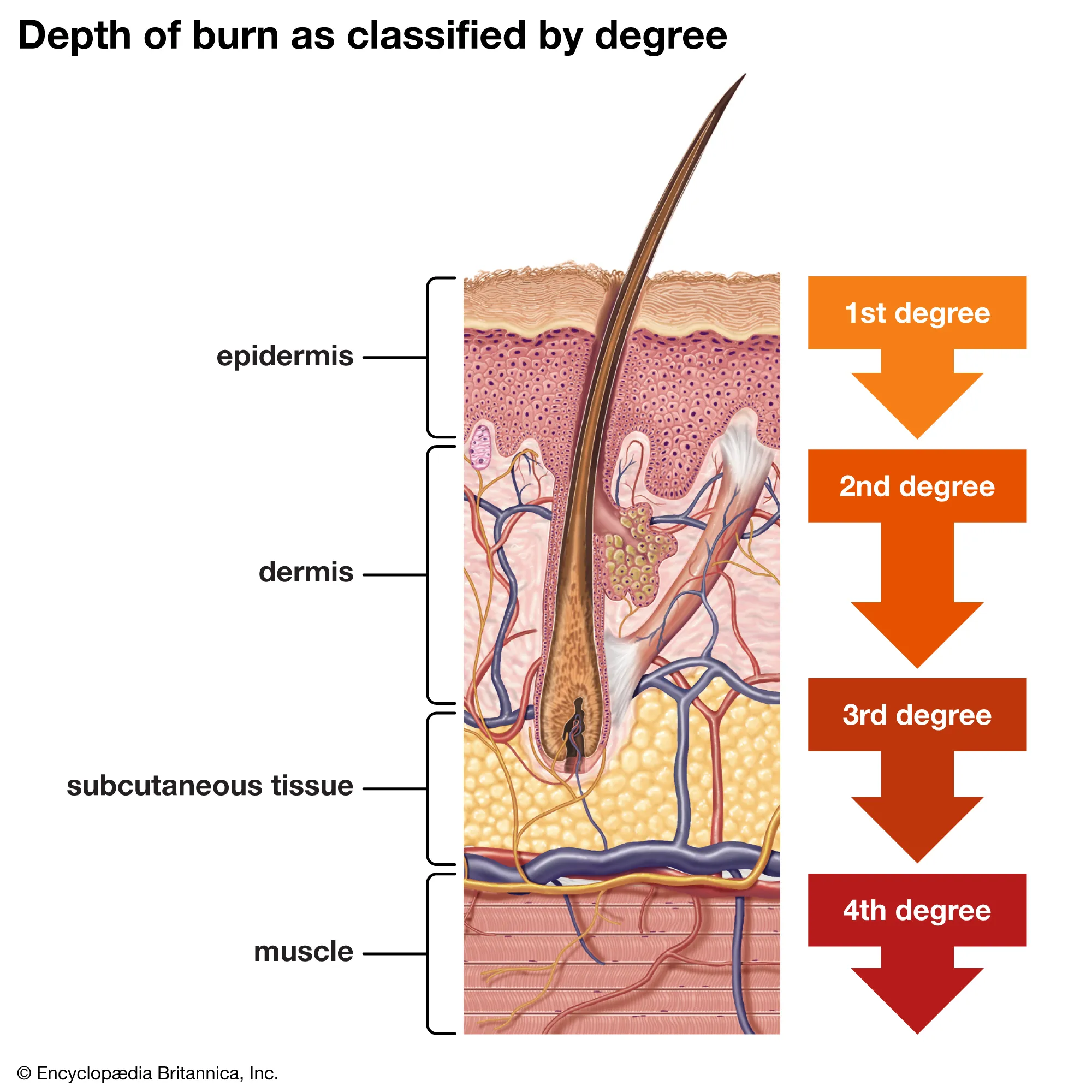
NORMAL STRUCTURE AND FUNCTION OF THE INTEGUMENTARY SYSTEM
OVERVIEW (FUNCTION)
Major Structures | Primary Functions |
|---|---|
Skin | Intact skin is the first line of defense for the immune system. Skin waterproofs the body and is the major receptor for the sense of touch. |
Sebaceous Glands | Secrete sebum (oil) to lubricate the skin and discourage the growth of bacteria on the skin. |
Sweat Glands | Secrete sweat to regulate body temperature and water content and excrete some metabolic waste. |
Hair | Aids in controlling the loss of body heat. |
Nails | Protect the dorsal surface of the last bone of each finger and toe. |
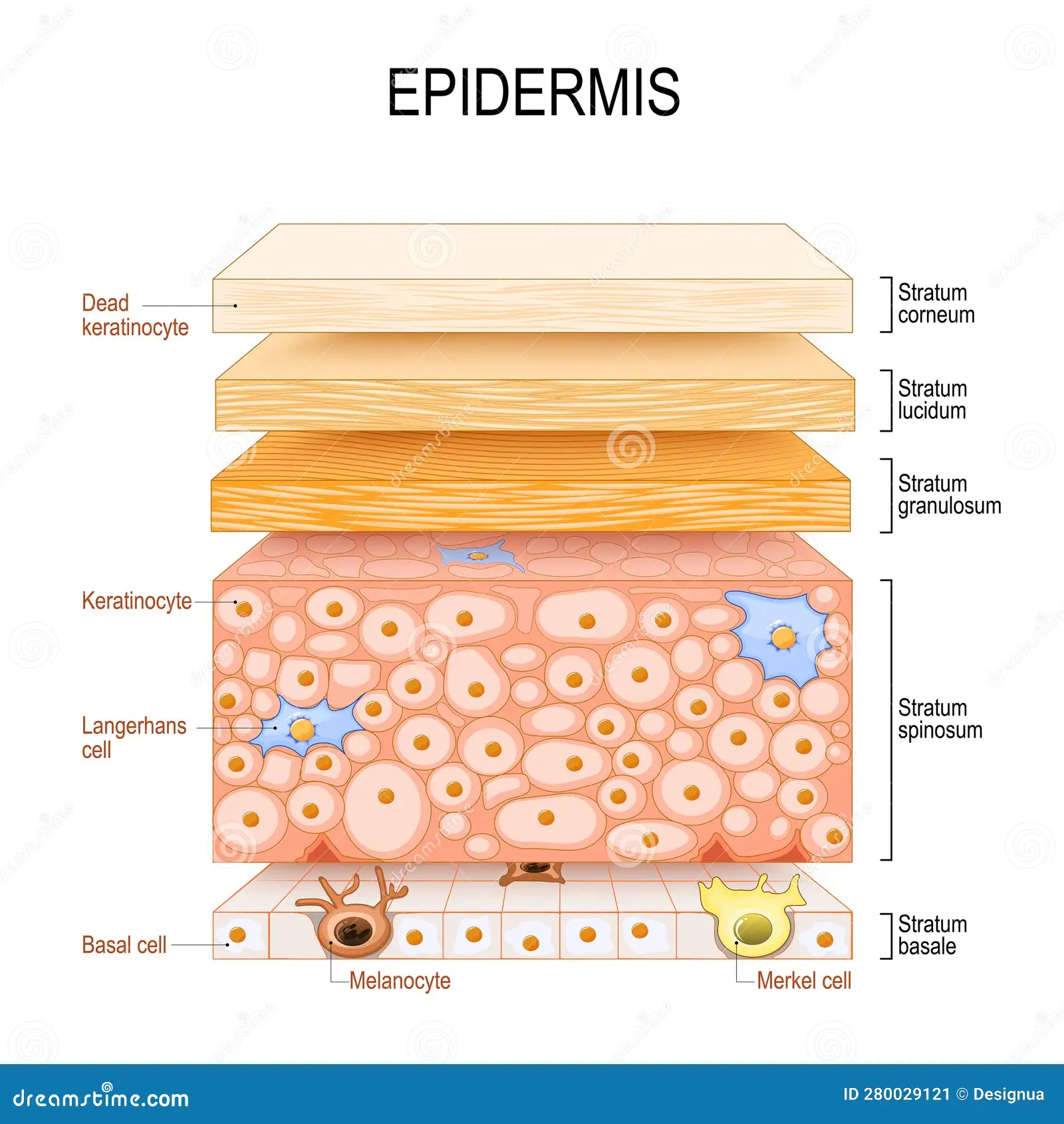
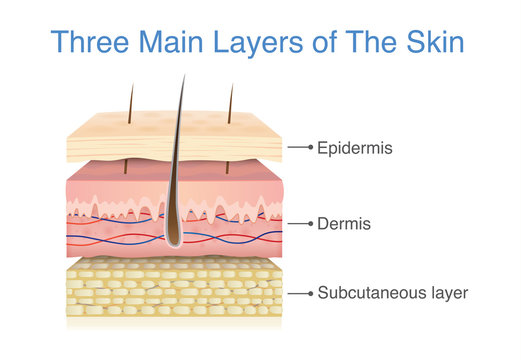
EPIDERMIS
OUTERMOST LAYER OF THE SKIN
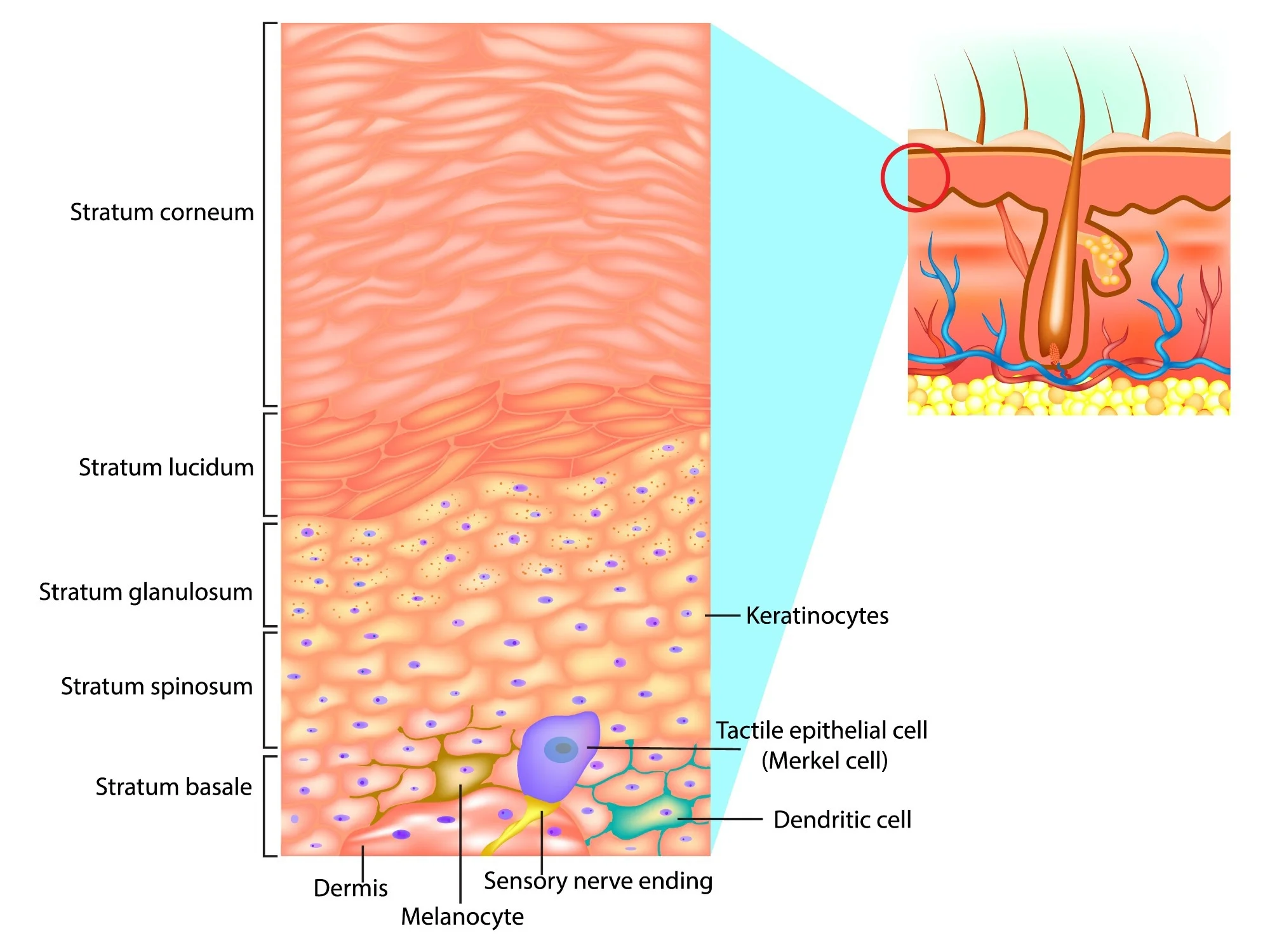
BASAL LAYER
LOWEST level of the Epidermis
NEW CELLS are produced and pushed upward; when they reach the top they DIE: These cells are called SQUAMOUS CELLS
Also Contains Melanocyte (Melanin Cells)—Produce the Pigment that determines skin color
KERATIN
Fibrous, Water-Repellent PROTEIN
Soft = Primary component of Epidermis
Hard = Found in the Nails and Hair
DERMIS (AKA CORIUM)
CONTAINS CONNECTIVE TISSUE, BLOOD VESSEL, LYMPH VESSELS, NERVE, AND EXOCRINE GLANDS (Sweat, Sebaceous)
SENSORY NERVE ENDINGS
The receptors that allow for stimuli such as touch, temperature, pain, and pressure
TISSUES
COLLAGEN
Tough flexible protein material [THINK GLUE]
Also found in Bones, Cartilage, Tendons, and Ligaments
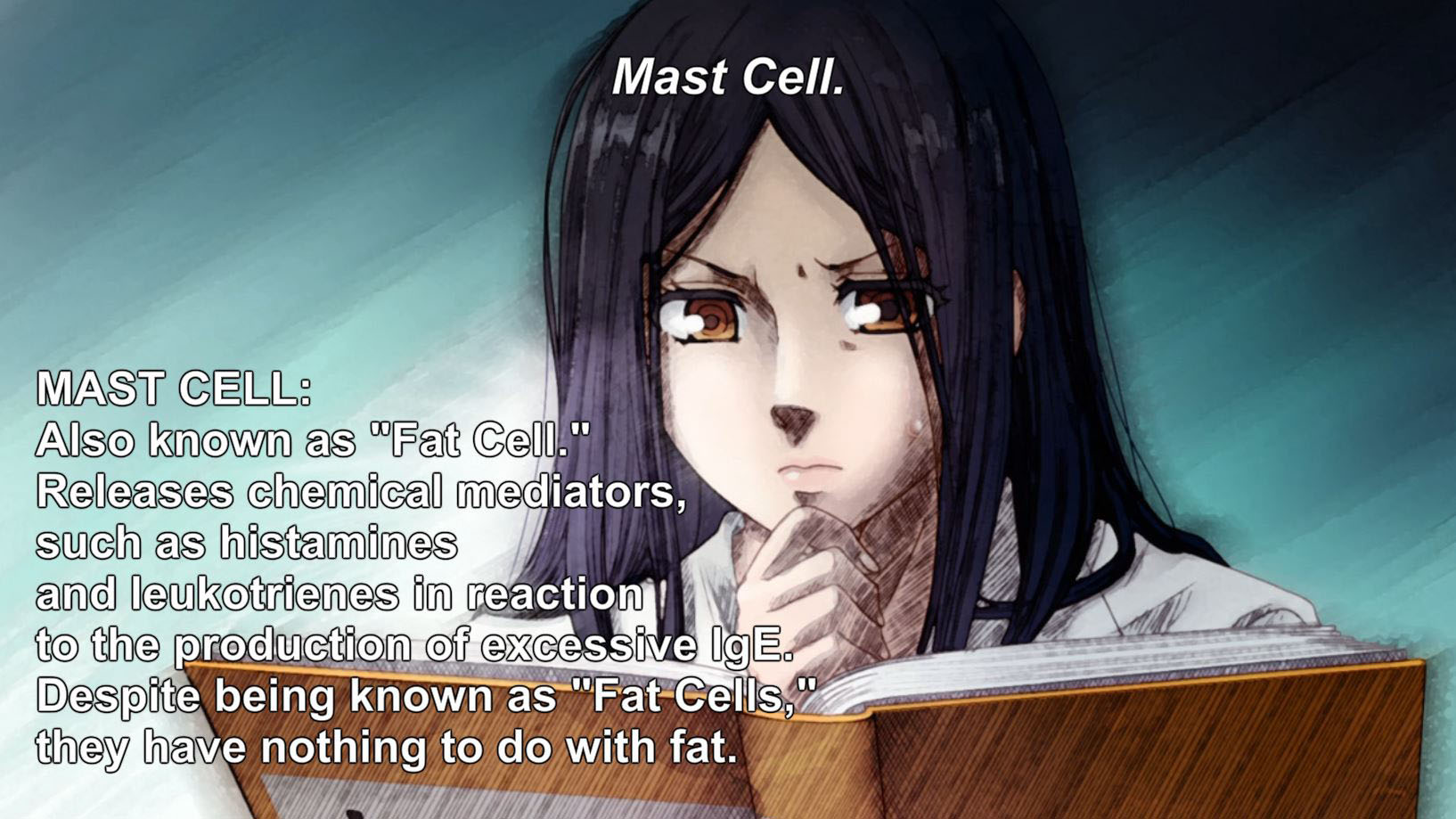
MAST CELLS
HEPARIN
Anticoagulant (Blood thinner) | Prevents blood clotting
HISTAMINE
Allergy Response | Causes symptoms like itching and increased mucus secretion
SWEAT GLANDS
APOCRINE (Found at the Hair follicles)
Eccrine (Found almost everywhere else)
Knees weak, Palms are sweaty
OTHER SWEAT GLAND TERMINOLOGY
Pores
Perspiration
Sweat (99% Water, 1% Salt and Metabolic waste)
Sweat + Bacteria = Body Odor (S T I N K Y)
Hidrosis
Production and excretion of Sweat
Fun Fact
Mammary glands (Milk-producing) are modified sweat glands (Therefore, these glands are apart of both the integumentary and reproductive systems.
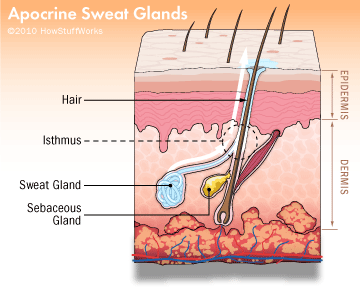
SEBACEOUS GLANDS
Closely associated with Hair Follicles
Produces Sebum
Oily substance that lubricates the skin and prevents/discourages bacteria Growth on the skin
HAIR
Tightly fused, Dead Proteins Cells filled with HARD Keratin
Melanin at the base of the follicle determine color
SUB-DERMIS (Subcutaneous Layer)
CONNECTS SKIN TO MUSCLE SURFACES
ADIPOSE TISSUE
Fat
LIPOCYTES
Fat Cells
Manufacture and stores large quantities of fat