Module 10 ~ Book Notes Bordetella
respiratory tract pathogens that cause whooping cough or pertussis
general characteristics
small, gram-negative bacilli or coccobacilli
obligate aerobic bacteria; grows best at 35-37oC
no fermentation of carbohydrates & inactive biochemical test systems
oxidation of amino acids
catalase positive
B. pertussis characteristics
catalase variable
fastidious & requires special collection and transport systems and culture media
inhibited by fatty acids, metal ions, sulfides, and peroxides
media for isolation require protective substances like charcoal, blood, or starch to bind & neutralize inhibitory substances
B. pertussis virulence factors
filamentous hemagglutinin (FHA) and pertactin
facilitate attachment to ciliated epithelial cells
pertussis toxin (PT)
a protein exotoxin that modifies host proteins by adenosine diphosphate-ribosyl transferase that interferes with signal transduction
adenylate cyclase toxin
inhibits host epithelial and immune effector cells by inducing supraphysiologic concentrations of cyclic adenosine monophosphate
tracheal cytotoxin
contributes to pathogenesis by causing ciliostasis, inhibiting DNA synthesis, and promoting cell death
clinical manifestations
pertussis
catarrhal phase — insidious & nonspecific symptoms such as sneezing, mild cough, and runny nose
highly communicable
paroxysmal phase — onset of coughing which can lead to coughing spells followed by vomiting
convalescent phase — begins within 4 weeks of symptoms onset; decrease in frequency and severity of coughing spells
spread by respiratory droplets or direct contact with infectious secretions
pathogen can adhere and replicate on ciliated respiratory epithelial cells
to prevent spread, acellular pertussis (aP) vaccination distributed
for specimen collection:
nasopharyngeal aspirates or swabs of Dacron polyester with nonwire shaft
detection by nucleic acid w/PCR
should only be utilized with at least two DNA targets
seek confirmation to avoid mischaracterization
isolation methods
Bordet-Gengou potato infusion agar with glycerol and horse/sheep blood
Regan-Lowe medium (contains charcoal, starch, horse blood, cephalexin, and amphotercin B)
Stainer-Schtolte medium (contains casamino acids)
colony morphology
on charcoal-horse blood and Regan-Lowe media, the colonies are smooth, glistening, and silver like mercury droplets
on Bordet-Gengou agar, colonies are hemolytic
identification methods
tiny gram-negative coccobacilli
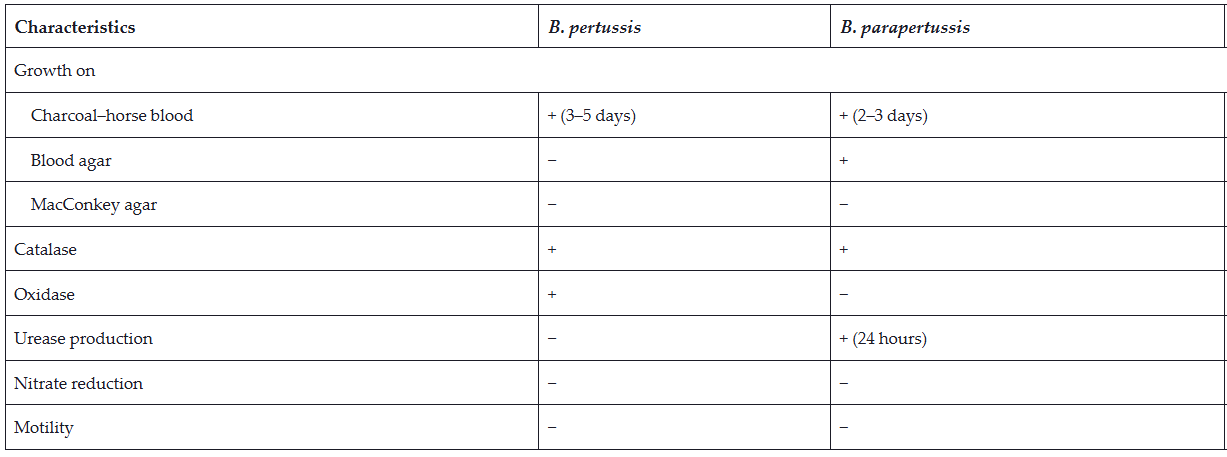
antimicrobial susceptibility
B. pertussis and B. parapertussis are generally sensitive to the macrolides, ketolides, penicillins, and tetracylines but are resistant to oral cephalosporins
erythromycin can be used for treatment only during the catarrhal phase
alternative treatments include azithromycin and trimethoprim-sulfamethoxazole