OPERATIONS RISK AND IMPROVEMENT
WHY IS IMPROVEMENT IMPORTANT
we can shift towards a focus on improvmenet due to:
peceived increase in the intensity of competitive pressure
nature of the world trade is changing
new technology
new ideas
scope of OM
this relates to the Red Queen effect- Valen compared the surivial of animals to businesses- the struggle for survival never gets easier
RADICAL OR BREAKTHROUGH CHANGE
improvments need major, dramatic change
their impact is sudden aprupt and expensive
it has large invesment and distruption
CONTINOUS OR INCREMENTAL IMPROVEMNT
this is kaizen
small incremental steps, changes add up
COMBINED IMRPOVEMENT
this is a combination of breakthorugh and continous improvement
EXPLOITATION OR EXPLORATION
exploitation
enhances existing processes
creates efficincies
tight control of improvment process
standardised
immediate benefits
incremental and predictable
fits into the existing strategy
exploration
new possibilities
radically changing
new ways of doing things
takes risks
long term benefits but these are difficult to pedicy
hard to take advantage of
ORGAINSATIONAL AMBIDEXTERITY
exploration and explotiating improvement are conflicting for resources and attential
organisation ambidexterity is the ability to exploit and explore this occurs in mature markets thorugh efficiency and new markets through innovation
RISK MANAGEMENT
things happen in operations that have a negative consequence
far reaching effects on operation, reputation, idel time reduction efforts, profitability and customer satisfaction ect
failure will occur in operations recognising this doesnt imply accepting or ignoring it
risk management is about
understanding what failurs could occur
examining ways of preventing failure
minimise the negative consquence of failutes
recovering from failutrd
POTENTIAL CAUSES OF FAILURE
supplier
human
operation
technological
p or s
customer
environmental
esecurity
POST FAILURE ANALYSIS
this looks at previous failures to learn about the sources of potential risk
it is used to uncover the root cause of failure
this includes activities such as:
accident investigation
failure traceability
compliant analysis
fault tree analysis
HOW CAN FAILURES BE PREVENTED
maintainance- all activities involved in keeping a systems equipment in working order
reliability- the profitability that a macine part/product will funcuton properly fot a specigied time under stated conditions
the objective of maintenance and reliability is the maintain the capability of the system
STRATEGIC IMPORTANCE OF MAINTAINANCE AND RELIABILITY
employee involvement
autonomous maintanance
skills training
rewards
empowerment
continous improvement
maintainence and relibility procedures
clean
monitor and adkist
make minor repairs
keep accutate recors
RESULTS
reduced variability
reduced inventory
improved quality
improved capacity
YIELDS
enhanced productiity
winning products
profitability
IMPORTANT TACTICS
RELIABILITY
relibility- improving indivisual compoments and providing redundance
systems are composed of a series of indivisual interrelated compoments
if these compoments are independant the reliability of the system is:
RS=R1 . R2. R3. Rn
the reliability of a compoment is defined as the probability of it performing as intended
if the nunmber of compoments increases the reliability of the whole system declines quickly
product failure rate
this is a basic unit measure for reliability
FR%=no. failures/no. units tested x 100%
FR(N)=no. failures/no. unit-hours of operating time
the mean time between failures=1/FR(N)
total time (unit-hour)= time.units
non operating tome= (total hours-failed hour)+(total hour b-failed hour b)
operating time= total time- non operating time
providing redundancy
to increase the reliability of systems redundancy is added in the form of back up compoments
Rs=(profitibility of first compoment working)+[{profitibility of 2nd compement working).(probability of needeing the 2nd compoment)]
reliability with parallel redundancy
another way to enhance reliability is to provide parallel paths
in a parallel system the paths are assumed independant
MAINTENCE
maintainance- implementing or improving maintence, inctrasing repair cpabilities or speed
there are 2 types of maintencne
preventitive- monitoring equipment and facilities and performing routine inspection and service to keep equipment and facilities reliable
break down- emergency or priority repairs on failed equipment
predictive- new tech enables this it uses advanced tech to monitor and predict equipment failure
implementing preventitive maintencne
need to know when a system requires a service or it may fail
high inital failure rates are infant mortaility
once a product settles in MTBF follows a normal distribution
good reporting and record keeping can aid the decision on when preventative maintainance should be performed
computerised maintenance system
we have data failes
equipment file
work order scheduel
repair history
invenoty of spare parts
personnel data
output reports
inventory and purchasing reports
equipment parts list
equipment history reports
cost analysis
work orders
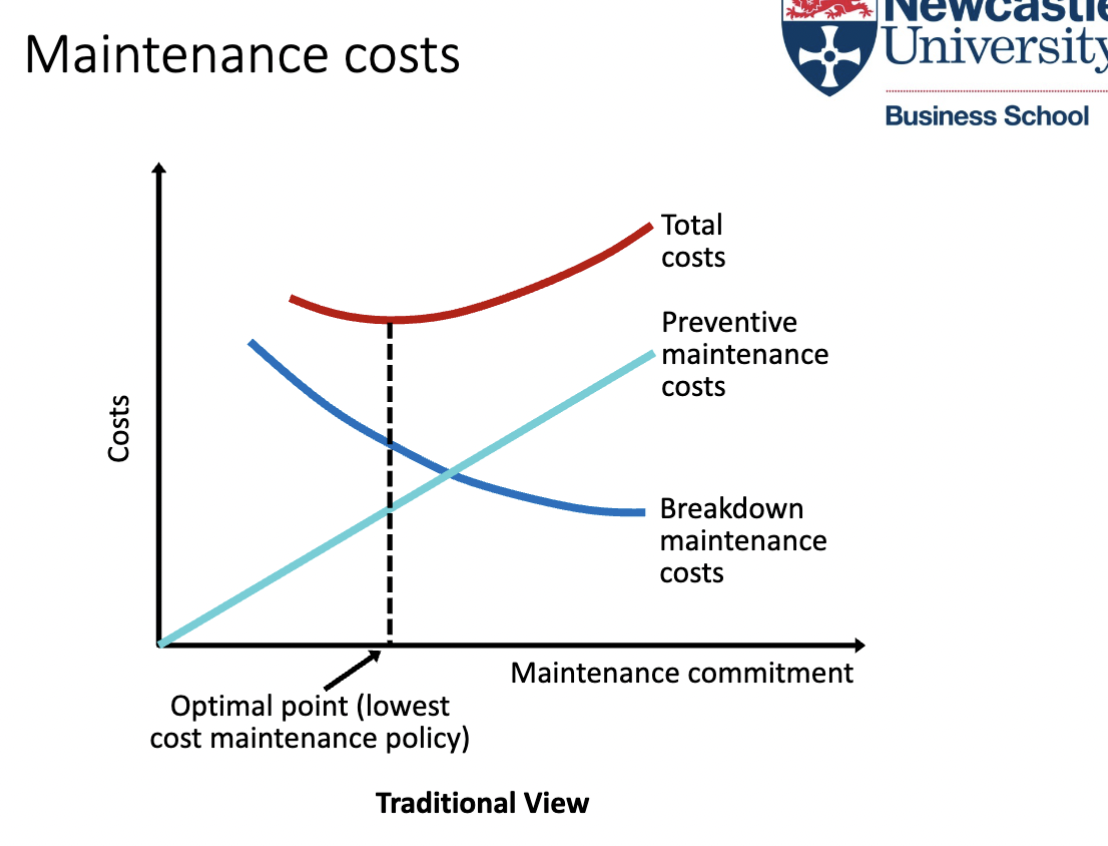
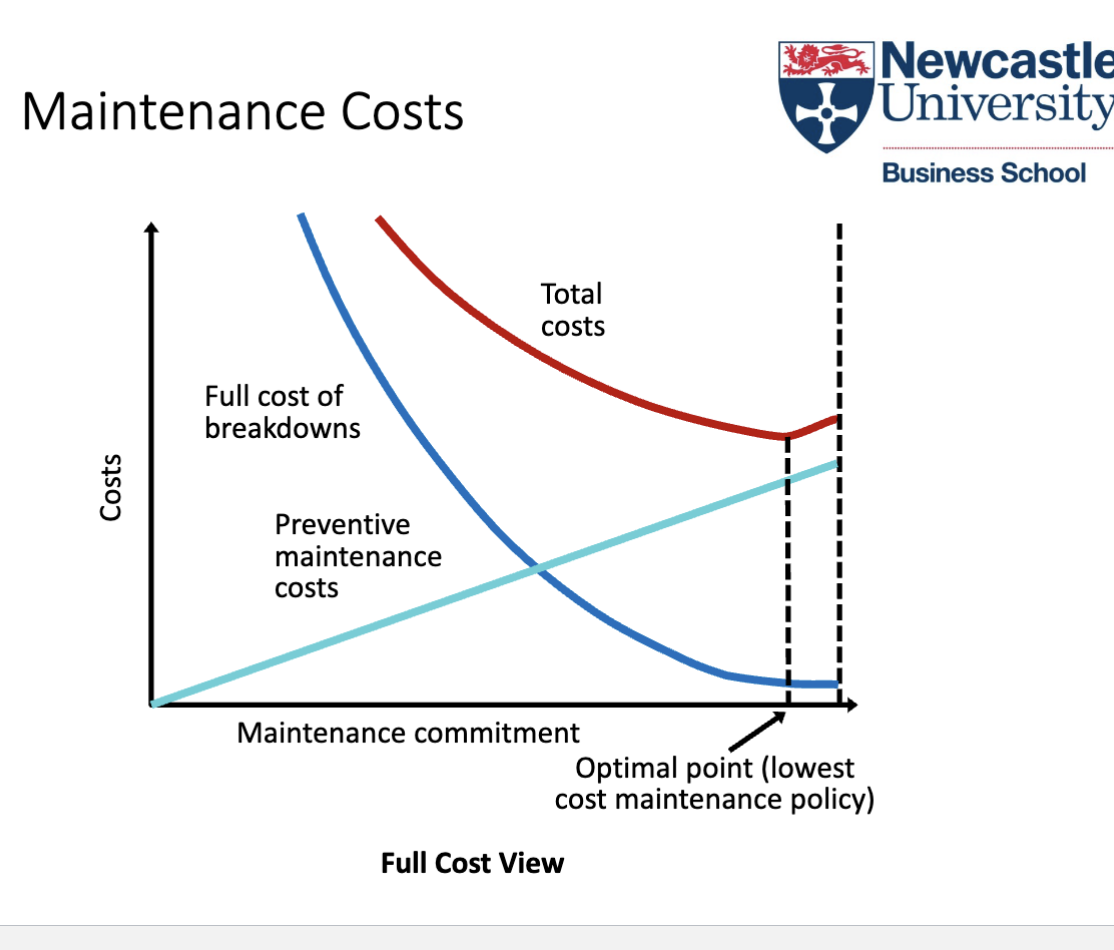
maintenance costs
the traditional view attempted to balance preventative and break down maintace costs
this approach failed to consider the full cost of a breakdown
invenotry
employee saftey and morale
scheduel unreliability
BREAKDWON VS PREVENTITIVE MAINTENCE
problems with breakdown maintenace ‘run it till it breaks’
might be ok for low crtically equipment or redudant systems
could be disastrous for mission critical plant machienry or equipment
no permissible for systems that could impact life
problems with preventitive maintencne fix it ‘whether or not it is broken’
scheduled replacement or adjustment of parts/equipment with a well established service life
sometimes misappliied eg replacing old but still good bearings
Expected number of break downs=sum of number of breakdowns x corresponding frequency
expected breakdown cost= expected number of breakdowns x cost per breakdown
preventitive maintence cost= cost of expected breakdowns if service contrace is signed + cost of service contract
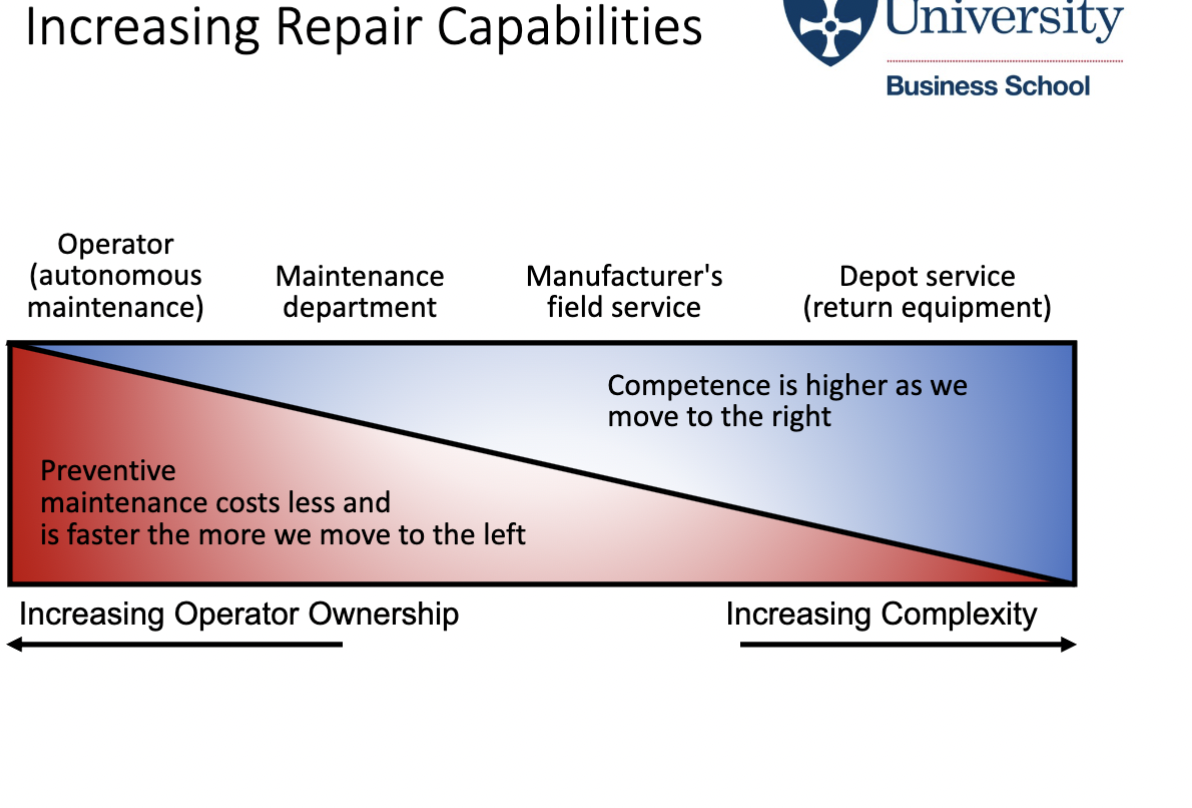
INCREASING REPAIR CAPABILITIES
well trained personnel
adequete resources
ability to repair plan and prioritise
ability and authority to do material planning
ability to identify the cause of breakdown
abiltiy to design ways to extend MTBF
 AUTONOMOUS MAINTENCE
employees accept respnsibility for:
observe
check
adjust
clean
notify
employees can predict failures prevent breakdowns and prolong equippment lfie
with autonomous maintencne the manager is making a step towards both employee empowerment and maitining system performance
TOTAL PRODUCTIVE MAINTENANCE
designing machines that are reliable easy to operate and easy to maintain
emphasising TC of ownership when purchaisng machiens so that service and maintence are inlcuded in the cost
developing preventtive maintenance plans that utilise the best practive of oeprators maitencne departments and depot service
training for autonomous maintence so operators maintain their own machines and partner with maintence personnel