4_Reaction to the Peace Treaty of Versailles
Initial Reactions
Many Germans opposed surrendering in 1918, believing the army could have continued fighting.
The public expected the Treaty to follow Wilson’s 14 Points, which focused on peace and recovery.
Instead, they saw the terms as unfair and humiliating.
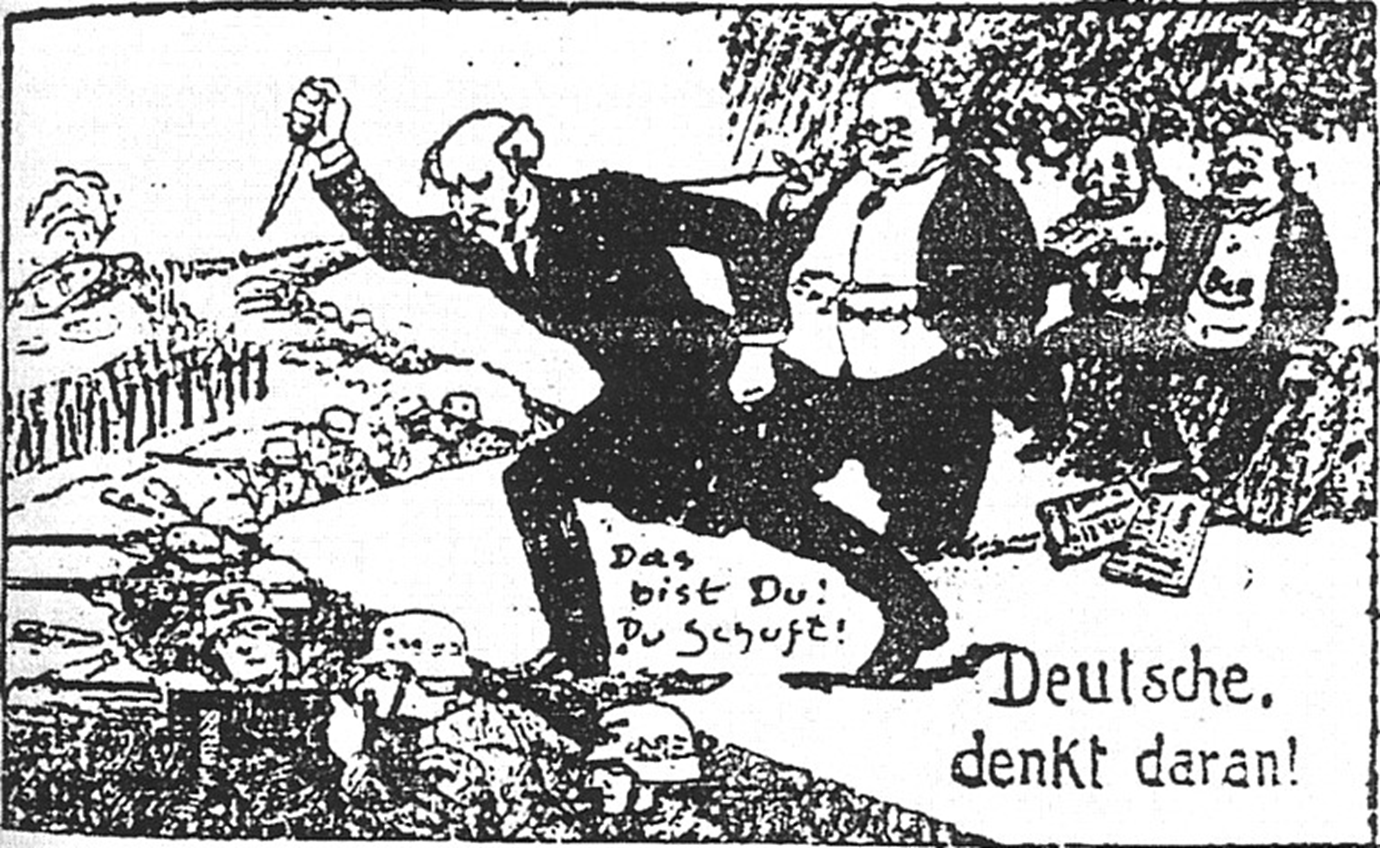
The Weimar Government was blamed and called the “November Criminals”, accused of “stabbing the army in the back.”
German Government’s Position
Chancellor Friederich Ebert called the terms “unrealisable and unbearable.”
He asked the army if they could resist an Allied invasion but was told they couldn’t.
Germany was excluded from negotiations and received the draft treaty in May 1919, with only 15 days to respond.
Unable to make changes, they called it a “diktat” (dictated peace).
The treaty was signed on 28 June 1919.
Economic and Territorial Impact
Germany lost some of its most productive industrial and agricultural land, reducing income needed for reparations (£6.6 billion).
The army restrictions were seen as denying Germany the right to self-defence.
The War Guilt Clause (Article 231) insulted national pride by forcing Germany to accept full blame for the war.
Political Unrest
The treaty fuelled anger and instability within Germany.
1919: Spartacist Revolt (Communist uprising) – crushed by the Freikorps (right-wing ex-soldiers).
1920: Kapp Putsch – Freikorps’ failed right-wing coup stopped by a Berlin workers’ strike.
1922: Foreign Minister Walther Rathenau assassinated for signing the treaty.
Overall Effects
Weakened the popularity of the Weimar Republic.
Caused political protests and uprisings.
Damaged the German economy and created long-term resentment.
Reactions to the Treaty — key voices & quotes
Philipp Scheidemann (German Chancellor, June 1919): resigned rather than sign; said “may the hand wither that signs this treaty” — shows extreme political disgrace attached to signing.
Paul von Hindenburg (1919): claimed “The German army had been dagger-stabbed from behind by the civilian populace” — echoes the stab-in-the-back myth blaming civilians/Weimar politicians.
Friedrich Ebert (1919): told returning veterans “No enemy has vanquished you” — attempted to preserve army honour and shift blame to politicians/treaty.
Count von Brockdorff-Rantzau (head of German delegation): wrote to Clemenceau that the treaty’s demands were “victorious violence”, impossible to carry out, and “more than the German people can bear” — formal diplomatic protest emphasising impracticality and humiliation.
Hall of Mirrors / public statement (propaganda tone): speech in Versailles portrayed the signing as national shame and called for vengeance and eventual recovery of German honour — shows rise of nationalist resentment and long-term desire to overturn the treaty.
Leading German figures reacted with outrage and humiliation: Scheidemann resigned rather than sign, Hindenburg promoted the stab-in-the-back myth, and Ebert sought to protect soldiers’ honour. The German delegation’s head warned Clemenceau that the treaty’s demands were violent, impractical, and unbearable. Public rhetoric in the Hall of Mirrors framed the treaty as a national disgrace and promised revenge — fueling nationalist resentment that undermined the Weimar Republic and made the treaty deeply unstable.
The ‘Stab-in-the-Back’ Myth
Origin: Phrase arose in 1919 during a conversation between General Ludendorff and British General Sir Neill Malcolm — Ludendorff embraced the image of being “stabbed in the back.”
Claim: The myth blamed civilian politicians, socialists, Jews and trade unions for Germany’s defeat, not the army or military failure.
Why it spread: The German army remained intact and Germany was not occupied, so people sought an explanation for defeat; the phrase was catchy and politically useful.
Impact on Weimar: Severely undermined the legitimacy of the Weimar Republic by portraying its leaders as traitors (the “November Criminals”).
Consequence: The myth fuelled nationalist resentment, propaganda, and political violence; it helped mobilise support for right-wing movements that promised to overturn Versailles.
Propaganda echo: Speeches in the Hall of Mirrors used the idea to demand vengeance and reclaim German honour — showing how the myth fed long-term instability.
The “stab-in-the-back” myth, popularised after a 1919 exchange between Ludendorff and Sir Neill Malcolm, blamed civilian politicians and minorities for Germany’s defeat rather than military failure. Because the army had not been crushed or the country occupied, the myth spread quickly and became politically powerful. It seriously weakened the Weimar Republic’s credibility by branding its leaders as traitors, fuelled nationalist resentment and propaganda (notably at Versailles’ Hall of Mirrors), and helped create the political climate that supported violent right-wing movements aiming to overturn the Treaty of Versailles.
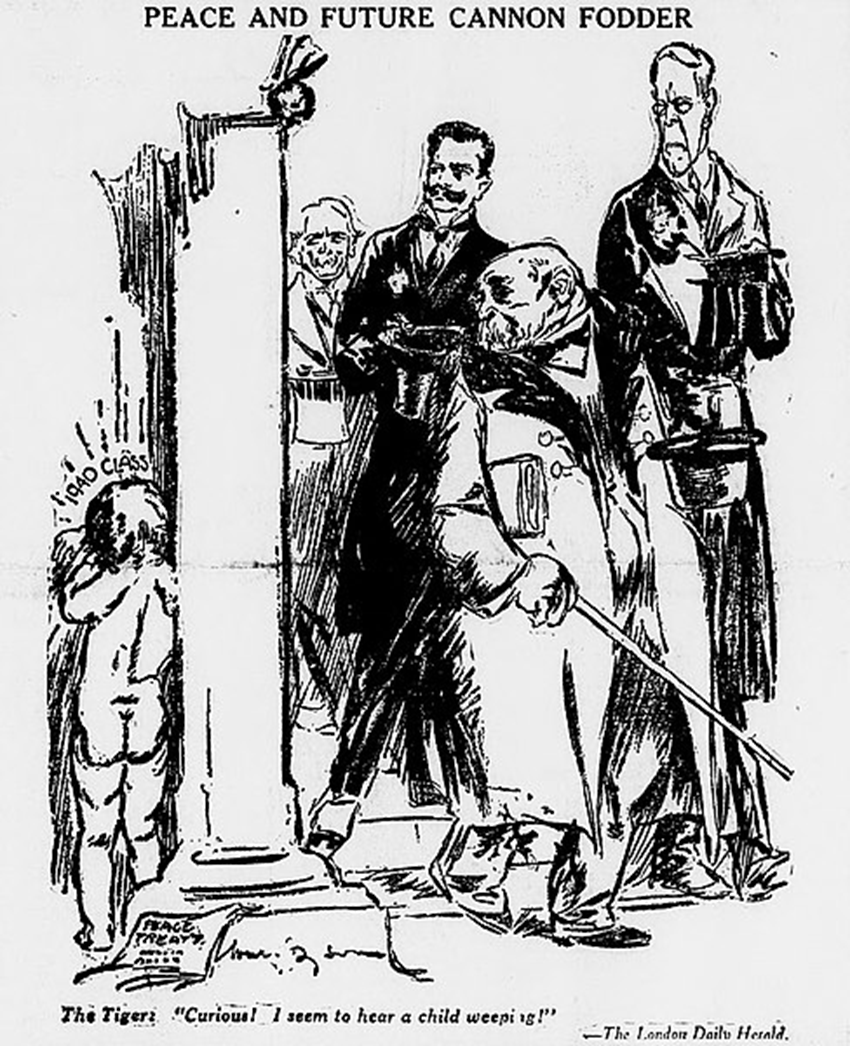
Clemenceau was nicknamed ‘The Tiger’ for his determination as a wartime leader.
This is a cartoon of 1919 prediction of what the Treaty of Versailles would do in 1940.
Reactions Outside Germany
Beatrice Webb (British observer, 1919):
Referred to Germany’s victors as its “oppressors” — meaning the Allied powers enforcing the harsh terms of Versailles.
Her mention of “property” referred to wealth, land, and social privilege — things at risk if revolution spread.
Feared revolution might occur due to economic hardship and resentment in Germany; “men of property” (the wealthy and elite) were worried about communist uprisings like in Russia (1917).
Webb’s tone shows sympathy for the German people rather than for the victorious Allies — she saw the Treaty as unfair and warned it could provoke instability.
Lieutenant Colonel W. L. G. Twiss (British negotiator, 1919):
His letter shows a milder attitude toward Germany; he wanted the Allies to ensure the Germans were fed and the treaty reasonably modified.
His use of the word “Huns” (a derogatory wartime term for Germans) reveals lingering prejudice, but his concern about fairness suggests pragmatism over vengeance.
Demonstrates how some Allied officials recognised the need to balance punishment with stability.
Outside Germany, reactions to the Treaty of Versailles were mixed. Beatrice Webb criticised the harsh treatment of Germany, describing the Allies as “oppressors” and warning that punishing the nation too severely could spark revolution, alarming the wealthy “men of property.” Her account reflects growing fears of instability and sympathy for the German people. Meanwhile, British officer Lieutenant Colonel Twiss showed a more practical view — though still using hostile language like “Huns,” he advocated feeding the Germans and softening some terms. Together, their views reveal that even among the victors, there were concerns that the peace settlement might create more problems than it solved.