4a: Schizophrenian& psychosis
Core Definitions and Frameworks
Psychosis: A mental state involving a loss of contact with reality; it is a symptom of various conditions rather than a standalone disorder.
characterised by hallucinations and delusions
Schizophrenia: A chronic syndrome involving disturbances in thought, perception, emotion, and behavior.
The Psychotic Spectrum: Psychotic experiences exist on a continuum of severity, ranging from schizoid traits to schizophrenia and schizoaffective disorder.
Biopsychosocial Aetiology: Disorders result from complex interactions between biological (genetic/neurological), psychological (stress/coping), and social (environmental/cultural) factors.
defining psychosis: Symptomatology
a collections of symptoms that affect the mind, where there has been some loss of contact with reality
beliefs and experiences that are not shared by other people
impacts a person’s sense of what is real and what isn’t
Positive Symptoms: Additional disturbances including hallucinations, delusions, disordered thought, and abnormal motor behavior.
Negative Symptoms: Diminished functioning such as affective flattening, anhedonia, alogia, avolition, and social withdrawal.
Hallucination Mechanisms: auditory, visual, olfactory (smells without a source) gustatory (flavours without substance), tactile (sensation on skin without stimuli)
Metacognition: Impaired self-awareness and difficulty monitoring cognitive processes.
Perception Misattribution: Incorrectly labeling internal imagery as external experience.
Efference Copy Model (Corollary Discharge Theory): Brain dysfunction in predicting sensory consequences of motor commands.
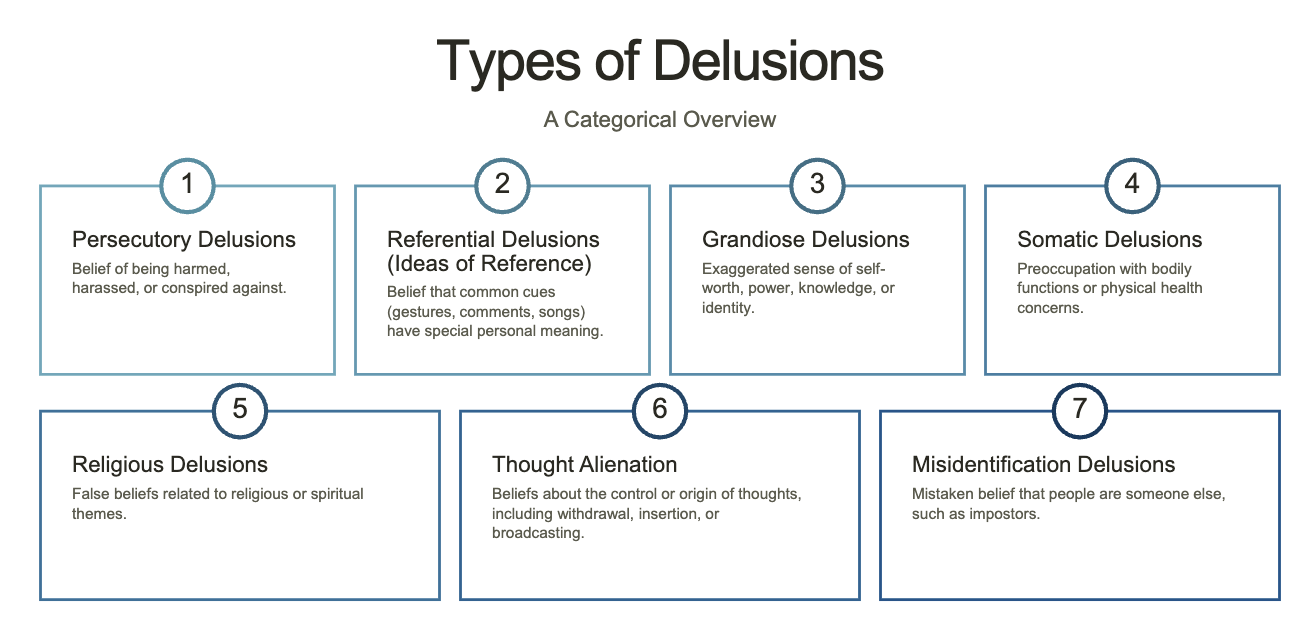
Delusion Categories: fixed, false beliefs held with strong conviction despite clear evidence to the contrary, and are not explained by cultural or religious background
Non-Bizarre: Theoretically possible (e.g., being followed).
Bizarre: Utterly impossible (e.g., thoughts being broadcasted).
Specific Types: Persecutory, Referential (ideas of reference), Grandiose, Somatic, Religious, Thought Alienation, and Misidentification.
Schizophrenia
umbrella term
complex syndrome characterised by dysfunctions
domains:
cognitive: thinking, concentraion
perceptual: hallucinations
behavioural: disorganised actions
language: speech, thought expression
emotional: challenges with expressing emotions, inappropriate emotional reactions
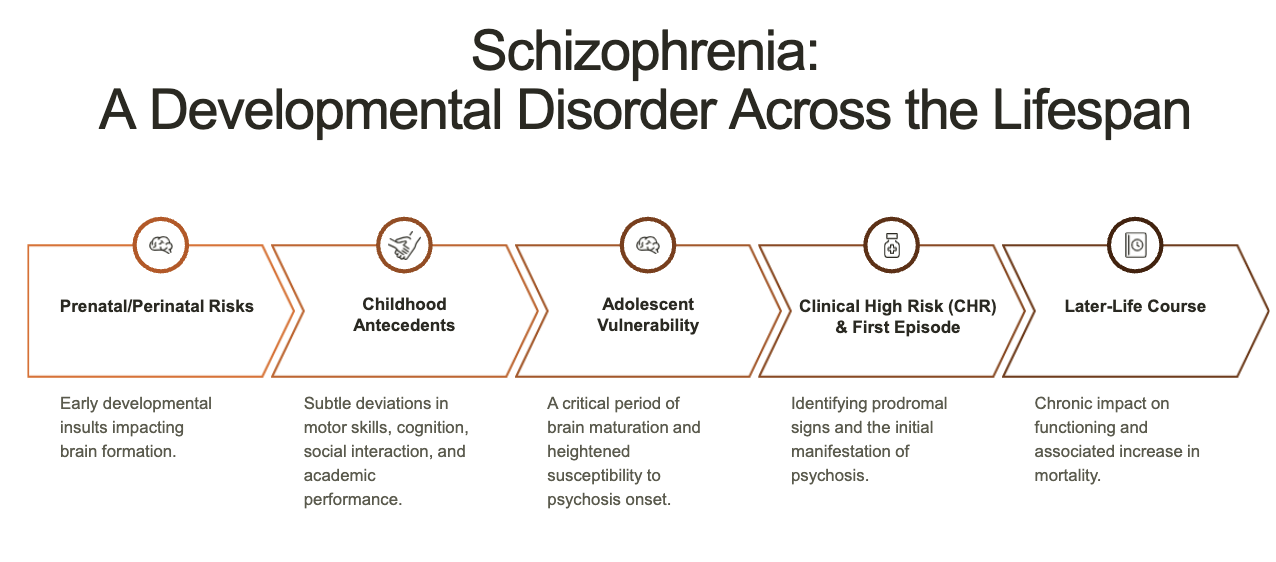
Epidemiology and Developmental Course - Schizophrenia
Prevalence: Affects approximately of the global population.
Demographics: Slightly more common in males; typical onset is late teens to mid-twenties.
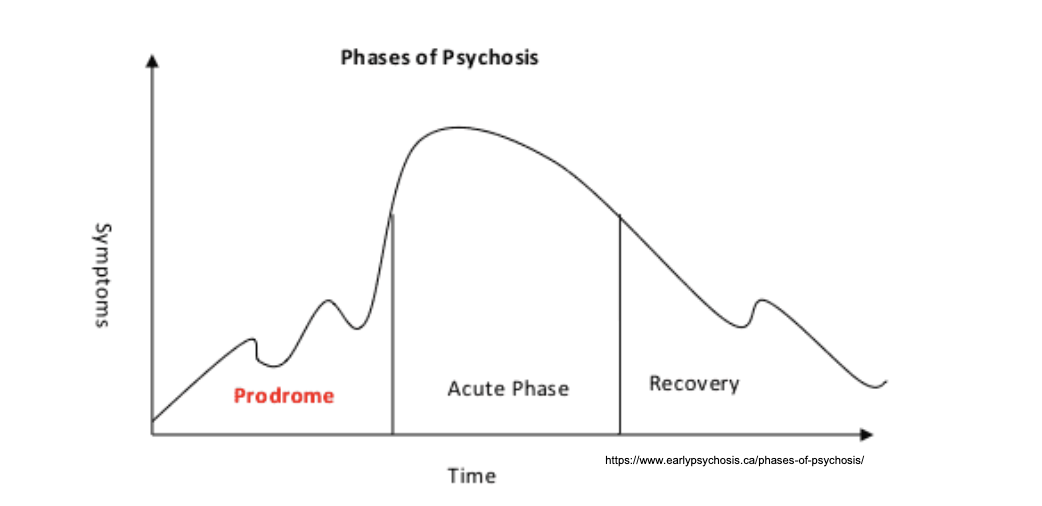
Clinical Stages:
Premorbid Phase: Subtle neurodevelopmental changes and social withdrawal.
Prodromal Phase: Attenuated psychotic symptoms and functional impairment. negative symptoms
Acute Phase: Full manifestation of positive symptoms and disorganized speech.
Recovery Phase: Early (stabilization) and Late (relapse prevention/quality of life). reduction in positive symptoms
Ageing Impacts: Increased risk of cognitive decline, physical comorbidities (cardiovascular, metabolic), and premature mortality.
DSM-5 Diagnostic Criteria and Differentials
Criterion A (Active-Phase Symptoms): Minimum of two symptoms for a significant portion of . At least one must be Delusions, Hallucinations, or Disorganised Speech.
Criterion B: marked decrease in functioning
Criterion C: persistent signs of disturbance, duration of at least 6 months, with at least 1 month of active-phased symptoms
Differential Diagnosis:
Bipolar Disorder: Differentiated by the timing of mood episodes; psychotic symptoms are often mood-congruent.
Substance/Medical: Must rule out intoxication, withdrawal, or endocrine/neurological conditions.
Developmental: Must evaluate for Autism Spectrum Disorder (ASD).
Specifiers: Include course (First Episode, Multiple Episodes, Continuous) and presence of Catatonia.
unspecified: when the course cannot be determined
other specifiers
catatonia
severity
Related Psychotic Disorders
Brief Psychotic Disorder: Symptoms lasting to .
Schizophreniform Disorder: Symptoms lasting to .
Schizoaffective Disorder: Schizophrenia features accompanied by a significant mood disorder.
Schizophrenia: symptoms lasting longer than 6 months
other psychotic disorders
Delusional Disorder: One or more delusions for or longer without markedly impaired functioning.
Shared Psychotic Disorder: Delusion develops in an individual due to close association with someone who has an established delusion.
spectrum
schizoid personality disorder: introverted, voluntary withdrawal from social interactions
schiotypal personality disorder: schizoid traits + magical thinking and odd behaviour
schizophrenia: schizotypal traits + psychosis
schizoaffective disorder
schizophrenia + significant mood disorder