7-Demographic transition
Econ 342: Development Economics
What is the Relationship Between Population and Economic Growth?
Perspectives on Population and Economic Growth
Thomas Malthus (1798)
Quote: "This [law of our nature] implies a strong and constantly operating check on population from the difficulty of subsistence. This difficulty must fall some where and must necessarily be severely felt by a large portion of mankind. . .And the race of man cannot by any efforts of reason, escape from it . . .misery is an absolutely necessary consequence of it."
Thomas Malthus argued that population growth is naturally limited by the availability of resources needed for survival. Since resources are finite, an increase in population inevitably leads to scarcity, resulting in hardship and suffering for many people. According to Malthus, this cycle of struggle is unavoidable and is a fundamental aspect of human existence.
Henry George (1879)
Quote: “The denser the population the more minute becomes the subdivision of labor, the greater the economies of production and distribution, and hence the very reverse of the Malthusian doctrine is true . . .”
Reverses Malthusian doctrine:
Denser populations enable better division of labor.
Greater economies of production and distribution.
Key Lecture Concepts
Endogenous Population Growth
Linking decisions regarding number of children to have with income levels.
Resource Constraints
Understanding fixed land stock implications on production.
Malthusian Dynamics
Population growth impacts living standards negatively.
Innovation Link with Population
Population size correlation with innovation rates explaining economic transitions from low-income/low-growth to high-income/high-growth societies.
Population and Output Growth Trends
Figure 8.1: Trends in world income per capita and population since 1 CE.
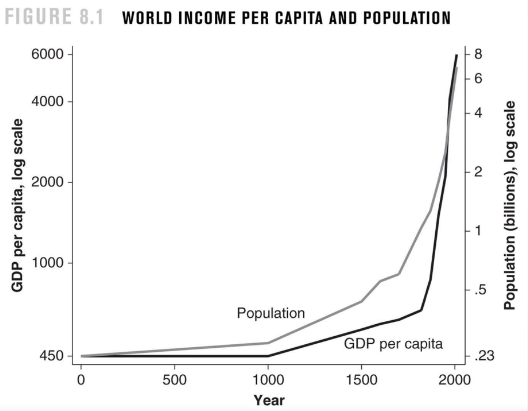
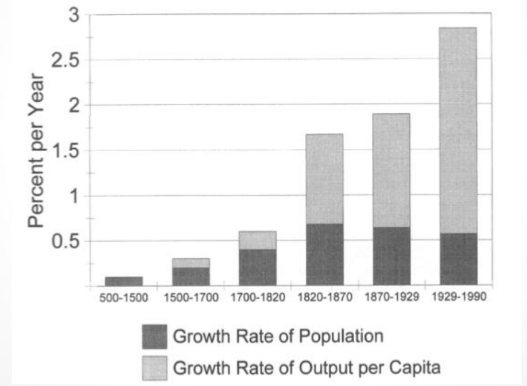
Figure 8.2: Relationship between population growth and output growth in Western Europe over time.
Overview of Demographic Transition Eras
Malthusian Era (1 Million BCE - 1800 CE)
Slow population growth and stagnant income levels.
0-1000 AD: Population growth rate of 0.02% per year, total world population went from 230 million to 261 million. World income per capita was $450 p/y and didn’t grow
1000-1820 AD: Incremental increase in income and population growth. World income per capita $670 p/y at a growth rate of 0.05%
There was little accumulation of formal human capital. Universities, founded as early as 11th and 12th centuries, were limited to a very small class of individuals, mainly served cultural and political purposes
Post-Malthusian Era (1800 CE - Present)
Started in Europe and North America then spread across the world
Acceleration in income per capita and population growth rates
Significant increases in both metrics over different decades.
More children being born and surviving to adulthood, but formal education still low
Modern Growth Era
Population growth began falling in early 1900s in Western Europe and North America
Fertility rates drop (TFR); higher education levels among children.
Population growth stabilizes to near zero in developed regions.
Growth of income per capita very fast
The Malthusian Economy Theory
Baseline Model:
Production Function: Y = BX^β L^(1-β) (with X as land stock, L as population size, B as level of technology).
In Malthusian era most production was agricultural, land most import production factor along with land. Fixed supply of land
Income per capita: y = B(X/L)^β (y is inversely related to the size of population: since land isfixed, income per capita falls when population rises)
Population growth (endogenous): L/L = θ(y-c)
Population growth is increasing with income per capita. c represents a “subsistence level” of consumption. θ is the parameter governing the response of population growth to income.
If y is sufficiently small, then people have incomes below the subsistence level and their families do not have enough surviving children to replace the parents, and the population declines; and vice versa.
Combining the equations of population growth and income per capita gives:
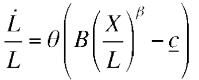
The growth rate of population is negatively related to the size of population itself
Steady State:
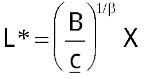
if population is equal to L*, then population neither grows nor shrinks, and stays at exactly L* , the Malthusian steady state
Model Implications
When people are richer, they have larger families, population increases; but given fixed levels of land (X) and technology (B), increasing the number of people lowers output per capita – the economy eats away at its own prosperity, and living standards are deemed to remain stagnant in the long run.
Any exogenous decline in population will temporarily raise living standards
Incorporating Technological Change
What is the effect of a one-time shift up in technology, B?
One-time technological shifts raise productivity temporarily but eventually income levels return to subsistence levels.
Continuous technology growth leads to either increases or declines in income based on demographic factors.
Endogenous Technological Change:
The technological growth can be modeled as:
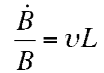
The technology growth rate increases when population increases: there are more potential innovators.
Increases in technological growth rate raises income per capita, generating higher growth rates of population, which in turn generates higher technological growth.
This virtuous circle will ultimately be the source of the transition to modern growth.
Transition to Sustained Growth
Thresholds: y < yT indicates stagnation (Malthusian) , while y > yT indicates continuous income growth despite population increases.
yM is steady state (Malthusian stagnation) yT is turning point of transition
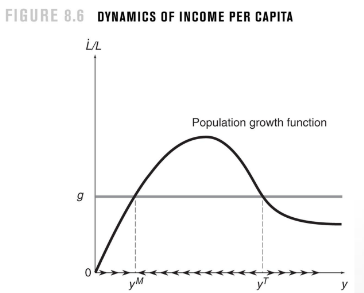
What drives the transition from the Malthusian economy to the modern growth economy?
As the size of population increases, the rate of technological growth increases consequently (i.e., there are more innovators) and is likely to be sufficiently higher than the population growth rate (g > n), causing sustained growth of income per capita
Quantity-Quality Tradeoff Theory
Created by Gary Becker in analysis of family behavior, theory that parents care not only about how many children they have (the quantity), but also about their quality (e.g., education). There is a tradeoff between the two – families cannot afford to have many highly educated children.
Low family income: an increase in income leaves more resources left over after paying for subsistence consumption, and parents are able to afford to have more children, but they do not want to spend money educating their children
(Education is relatively expensive, low economy-wide efficiency implies relatively low returns to education, high mortality of children and low life expectancy lower returns to education, child labor generates income, cultural factors: more children sustains family lineage)
High family income: parents begin to invest in their children’s education. Meanwhile, the “price” of children rises when income continues to go up, thus the optimal number of children may fall.
(Higher income makes education affordable, higher economy-wide efficiency and longer life expectancy raise returns to education, child rearing is time-consuming, so the opportunity cost rises with income (e.g., women’s education and labour force participation), reduced infant/childhood mortality enables lower fertility given the same desired quantity of children)
Key Drivers of New Income-Fertility Relationships
Compatibility of career and family life is now a significant determinant of fertility rates in high-income countries.
Availability of childcare services, greater paternal involvement, and progressive social norms have influenced family planning decisions.