Endocrine System
Introduction:
The endocrine system uses hormones; the nervous system uses neurotransmitters
Overview of the Endocrine System:
The body has 4 principal mechanisms of communication between cells
Gap junctions: pores in cell membrane allow signaling molecules, nutrients, and electrolytes to move from cell to cell
Neurotransmitters: released from neurons to travel across synaptic cleft to second cell
Paracrines: secreted into tissue fluids to affect nearby cells
Hormones: chemical messengers that travel in the bloodstream to other tissues and organs
Nervous System Endocrine System | ||
Communicates by means of electrical impulses and neurotransmitters | Communicates by means of hormones | |
Releases neurotransmitters at synapses at specific target cells | Releases hormones into bloodstream for general distribution throughout body | |
Usually has relatively local, specific effects | Sometimes has very general, widespread effects | |
Reacts quickly to stimuli, usually within 1-10 ms | Reacts more slowly to stimuli, often taking seconds to days | |
Stops quickly when stimulus stops | May continue responding long after stimulus stops | |
Adapts relatively quickly to continual stimulation | Adapts relatively slowly; may respond for days to weeks | |
Comparison of Endocrine and Exocrine Glands
Exocrine glands
Have ducts; carry secretion to an epithelial surface or the mucosa of the digestive tract: "external secretions"
Extracellular effects (food digestion)
Endocrine glands
No ducts
Contain dense, fenestrated capillary networks which allow easy uptake of hormones into bloodstream
"Internal secretions"
Intracellular effects such as altering target cell metabolism
Liver cells defy rigid classification —releases hormones, releases bile into ducts, releases albumin and blood-clotting factors into blood (not hormones)
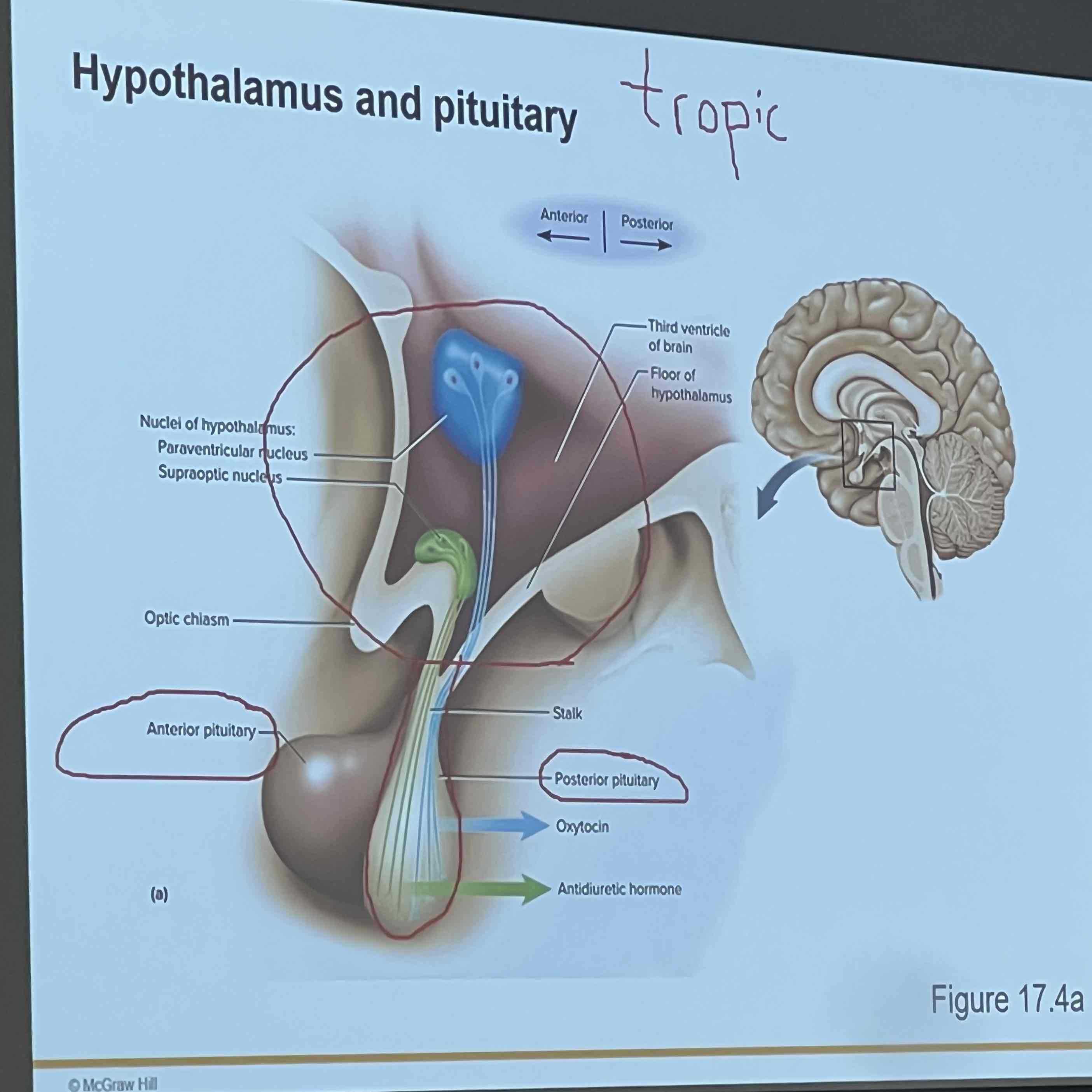
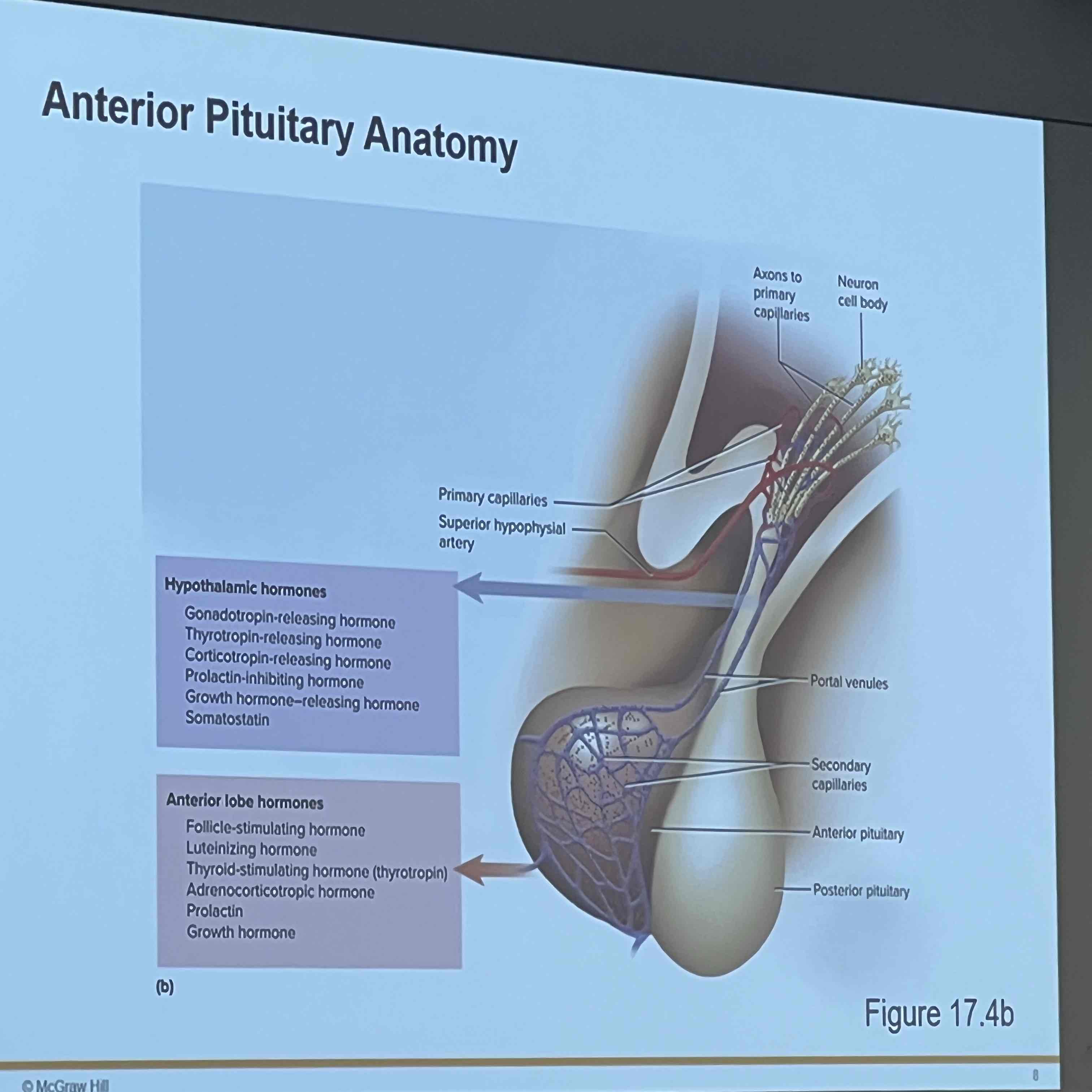
Hypothalamic Hormones 1
Eight hormones produced in hypothalamus
Six regulate the anterior pituitary
Two are released into capillaries in the posterior pituitary
Six releasing and inhibiting hormones stimulate or inhibit the anterior pituitary
TRH, CRH, GRH, and GHRH are releasing hormones that promote anterior pituitary secretion of TSH, PRL, ACTH, FSH, LH, and GH
PI inhibits secretion of prolactin, and somatostatin inhibits secretion of growth hormone and thyroid-stimulating hormone by the anterior pituitary
Posterior Pituitary Hormones 2
Two hormones are produced in hypothalamus and transported to the posterior lobe of pituitary
• Released when hypothalamic neurons are stimulated
ADH (antidiuretic hormone)
Increases water retention, thus reducing urine volume and preventing dehydration
Also called vasopressin because it can cause vasoconstriction
Posterior Pituitary Hormones :
Oxytocin (OT)
Surge of hormone released during sexual arousal and orgasm
Promotes feelings of sexual satisfaction and emotional bonding between partners
Stimulates labor contractions during childbirth
Stimulates flow of milk during lactation
May promote emotional bonding between lactating mother and infant
The Thymus
Thymus plays a role in three systems: endocrine, lymphatic, immune
lymph is fluid that leaks out of your blood
Bilobed gland in the mediastinum superior to the heart
• Goes through involution after puberty
Site of maturation of T cells important in immune defense
Secretes hormones (thymopoietin, thymosin, and thymulin) that stimulate development of other lymphatic organs and activity of T lymphocytes
The Thyroid Gland
Largest gland that is purely endocrine
Composed of two lobes and an isthmus below the larynx
Dark reddish brown color due to rich blood supply
Thyroid follicles: sacs that make up most of thyroid
Contain protein-rich colloid
Follicular cells: simple cuboidal epithelium that lines follicles
Secretes thyroxine (T, because of four iodine atoms) and triiodothyronine (T3) in response to TSH
Increases metabolic rate, 2 consumption, heat production (calorigenic effect), appetite, growth hormone secretion, alertness, reflex speed
Parafollicular (C or clear cells secrete calcitonin with rising blood calciumStimulates osteoblast activity and bone formation in children
The Parathyroid Glands:
Usually four glands partially embedded in posterior surface of thyroid gland
• Can be found from as high as hyoid bone to as low as aortic arch
Secrete parathyroid hormone (PTH)
Increases blood Ca?* levels
Promotes synthesis of calcitriol
Increases absorption of Ca2+
Decreases urinary excretion
Increases bone resorption
The Adrenal Medulla
Adrenal medulla: inner core, 10% to 20% of gland
Has dual nature acting as an endocrine gland and a ganglion of the sympathetic nervous system
Innervated by sympathetic preganglionic fibers
Consists of modified sympathetic postganglionic neurons called chromaffin cells
When stimulated, release catecholamines (epinephrine and norepinephrine) and a trace of dopamine directly into the bloodstream
As hormones, catecholamines have multiple effects
Increase alertness and prepare body for physical activity
Mobilize high-energy fuels, lactate, fatty acids, and glucose
Glycogenolysis and gluconeogenesis by liver boost glucose levels
Epinephrine inhibits insulin secretion and so has a glucose-sparing effect
Muscles use fatty acids, saving glucose for brain
Increase blood pressure, heart rate, blood flow to muscles, pulmonary airflow, and metabolic rate
Decrease digestion and urine production
The Adrenal Cortex
Cortex surrounds medulla and secretes several corticosteroids (hormones) from three layers of glandular tissue
Zona glomerulosa (thin, outer layer)
Cells are arranged in rounded clusters
Secretes mineralocorticoids-regulate the body's electrolyte balance
Zona fasciculata (thick, middle layer)
Cells arranged in fascicles separated by capillaries
Secretes glucocorticoids and androgens
Zona reticularis (narrow, inner layer)
Cells in branching network
Secretes glucocorticoids and sex steroids
Mineralocorticoids: from zona glomerulosa
Steroid hormones that regulate electrolyte balance
Aldosterone stimulates Na* retention and K* excretion
Water is retained with sodium by osmosis, so blood volume and blood pressure are maintained
Part of the renin-angiotensin-aldosterone (RAA) system
Glucocorticoids
Secreted by zona fasciculata and zona reticulata in response to ACTH
Regulate metabolism of glucose and other fuels
Cortisol and corticosterone stimulate fat and protein catabolism, gluconeogenesis (glucose from amino acids and fatty acids), and release of fatty acids and glucose into blood
Help body adapt to stress and repair tissues
Anti-inflammatory effect becomes immune suppression with long-term use
Sex steroids
secreted by zona fasciculata and zona reticularis
androgens: set libido through life; large role in prenatal male development
The Pancreatic Islets:
Glucagon: secreted by alpha (a) cells or glucagon cells
Released between meals when blood glucose concentration is falling
In liver, stimulates gluconeogenesis, glycogenolysis, and the release of glucose into the circulation raising blood glucose leve
In adipose tissue, stimulates fat catabolism and release of free fatty acids
Glucagon also released in response to rising amino acid levels in blood, promotes amino acid absorption, and provides cells with raw material for gluconeogenesis
Insulin secreted by beta (B) cells or insulin cells
Secreted during and after meal when glucose and amino acid blood levels are rising
Stimulates cells to absorb these nutrients and store or metabolize them, lowering blood glucose levels
Promotes synthesis of glycogen, fat, and protein
Suppresses use of already-stored fuels
Brain, liver, kidneys, and RBCs absorb glucose without insulin, but other tissues require insulin
Insufficiency or inaction is cause of diabetes mellius
Also produce amylin to reduce spikes in blood sugar
Somatostatin secreted by delta (o) cells or somatostatin cells
Partially suppresses secretion of glucagon and insulin
Inhibits nutrient digestion and absorption which prolongs absorption of nutrients
Pancreas also has PP cells that secrete pancreatic polypeptide
(PP) that inhibits vagal stimulation of pancreas after a meal Hyperglycemic hormones raise blood glucose concentration (includes hormones from other glands)
• Glucagon, growth hormone, epinephrine, norepinephrine, cortisol, and corticosterone
Hypoglycemic hormones lower blood glucose
Endocrine Functions of Other Tissues and Organs:
Skin
• Keratinocytes convert a cholesterol-like steroid into cholecalciferol using UV from sun
Liver: involved in the production of at least five hormones
Converts cholecalciferol into calcidiol
Secretes angiotensinogen (a prohormone)
Precursor of angiotensin Il (a regulator of blood pressure)
Secretes 15% of erythropoietin (stimulates bone marrow)
Source of IGF-I that controls action of growth hormone
Hepcidin: promotes intestinal absorption of iron
Kidneys: play role in production of three hormones
Convert calcidiol to calcitriol, the active form of vitamin D
Increases Ca?* absorption by intestine and inhibits loss in the urine
Secrete renin that converts angiotensinogen to angiotensin I
Angiotensin Il created by converting enzyme in lungs
Constricts blood vessels and raises blood pressure
Produces 85% of erythropoietin
Stimulates bone marrow to produce RBCs
Heart
Atrial muscle secretes two natriuretic peptides in response to an increase in blood pressure
These decrease blood volume and blood pressure by increasing Na* and H20 output by kidneys and oppose action of angiotensin Il
Lowers blood pressure
Stomach and small intestine secrete at least 10 enteric hormones secreted by enteroendocrine cells
Coordinate digestive motility and glandular secretion
Cholecystokinin, gastrin, ghrelin, and peptide YY (PYY)
Adipose tissue secretes at least hormones including leptin
• Slows appetite
Osseous tissue: osteocalcin secreted by osteoblasts
Increases number of pancreatic beta cells, pancreatic output of insulin, and insulin sensitivity of body tissues
Inhibits weight gain and onset of type 2 diabetes mellitus
Placenta
Secretes estrogen, progesterone, and others
Regulate pregnancy, stimulate development of fetus and mammary glands
Saturated when all receptor molecules are occupied by hormone molecules
Hormone Receptors and Mode of Action
Hormones stimulate only those cells that have receptors for them
Receptors are protein or glycoprotein molecules
• On plasma membrane, in the cytoplasm, or in the nucleus
Receptors act like switches turning on metabolic pathways when hormone binds to them
Usually each target cell has a few thousand receptors for a given hormone
Receptor-hormone interactions exhibit specificity and saturation
Specific receptor for each hormone
Saturated when all receptor molecules are occupied by hormone molecules
Peptides and catecholamines
Cannot penetrate target cell
Bind to surface receptors and activate intracellular processes through second messengers
Steroids and thyroid hormone
Penetrate plasma membrane and bind to internal receptors (usually in nucleus)
Influence expression of genes of target cell
Take several hours to days to show effect due to lag for protein synthesis