AP US Government and Politics Ultimate Guide
AP Gov Exam Structure
Section I: Multiple Choice
55 Questions | 1 Hour 20 Minutes | 50% of Exam Score
Section II: Free Response
4 Questions | 1 Hour 40 Minutes | 50% of Exam Score
1) Concept Application FRQ
Just like SAQs in other APs, asks you to apply your knowledge to an event/situation you do not know. (described in stimulus)
Tips
Write in complete sentences
“Identify __”: one sentence
“Explain/Describe/Justify ___”: 2-3 sentences
Be specific in evidence
ALWAYS tie your answer back to the prompt
2) Quantitative FRQ
Interpret a graph/chart/etc and answer the prompts regarding those charts/graphs. This is generally considered the easiest FRQ in AP Gov.
It is split four questions, a, b, c, and d.
a & b are generally really easy, just looking at the chart and identifying what the graph shows.
ex: graph showing % of voters identifying as republican, democrat, and [year] to [year]
c & d ask you to explain the trend identified in a & b
ex: Explain one reason the political party identified in part a/b may have experiences growth (if you chose independents, a potential answer might be the increasing distrust in government, if the data is more recent)
Tips
Write in complete sentences
“Identify __”: one sentence
“Explain/Describe/Justify ___”: 2-3 sentences
Be specific in evidence
ALWAYS tie your answer back to the prompt
3) SCOTUS (Supreme Court) Comparison FRQ
Compare a supreme court case you don’t know (explain with stimulus) with a required supreme court case.
Structure
Split into 3 questions, generally with each requiring you to compare one of the four main structures of court cases
Facts of the case
Constitutional issue of the case
Ruling of the case
Significance of the case.
May require to you to apply the unknown case to broader knowledge, like asking how interest groups might use this case to further their agenda or what steps can be taken to advocate for similar decisions in the future, highlighting the interconnectedness of case law and political activism.
Tips:
Write in complete sentences
“Identify __”: one sentence
“Explain/Describe/Justify ___”: 2-3 sentences
Be specific with evidence
ALWAYS tie your answer back to the prompt
4) Argumentative Essay
6 Points Total
Thesis - 1 point
[Claim] because x, y, z. (XYZ are evidence)
Evidence - 3 points
Use two pieces of evidence to support your thesis, one MUST one of the three foundational documents listed in the prompt
To be safe, try to use the pieces of evidence multiple times. That way, if one way you use the evidence doesn’t really support your thesis, you have another shot with the second way you used it.
Reasoning - 1 point
Explain how your evidence supports your thesis
“Name, explain, and analyze your evidence,” name what the evidence is, explain what the evidence claims, and analyze how they supports your claim
Counterargument & Rebuttal - 1 point
Explain a counterargument and prove why your POV is better
“Some way claim that ___, however, ____”
Unit 1
Enlightenment influences
natural rights
popular sovereignty
social contract
republicanism
Forms of democracy
Participatory
Elite
Pluralist
Hyperpluralist
Debates of federalism and fights about federal power
Federalists and antifederalists
Why the articles of confederation failed
Weak federal government
No militia
No taxing powers
No executive
Strong state government
All states needed to ratify
Shay’s rebellion
Compromises that lead to the constitution
Great compromise (representation, bicameral congress)
Electoral College
3/5ths Compromise
Bill of Rights
Separation of powers/checks and balances
Federalism
Dual federalism - separation of powers
Cooperative federalism - sharing of powers
Devolution - Returning powers to states
Delegation of powers
Enumerated powers
Reserved powers
Concurrent powers
implied powers
Fiscal federalism
Categorical grants (strings attached)
Block grants
How federal has changed over time
10th amendment - reserved for state government
14th amendment - selective incorporation, bill of rights applies to states
congress clause, congress regulates commerce
elastic/necessary and proper clause
McCulloch vs Maryland (pro-federal)
US v Lopez (pro-state)
Political System
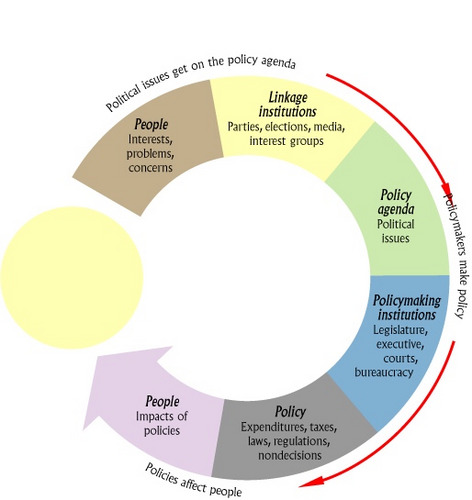
Unit 2
Congress makes laws/legislation
Article I section 8
Tax
Declare War
Interstate commerce
Regulate immigration
Congress representation
Senate - two reps per state
House of reps - by population
Leadership in congress
Speaker of the house
Majority and minority leaders (house and senate)
Majority and minority whips (house and senate)
President of the senate (vice president of US)
cannot vote
President pro temp
President when vice president is gone
Committees
Standing committees - always exist
Joint committees - senate and house members
Select committees - temporary
Bills → laws
Must pass house and senate in identical form
1) Bill introduced by reps
Pork-barrel spending often added
2) Bill then assigned to committee
3) Congress votes
4) bill go to president to sign or veto
Log-rolling: “I’ll vote for your bill, you vote for mine”
Spending
Mandatory spending - required spending
discretionary spending - spending that may vary
Increasing partisanship makes compromise hard
Political and Racial Gerrymandering
Baker v Carr
Shaw v Reno
Representative models
Trustee model - Believe they’ve been voted in to do what they believe is best, vote based on their own beliefs
Delegate Model - vote for what the people want
Politico Model - hybrid of other two
President had no formal law-making powers, but uses formal/informal powers to get policy agenda passed
Vetos / Pocket Veto
Executive Orders
Bargaining
Bully Pulpit
Congressional/Executive conflict
War Powers Act
Executive can not enforce laws he disagrees with
Congress can withhold funding from bureaucracy
Supreme court appointments, other appointments
Judicial conflict w/ Executive/Legislative
Judicial Review (marbury v madison)
Expansion of Federal Power
Andrew Jackson - vetos, trail of tears
Abraham Lincoln - civil war/ending slavery
FDR - New deal programs
President’s communication - bully pulpit
FDR’s fireside chats
Televised debates
Social Media
Judicial structure
US district courts → US circuit court of appeals → US Supreme Court
Stare - precedents, “let it stand”
Original jurisdiction vs appellate jurisdiction
Life tenure / being unelected - protects court from bias from trying to gain public favor
Federal Bureaucracy
Federal Secretaries
Executive departments → departments → agencies, commissions, government corporations (somewhat independent)
Iron Triangles
Bureaucracy
Interest Group
Congressmen/committees
Unit 3
Bill of rights protects individual liberties and rights
Individual Liberties vs Rights
There are restrictions of rights
US Constitution and Amendment
1st Amendment - Freedom of speech & religion
Exercise Clause
Establishment Clause
2nd Amendment - Right to own guns
3rd Amendment - Right to not house soldiers
4th Amendment - Protected from unwarranted search & seizure - police need a warrant
5th Amendment - Right to due process, probable cause, Miranda Rights, can’t be tried twice for the same crime
6th Amendment - Right to speedy trial, right to jury in criminal trials
7th Amendment - Jury Trial in citizen trial
8th Amendment - Cruel and unusual Punishment
9th Amendment - non-enumerated rights kept by the people
10th Amendment - rights reserved to states
14th amendment - Equal protection and citizenship
Unit 4
Political Socialization
Family
Friends
Education
Media
Culture
Generational and Age-related changes in politics
Public Opinion Polls
Exit Polls
Tracking Polls
Entrance Polls
Issues with polls
Sampling Error
Bias questions
Political Ideology
Conservative
Liberal
Political Parties
Republican
Democrat
Libertarian
“Third parties”
Public policy only reflects the beliefs of those who participate in politics
Unit 5
Voting rights have expanded over time
15th amendment - African-American voting rights
17th amendment - direct senator elections
19th amendment - women voting rights
24th - Abolished poll taxes
26th - Lowered voting age to 18
Voting behavior
Rational Choice
Retrospective Voting
Prospect Voting
Straight-Ticket Voting
Factors that influence voter turnout
Voter ID laws
Political efficacy - do they feel their vote matters?
Type of election
Demographics
More POC
More Older voters
Linkage institutions (unit 1 again)
Primaries vs caucuses
Open vs Closed Primaries
Party Realignment / Dealignment
Issues with the two-party system
Winner-take-all
Factors that influence Interest Group Success
Size
Intensity
Financial Resources
Free-rider problem
Electoral College
Incumbent Advantage
Campaign Spending
Watchdog Agency/Investigative Journalism
Media bias/sensationalism
Required Court Cases
McCulloch Vs Maryland
Facts: US Bank created branches in various states, so Maryland taxed the bank a ridiculous amount, so the bank sued.
Issue: Was the bank was allowed under necessary and proper clause (implied power)
Ruling: Yes
Significance: legitimized implied power and strengthened federal power
United States vs Lopez
Facts: A high school senior brought a gun to school and was arrested. Federal law banned guns in school
Issue: The federal gov had no power to regulate guns, they passed this law under the commerce clause, claiming that guns in schools because gun violence in schools hurts interstate commerce.
Ruling: The supreme court sided against the federal gov and removed the regulation
Significance: Showed restrictions of federal powers
Baker v Carr
Facts: Tennessee hasn’t redrawn their districts, and with unequal population changes, some voters had much more power than others
Issue: Were legislative districts justiciable (previously no) and did this unequal power violate the 14th amendment’s equal protections clause?
Ruling: Legislative districts were justiciable and this violated the 14th amendment
Significance: created the one-person-one-vote doctrine, increased judicial power
Shaw vs Reno
facts: NC had few African-American reps, so they redrew district lines to created two majority black district (racial gerrymandering)
Issue: Did this violate the one person one vote doctrine, was gerrymandering okay if it was to help an underrepresented group?
Ruling: this was against the colorblind interpretation of the constitution and against one person one vote
significance: banned racial gerrymandering
Marybury vs Madison
Issue: In his last days of his presidency, federalist John Adams created a ton of new courts and appointed many judges to dilute the power of the next democratic-republican president Jefferson. Jefferson didn’t deliver these appointments and one would-be judge sued
Issue: Did the court has the power to appoint/approve judges, as claimed in the judiciary act?
Ruling: Marbury did have the right to his appointment, but the judiciary act itself was unconstitutional, so it was never given.
Significant: This case established the principle of judicial review, allowing the Supreme Court to declare an act of Congress unconstitutional, significantly increasing the power of the judiciary.
Engel v Vitale
Facts: NY law created a nondenominational prayer for students along with the pledge of allegiance, but parent sued
Issue: Was this a violation of the 1st amendment’s establish clause, which prevents congress from respecting an establishment of religion?
Ruling: This was a violation of the establishment clause
Significant: Used a precedent in future cases about religion in school/government and the establishment clause
Wisconsin vs Yoder
Facts: Amish families removed their children from school after 8th grade because they felt it was unnecessary and they didn’t want their children taught secular beliefs. However, Wisconsin required children to be in school until the age of 16
Issue: Did the compulsory education law violate the 1st amendment free exercise clause?
Ruling: This violated the free exercise clause
Significance: Used a precedent in future cases about religion in school/government and the free exercise clause
Tinker vs DeMoin e
Facts: Students wore black armbands to protest the Vietnam war, and the school made a rule against it and punished the students.
Issue: Could students symbolic and silent speech protected under the 1st amendment freedom of speech, or did the school have the right to prevent disruption?
Ruling: Unless the school had substantial proof of disruption, students’ symbol free speech was protected
Significant: Created the “substantial disruption” test and expanded free speech to symbolic speech
Schenck vs the United States
Facts: US passed the espionage act which outlawed hindrances to military recruitment and the draft. Schenck wrote and distributed a pamphlet urging draft-age men to resist the draft and was arrested.
Issue: Did the espionage act violate the 1st amendment freedom of speech?
Ruling: Schenck was not just protesting the draft, he was encouraging people to avoid the draft (and break the law,) which was not protected speech. It was compared to yelling fire in a crowded theatre when there is no fire, which is dangerous and does not fall under protected speech either.
Significant: Demonstrated restrictions on freedom of speech (especially during war/crisis), created the “clear and present danger test,” which was used to determine if speech was protected or not based on if they caused a clear and present danger.
New York Times vs US
Facts: A NYT reporter leaked the pentagon papers that revealed the government had lied about the already controversial Vietnam war. The Nixon tried to use prior restraint to prevent anything else about the papers from being published. NYT sued.
Issue: Did Nixon’s actions violate the 1st amendment freedom of the press, was prior restraint itself a violation of the 1st amendment?
Ruling: Nixon’s administration did violate the first amendment
Significance: Ruled prior restraint was rarely applicable and to use it there must be a valid reason and danger posed. Protected freedom of speech and press.
Ex: Leaking the time and location of the D-Day invasion wouldn’t been dangerous to the US and allies’ armies and hurt the attack, but wanting to hide that the president had been lying did not cause danger
Mcdonald v Chicago
Facts: McDonald lived in a dangerous area that was frequently robbed and believed a clunky, large hunting rifles would not be practical for protection like an handgun would be, but Chicago had restrictive handgun laws.
Issue: Did the handgun laws violate the 2nd amendment right to bear arms?
Ruling: The Supreme Court ruled in favor of McDonald, stating that the Second Amendment applies to state and local governments through the Fourteenth Amendment, invalidating Chicago's handgun ban.
Significant: Through the Fourteenth amendment’s selective incorporation, a process through which the bill of rights, which technically only applies to the federal government, can be applied to the state government, meant that state/city laws against handguns cannot violate the 2nd amendment.
Gideon vs Wainwright
Facts: Gideon had robbed a poll hall and was arrested. He was poor, and in other states, he had received a lawyer free of charge, but in Florida, they only appointed lawyers in federal cases.
Issue: Did the 6th amendment’s right to counsel, which protects citizens from the federal government, apply to state governments?
Ruling: Through the 14th amendment and selective incorporation, the 6th amendment was applied to the states
Significance: Applied the 6th amendment to states and furthered selective incorporation.
Brown v Board of Education
Facts: Schools were segregated under Plessy v Fergeson’s “Separate but equal” doctrine.
Issue: Did segregation violate the equal protection clause in the 14th amendment?
Ruling: Segregation was inherently unequal and is against the 14th amendment
Significance: Victory for the civil rights movement, required desegregation, promoted equality, angered southern states.
Citizens United vs FEC
Facts: The Bipartisan Campaign Finance Reform Act (BCRA) made it illegal for corporations and nonprofits to engage in electioneering (creating support for a candidate) for 60 days before an election and 30 before a primary. Citizens United, a political group, created a movie meant to “expose” Hillary Clinton and prevent her from winning the democratic primary. However, it wasnt able to be realized until the period where corporations cannot speak. Citizens United sued.
Issue: Was BCRA a violation of the freedom of speech of corporations? Previously, corporations had been ruled as groups of people and therefore had 1st amendment protections
Ruling: BCRA’s restriction on speech was unconstitutional
Significance: In the political arena, money = speech, so is it fair for those with the most money to have the loudest voice? This case found yes, as long as they don’t collaborate directly with a candidate.
Required Documents:
Declaration of Independence
Enlightenment Ideals
Natural Rights
Popular Sovereignty
Social Contract
Federalist 10
Factions were dangerous
Protect against factions
Separation of powers
Republicanism/representation
competition of factions
Brutus 1
Disliked large gov and infringement on rights
Supported participatory model
Tyranny of the majority
US is too big to be properly controlled by one gov
Supremacy Clause gave the government too much power
Articles of Confederation
Weak federal gov
Strong state government, all must agree to amend
States were sovereign and supreme
Only a Legislative Branch
US Constitution
Stronger federal gov
Solved issues w/ Articles of Confederation
Articles: Large Elephants Jump Far And Nap Regularly
Large - Legislative
Elephants - Executive
Jump - Judicial
Far - Federalism/State Relations
And - Amendment Process
Nap - Nation Supremacy
Regularly - Ratification
Federalist 51
Humans suck and will always become tyrannical, so everyone in gov needs to be checked to prevent this
Separation of Powers
Federalist 70
A single executive is best
provides more energy, acts quicker
Easy to place blame
Single Executive complements many representatives in Legislative
Federalist 78
Judges should hold their offices as long as they dont mess up or die because this prevents them from needing to pander to the public for votes
Judges need to know a lot of precedents/articles/etc, so experience is good, and constant turnover is bad, lifetime offices are good
Judges job = Judicial Review
Judicial Branch is not superior to the legislative branch since they dont “undo” legislation, unconstitutional laws are already null and void and judges simply act as a intermediary
Letter from a Birmingham jail
Illustrates how the 14th amendment equal protection clause supports social movements
Waiting does not lead to change, action must be taken
Moderation is bad