2. People in business
Employee Motivation
Motivation Definition: The reasons individuals engage in work.
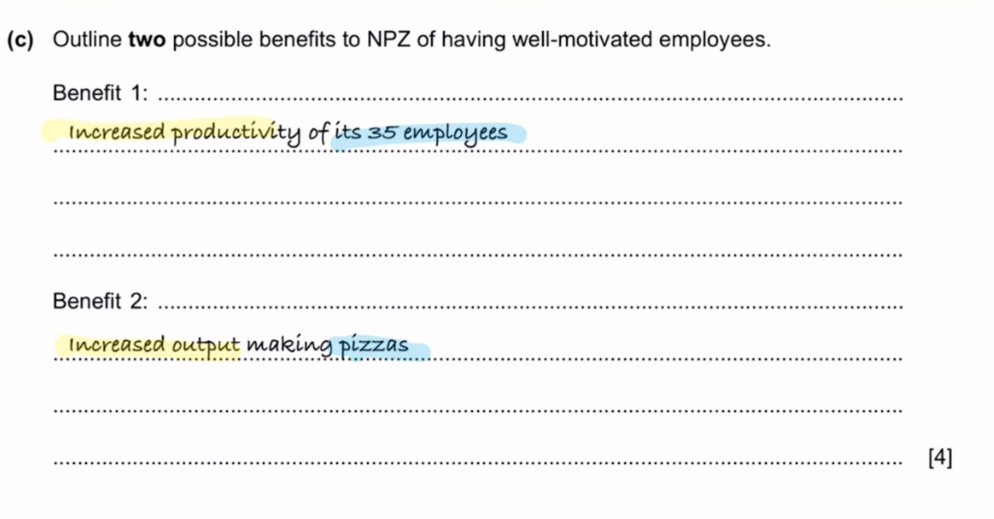
Importance of Motivation: Leads to improved productivity, competitiveness, reduced absenteeism, better quality products/services, and lower labor turnover.
Maslow's Hierarchy of Needs
Physiological Needs: Basic survival requirements, e.g., fair wages.
Safety Needs: Protection from harm, e.g., job security and safe environments.
Social Needs: Requirements for social interactions and relationships, e.g., teamwork.
Esteem Needs: Desire for respect and recognition, e.g., promotional opportunities.
Self-Actualization: Growth and fulfillment through increased responsibilities.
Theories of Motivation
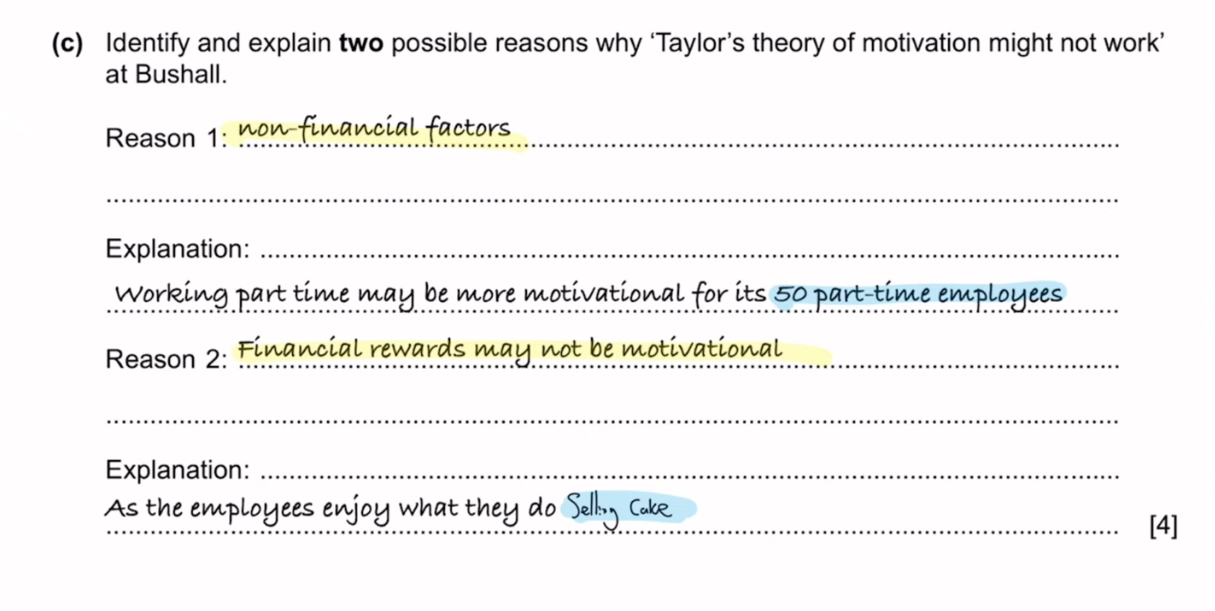
Taylor's Scientific Management: Advocates for piece rate pay where earnings are based on output produced, emphasizing money is the key motivator.
Hertzberg's Two-Factor Theory:
Hygiene Factors: Basic conditions like salary and working environment; failure to satisfy leads to demotivation.
Motivators: Achievement, recognition, and growth opportunities that enhance satisfaction and motivation.
Rewards and Incentives
Financial Rewards:
Time Rate: Hourly pay.
Piece Rate: Payment per item produced.
Salary: Fixed, regular payment.
Commission: Earnings based on sales percentage.
Bonus: Additional pay for exceptional performance.
Performance-Related Pay: Compensation linked to employee performance.
Non-Financial Rewards:
Job Enlargement: Adding similar level tasks.
Job Rotation: Shifting roles among employees.
Job Enrichment: Increasing task complexity and significance.
Teamworking: Enhancing morale through collaborative efforts.
Training: Developing skills for personal growth.
Opportunities for Promotion: Career advancement prospects.
Fringe Benefits
• Employee perks provided by employers, e.g., medical insurance, company cars, pension plans, housing allowances, free meals, and remote work options.
Organizational Structure
Definition: The arrangement of levels of management and division of responsibilities in a business.
Benefits:
Clarifies communication channels.
Helps employees understand their position and departmental relationships.
Fosters a sense of belonging.
Span of Control
Definition: The number of subordinates directly supervised by a manager.
Types:
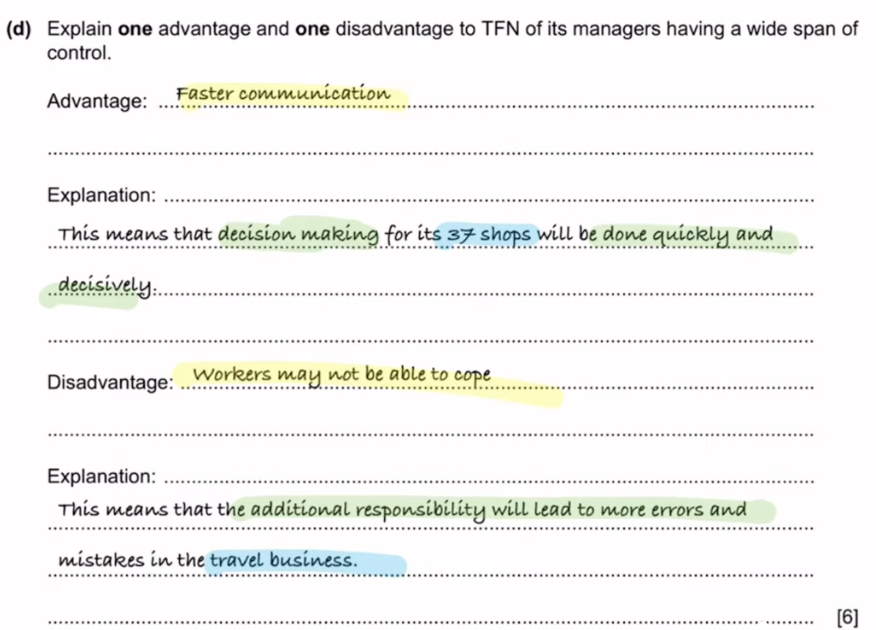
Wide Span of Control:
Many subordinates per manager.
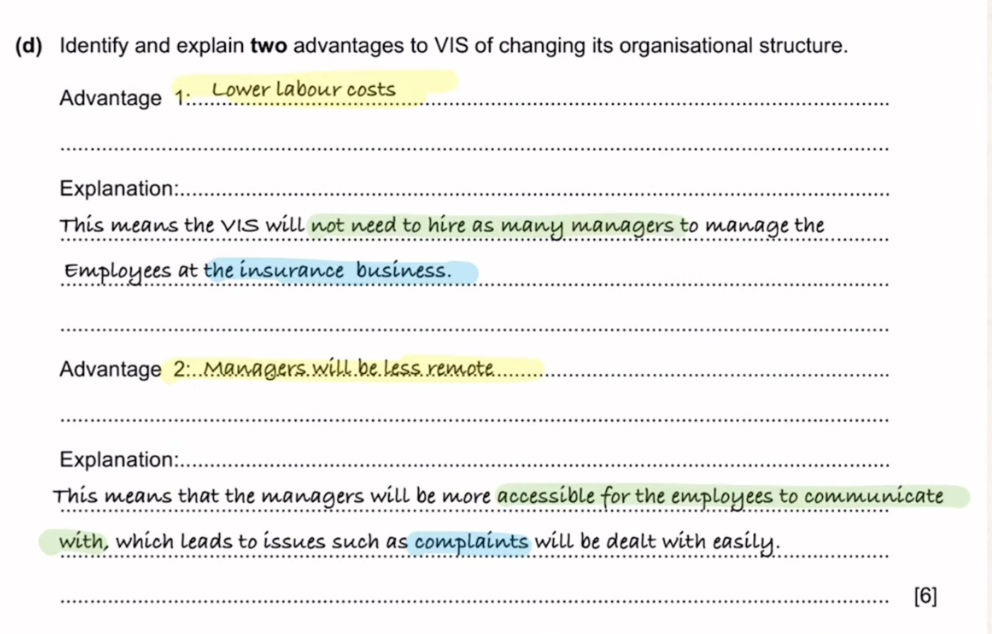
Advantages:
Faster communication.
Cost savings due to fewer managers.
Encourages delegation.
Disadvantages:
Less managerial control.
Potential skill mismatches among employees.
Increased communication load.
Narrow Span of Control:
Fewer subordinates per manager.
Advantages:
Closer supervision.
Opportunities for promotion.
Disadvantages:
Slower communication due to multiple layers.
Chain of Command
Definition: The structure of an organization which allows information and instructions to be passed from senior management to lower levels of management.
Short Chain:
Advantages:
Quick communication.
Easier task delegation.
Increased employee motivation due to direct relationships.
Disadvantages:
Limited promotional opportunities.
Increased workload for managers.
Long Chain:
Advantages:
Clear hierarchy.
Efficient resource allocation.
Allows specialization.
Disadvantages:
Slower decision-making.
Increased communication breakdowns.
Roles of Management
Planning: Setting goals and directing resources.
Organizing: Efficient use of resources and employee allocation.
Coordinating: Ensuring effective communication between departments.
Commanding: Providing guidance and supervision.
Controlling: Evaluating performance and setting corrective actions.
Delegation
Definition: Assigning authority to subordinates for specific tasks.
Advantages for Managers:
Frees time for critical tasks.
Reduces the chance of mistakes.
Advantages for Subordinates:
Increases motivation and autonomy.
Enhances skill development.
Leadership Styles
Autocratic:
Decision-making is centralized.
Advantages: Quick decisions, effective in crises.
Disadvantages: May ignore better ideas, demotivates employees.
Democratic:
Involves employees in decision-making.
Advantages: Valued input, motivation.
Disadvantages: Slower decisions, potential conflicts.
Laissez-Faire:
Minimal guidance from managers.
Advantages: Encourages creativity.
Disadvantages: Lacks direction, ineffective without motivated employees.
Trade Unions
Purpose: Protect the interests of workers (e.g., better pay, working conditions).
Limitations:
Membership costs.
May require participation in actions that members disagree with.
Key Concepts
Job Analysis: A study to identify and record tasks, responsibilities, and requirements for a new employee.
Job Description: A document outlining job title, location, summary, reporting structure, duties, and working conditions, aimed at preventing unqualified applicants.
Job Specification: Outlines the qualifications, skills, and characteristics required for a job.
Recruitment Methods
Internal Recruitment
Advantages:
Cost-effective (saves time and money).
Familiarity with business culture promotes better fit.
Motivates employees seeking promotions.
Disadvantages:
No introduction of new skills.
Potential jealousy among employees.
Lack of suitable candidates.
External Recruitment
Advantages:
Access to new skills and fresh perspectives.
Larger pool of candidates.
Disadvantages:
Candidates lack knowledge of business operations.
Higher resource commitment required.
Stages of Recruitment and Selection
Advertising Vacancies: Essential for attracting candidates; can utilize job centers, online resources, and media.
Selection Process:
Submission of applications or CVs.
Shortlisting candidates.
Conducting interviews.
Administering aptitude tests.
Employee Types: Part-time vs. Full-time
Part-time Employees
Advantages:
Flexible hours accommodate busy periods.
Lower labor costs.
Disadvantages:
Limited training, which may reduce service quality.
Potential low commitment and higher turnover.
Full-time Employees
Advantages:
Consistent service and work quality.
Better communication and promotion opportunities.
Disadvantages:
Higher overall costs and less flexibility.
Importance of Training
Purpose: Improves efficiency, motivation, and reduces errors.
Types of Training:
Induction Training: Familiarizes new employees with operations (legal requirement in many areas).
Advantages: Reduces mistakes, integrates employees.
Disadvantages: Costs associated with training time.
On-the-Job Training: Learning while working with experienced employees.
Advantages: Cost-effective, production continues.
Disadvantages: Potential of transferring bad habits.
Off-the-Job Training: Specialized training outside the workplace.
Advantages: Up-to-date skills and knowledge.
Disadvantages: High costs, less tailored to specific business needs.
Dismissal vs. Redundancy
Dismissal: Termination due to unsatisfactory performance (lateness, misconduct).
Redundancy: Job loss caused by organizational needs (e.g., downsizing, teleautomation).
Legal Controls in Employment
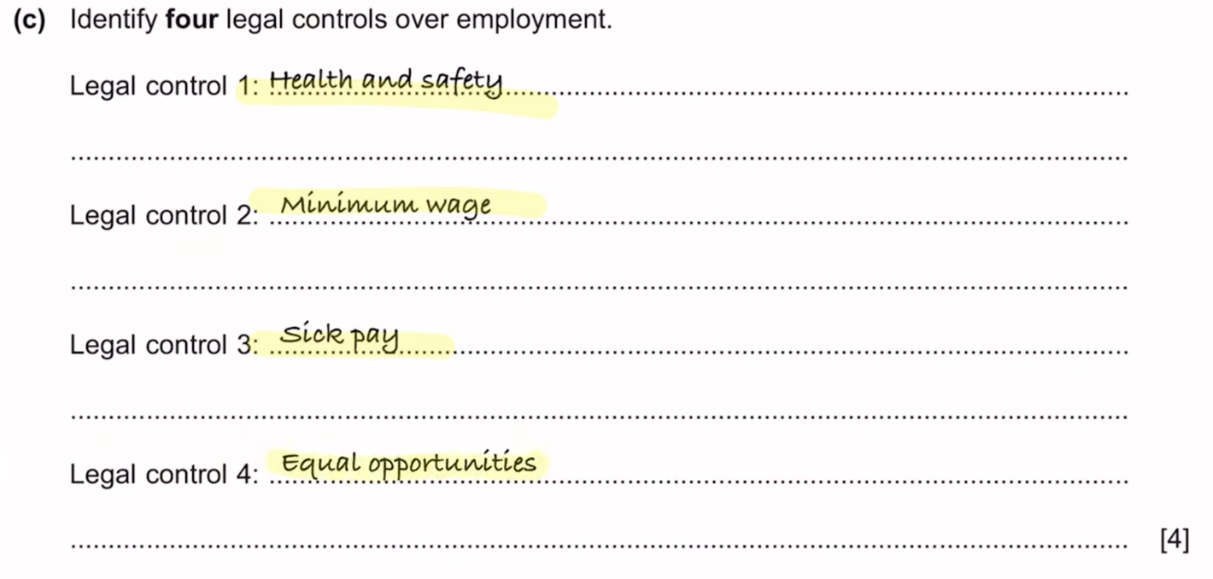
Contract of Employment: Legally binding document outlining employment terms (e.g., title, pay, hours).
Unfair Dismissal Protection: Employees safeguarded against termination for unjust reasons.
Health and Safety Regulations
• Employers must ensure safe working conditions and provide necessary equipment. Training in health and safety reduces accidents and fosters a motivated workforce.
Importance of Effective Communication
Definition: Communication is the transfer of messages between individuals.
Benefits:
Accelerates decision-making.
Informs customers about products and activities.
Enhances productivity.
Ensures staff awareness of organizational objectives.
Reduces communication barriers.
Communication Methods
Internal Communication: Exchanges within the organization (e.g., emails, notice boards).
External Communication: Exchanges with outside entities (e.g., advertisements, information to customers).
Types of Communication
One-way Communication: No feedback opportunity (e.g., newsletters).
Two-way Communication: Allows feedback (e.g., letters, emails, phone calls).
Communication Formats
Verbal Communication:
Advantages: Quick, efficient, allows immediate feedback.
Disadvantages: Time-consuming for lengthy discussions, lacks written records.
Written Communication:
Advantages: Provides evidence, allows detailed messages, economical.
Disadvantages: No instant feedback, message delivery is uncertain, long messages may disengage readers.
Visual Communication:
Advantages: Simplifies complex information, attractive presentation.
Disadvantages: No feedback, potential misinterpretation.
Factors Influencing Communication Method Choice
Speed: Urgent information favors phone calls; non-urgent can use emails or letters.
Cost: Low-cost options like letters or emails; high-quality visuals incur more expense.
Details: Written communication for legal documents; verbal for informal discussions.
Leadership Style: Autocratic leaders prefer one-way methods; democratic leaders favor two-way methods.
Receiver Dynamics: Single recipients can use direct phonetic methods; multiple require emails or notices.
Communication Barriers and Solutions
1. Sender Issues: Complex language, too lengthy messages.
• Solution: Use simple language, seek feedback, concise communication.
2. Medium Issues: Wrong channel or alterations in message.
• Solution: Ensure proper feedback channels, select appropriate medium for message importance.
3. Receiver Issues: Lack of attention or willingness.
• Solution: Emphasize message significance, use respected senders, follow up.
4. Feedback Opportunities: Absence in communication method used.
• Solution: Choose channels that facilitate feedback.
Application in Business Scenarios
• IT Communication Methods: Example methods include emails (written record) and telephones (two-way communication).
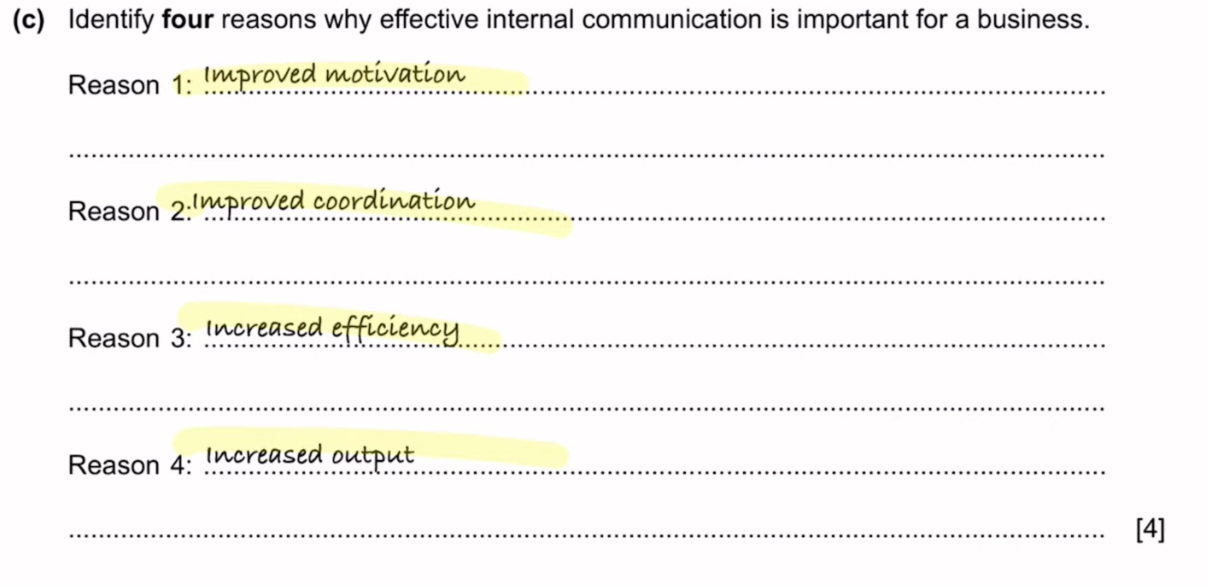
Importance of Internal Communication
Reasons:
Enhances motivation.
Improves coordination.
Increases efficiency.
Raises output levels.