Sex Determination
1/31/24
Sex Determination in Humans
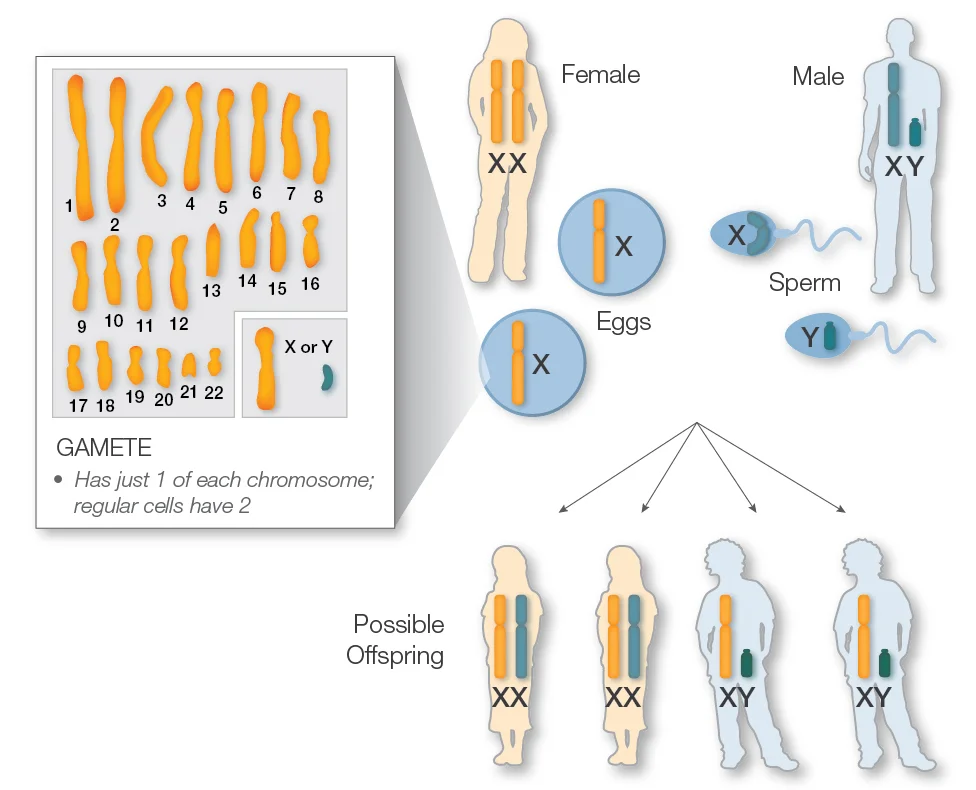
Autosome- a chromosome other than a sex chromosome
Sex Chromosome- chromosome determining the individuals sex
Gamete- Has just 1 of each chromosome
The Sex Chromosomes
PAR stands for Pseudo- Autosomal Region. these regions are the regions of sequence similarity where X and Y pair in meiosis.
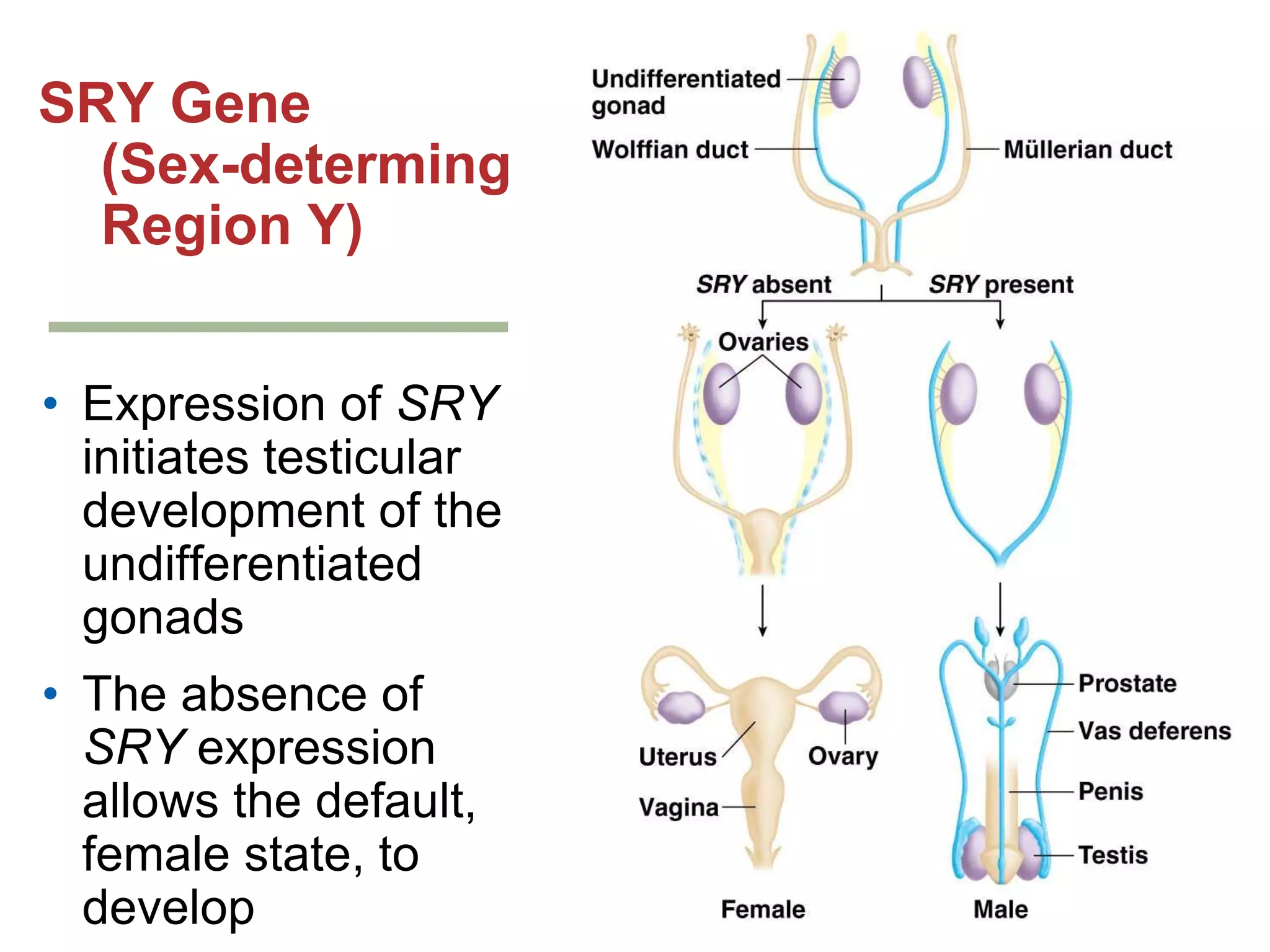
The presence of SRY directs male sexual development
Sex determination starts in early development → Gonad Dependent
Expression of the SRY on males results in development of the testes and production of testosterone. SRY is necessary but not sufficient for male sexual development (aka expressing SRY is not enough alone)
No SRY results in the development of the ovary, complex expression patterns of hormones like estrogen and usually female secondary characteristics. Absence of SRY is necessary but not sufficient for sexual development (aka not expressing SRY is not enough lone)
SRY and Male Development
SRY expressed→ turns on SOX9→ SOX9 expression induces testes development→ Testes development allows testosterone to be produced in necessary amounts for male characteristics to develop→ Testosterone binds to Androgen Receptor→ complex enters nucleus to bind to DNA and changes expression
There is genetic variation in genes determining sex determination and sexual development, leading to variation on primary and secondary characteristics
No functional receptor the body does not respond to androgens (internal intersex +external female characteristics)
Accumulation of androgen leads to differences in development (mix of male, female, and intersex)
Testosterone can’t be converted to DHT leading to differences in development (intersex characteristics)
This form of development is responsible for sexual characteristic development ⬇
Dosage Compensation
Genes outside of PARs have different dosage (amounts of product)
Dosage Compensation- Dosage compensation is the process by which organisms equalize the expression of genes between members of different biological sexes
XX- condensed and decondensed similarly, one x will be turned off by being condensed→ “Active X” and “Inactive X”
Mosaicism
(example in Tortoiseshell cats)
Sex Determination: Many Types
1) Genetic Sex Determination
Inherited sex chromosomes that result in different morphology between sexes
XX/XY ← Male
ZZ/ZW ← Female (bird)
XX/X_ ← insect (male) (fertilized egg= female; unfertilized egg= male)
2) Enviornmental Sex Determination
factors in the environment result in affects on the genes that code for sex (they do not have sex chromosomes)
3) Hermaphrodites
Ex: clown fish
organism is able to make both eggs and sperm
Sex Dimorphism
Some species have trait differences between males and females in addition to primary sexual characteristics. This is called sexual dimorphism.
Two Types of dimorphic traits:
Sex Influenced- A trait whose expression is conditioned or influenced by the sex of the individual
Sex Limited- A trait that is expressed in one sex even though both sexes carry the alleles→ not sex Chromosome linked
Sex Linkage
mode if inheritance resulting form genes being located on the sex chromosome
sex chromosome= possibility of sex linkage
no sex chromosomes= no sex linkage
Sex Chromosomes
Y-linked genes (and traits) are called Holandric very few of these little genetic information
sex linkage is mostly inherited on the X-chromosome
due to hemizygosity, sex linked traits (like colorblindness) is more likely to affect males
affected females will have to have an affected father. the mother will either be colorblind or a carrier
when a the sex of the carrier organism is swapped and the offspring that carries it percentage goes from 50% to 100% (half carrier to all affected in some way) thats a sign of a sex linked trait in mendelian genetics
Hemizygosity- when there is only one copy of an allele in a diploid cell
modes of inheritance can include autosomal recessive and autosomal dominant
key clues- (XY children) do no inherit the trait from fathers (XY parent)- the same as for the X-linked recessive
For the Exam
SI Sessions: Mondays + Wednesday from 5-6:30
predict phenotypic ratio , determine degrees of freedom \, concepts, terminology, and synthesis