Action potential
Resting potential
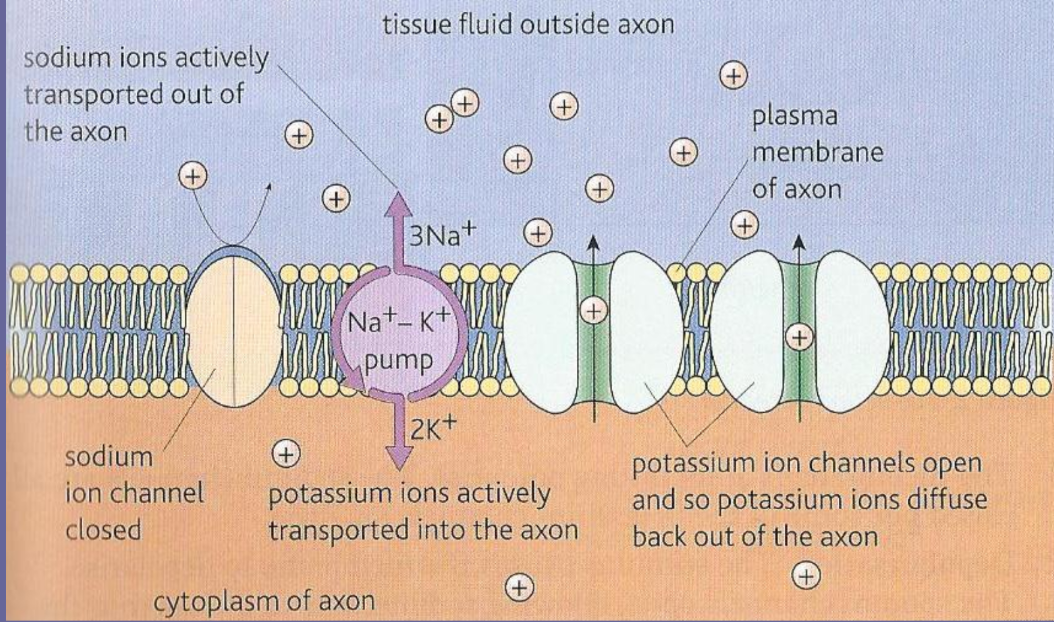
the potential difference between the inside of the neurone and the outside when a neurone is at ‘rest’
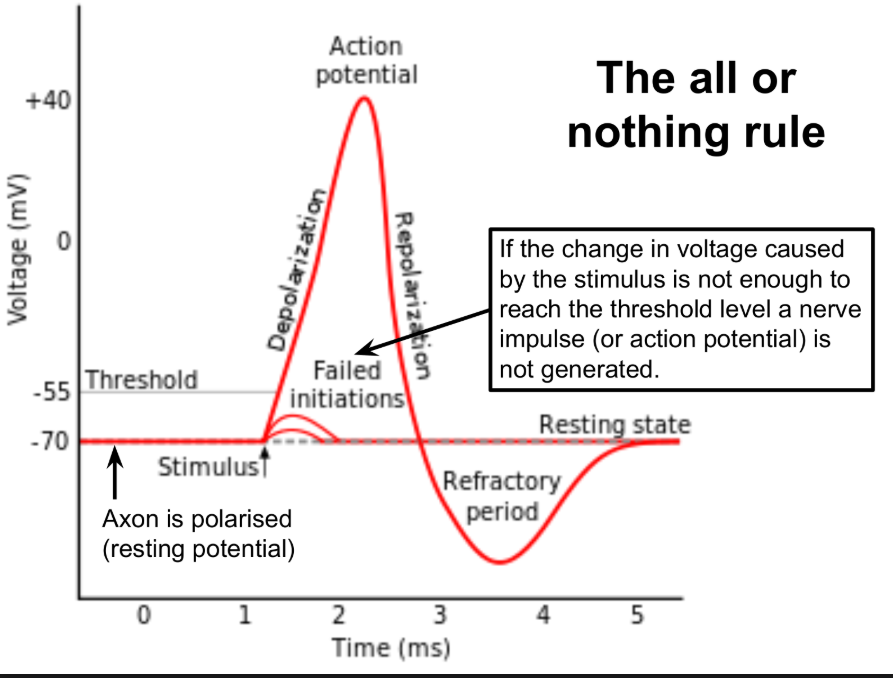
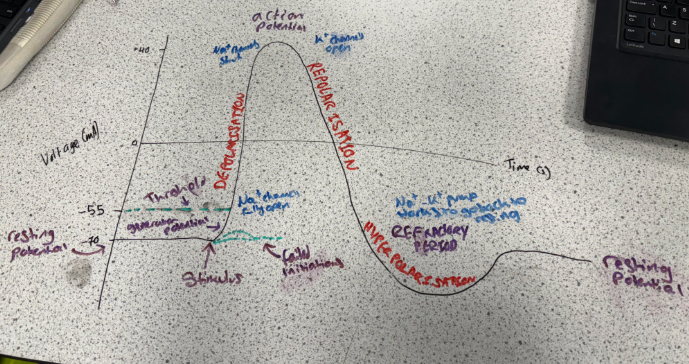
- 70mV (minus 70)
due to relative distribution of ions
large negatively charged protein ions stay inside the cell
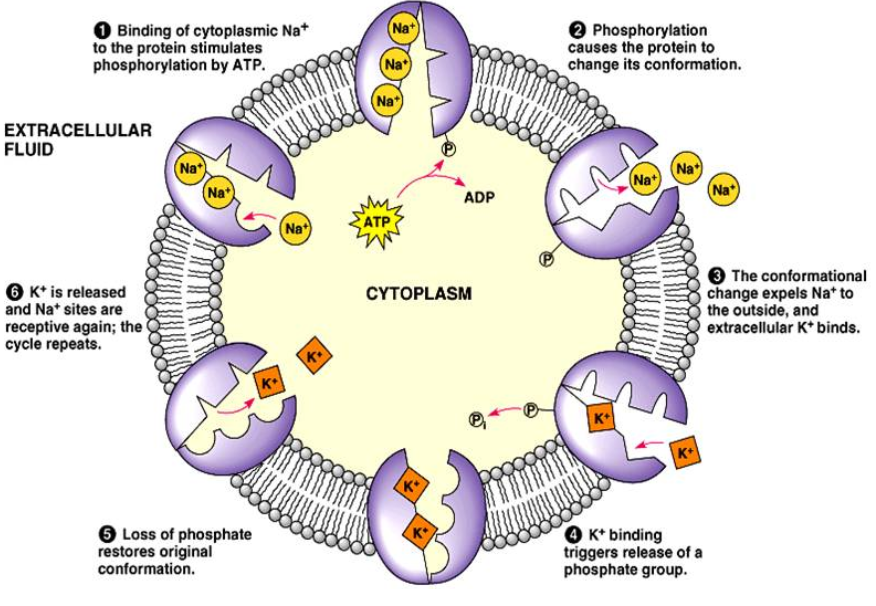
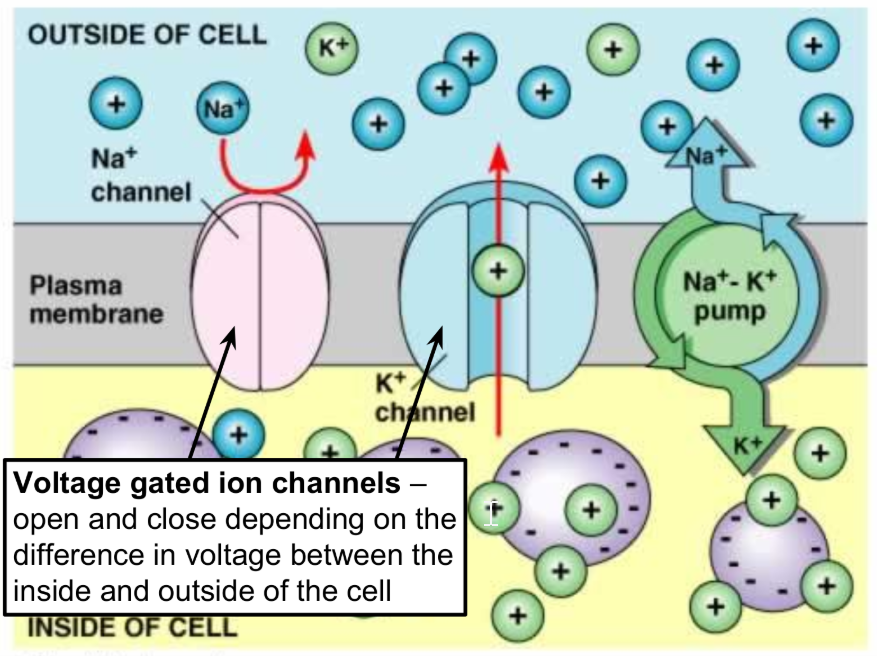
sodium - potassium pump (3Na+ out 2K+ in)
potassium ion channels allow K+ ions to diffuse out (as they are pumped in)
neurones are polarised
inside of a neurone contains more negatively charged ions than the outside
ion channels are found along the whole length of neurone
Generating an action potential
when a neurone is stimulated the stimulus causes some of the sodium ion channels to open
Na+ ions enter cell
inside of the cell becomes more positive so cell potential difference changes
when threshold value is reached (-55mV) an action potential is generated and Na+ channels become fully open
at +40mV Na+ ion channels shut and K+ ion channels open
Refractory period
hyperpolarised
pump works harder to get back up to -70mV
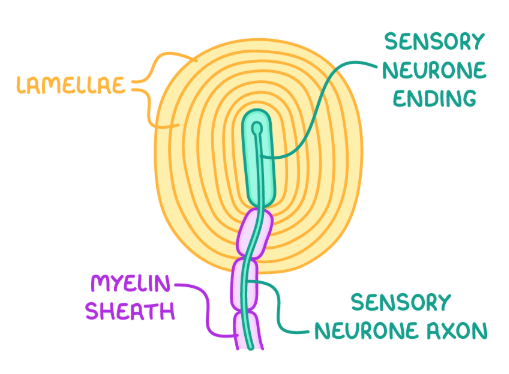
Pacinian corpuscle
pressure and vibration receptors found in the skin
mechanoreceptor
convert mechanical energy into electrical energy