Theories of Emotion
What is Motivation?
Internal energy to fuel behaviour and pointing that energy in a particular direction toward some sort of particular purpose or goal
Energy provides mobilization, strength, intensity, persistence to behaviour
Extrinsic vs. Intrinsic Motivation
Some of your motives spring naturally from internal forces, whereas other motives reflect external pressures

Intrinsic
Engaging in activities because you enjoy them, because they make you feel good and/or because they are inherently fulfilling or meaningful
Example: Spending time on a hobby
Intrinsic motivation is found to be essentially important because they fulfil basic human psychological needs for autonomy (choosing your own path and behaviours), competence (succeeding at existing tasks and mastering new skills) and relatedness (connecting with social others) this is called “Self Determination Theory”
Extrinsic
Engaging in activities for external rewards or to avoid negative outcomes, such as earning money or receiving praise, rather than for the inherent satisfaction of the activity itself
Example: A student studies hard because they feel guilty if they don't meet their parents' expectations, not because they enjoy learning
Introjected regulation
A concept from self determination theory
Referring to a type of motivation where individuals engage in an activity due to internal pressures or feelings of obligation rather than genuine personal interest or enjoyment
Relies on feelings of pressure rather than the choice or align with personal values
You might engage in certain behaviours because you know the social norms of your in group and want to avoid shame and guilt based on your internalization of these rules
Example: You might start exercising as a child or adolescent because your parents forced you off your phone and onto the soccer field with ice cream bribes and lectures (extrinsic). But as you grew up and became more independent, you continued exercising at first because you felt guilty when you didn’t (introjected), and then because you began consciously valuing physical activity and considering it an important part of your goal of being physically healthy (identified), and then because you became someone whose self-concept involved physical fitness and health (integrated)
Using External Rewards Strategically
When there’s no intrinsic motivation external rewards can jumpstart the process
Unexpected rewards: rewards that aren’t anticipated (a surprise coupon for recycling) are more effective at creating positive reinforcement compared to rewards the person expects and works for
Unexpected rewards engage the brain’s reward circuity more powerfully, leading to the thought “I should so this again!”
Reinforcement Schedules
Frequent at first: Deliver rewards consistently to encourage the behaviour early on
Unpredictable later: Gradually make the rewards less frequent and more random to sustain the behaviour and build long term habits
This aligns with operant conditioning
Social Rewards are Effective
Social rewards (like praise or approval) don’t undermine intrinsic motivation as much as materials or financial rewards
Example: In a study, teenagers donated more in a game when they received thumbs-up from peers, demonstrating the power of social approval as a motivator
“Intrinsic and Extrinsic motivation is not a dichotomy but a continuum, and often behaviours start as controlled and move to autonomous”
Extrinsic rewards like money and intrinsic motivation like personal interest are not completely separate or opposite categories
A behaviour doesn’t have to be entirely extrinsic or entirely intrinsic they can overlap
Extrinsic and Intrinsic motivations exist on gradual progression
Example: You might doing something for an external reason (like a reward) but gradually find more internal reasons (like personal enjoyment)
Many behaviours are initially driven by external control or pressure like rewards, punishment or guilt
Example: You might start exercising because your doctor tells you to or to avoid feeling judged
Over time behaviours can become more self directed or internalized as a you find personal meaning in them
Example: After exercising for a while, you may start enjoying it or recognizing its benefits, making it something you do for yourself
Motivation isn’t black and white (extrinsic and intrinsic); its a process, People often start doing things for external reasons but with time can develop more personal or self driven reasons for continuing this behaviour
“Extrinsically rewarding behaviours people already enjoyed appears to decrease the original intrinsic motivation”
If someone is doing something they naturally enjoy (intrinsic motivation) and you introduce an external reward (extrinsic motivation), it can affect how they perceive their original enjoyment
When a reward is introduced, people might start attributing their behaviour to the reward instead of their personal enjoyment, which reduces their internal motivation to do the activity
This suggest that reward changes how people interpret their own behaviour which undermines their sense of intrinsic motivation
The reward shifts focus from internal enjoyment to external validation
The brain reinterprets the activity as externally controlled which diminishes the sense of autonomy that fuels intrinsic motivation
Incentives
Stimuli in the environment that motivate one to engage in a behaviour
Approach and Avoidance Motivation
In addition to extrinsic to intrinsic continuum another core principle: Approach pleasure and avoid punishment and pain
Regulatory Focus Theory - E. Tory Higgins
Motivation varies based on the outcome being pursued
Argues that in addition to understanding how human beings approach and avoid certain situations and outcomes, we would do well to also consider whether these motivations are focused on achieving gains or avoiding losses
Promotion Focus
Motivated by the desire to achieve positive outcomes or move towards an ideal state
Focus on gains and aspirations
Emphasis on growth and achievement
Risk taking is more likely when pursuing opportunities
Example: Looking for a romantic partner to snuggle with before winter reflects a promotion focus because it’s driven by the desire to gain something positive (companionship and warmth)
VS.
Prevention Focus
Motivated by the desire to avoid negative outcomes or maintain security
Focuses on loss prevention
Emphasis on safety, responsibility and duty
Not engaging in risk taking to minimize potential losses
Example: Paying your bills on time to avoid a bad credit score reflects a prevention focus because it’s driven by the desire to prevent a negative outcome (financial trouble)
^^Promotion Goals vs. Prevention Goals Situation^^
Promotion Goals:
Focus on achieving positive outcomes (e.g., getting an A).
Linked to thriving: students pursuing promotion goals are likely to:
Work harder.
Persist under stress.
Think creatively to achieve their goals.
Prevention Goals:
Focus on avoiding negative outcomes (e.g., avoiding an F)
Linked to surviving: effort and creativity may be lower because the focus is on avoiding failure rather than excelling
Overlap Between Promotion and Prevention Goals
Not mutually exclusive: People can hold both types of goals simultaneously.
ExampleA student might want to achieve an A (promotion) while also avoiding an F (prevention)
Flexibility is key: Being able to shift between these goal orientations can be adaptive, depending on the context or task at hand
Example: Promotion goals might dominate in a creative task, while prevention goals might guide risk management
Motivation and The Emotional Connection
Approach motivation
Drives us toward positive experiences and outcomes
Associated emotions: joy, contentment
Avoidance motivation
Drives is away from negative experiences and outcomes
Associated emotions: fear, disgusts
Motivation Theory: A Historical Overview
Motus Animi
The stirring of the soul
Hedonism
The approach of pleasure and avoidance of pain is one of the driving forces underlying human behaviour
Will
One of the first treatments of motivation in psychology literature investigated what was called “will”
An organisms ability to make choices freely
The idea suggests that motivation involves the power to decide and act according to one’s own preferences or desires
What is Emotion?
Subjective changes, autonomic and neural arousal, impulses to action and behaviour designated to have an effect upon the stimulus that initiated the complex sequence
Emotions are reactions to things or events in our environment
They are functional because they help us quickly and efficiently take action, which can influence the world around us
However our emotions happen inside people, so we can’t directly see them; we can only infer or guess what someone is feeling based on their behaviour or expressions
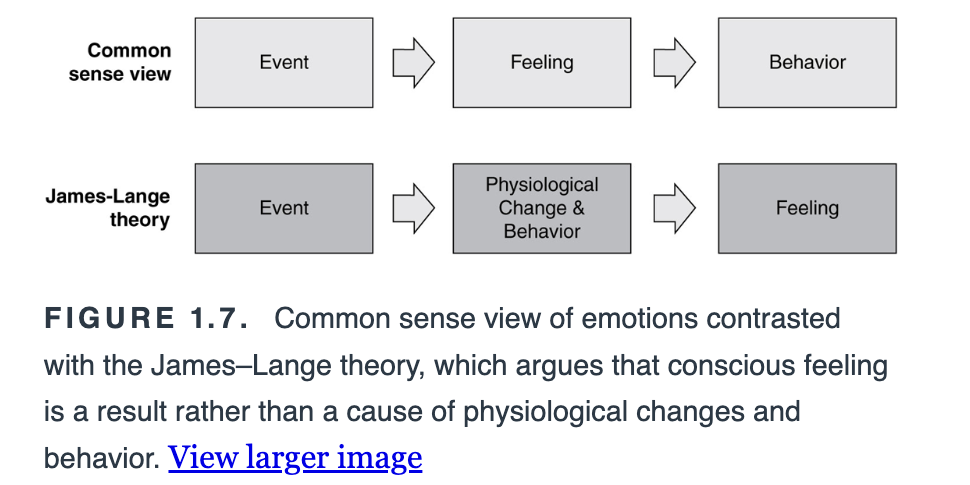
James Lange Theory
Emotional feelings are based on body’s instinctive reaction to certain kinds of situations
Example: When we encounter a bear in the woods, our body may respond with increased heart rate and sweating, leading us to feel fear. This theory suggests that the physiological changes occur first, and the emotional experience follows as a result of those changes
More specifically sensation from the muscle and the internal organs is necessary for the full experience of emotion
Any decrease in this sensation decreases the emotion
Criticisms
Carl Lange’s assumption about our response to a bear is obviously wrong: You do not automatically run away from a bear, you would not run away from a bear in a circus or a sleeping bear
The cause of of your running away is not really the bear itself, but your perception and interpretation of the situation
The idea that how we interpret a situation is what determines an emotional response has become profoundly important for our understanding of emotion
Contradicts the Common View
You feel angry and therefore attack, or you feel frightened and therefore you try to escape
The James Lange theory reverses the direction of cause and effect: You notice yourself attacking therefore you feel angry or you notice yourself trying to escape and therefore you feel frightened
Self Determination Theory
Human beings are intrinsically motivated to determine their own lives, shaped by the core needs of autonomy, competence and relatedness
Humans possess innate psychological needs that drive their behaviour and influence their emotional experiences, ultimately leading to enhanced well-being and personal growth
Autonomy
Core motive to self direct one’s own behaviour and feel in control of one’s life
Competence
Core motive to apply one’s skills to have an impact on the world, to feel capable of handling the demands of the world
Relatedness
Core motive to be meaningfully socially engaged with other humans
Plutchik’s Definition of Emotion
A Common Definition of Emotion
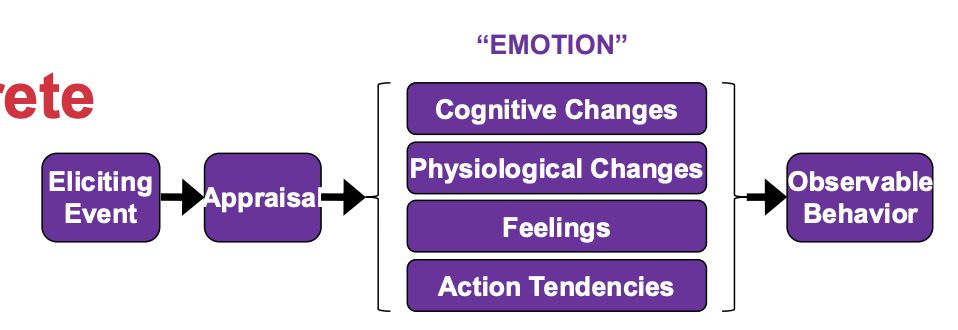
Emotion is an inferred complex sequence of reactions to a stimulus (including) cognitive evaluations, subjective changes, automatic and neural arousal, impulses to action, and behaviour designed to have an effect upon the the stimulus that initiated the complex sequence:
Emotions are functional in the sense that they are geared towards having an effect on the world around us
Emotions guide us to quick and effective action
Every emotion is a reaction to a stimulus
Distinguishes emotions from purely internal drives
The definition proposes that emotion includes four aspects:
Cognitive appraisal (assessing what a stimulus means for your goals, concerns or well being
Similar to William James idea of interpreting the situation (seeing a bear as dangerous)
Feelings: The subjective experiences or internal changes associated with the emotion
Physiological Changes: Bodily responses, such as automatic (heart rate) and neural arousal
Behaviour: Observable actions or reactions triggered by the emotion

Appraisal
Cognitive evaluation of what a stimulus or situation means for one’s goals, concerns and well being
Interpretation of the emotion eliciting event
An Alternative: Core Effect
Some researchers believe that emotions don’t need to have all four parts - thinking (appraisal), feelings, physical changes and behaviours working together to be considered emotions
Instead they propose focusing on one key part like feelings and studying how it relates to others
Discussing discrete categories (fear, disgust, anger) are not the only way to understand emotions
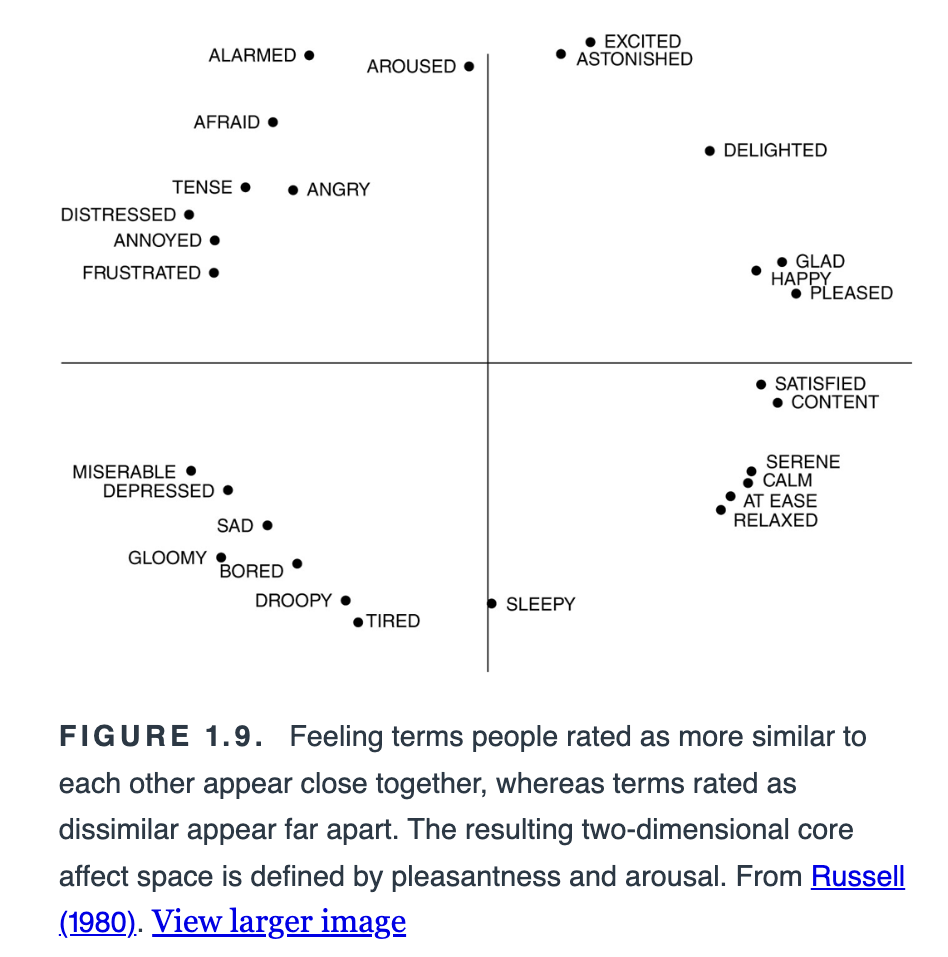
An alternative is to arrange feelings along dimensions
Multidimensional scaling (allows us to see what dimensions emerge statically from people’s ratings of their experience)
Examples of dimensions might include:
Pleasantness vs. Unpleasantness (how positive or negative the feeling is).
High Energy vs. Low Energy (how intense or calm the feeling is).
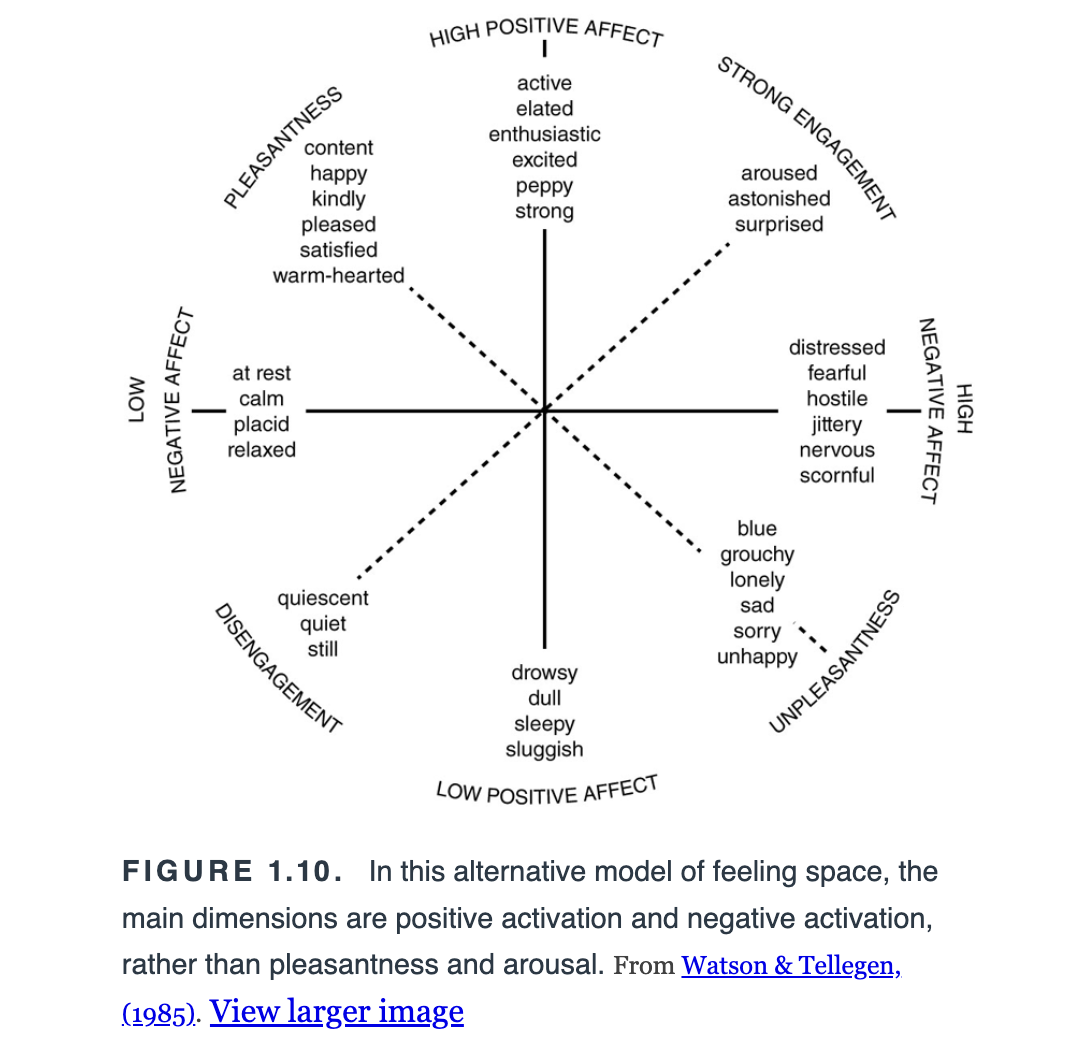
Circumplex Model
A model in which emotional feelings form a circle; emotions close to each other on the circle or similar or likely to be experienced at the same time
The model helps to visualize how emotions relate to each other
Example: Anger and frustration are next to each other because they feel alike and can overlap
Example: Happiness and sadness are opposite sides of circle
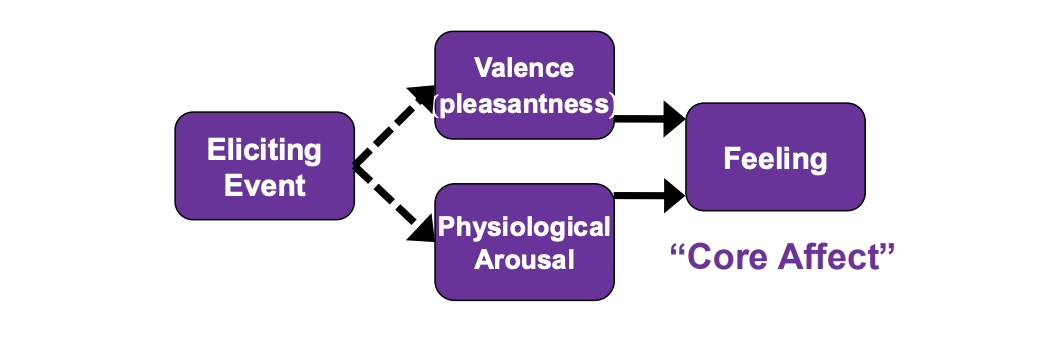
Core Affect
A model for describing the feeling aspect of emotion emphasizing dimensions of pleasantness and arousal
Focuses on two dimensions of emotion:
Pleasantness (how positive or negative the feeling is)
Example: Feeling happy is very pleasant; feeling annoyed is unpleasant
Arousal (how active or calm the feeling is)
Example: Excitement is high arousal; relaxation is low arousal
Every emotion can be placed somewhere on this grid:
Joy: High pleasantness, high arousal
Fear: Low pleasantness, high arousal
Evaluative Space Model
A model of attitudes, proposing that evaluation of some target goodness and badness are independent rather than opposite
Some target’s badness and goodness are independent of each other, such that something can be good and bad at the same time
Comparing The Models
Circumplex Model of Emotion
This model focuses on feelings being either positive or negative on a single scale
If you feel a strongly positive emotion, you can’t feel strongly negative emotion at the same time
Positive and negative feelings are on opposite ends of the spectrum
Evaluative Space Model
This model suggest positive and negative feelings are independent and not on the same scale
Something can feel good and bad at the same time
Example: eating spicy food might be enjoyable (positive) but uncomfortably hot (negative)
Positive and negative affect are treated as separate dimensions
you can have a mix of strong positive and strong negative feelings simultaneously
Which model is right?
According to the results of one study, positive and negative affect are opposites in most situations, but in a few bittersweet situations people do feel both
Mixed emotions often can occur when a meaningful experience in one’s life is coming to an end
Similarities
They emphasize the feeling aspect of emotions, rather than cognitive or behavioural aspects
They agree that emotional feelings are best described in terms of continuous dimensions like valence (positive and negative) and arousal (high/low), rather than discrete categories like “anger” or “joy”
They emphasize that feelings are mainly defined in terms of valence (positive and negative) and degree of arousal (how energized or calm the feeling is) or activation
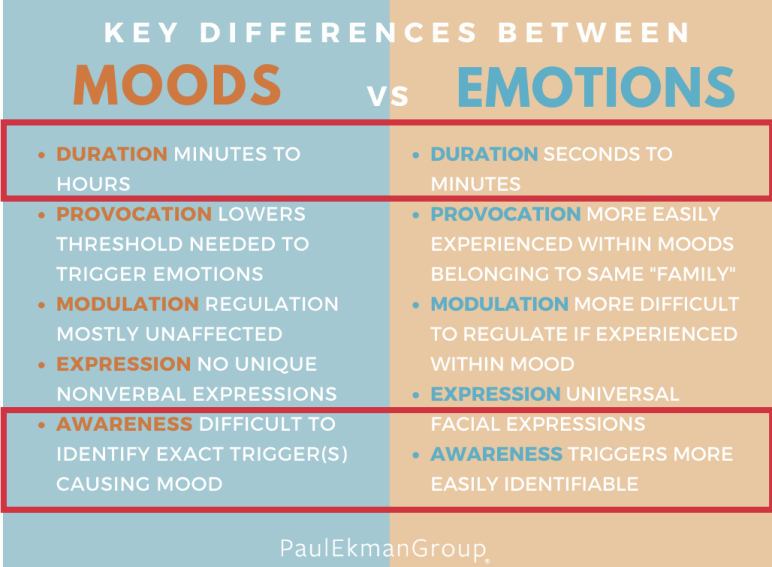
Emotions vs. Moods
Moods
No specific action
Difficult to pinpoint why the mood was caused
A diffuse, longer lasting affective state of being not tied to a particular stimulus
Sometimes you just wake up in a grumpy mood, for no obvious reasons
Researchers differentiate moods from emotions as lasting longer, having less clear cut causes and being less associated with specific action tendencies
Emotions
Leads to specific actions: cry, scream, run away
Differences
Emotions tend to be short lived phenomena, measured in minutes
Moods can linger over hours, days or even multiple days
Emotions and moods differ in terms of their causes:
Emotions are linked to an easily identified internal or external triggers, they are reactions to some stimulus or event
We can sometimes can come up with a plausible account of our mood, but there may be multiple, diffuse reasons for it and sometimes it’s difficult to identify any explanation at all
Emotions are tied to specific behaviours
Moods are less obviously connected with specific actions
If you are angry (an emotions) presumably you are angry at someone and about something, and you want to do something to resolve whatever situation is provoking your anger
If you’re just in a grumpy mood what can you do? sulk? complain?
If it’s not clear what your upset about the actions needed to improve you mood may be less apparent
Modern Theories of Emotion
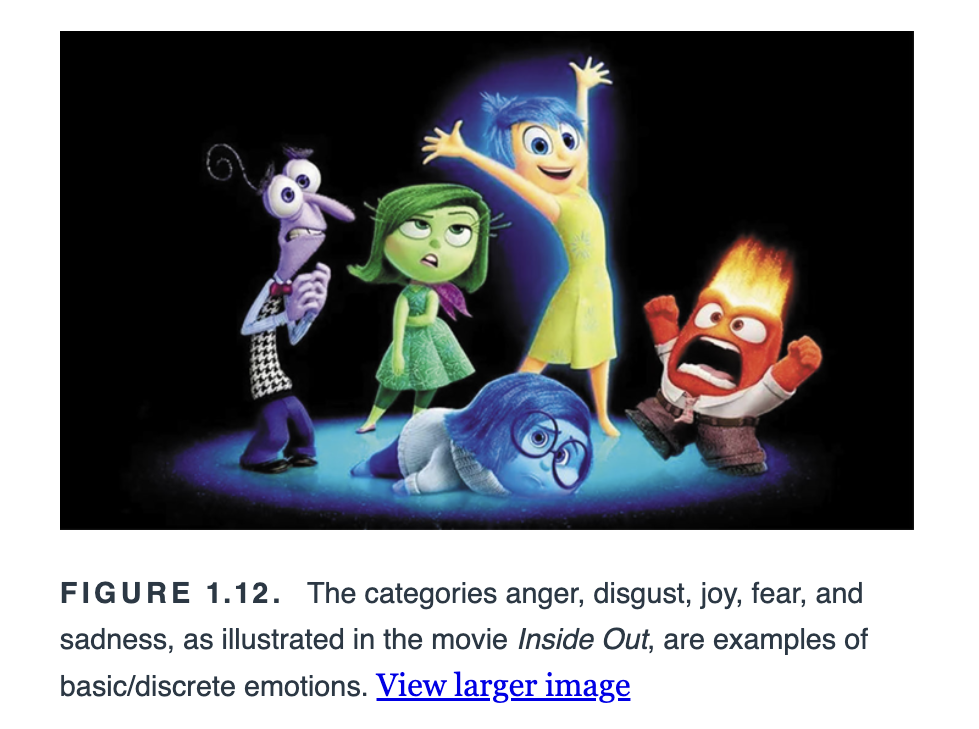
Basic/Discrete Emotions
We should think of emotions in terms of distinct categories
Emotional responses reflect our evolutionary heritage and then are part of human nature
Three main propositions
Each emotion is thought to serve a distinct adaptive function
Every basic emotion evolved to address a specific survival challenge, making it easier for humans to adapt to their environment
Emotions are not random they serve distinct purposes that have been shaped by evolution to protect and sustain us
Example: Fear presumably evolved to help us escape the threat of predators and similar resources of immediate physical danger
Basic emotions activates multiple components of the emotional system (appraisals, cognitives, physiological changes, behaviours…) Producing a responses that should help you respond efficiently to the situation at hand
Emotions act like a control system, organizing all aspects of your response to help you react appropriately and quickly to challenges
Example: When experiencing fear
Cognitive: Attention focuses on the threat
Physiological: Heart rate increases, pupils dilate and adrenaline flows (fight or flight response)
Behavioural: The body prepares to run or defend itself
Categories like fear, anger, sadness aren’t just cultural or subjective they represent innate and universal emotions that all humans share
Emotions are fundamental to human nature, not social constructs and they arise from common psychological and physiological processes across all cultures
Example: Paul Ekman argues that these emotions are biologically hardwired, evolutionarily developed and universally recognized (through facial expressions)
The best known list of basic emotions:
Happiness
Sadness
Anger
Fear
Disgust
Surprise
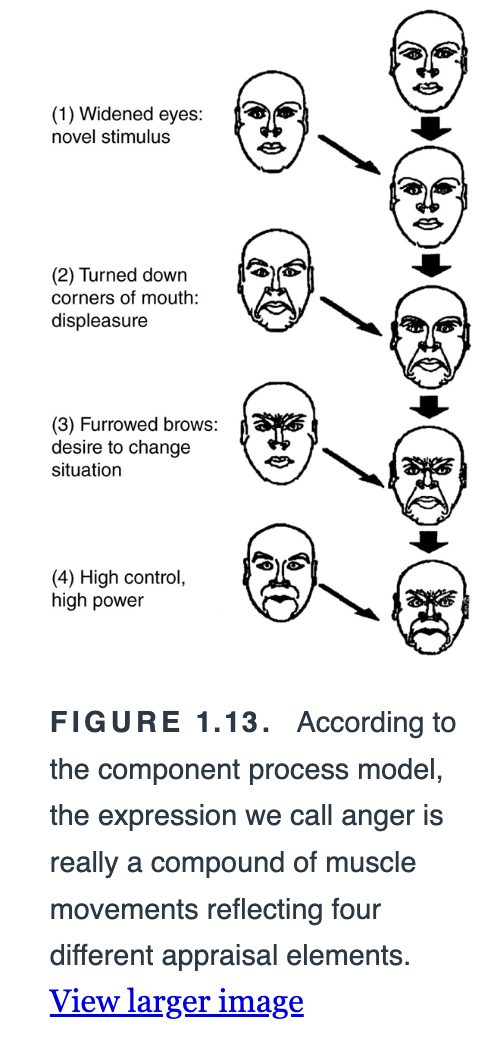
Component Process Model
Emotions are responses to environmental events, rooted in our evolutionary history
Model emphasizes the importance to cognitive appraisal (how we interpret or evaluate events)
Appraisal is needed for an emotional response to occur
Example: To be disgusted by a cockroach in your kitchen, you must appraise it as source of contamination that is likely to make you sick
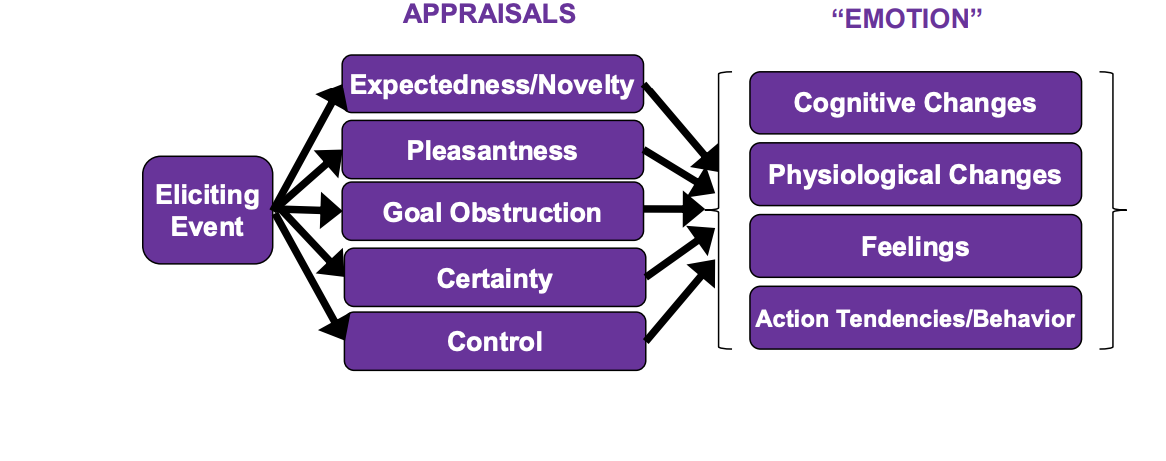
Dimensional Appraisal System
Instead of categorizing emotions into fixed types (like anger, fear or sadness) this model evaluates emotions along multiple dimensions and determines which emotion is activated
Examples:
Novelty: Is the threat new or familiar?
Pleasantness: It is enjoyable or unpleasant?
Need for change: Does the situation require action?
Comparing The Models
Restaurant Analogy
Imagine emotion theories as different restaurants:
The basic emotions model offers a set menu with fixed dishes for each emotion (e.g., "fear" always comes with specific physiological and behavioral responses).
The component process model is like a buffet, where your emotional "dish" is created by combining different ingredients (appraisal dimensions).
Overlap with Basic Emotions:
The Component Process Model (CPM) acknowledges that common recognizable emotion states (e.g., anger, fear, sadness) align with basic/discrete emotions.
These "modal emotions" reflect prototypical threats or opportunities humans evolved to respond to, much like the focus of basic emotions theory.
Example: Fear might still arise in response to a predator, reflecting a common evolutionary challenge.
Flexibility in Emotional Expressions:
In the CPM, the same general emotion (e.g., anger) can look different depending on the specific appraisals involved.
Example:
Full Anger Profile: Appraisals of an injustice, certainty about the cause, and goal blockage might lead to a classic anger response (e.g., yelling).
Partial Anger: If only some appraisals are present (e.g., mild goal blockage but uncertainty about the cause), the response might not look like full anger.
B. Appraisal Dimensions Produce Variety:
Emotions can arise from unique combinations of appraisal dimensions, leading to experiences that don’t fit neatly into traditional categories like fear or sadness.
This flexibility explains "quirky," less common emotional states.
Example:
Feeling nostalgic: This might combine appraisals of pleasantness (fond memories) with goal incongruence (you can’t relive those moments)
Novel Emotional Experiences:
Unlike the basic/discrete model, which focuses on fixed emotion categories, the CPM allows for uncommon but real emotional experiences that don’t fit neatly into any single emotion.
Example:
Bittersweet emotions: Feeling joy and sadness simultaneously when a child graduates—pleasantness from their achievement and unpleasantness from knowing they are moving away.
Psychological Construction of Emotion
Schachter and Singer’s Study
Psychological arousal: acts as the intensity dial for emotion
Cognitive appraisal: Determines the type of emotion you feel by interpreting the context
The Study
Participants injected with epinephrine (to induce physical arousal) or given a placebo.
Some participants were informed about the expected effects of epinephrine; others were not.
Participants were placed in two emotional contexts:
Euphoria condition: A confederate acted playful and happy
Anger Condition: A confederate acted irritable and frustrated
Key Findings
Uninformed participants:
Interpreted their physiological arousal based on the emotional cues in the situation:
Felt happy in the euphoria condition.
Felt angry in the anger condition.
Informed participants:
Attributed their arousal to the injection, not the context, and experienced less emotional reactivity
Implications:
Emotion arises not just from physical arousal but from how the context is interpreted.
Arousal is not specific to each emotion, challenging theories that suggest each emotion has a unique bodily signature.
Psychological Construction of Emotion
Core Idea:
Emotions are not biologically hardwired categories (e.g., "fear" or "anger").
Instead, they are constructed through:
Core affect (basic feelings of pleasantness and arousal).
Cognitive appraisals of the context.
Cultural and linguistic concepts that shape how we label and experience emotions.
Core Affect Dimensions:
Valence: Is the emotion pleasant or unpleasant?
Arousal: Is the emotional experience highly activating (e.g., excitement) or low-activating (e.g., calm)?
Role of Cultural and Linguistic Concepts:
Emotion labels (e.g., "anger," "joy") are shaped by language and cultural norms.
Different cultures may interpret or label the same core affective states differently.
Example: What one culture calls "anger," another might describe as "frustration" or "righteous indignation."
Key Proposition:
Emotions result from the integration of:
Core affective states (universal feelings of arousal and valence).
Contextual appraisals (interpretation of the situation).
Cultural concepts (learned through language and shared experiences)
Putting It Together
Schachter and Singer’s study laid the groundwork for the psychological construction view by showing that physiological arousal alone does not create specific emotions. Instead, emotions depend on how arousal is interpreted in context. Building on this, the psychological construction model argues that:
Emotions are not innate categories but are shaped by core affect and contextual appraisals, filtered through cultural and linguistic frameworks.
This approach emphasizes the role of individual experience and culture in defining and categorizing emotions, rather than universal, biologically hardwired emotion types.
Comparing Emotion and Motivation
Similarities
Shared Origin and Function:
Both "emotion" and "motivation" derive from the Latin root motus, meaning "to move," highlighting their shared role in driving action.
Both involve approach and avoidance behaviors:
Emotions like joy can draw us toward rewarding experiences.
Motivations, like hunger, push us to seek food.
Energy and Direction:
Both concepts involve an "energy + direction" framework:
Motivation provides the energy to pursue goals and direct behavior.
Emotions energize responses to stimuli and provide feedback for goal achievement.
Interdependence:
Emotions influence motivation:
Anticipated emotions (e.g., the joy of a vacation) can motivate saving money.
Motivation triggers emotions:
Achieving a goal often results in emotions like pride or relief.
Evolutionary Perspective:
Both are adaptive processes:
Emotions prepare the body to respond to threats or opportunities.
Motivations ensure survival and reproduction by guiding behaviors toward essential needs.
Overlap in Research and Study:
Psychologists often study emotions and motivations together because they are deeply interconnected and influence behavior similarly.
Differences
Temporal Focus:
Emotions:
Focused on the present moment.
They are immediate responses to environmental stimuli, such as feeling fear when encountering danger.
Motivation:
Often focuses on long-term goals.
Involves behaviors across time, like working toward academic success or saving for retirement.
Scope of Study:
Emotions:
Encompass feelings, physiological changes, and behavioral impulses (e.g., sadness, anger).
Studied for their impact on moment-to-moment reactions.
Motivation:
Includes goal-setting, effort allocation, and persistence.
Studied for its role in goal-directed behavior over time.
Role of Feedback:
Emotions:
Provide feedback on progress:
Positive emotions signal success (e.g., joy when achieving a goal).
Negative emotions indicate challenges or setbacks (e.g., frustration from failure).
Motivation:
Drives the behaviors that generate those feedback signals.
Broader Processes in Motivation:
Motivation involves multiple psychological processes beyond emotion, such as planning, decision-making, and self-regulation.
Intersection of Emotion and Motivation
Emotion as Energy for Motivation:
Emotions provide the energy for motivated actions.
For example, fear of failure can motivate intense preparation for an exam.
Emotion as Feedback:
Emotions reflect how well we are meeting our goals.
Success brings joy and pride.
Failure brings sadness or frustration
Research Methods: How do we study emotion and motivation
Inducing Emotion and Activating Motivation
Emotion researchers use several methods to induce emotion, for example researchers may ask participants to think of a time in their life when they experienced an emotion very strongly, to remember that experience vividly and then to talk or write about the experience
To elicit emotions:
Or researchers may participants to read and vividly imagine themselves in a story designed to evoke a strong emotion
Showing photographs or short film clips
^^ONE ADVANTAGE OF ALL THESE METHODS IS THAT THEY ARE FACE VALID
Researchers typically use stories or images with emotional meaning on which most people can agree
THERE ARE SOME LIMITATIONS TO THESE METHODS THOUGH
They generally serve to evoke emotion through a memory or imagined situation, rather than a real event happening in the present moment
In some studies researchers have evoked emotions by putting participants directly into emotional situations, such as giving them small gifts, complimenting them on their “creativity” on a preliminary task, or asking them to give a speech to a cold and unresponsive audience
Although such strategies are ecologically valid, resembling the real-life situations in which people feel emotions, the emotions may not be specific, and people may respond in different ways.
Emotions elicited in laboratory settings are at best weaker than those people can experience in the real world
Researchers can PRIME existing motivations and goals by making them especially salient in the moment
to subtly activate or highlight them in a person's mind, making them more accessible and likely to influence behavior without the individual being fully aware of it. This is often achieved by presenting stimuli (e.g., words, images, or tasks) that are associated with certain motivations or goals, which in turn directs attention and actions toward those goals.
Ex. Before a test, a teacher might display images of successful graduates or famous achievers, subtly encouraging students to focus on doing their best.
Experience sampling
The researcher gives each participant a device of some kind, like a smartphone or tablet, that buzzes at unpredictable times throughout the day. When the buzz happens, the participant is supposed to answer questions about his or her situation, feelings, activities, and so forth right away. Researchers can also “scrape” data about emotion from text, images, and emojis in people’s social media posts and other online content. The advantage of these approaches is that they examine people in real life
THERE ARE CONS THOUGH:
people aren’t experiencing intense emotional or motivational states most of the time; these are not experimental designs and so you cannot assess cause/effect relationships; and the measures you can collect are usually limited to simple, quick, self-report items
Measuring Emotion and Motivation
Noted the definition of emotion typically includes:
Cognitions
Feelings
Physiological changes
Behaviors
People have trouble fighting out their motivations
We tend to mimic other people’s facial expressions, mannerisms.. Something that is called the “CHAMELEON EFFECT”
Psychologists really rely on these kinds of methods
Self reports: participants descriptions of their own feelings
Biological measurements: measures of heart rate, blood pressure
Behaviors: actions we can observe such as facial and vocal expressions
Reliability of a measure
Typically measure from a scale of 0 to 1
If the reliability is high close to 1, then people who are tested repeatedly under the same conditions get nearly the same score each time. If the reliability is close to 0, scores fluctuate randomly from one test administration to another. If reliability is low, then the test is not measuring anything
Validity of a measure
An assessment of whether scores on some measurement represent what the researcher claims they represent
In a highly valid measure, the intended construct (typically a psychological process, ability, or event) is the only or primary determinant of people’s scores. A questionnaire could be invalid if many people answer it untruthfully, or if it is influenced by characteristics other than the one intended
Validity
1. Face Validity
Definition: The extent to which the content of a measure seems, at a glance, to represent the concept it's supposed to measure. It’s a superficial judgment—does it "look" right?
Example: A questionnaire designed to measure stress levels asks questions like, "How often do you feel overwhelmed?" This has face validity because it obviously relates to stress.
2. Content Validity
Definition: The measure should comprehensively cover all aspects of the intended construct, without including unrelated elements.
Key Idea: It’s about how well the measure represents the full scope of the concept.
Example: If you're developing a test of math ability, content validity would require questions on all relevant topics (e.g., algebra, geometry) and exclude irrelevant ones (e.g., general knowledge).
3. Convergent Validity
Definition: The degree to which different measures of the same concept correlate positively with each other. This shows that they are capturing the same underlying construct.
Key Idea: Similar measures should produce similar results.
Example:
Two questionnaires measuring anxiety should yield similar scores for the same person.
Physiological measures like heart rate and cortisol levels, both related to stress, should show a positive correlation when stress increases.
4. Predictive Validity
Definition: The extent to which scores on the measure can accurately predict outcomes that are theoretically related to the construct.
Key Idea: A good measure predicts behaviour or outcomes that align with the theory behind it.
Example:
An SAT score should predict a student’s success in college (if it has predictive validity).
A measure of job satisfaction should predict employee turnover rates (if it is valid for that purpose).

Measuring
Self-Reports
Subjectivity in Ratings:
People rate their emotions based on personal standards. For example, one person might rate their nervousness as a "5" on a scale, but that may not correspond to the same intensity for someone else rating their nervousness as a "5."
Cross-Cultural Issues:
Emotion words may lose nuances during translation, which makes comparing emotional experiences across languages and cultures challenging. This can lead to inaccurate assumptions about the meaning of emotion words, as they can differ subtly in each language or dialect.
Limitation:
Self-reports depend heavily on personal interpretation and linguistic differences, making it difficult to get precise or universally comparable measurements.
Biological Measures
Sympathetic and Parasympathetic Nervous Systems:
Sympathetic Nervous System (SNS): Activates the "fight or flight" response, preparing the body for action by increasing blood flow and oxygen to muscles. It is crucial for strong emotions, such as fear and anger.
Parasympathetic Nervous System (PNS): Works to relax the body, conserve energy, and facilitate recovery and growth processes.
Hormones:
Hormones are chemicals in the body that regulate processes like arousal, and they are crucial in emotional responses. For example, adrenaline boosts energy during a stressful situation.
Electroencephalography (EEG):
EEG records electrical activity in the brain by placing electrodes on the scalp. It provides high-resolution, real-time information (in millisecond-by-millisecond increments) about neural activity, but only from the neurons closest to the electrodes.
Limitation:
It cannot accurately detect activity in deeper brain structures and provides imprecise spatial localization of activity, as it sums the electrical activity over a wide area.
Functional Magnetic Resonance Imaging (fMRI):
fMRI detects changes in blood oxygen levels to assess brain activity. Active brain areas consume more oxygen, which fMRI measures to locate neural activity. It can pinpoint changes within 1 to 3 millimeters, even in deeper brain regions, and is more accurate than EEG in terms of spatial resolution.
Limitation:
Practical Disadvantages: The individual must stay completely still inside a noisy machine. This can be difficult for children or those with claustrophobia.
Contextual Limitation: fMRI experiments require participants to remain still and respond to static stimuli (like images), which may not replicate real-world emotional experiences where movement and social interaction are involved.
Cost and Accessibility: fMRI equipment is expensive and often limited to research institutions or hospitals.
Behavioral Observations
Challenges in Observation:
People can try to conceal their emotions, which makes it difficult to gauge their true emotional state through behavior alone.
Facial Expression Coding:
Facial expressions can be subtle and fleeting. For example, a typical emotional expression might last only 1 or 2 seconds. To accurately code expressions, observers must watch videos of a person’s behavior, often in slow motion, to identify minute changes in facial muscles.
Action Units:
Researchers track specific muscle movements (known as "action units") to categorize emotions, such as raising inner or outer eyebrows or tightening lips.
Limitation:
This process is time-consuming and requires significant training to distinguish the facial movements accurately, limiting the scalability of behavioral observation studies.
Takeaways:
Self-Reports: Offer subjective insights but are prone to cultural and individual interpretation biases.
Biological Measures: Provide more objective data (e.g., heart rate, brain activity), but have limitations in terms of accessibility, context, and spatial resolution.
Behavioral Observations: Can be difficult to interpret due to the subtleness of facial expressions and the need for detailed coding and repetition, but they provide valuable insights into the outward manifestations of emotion.