Week 6 lecture/ Required Readings
Health Professionals & Interprofessional Collaboration (NURS 3001 B Week 6)
Agenda
Online Class via Zoom: Link provided on eClass.
Topics for Discussion:
Scholarly Paper and Group Presentations.
Roles and Structures: Regulated Nursing in Canada.
Interprofessional Collaboration.
Delivery of Care and Practice Settings.
Control Acts and Delegated Acts.
Interprofessional Education.
Who Delivers Health Care?
Who delivers health care and where it is delivered are undergoing continual change
Health care in Canada is provided by a wide variety of healthcare providers:
Conventional (or mainstream) medical practitioners
Those who practice complementary and alternative medicine
Informal workers:
Volunteers of community organizations
Friends and family members
Roles and Structures: Regulated Nursing in Canada
Four Designations in Nursing:
Registered/Licensed Practical Nurse (RPN/LPN)
Registered Psychiatric Nurse (RPN)
Registered Nurse (RN)
Nurse Practitioners or Registered Nurse, Extended Class (NP/RN(EC)) in Ontario.
Importance of Role Clarity:
Need for better role clarity and addressing historical power structures that impeded interprofessional and intraprofessional collaboration
Registered/Licensed Practical Nurses (RPN/LPN)
Registered Practical Nurses in Ontario (rest is LPN)
Make up 29% of regulated nursing workforce
Role first established in late 1930s
Manitoba was first to require registration in 1946
Education – Diploma
Registration Examination – Canadian Practical Nurses Registration Examination (except Quebec); in 2022 Ontario and BC will move to Regulatory Exam – Practical Nurse Jurisprudence – required in Alberta, Manitoba, Ontario, NB, NS
Registered Psychiatric Nurses (RPN)
Exclusive to Manitoba, Saskatchewan, Alberta, BC, and Yukon, comprising 1.4% of the workforce.
First established during WWII (early 1940s).
Registration Context:
Saskatchewan was the first to require registration in 1948.
Education options include Baccalaureate or Diploma.
Examination: Registered Psychiatric Nurses of Canada Examination (if in Yukon, must go to other provinces for examination).
No Jurisprudence requirement.
Registered Nurses (RN)
In all provinces and territories
Represent 68% of the regulated nursing workforce
Historical Role:
Indigenous healers were the first nurses in Canada
Registration requirement began in Manitoba (1913).
Education:
Typically requires a Baccalaureate, with variations in Quebec (Quebec – has both BScN and Diploma).
Examination:
NCLEX, except in Quebec.
Jurisprudence in multiple provinces- BC, Alberta, Ontario, NB, NS, PEI.
Nurse Practitioners/ Registered Nurse, Extended Class RNs
In all provinces and territories
Account for 1.4% of the regulated nursing workforce.
Historical Context:
Expanded roles emerged in the 1890s in northern and remote communities.
Ontario and BC legislated NP authority and scope of practice in 1997.
Educational Requirements:
Generally a Master's degree.
Registration Examinations: Include Primary Health Care, Pediatrics, and Adult (Except Quebec).
Jurisprudence presented in Ontario and NS.
Interprofessional Collaboration
Key Aspects:
Socialization
Role Clarification.
Access to prevention, promotion, and management.
Ensuring the right provider meets patient needs at the right time and place.
Focus on Patient Safety.
Respecting diverse knowledge, skills, and perspectives.
Identifying appropriateness
Support patient care needs
Intra-professional vs Interprofessional
Intra-professional: Collaboration among nurses only.
Interprofessional: Involves multiple healthcare providers.
Interdisciplinary: Across disciplines- Includes non-healthcare professionals (e.g., sociology, engineering, IT, law).
Practice Settings
Where care is provided includes:
Hospitals.
Residential care facilities.
Rehabilitation centers.
Community care facilities.
Hospices
Clinics and Offices
Primary care settings.
Home care
Trends in Health Care Delivery
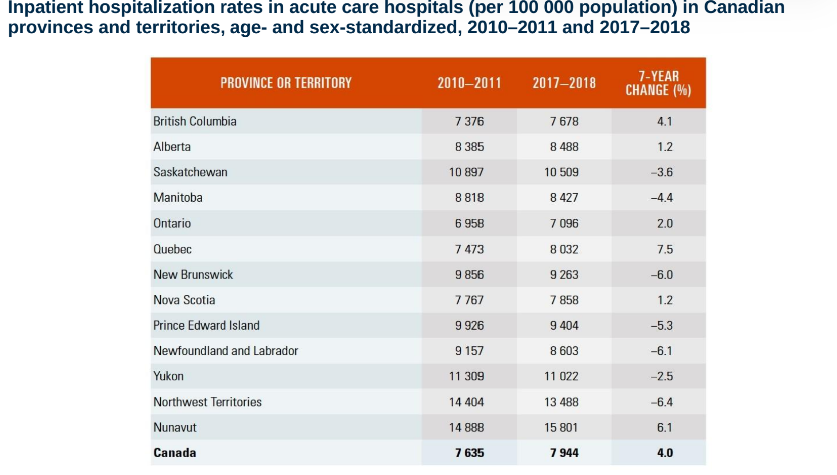
In 2014, Statistics Canada reported that 4.5 million Canadians did not have a family physician
To address the issue, all regions are experimenting with different ways to deliver primary care:
Patient's Medical Home (PMH).
Interprofessional collaboration.
Community-based care.
Categories of Health Care Providers
Conventional Health Care Providers: Physicians, nurse practitioners, midwives, nurses, and dentists.
Allied Health Professionals: Dental hygienists, dietitians, optometrists, psychologists.
Complementary and Alternative Practitioners: Indigenous healers, naturopathic doctors, massage therapists.
Conventional Medicine
Conventional medicine is frequently referred to as orthodox, mainstream, traditional, or Western medicine.
Conventional healthcare practitioners diagnose health problems; treat pre-diagnosed health problems; and render technical, therapeutic, or supportive care with scientifically proven therapies, medication, and surgery.
Alternative Medicine
Critics of alternative medicine believe that treatments should be scientifically proven before they are used (also called an evidence-informed or evidence-based approach).
A significant number of Canadians use CAM at some point in their lives. This may be due to many factors, including:
disillusionment with conventional treatment
difficulty getting appointments with their doctor
cultural influences and belief systems that contradict mainstream medicine
information available on the Internet
many more people are actively participating in their own health care and treatment options.
Regulation of Health Care Professions
Educational standards
Provincial and territorial examinations
Practitioner’s scope of practice, which outlines skills, acts, and services the practitioner is able to perform competently and safely
Curbing of individual’s practice if standards are not met
Formal complaints process for the public
Complaints investigation and follow-up
Title protection
Competence and quality assurance
Performing Controlled Acts
Controlled acts, if not performed by a qualified practitioner, may result in harm to a patient
Controlled acts are identified by the Regulated Health Professions Act (RHA) or the equivalent in each jurisdiction
Examples of controlled acts include:
Giving an injection
Setting or casting a fracture
Passing a nasogastric tube
Prescribing a medication
Exceptions to Controlled Acts
Most provinces and territories allow controlled acts to be performed by competent yet unregulated individuals, including
A person with appropriate training providing first aid or assistance in an emergency
Students learning to perform an act under the supervision of a qualified person
A person, such as a caregiver, trained to perform an act (e.g., giving injections to a person with diabetes)
An appropriate person designated to perform an act in accordance with a religion
Delegated Acts
Definition: A delegated act by definition is the means by which a regulated health professional (authorized to perform the delegated act)transfers legal authority or permits another person to carry out a controlled act they are otherwise unauthorized to do (procedures that are not controlled acts do not require delegation)
Although guidelines and protocols for delegation of medical acts vary across Canada, in general the delegated act must be clearly defined and supervised accordingly
The delegating health care professional, the delegate, the facility, or environment in which the act is performed share responsibility for the act
Nonregulated Professions and Occupations
People who work within nonregulated occupations do not have federal or provincial legislations governing their occupations.
Like regulated professions, many nonregulated occupations have professional organizations or bodies that award certification when a person completes a set of written or practical examinations or both
Definitions in Interprofessional Collaboration
Interprofessional: The relationship between various professions as they purposely interact to work and learn together to achieve a common goal. For example, if a patient has trouble swallowing, nurses, speech language pathologists and dietitians need to work together as a team to figure out what is wrong and how to help the patient.
Collaboration:
Involves multiple people interacting to achieve a common goal
Consists of social inputs and task inputs
An active and ongoing partnership between professionals and institutions with diverse backgrounds and mandates who work together to provide services
A process that involves cooperation, communication, negotiation, trust, respect, and understanding to build a synergistic alliance that maximizes the contributions of each participant
Critical Elements of Collaboration
Coordination (working to achieve shared goals)
Cooperation (contributing to the team, understanding and valuing the contributions of other team members)
Shared decision-making (relying on negotiation, communication, openness, trust, and a respectful power balance)
Partnerships (open, respectful relationships cultivated over time in which all members work equitably together)
Interprofessional Collaborative Practice: Definition
An interprofessional process of communication and decision-making that enables the separate and shared knowledge and skills of care providers to synergistically influence the client/ patient care provided.
Interprofessional Education
Occasions when two or more professions learn with, from and about each other to improve collaboration and the quality of care.
CIHC uses the term to include all such learning in academic and work based settings before and after qualification, adopting an inclusive view of "professional".
Evidence of Interprofessional Collaborative Practice
CHSRF Synthesis 2007: Overall Key Messages
High quality evidence supporting positive outcomes for patients/clients, providers& system in specialized areas (e.g. diabetes, mental health, hypertension) with interprofessional collaboration e.g
Physician/ pharmacist mgmt. hypertension with significant B/P reduction
Diabetes shared care very positive feedback re service & increased confidence providing routine diabetes care in practice
Case manager & PC physician collaboration for depression significant positive effects in standardized depression outcomes
Positive Outcomes for patients/clients, providers and system when interprofessional collaboration fostered and supported on basis of servicing geographic populations or population health models (environmental scan/ some of literature reviews) e.g.":
FP physicians and clinical dieticians resulted in significant decrease in weight (50% with intense follow up and personal diet)
Some correlation (statistically significant) in team effectiveness and lower wait time appts./few ER visits/ higher access PHC
Interprofessional services to population 15,000 with improvement satisfaction professional practice, reduction in ER use, healthier lifestyles.
Regulatory and legislative support not readily evident to foster and promote consistency and clarity of interprofessional collaborative partnerships and scope of practice, nor availability of physician (and other professional) remuneration models
Evidence for interprofessional practice:
Canadians who have additional access to either nurse and/ or other professional were:
> 2.5 times more likely to report range of services that met needs
42% more likely to rate quality health care as good, very good, or excellent.
46% more likely to have more knowledge of conditions
67% more likely to report know- how re preventing future problems
Conclusion
Evidence to support interprofessional practice (especially for management chronic disease)
Some evidence & lot of support for interprofessional practice
Need to clarify understanding/ definitions re interprofessional practice & education
Need for one set of interprofessional competencies for all professions
Better evaluation/ research needed
Questions for Reflection
What is the current status of Interprofessional Education?
How well does current Interprofessional Education support Interprofessional Practice?