WEEK 10: French Baroque Painting & Architecture
Poussin: known for his classical French Baroque style
Rebecca and Eliezer of the Well, 1640’s
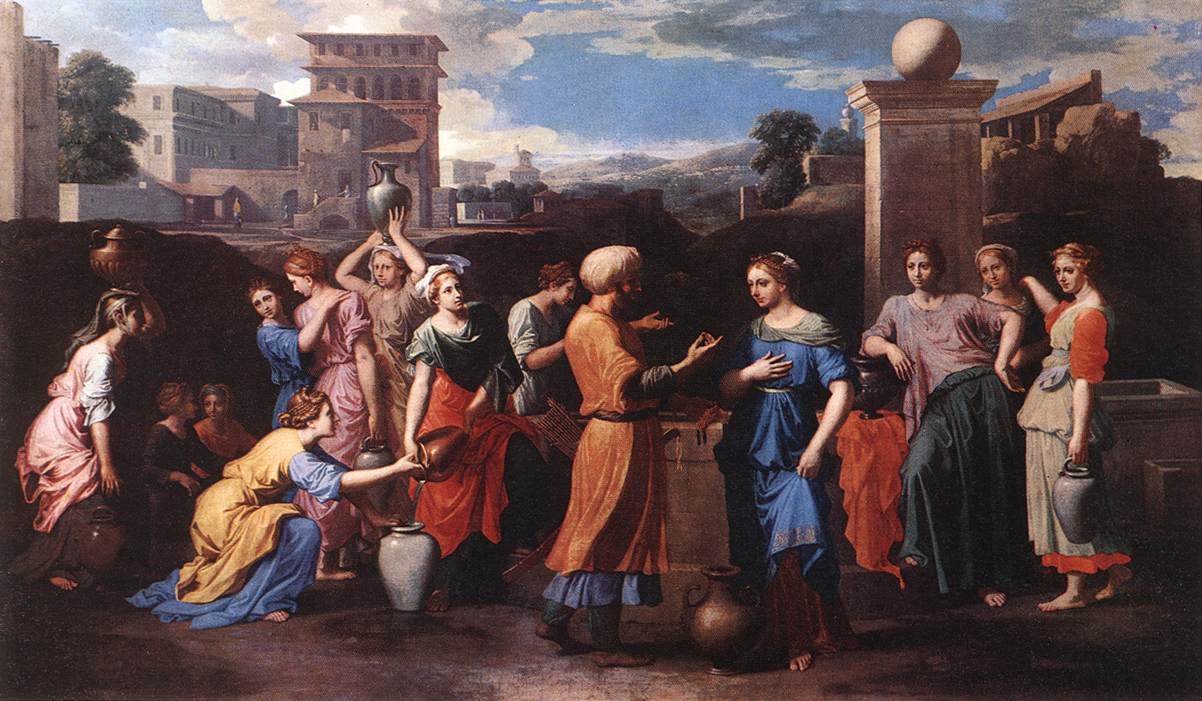
Commissioned by a wealthy Parisian silk merchant in Paris who was already a patron
This painting stands as a prime example of French Baroque art
Depicts the biblical narrative from Genesis, Eleazar
is tasked with finding a wife for Isaac. Rebecca is chosen by her virtue spirit
The crucial "camel test" is a central moment, illustrating Rebecca's profound kindness and suitability as a bride for Isaac as she readily offers water not only to Eleazar but also to his camels.
The composition strongly emphasizes feminine beauty, particularly in the graceful figures of the women and the elegant forms of the water jugs, all arranged within Poussin’s characteristic classical frieze structure, which provides a sense of order and timelessness.
The painting skillfully illustrates subtle characteristics of the Baroque style, yet these elements ultimately lead back to an underlying adherence to classical ideals of balance, harmony, and rational composition.
The classicizing background, often reminiscent of ancient Roman architecture or idealized landscapes, purposefully contrasts with the more dynamic and emotionally expressive figures in the foreground, capturing a fundamental tension between tradition (classical) and innovation (Baroque) in the art of the period.
The use of bright and vibrant colors significantly elevates the emotional impact of the paintings
Some of the women in the scene engage directly with the viewer through their gaze
The dramatic lighting, characterized by strong contrasts between light and shadow (chiaroscuro), and the emotional intensity conveyed through the figures' gestures and expressions, create a heightened sense of theatricality and narrative impact, typical of the Baroque era.
Landscape with the Funeral of Phocion, 1640’s
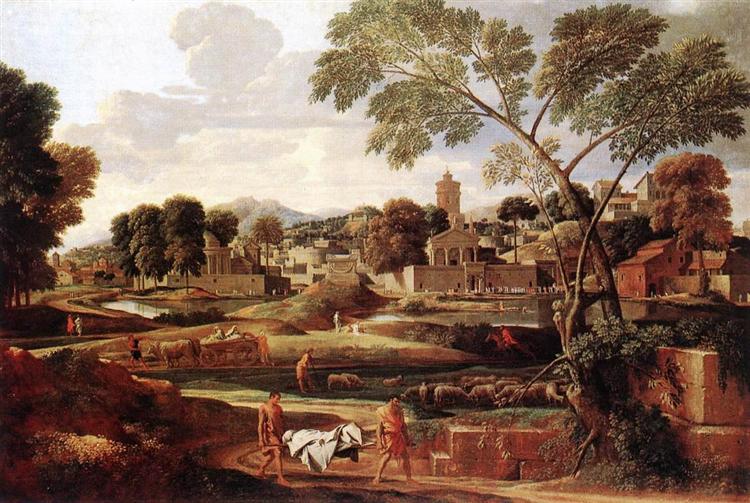
Classical landscape painting: This genre, deeply cultivated by Poussin, is characterized by its meticulously arranged natural elements—often featuring ancient ruins, idealized trees, and figures—integrated into a harmonious and balanced composition. These landscapes serve not merely as backgrounds but as integral stages for historical or mythological narratives, imbuing them with intellectual and emotional depth.
Commissioned by a wealthy French merchant: This piece was likely acquired by a sophisticated connoisseur of classical art, reflecting the growing trend among the Parisian elite to acquire works that showcased virtue, stoicism, and intellectual rigor. Such patronage by a discerning individual often allowed Poussin the freedom to explore complex themes and techniques, aligning with his academic approach.
Depicts the ancient story of Phocion: The painting profoundly illustrates the narrative of Phocion, an Athenian general renowned for his incorruptibility and integrity, who was unjustly accused of treason and executed by his own people. This choice of subject highlights enduring themes of heroism in the face of injustice and the profound tragedy of human ingratitude and folly, resonating with Poussin's consistent interest in morally didactic narratives.
Geometric shapes are utilized throughout the composition: Poussin meticulously employs geometric principles, such as stable triangular compositions for figures and the careful placement of architectural elements within a structured grid, throughout the entire artwork. This not only creates a strong sense of order and visual balance but also reinforces his intellectual and rational approach to art, thereby intensifying the emotional impact of the scene by providing a stable, classical framework.
Peaceful Arcadian landscape: A serene Arcadian landscape serves as the primary setting, strikingly juxtaposing the timeless beauty and tranquility of nature with the profound human drama unfolding. This idealized natural environment represents a pastoral paradise, often associated with antiquity and philosophical contemplation, which traditionally served as a backdrop for profound human experiences and moral reflection.
Festival taking place in a temple: Within the scene, elements suggesting a festival are taking place in a distant temple, where glimpses of activity hint at the convergence of gods and mortals. This symbolizes a profound harmony and the celebration of life amidst the prevailing themes of tragedy, suggesting an enduring cycle of existence and the possibility of spiritual or communal transcendence even in sorrow.
City of Aethons depicted as an idealized vision of beauty and grandeur: The city of Aethons appears in the distance as an idealized vision of classical beauty and grandeur, showcased through intricate architectural details that reflect the aspirations of the ancient world. Its pristine
appearance and grand scale serve as a stark contrast to the immediate human tragedy, emphasizing an enduring ideal of civic order and timeless aesthetic perfection.
Stoic themes shown through the expressions and postures of the figures: These themes are profoundly conveyed, particularly in the dignified bearing of Phocion's grieving followers as they respectfully carry his body. Their controlled emotions, solemn movements, and lack of overt despair convey a philosophical message about maintaining virtue, enduring hardship with calm resignation, and upholding moral principles even when faced with immense difficulties and injustice, reflecting the Stoic ideal of inner fortitude and reason over passion.
Lorrain:
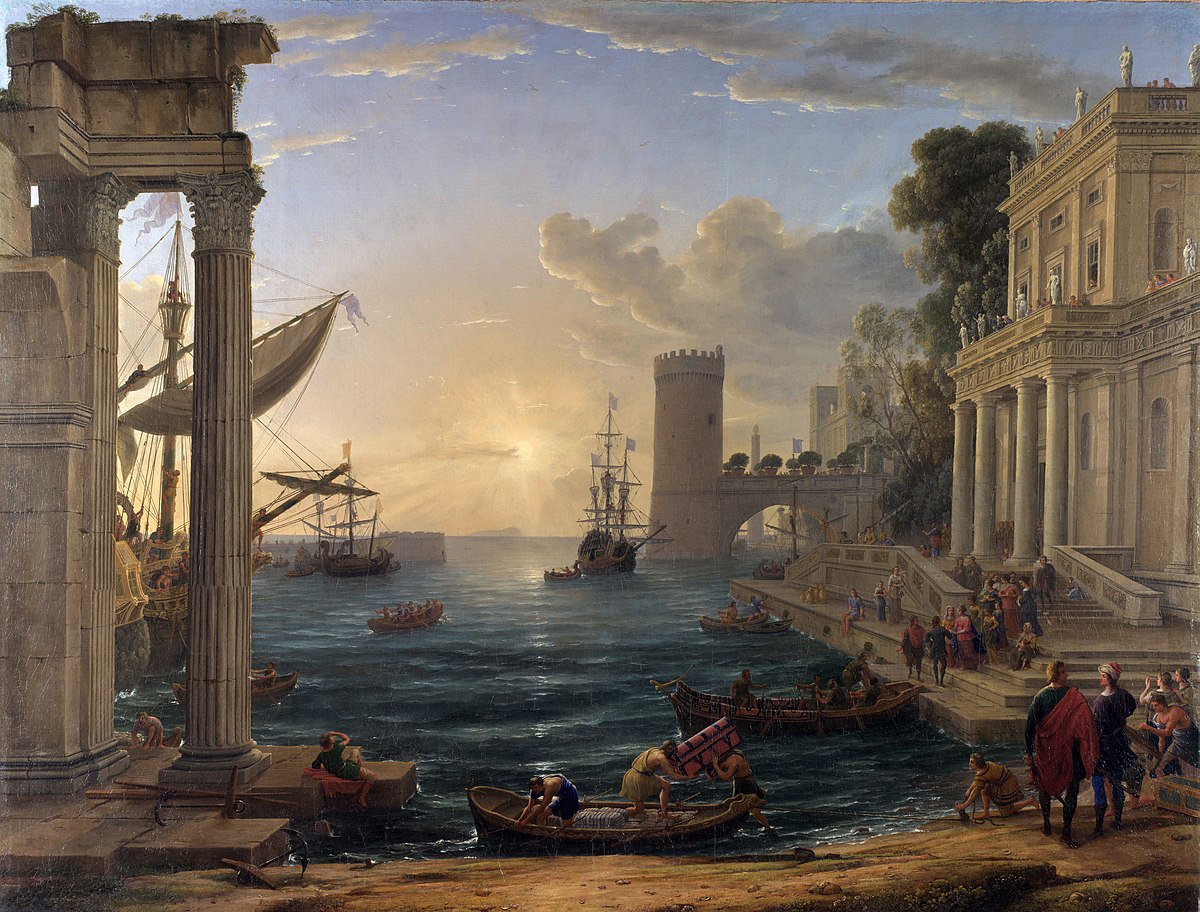
Embarkation of the Queen of Sheba, 1640’s
Balanced, classical composition
Subject and Narrative
Depicts the Queen of Sheba preparing to set sail from a grand, classical-style port to visit King Solomon in Jerusalem (Old Testament, 1 Kings 10:1-2).
The Queen herself is a small figure, seen on the steps to the right, descending to a waiting launch.
Key Characteristics
Mastery of Light:
Innovative depiction of light with the sun placed centrally just above the horizon at early morning.
Warm, soft light permeates the entire scene, reflecting on water, illuminating clouds, and casting a golden glow over buildings.
This central sun creates a powerful sense of atmospheric depth and unity.
Idealized Composition:
The scene is an idealized, imaginary seaport, not a realistic portrayal of an ancient city.
Highly structured composition with towering classical buildings framing the view, guiding the viewer's eye towards the central light and the open sea.
Reflects Claude's years in Rome and his deep interest in antiquity.
Architectural Detail:
Features a bustling port with numerous small figures engaged in activities like loading goods onto boats.
Landscape with the Marriage of Issac and Rebecca (The Mill), 1640’s
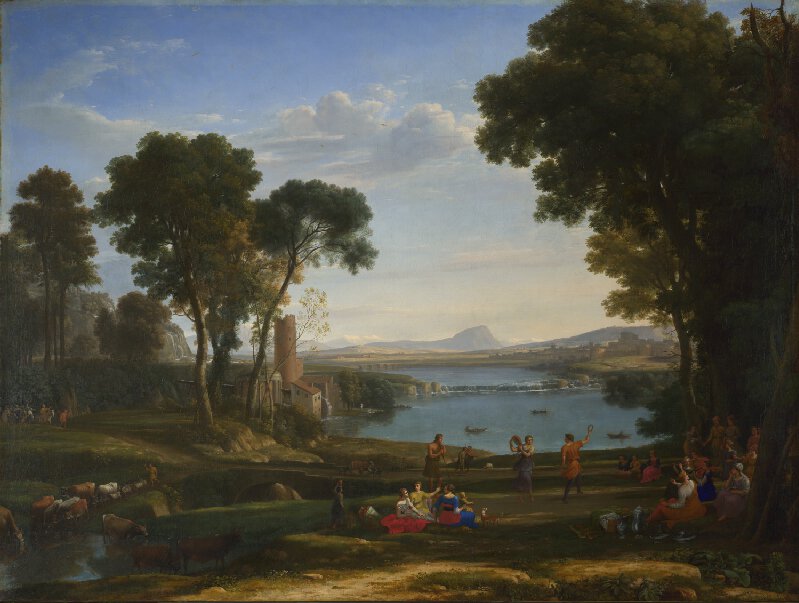
Subject Matter: The work is nominally based on the Old Testament story of the marriage of Isaac and Rebecca. However, the specific ceremony is not detailed in the Bible, and the painting depicts figures (likely contemporary Italian peasants) dancing and picnicking in a festive, arcadian scene.
Composition and Style: The painting exemplifies Claude's signature "ideal landscape" style, where nature is the main subject. The scene is not a realistic location but an imagined, balanced, and serene setting inspired by the Roman countryside where Claude lived.
Key Visual Elements:
Framing: Tall trees on either side of the canvas frame the central view, a typical device used by Claude to guide the viewer's eye into the distance.
Depth and Light: A wide river meanders from the foreground into the distance, leading the eye towards mountains and a town in the background. The painting is notable for its naturalistic, even lighting and atmospheric depth, though not as dramatic as its companion piece.
Figures: Human figures are small in scale and blend into the landscape, emphasizing the dominance of the natural world. The central figures are engaged in joyful activities, including dancing to a tambourine and flute.
Companion Piece: It was painted as a pendant to the more famous Seaport with the Embarkation of the Queen of Sheba (also 1648). The pair were commissioned by the nephew of the pope
Louis XIV (14) Governs Alone, Hall of Mirrors, Palace of Versailles, 1670’s
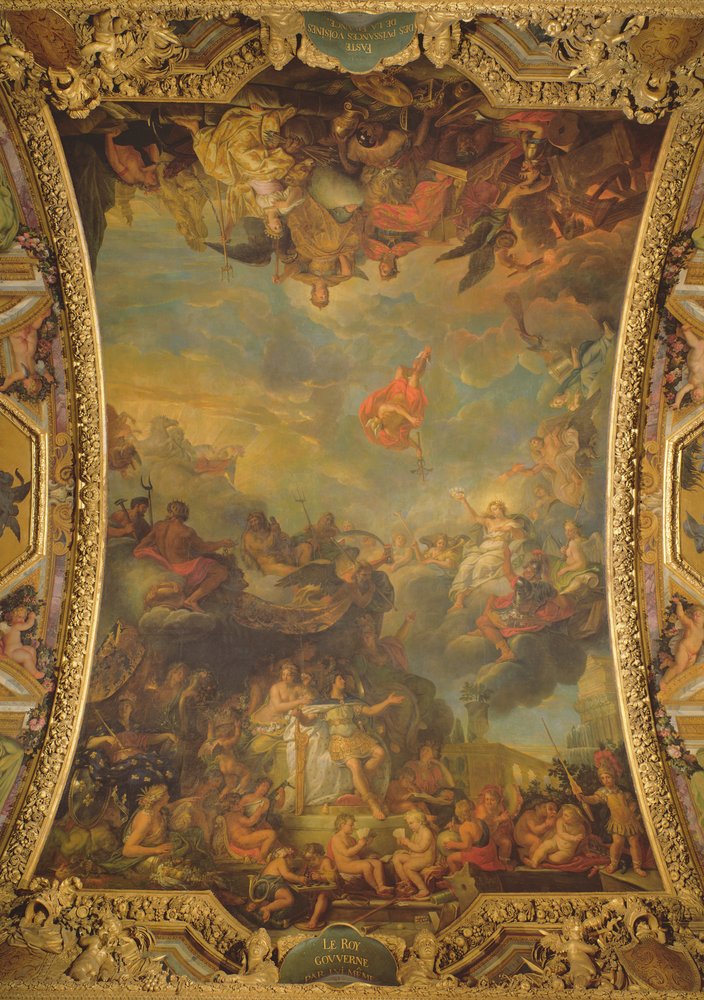
Central Position: As a key piece, it is prominently located on the vaulted ceiling,
It's part of a larger series of painted compositions that narrate the first 18 years of Louis XIV's personal rule (1661-1678), showcasing his military, diplomatic, and administrative successes.
Louis XIV as Apollo: The King is often depicted with attributes of Apollo, the sun god, symbolizing his role as the source of all light, life, and order in the kingdom.
Allegorical Figures: Surrounding the King are various allegorical figures representing virtues, powers, and institutions that are now directly controlled or influenced by his singular will.
Absolute Monarchy: The painting powerfully communicates the doctrine of absolute monarchy
Palace of Versailles, 1660’s
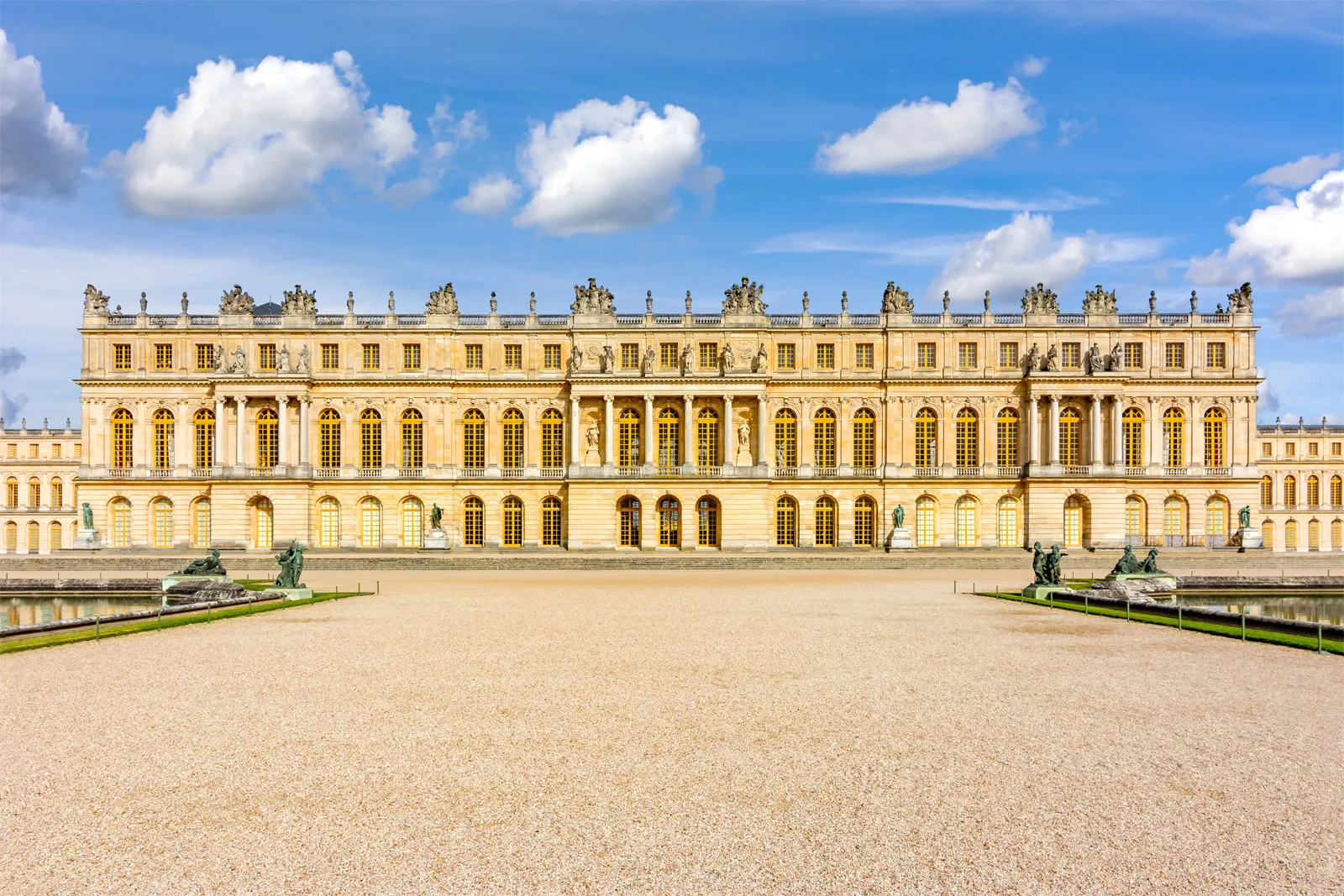
Humble origins: The palace began as a small hunting lodge constructed for King Louis XIII in 1623.
The Sun King's vision: Beginning in 1661, Louis XIV transformed his father's hunting lodge into a grand Baroque palace and used it as a symbol of his absolute power.
A new center of power: In 1682, Louis XIV moved his court and government to Versailles to better control the nobility and distance himself from the people of Paris.
Formal Gardens: Designed by André Le Nôtre, the sprawling gardens cover nearly 2,000 acres and are a key Baroque feature. They are meticulously planned with geometric patterns, symmetrical pathways, and manicured hedges, demonstrating humanity's—and by extension, the King's—domination and rational control over nature.
Symmetry and Order: The main façade, though incorporating classical elements like columns and pediments, is rigorously symmetrical and organized, reflecting the Baroque ideals of harmony and control.
Centralization of Power: The King's bedroom is located at the exact geographical and symbolic center of the palace,
Hall of Mirrors, Palace of Versailles, 1670’s
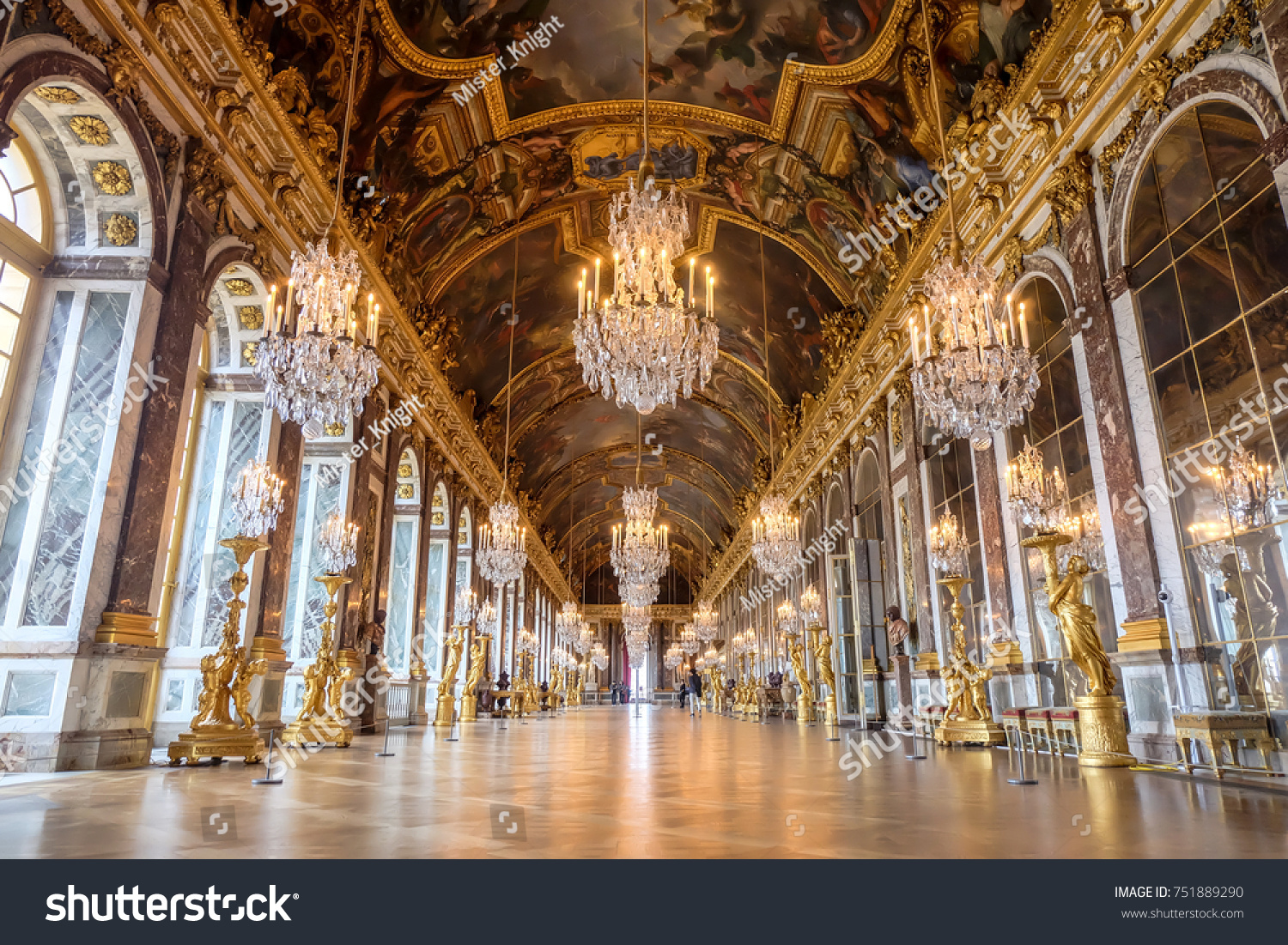
Key Contributors:
Jules Hardouin-Mansart: Principal architect, designed the structure.
Charles Le Brun: First Painter to the King, directed all interior decoration and ceiling paintings.
Purpose: Connected the King's Grand Apartment to the north and the Queen's Grand Apartment to the south, replacing an earlier terrace
Reinforcement of Power: Imagery constantly reinforced the absolute power and divine right of Louis XIV.
Purpose of Mirrors:
Visually double the size of the hall, creating an illusion of infinite space.
Amplify natural light from the windows.
Showcase France's advanced manufacturing capabilities in producing large, high-quality mirrors.