Linear & Angular Kinematics II
Linear and Angular Kinematics II
Key Concepts to Understand
Relationship between the axis of rotation and the plane of motion.
Basic metrics for describing angular kinematics:
Direction and sign of motion.
Angular velocity and angular acceleration.
Importance of directional coordinate systems for class discussions.
Axes of Rotation
Movement Dynamics:
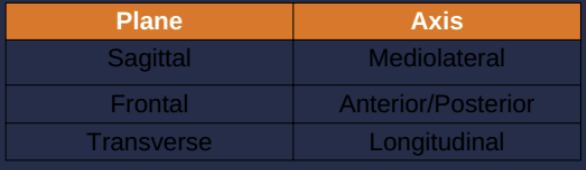
Joints turn around an axis that has a 90-degree relationship to the plane of motion.
Named Axes of Rotation:
Mediolateral Axis of Rotation
Anteroposterior Axis of Rotation
Longitudinal Axis of Rotation
Rotary (Angular) Motion
Definition:
Movement of a segment involves each point moving through the same angle simultaneously while maintaining a constant distance from the center of rotation.
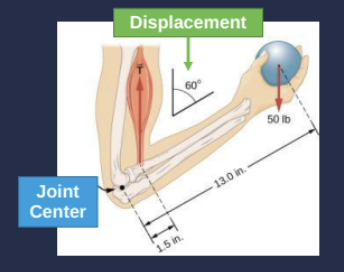
Degrees of Freedom
Movement Options for a Segment:
A completely unconstrained segment has 6 degrees of freedom.
More constrained segments retain fewer degrees of freedom
Unconstrained segment can rotate around each of the 3 axes
3 planes x 2 direcions = 6 options for movement
Comparison: Linear vs. Rotary Motion
Linear Motion:
Measured in meters (m).
Rotary Motion:
Measured in radians (rad).
Conversion Note:
1 radian ~ -57.3 degrees
2 radians = 360 degrees
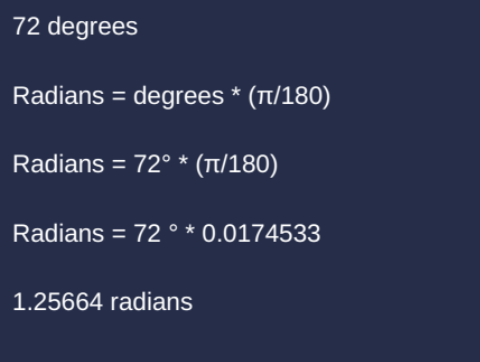
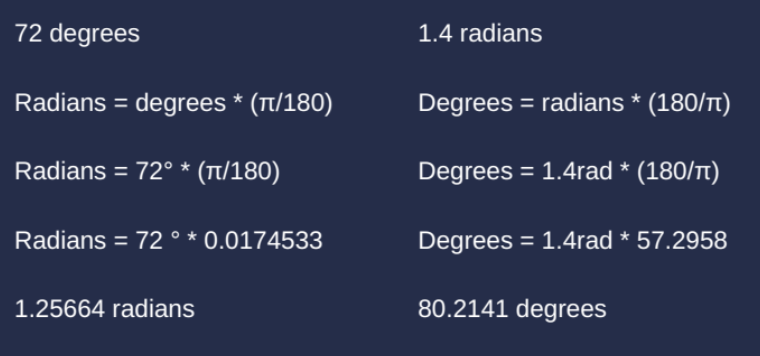
Converting Degrees to Radians
Conversion Formula:
Degrees from Radians:
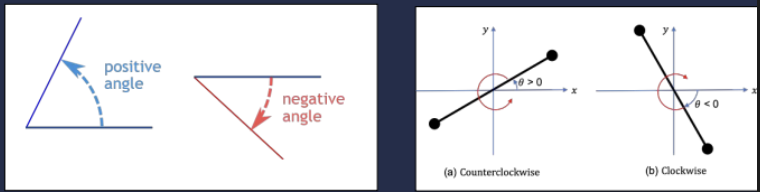
Direction of Rotation
Clockwise: Denoted as negative (-).
Counterclockwise: Denoted as positive (+)
Clockwise (-) vs. Counterclockwise (+)
Vector Magnitudes in Rotational Movement
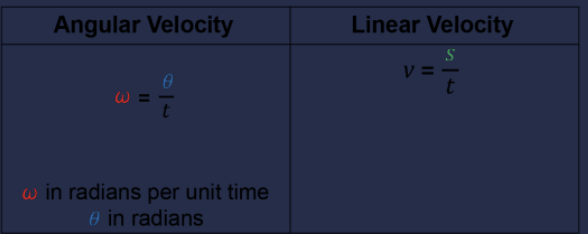
Angular Velocity (ω):
Measured in radians per unit time.
Linear Velocity (V):
Position versus time relations.
Angular Kinematic Example
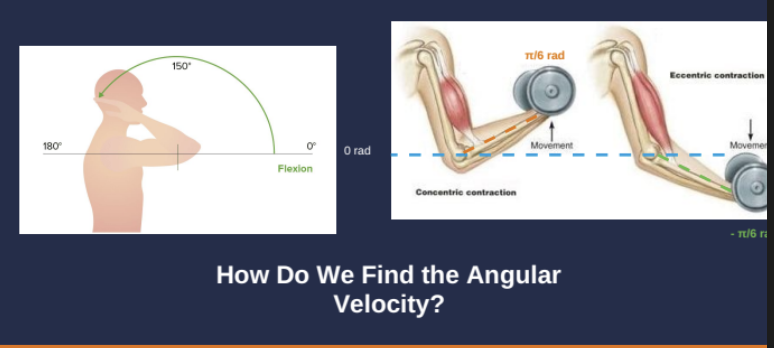
Example Data for Angular Displacement Calculation:
Required Measurements:
Starting Position
Ending Position
Calculation of Angular Displacement:
Starting position: /-6 rad
Ending position: /6 rad
Angular Displacement = /3 rad
Change in Time = 3 seconds
Angular Velocity = /rad/s
Answer: 0.35 rad/s
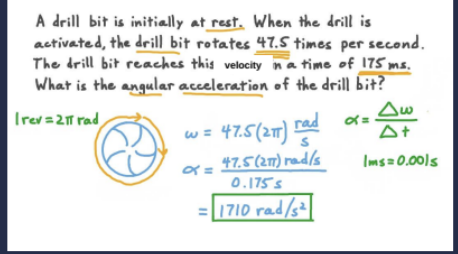
Angular Acceleration
Definition: Rate of change of angular velocity with respect to time
Formula for angular acceleration (α):
= (rad/s) / t (s)
Example of Angular Acceleration Calculation
Data Points:
Starting Velocity: 0 rad/s
End Velocity: -π/2 rad/s
Change in Time: 4 seconds
Calculation:
Defining Our Coordinate System (Part 2)
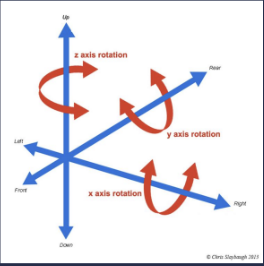
X-axis (Mediolateral Axis): Positive is to the right, negative is to the left.
Y-axis (Anteroposterior Axis): Positive is anterior, negative is posterior.
Z-axis (Longitudinal Axis): Positive is superior, negative is inferior.
Upcoming Lectures and Topics
1/13: Introduction to Biomechanics and Motor Control, Reading FB: Chapter 1
1/15: Linear and Angular Kinematics (position, displacement, velocity), Reading FB Chapter 2
1/20: Linear and Angular Kinematics II, Reading FB Chapter 3
(Acceleration and application, right hand rule)1/22: Forces in Human Movement, Reading Chapter 5
1/27: Ground Reaction Forces, Reading Chapter 6
1/29: Ground Reaction Forces In-Class Lab, Guide on Canvas
2/3: Muscle Mechanics I, Focus on Torque
2/5: Muscle Mechanics II, Focus on (force-length, force-velocity)
2/10: Exam #1