Ch. 4 - Light in Lakes
Light as an entity
The sun = ultimate source of energy
99.9% of species are driven by the sun for use of photosynthesis
Until recently, we believed all ecosystems on Earth were based totally on the sun. We now know of 2 ecosystems not dependent on the Sun:
1) deep ocean vents
in Mid-Atlantic Ridge
the are dependent on chemistry that drives up
they are chemosynthetic: they get their energy from breaking bonds
they do this process to substitute for sunlight
ex: Biota of the Mid-Ocean Ridges
2) some cave ecosystems
Phytoplankton are mostly dependent on light which is why they live in open waters
Littoral zones: where rooted aquatic macrophytes can grow
aquatic macrophytes are higher plants that have gone back to water
Light depends on littoral zones (the further light goes, the further the littoral zone will reach) because it is based upon where the aquatic macrophytes can grow
Light is needed by animals so that they are able to see
Electromagnetic Spectrum in Limnology
Light quality: changing as you go deeper because of wavelengths
Light quantity: declines as you go deeper
Limnology only uses parts of the electromagnetic spectrum: UV, Visible, and Infrared zones
UV: for ozone depreciation
Visible: where photosynthesis occurs
Infrared: heating a lake (lake energy)
Different colours of light have different wavelengths ( = Greek letter lambda)
E = hc/
E = energy
h = Plank’s constant
c = velocity of light
= wavelength
therefore, a high wavelength () means a lower E, and therefore penetrates less into water
wavelength and energy are inversely proportional to eachother
if wavelength is long, energy will be lower, and will be absorbed first
if wavelength is short, energy will be higher, and will be absorbed last
So, in the electromagnetic spectrum, red will be absorbed first because it has a long wavelength, and blue will be absorbed last because it has a short wavelength
Transmission of light with depth is based on the amount and type of light
algae are different colours because of what light they have adapted to
algae at surface level of water will be most likely red
algae at a deeper sea level will be most likely green
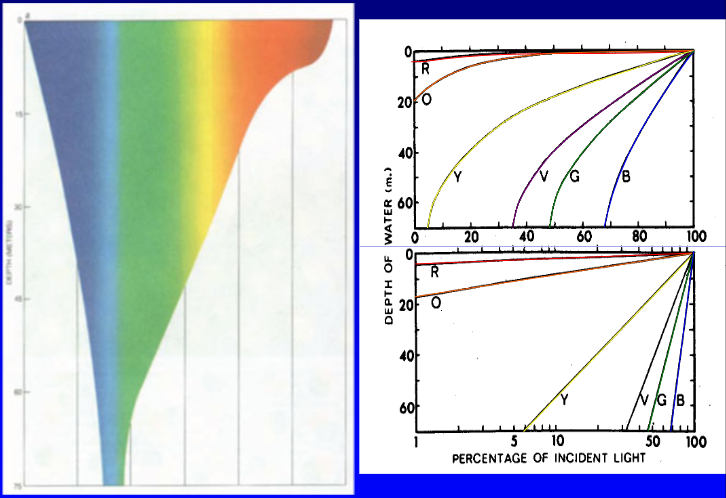
If lake water is coloured or not clear, these graphs above no longer hold
Lakes can be different colours due to different chemistry or environmental factors taking place
Ex. clay, salt
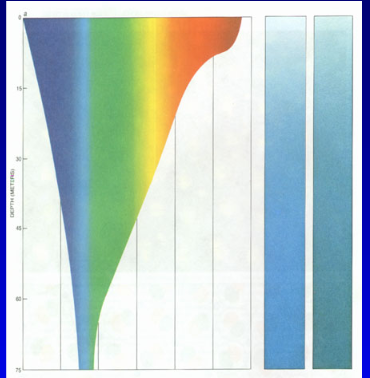
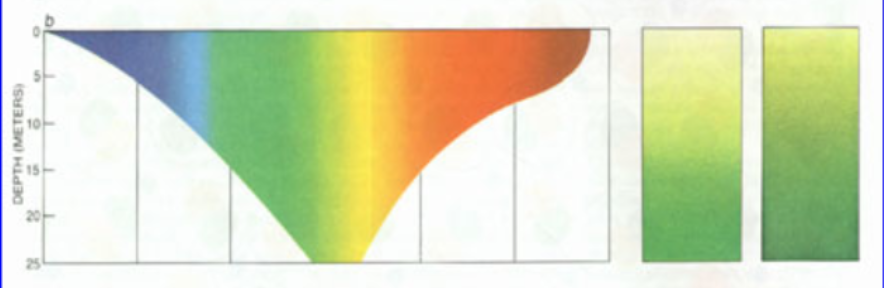

Light Diagrams
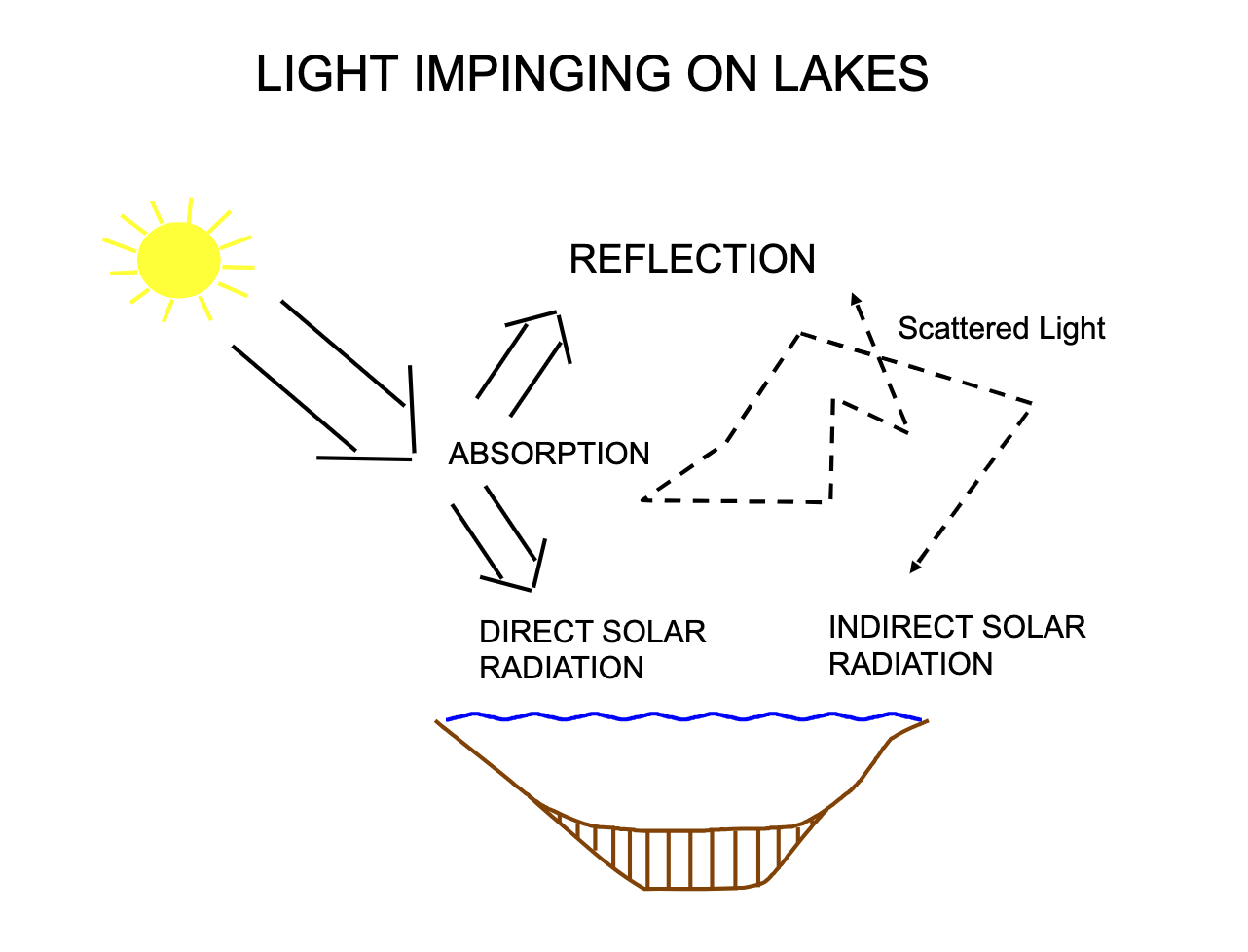
The Direct Solar Radiation is light that directly makes it to lake surface
The Indirect Solar Radiation is light that is scattered or reflected before it reaches the lake surface.
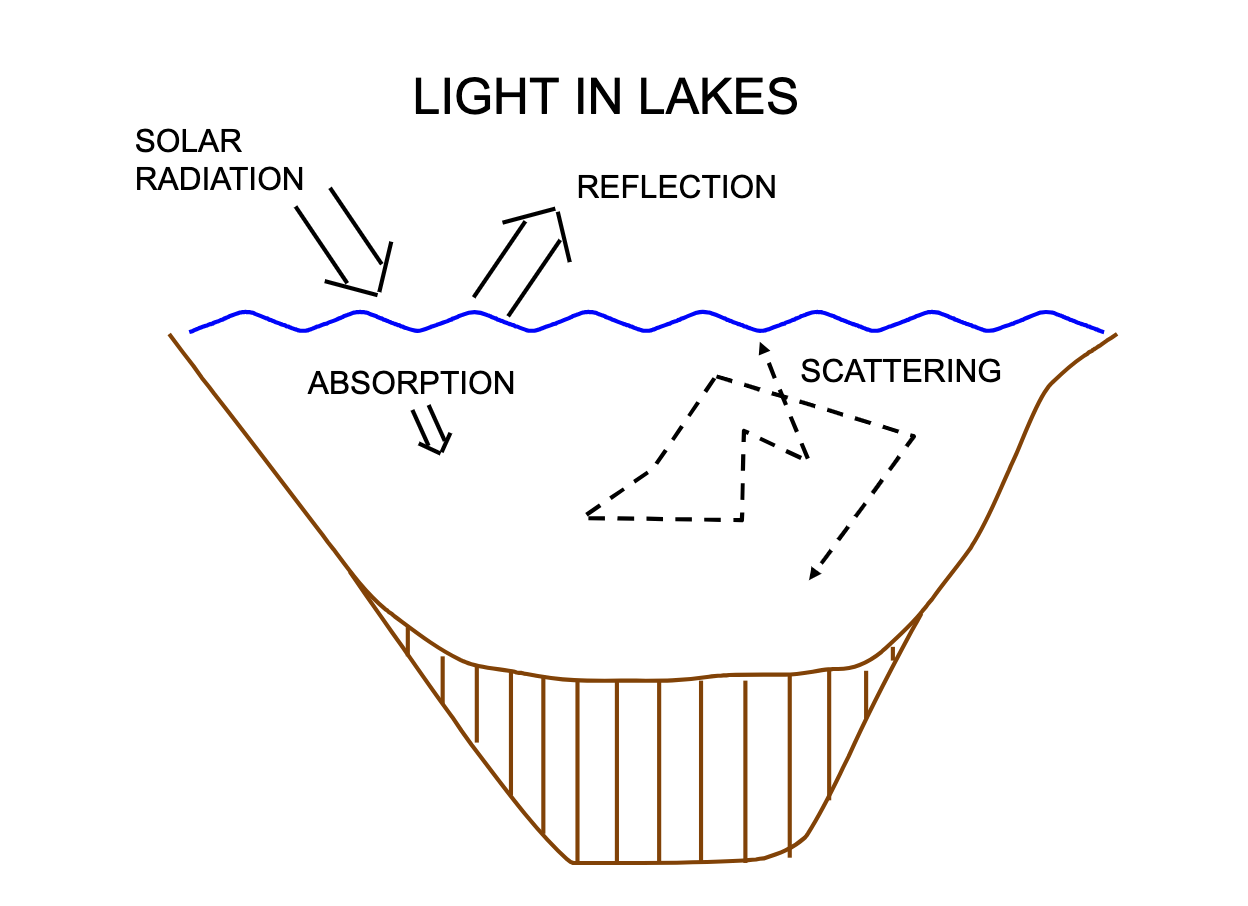
Once the light in lakes is absorbed it can be processed into photosynthesis by aquatic macrophytes
If the light angle is not right than it will be reflected back and will not contribute to the energy available for photosynthesis
Snow and Ice
Ice can control light penetration, the main factors are the type, amount and snow
Black ice: freezes solid, removes some of the light being absorbed by the water
White ice: ice that melts a bit, then slushes, then freezes, it removes a lot of the light being absorbed by the water
Snow: does not let much light through into the water
Heating of Lakes
The greater the absorption and scattering, the greater the heating
clear lakes are not heated as much as those that are not clear when absorbing the sun’s energy to heat the lake
Physical Laws Affecting Light
Lambert’s Law: The absorption of light is exponential with the length of the light path
a.k.a. the deeper you go the less light you see
Beer’s Law: The absorption of light by any substance is proportional to the concentration of that substance
a.k.a. The more stuff you have in a lake the less light is being passed through (like a cloudy glass)
Ex. Lakes with high suspended solids (e.g. clays)
by Beer’s Law: the more lake you have the less light that will pass through
Ex. Lakes with high Dissolved Organic Carbon (DOC)
why is DOC critical? The more DOC you have the less light will pass through
Algal blooms can greatly affect light penetration and quantity
some algae have evolved to come to surface to get the sunlight
Techniques to Measure Light
Secchi disk: measuring how much light can pass through (lowering the disk until you can’t see the disk)
Secchi disk depth = corresponds to depth of approx. 10% of surface light
Photic zone = ~1.5 - 2X Secchi Depth
The photic zone is where enough light is needed for algae to photosynthesize
Underwater photometer: tells quality of light
Underwater spectrophotometer: tells quantity of light
Turbidity meter
Water Colour
Water colour dramatically affects the light quality and quantity
Apparent colour: includes suspended material (i.e. is not filtered)
True colour: filtered first, so only includes dissolved material
Water colour and transparency (not in distilled water) will be affected by:
biogenic factors (e.g. algae)
suspended solids (e.g. clays)
dissolved organic matter (e.g. DOC)
Summary
Reflection, scattering and absorbance all:
influence the quantity and quality of light
determine the temperature of water and stratification patterns