Master notes

Agricultural Practices and Systems
Cropping Systems
Emphasis on cropping systems in Saskatchewan.
Continuous Cropping
A significant proportion of Saskatchewan’s agricultural land is continuously cropped.
Benefits of crop rotations include: - Managing fertility - Disease control - Weed control - Insect control - Moisture management
Decline in summerfallow area noted.
Increased reliance on direct seeding techniques: - Minimum tillage and zero tillage methods utilized.
Increased use of technology and fertility inputs leads to: - Improved soil organic matter - Enhanced soil structure - Greater soil carbon content - Reduced erosion
Agricultural Land Use Statistics
Data on agricultural land use (in hectares) in Saskatchewan: - Agricultural land use in 2011 and 2016: - Natural land for pasture: 4,560,727 (2016), 4,816,782 (2011) - Tame or seeded pasture: 1,946,796 (2016), 2,057,957 (2011) - Woodlands and wetlands: 973,886 (2016), 1,009,381 (2011) - Summerfallow land: 578,445 (2016), 1,445,510 (2011) - All other land: 477,326 (2016), 881,155 (2011) - Land in crops: 16,385,436 (2016)
Summerfallow Practices
Historically used for: - Fertilizer incorporation - Stubble management - Seedbed preparation - Soil water storage - Weed control - Nutrient availability via nitrogen mineralization
Noted decline in summerfallow land usage in Saskatchewan due to: - Increased erosion potential - Shift to alternative cropping methods due to climate variability.
Crop Management Studies
Comparative studies of cropping practices:
Continuous Cropping vs. Crop-Fallow
1994 study at Indian Head: - Continuous cropping yields were 88% of fallow crop yields across various sites and years.
Evaluation focused on conservation tillage systems and continuous cropping benefits.
Tillage Practices
Conventional Tillage vs. Direct Seeding
Advantages of Conventional Tillage: - Physically kills weeds. - Buries stubble and leaf-borne diseases below the seedbed. - Exposes insect eggs in soil for desiccation or predation. - Increases soil mineralization. - Dries soil surface for easier spring seeding access. - Warms soils faster. - Incorporates fertilizers and herbicides efficiently. - Promotes uniform seedbed preparation.
Disadvantages of Conventional Tillage: - Prone to soil erosion due to moisture reduction. - Removal of stubble leading to reduced moisture retention from snow catch. - Loss of soil organic matter over time. - Deterioration of soil structure and aggregates. - Increased weed populations if tillage is not timely. - Higher machinery and fuel costs.
Intercropping Practices
Definition of Intercropping
Growing more than one type of crop simultaneously in the same field.
Types of Intercropping
Mixed Intercropping: - Two or more crop types mixed, seeded, and harvested together.
Row/Strip Intercropping: - Two or more crops grown in alternating strips or rows, typically at the width of a seeder.
Relay Intercropping: - Planting a second crop into an existing standing crop, where a slower growing crop is seeded before a faster growing crop.
Benefits of Intercropping
Adds stability through increased biodiversity.
Reduces fertilizer and pesticide requirements.
Different crops utilize distinct nutrient bands, minimizing competition.
Fixed nitrogen contributions from legumes.
Diversity mitigates severe pest and disease outbreaks.
The phenomenon of overyielding can occur.
Overyielding Concept
Definition: When the yield from an intercrop surpasses yields from identical crops grown in monoculture on the same land.
Complementary Resource Use: - Mixed species optimize resource use. - Benefits from using varying types of plants, such as nitrogen fixation by legumes and weed suppression.
Land Equivalency Ratio (LER)
Formula for LER:
Interpretation: - LER > 1: Indicates overyielding; the intercrop is more productive. - LER < 1: Indicates that sole crops are more productive.
LER Data for Various Crop Combinations
Wheat-Canola: - Pesticide-free: 1.13; Conventional: 1.04; Average: 1.09
Wheat-Pea: - Pesticide-free: 0.87; Conventional: 1.10; Average: 0.99
Canola-Pea: - Pesticide-free: 1.19; Conventional: 1.22; Average: 1.21
Wheat-Canola-Pea: - Pesticide-free: 1.16; Conventional: 1.12; Average: 1.14
Overall averages summarize LER frequencies across various intercropping systems.
Challenges with Intercropping
Difficult crop maturity alignment.
Complexity in planning and management for two distinct crops: - Seeding dates, depths, and rates must align.
Diverse fertility and pesticide requirements complicate cultivation.
Potential Crop Combinations for Intercropping
Chickpea-Flax
Wheat-Canola
Wheat-Pea
Wheat-Canola-Pea
Example: Chickpea-Flax Intercrop
Flax's upright growth complements the spreading of chickpeas, reducing competition for space.
Chickpeas require drought stress, while flax can help manage soil moisture.
Chickpeas contribute nitrogen fixation to the system.
Differing seed sizes facilitate easier seed separation post-harvest.
Protein Content Study Related to Intercropping
Research indicates increased protein content of wheat when intercropped with peas.
Cover Crops
Definition and Use
Cover crops are grown to cover the soil during periods when it would otherwise be bare.
Can be grown during full growing season or shoulder seasons to enhance soil health.
Common Purposes for Cover Crops
Replace summerfallow and reduce erosion.
Improve soil health and organic matter content.
Manage problem soils caused by flooding or salinity.
Serve as a nitrogen source or forage.
Benefits of Cover Crops
Maintains soil cover leads to soil health improvement.
Increases yields of subsequent crops.
Reduces costs related to fertilizers and breaks pest, disease, or weed cycles.
Challenges of Using Cover Crops
Return on investment may be uncertain if not harvested.
Concerns about moisture and nutrient competition before next crops are seeded.
Statistics on Common Cover Crops
Cover crops utilized in the prairies include: - Oats - Clover (various types) - Peas - Radish - Hairy vetch - Fall rye - Phacelia - Sweet clover - Sunflowers - Sorghum
Use of Multiple Species in Cover Crops
Survey data indicates that diverse combinations of cover crops exist.
Commonly utilized blends range from 2-5 species to more than 10 species.
Challenges with Cover Crops
Establishment issues related to saline and flooded conditions.
Water and nutrient consumption activity by cover crops.
Green Manure Crops
Definition
Green manure crops are incorporated into the soil to improve fertility by adding nutrients and organic matter.
Recommended incorporation depth is 3-4 inches for effective decomposition.
Common Types of Green Manure Crops
Legumes: - Sweet clover - Alfalfa - Various clover species - Peas
Non-legumes: - Oats - Barley - Mustard - Canola - Buckwheat - Fall rye
Soil Improvement through Green Manure
Enhances erosion control.
Increases organic matter.
Improves soil structure and biologic activity.
Nutrient Improvement
Legumes turned under can contribute: - >100 pounds of nitrogen per acre at blossom stage. - Mixed grasses and legumes can add 50-100 pounds of nitrogen per acre. - Various rates of nitrogen contribution depend on soil and climatic conditions.
Pest Management via Green Manures
Competes against weeds and can break cycles of pests and diseases, benefiting beneficial organisms.
Some crops can produce natural toxins to inhibit weed growth.
Considerations for Green Manure
Effective management requires consideration of time, costs, and equipment for incorporation.
Nitrogen Fixation Data for Legumes
Study results on nitrogen fixation potential for different legumes under irrigation: - Alfalfa: 267 lb/A - Sweetclover: 90 lb/A - Field pea: 178 lb/A
Yield Data for Legumes in Crop Study
Dry matter and nitrogen yields from various legumes at specific growth stages, including: - Early Bud and Full Bloom data are featured.
Environmental Management Practices
Riparian Buffers
Definition
Riparian areas are zones adjacent to water bodies that support moisture-loving plants.
Impacts of Cultivating Near Streams
Leads to reduced vegetation, sediment trapping ability, habitat loss, and environmental quality deterioration.
Benefits of Buffers
Seeding perennial forage and/or trees can slow water flow, filter pollutants, and enhance wildlife habitats.
Saline Plantings
Planting Strategies on Saline Land
Establishment helps reduce salinity and erosion risks.
Perennial forages can draw down water tables even in absence of harvest.
Challenges in Saline Forage Establishment
Slow establishment of perennials and high salinity impact.
Limited crop choices in saline areas due to flooding conditions.
Recommended Perennial Forages for Saline Areas
Include various grasses and legumes adapted to saline conditions.
Organic Cropping Overview
Objectives of Organic Farming
Emphasis on sustainable methods and ecosystem harmony.
Prohibition on manufactured synthetic herbicides, pesticides, or GM crops.
Extensive transition periods (36 months) to achieve organic status.
Principles of Organic Production
Protecting the environment, minimizing soil degradation, and optimizing biological productivity.
Enhance long-term soil fertility and maintain biodiversity.
Rotational Practices in Organic Systems
Use longer rotations, often involving legumes, to manage various agricultural challenges.
Fertility Management in Organic Systems
Nitrogen contributions from: - Organic matter breakdown - Legumes in rotation - Manure and compost.
Addressing deficiencies in phosphorous and sulfur on a regional basis.
Weed, Insect, and Disease Management
Require active management strategies: - Traditional approaches like sanitation, crop rotations, and resistant cultivars. - Incorporating biological controls and trap crops.
Steps for Organic Certification
Includes familiarity with the certification process and maintaining meticulous records throughout production.
Seeding rate (lb/ac) = (9.6 х TKW(grams) x target plant stand (plants/ ft' 2))/
(% survival (whole #))
What is a Crop Rotation?
Definition: The act of growing different crop types on the same area of land.
Factors: The types of crops chosen for rotation are heavily influenced by: - Economic constraints - Management constraints
Example Crops Used in Rotation: - Wheat - Canola - Winter Wheat - Peas
Typical Rotations Found in Saskatchewan
Black/Dark Brown Soil Zone:
Cereal-Canola-Cereal-Pulse
Traditional Brown Soil Zone: Summerfallow-wheat
Modernized Brown Soil Zone: Pulse-Cereal-oilseeds (mustard/canola/flax)
Historical Presence: Pulse-Cereal-Summerfallow rotations still exist.
Crop Life Cycles
Diversity Importance: The best agronomic situation is characterized by the greatest diversity of crop life histories.
Life Cycles Available for Cropping on Prairies: - Summer Annual Grain Crops: - Normal crops are planted in spring and harvested in fall (e.g., Canola, Wheat, Pea). - Winter Annual Grain Crops: - Planted in early fall (late August or early September), overwintering in vegetative state to be harvested in late summer or early fall (e.g., Winter Wheat, Fall Rye). - Biennial Green Manure or Forage Crops: - Plant in spring (often with companion crops), grows and overwinters, flowering next spring/summer (e.g., Sweet Clover, Red Clover – grown with Oat in first year). - Perennial Forage Crops: - Planted in spring (often with companion crops), lives for several years, with productivity highest in mid-life (e.g., Alfalfa, Brome Grass).
Crop Rotation Considerations
Water Availability
Assessment Factors: - Rooting depth: Shallow vs. deep - Moisture use efficiency - Soil texture: Heavy vs. fine
Crop Characteristics with Regards to Soil Water Use
Guidance: Length of active growing season is the best overall guide to the relative amount of soil water depletion.
Indicators: - Rooting depth of crops also impacts depletion.
Table of Water Depletion:
- Sunflower: Heavy department, Long, Deep - Corn: Heavy, Long, Moderate Deep - Soybean: Moderate Heavy, Moderate Long, Moderate Shallow
- Spring Wheat: Medium to Moderate Light, Medium Heavy to Moderate Light, Short - Canola: Medium, Moderate, Medium but Variable, Short - Dry Pea: Moderate, Heavy, Medium, Shallow
- Wheat: Data derived from a Phase II crop sequence experiment.Source: Diversifying Cropping Systems Enhances Productivity, Stability and Nitrogen Use Efficiency.
Soil Fertility
Leguminous Crops: - Nitrogen fixation by legumes available for subsequent crops increases yield and protein while decreasing fertilizer requirements. - Forage legumes and green manure provide the most fixed nitrogen. - More crop residue input into the soil (green manure): Alfalfa and sweet clover produce the most biomass.
Nitrogen Uptake by Various Crops
Differential nitrogen uptake abilities of crops depend on rooting depth and structure.
Deep-rooting crops can recover leached , while horizontal root growth captures immobile nutrients.
Nitrogen Fixation Amount Variation (Figure 3)
Plant N Consumption (lb/ac): - Data indicating % of total nitrogen requirements fixed from various legumes including Alfalfa, Faba bean, Sweet clover, Field Pea, Lentil, Chickpea, Dry Bean (measured biochemically).
Nutrient Uptake Tables
Table 6: Nitrogen and Phosphorus uptake ( ext{P}_2 ext{O}_5)
- Details various Saskatchewan crops based on yield and corresponding nitrogen/phosphorus uptake. - Variables include: - Crop Yield/A - Grain and Straw Yield - Total Nitrogen and Phosphorus uptake per acre.Source: Nutrient Uptake and Removal by Field Crops - Western Canada; Canadian Fertilizer Institute.
Diseases and Crop Rotation
Importance of Crop Rotation: Primary reason for implementing crop rotation is to reduce severity of soil or residue-borne diseases. - Diseases sources include; - Wind and water-borne (e.g., rusts) - Seed-borne (e.g., smuts) - Insect-borne (e.g., aster yellows)
Mechanism: Infected crop residue serves as a substantial source of inoculum, thereby breaking disease life cycles (such as black leg in canola).
Suggested Practices: - Utilize both susceptible and non-susceptible crops. - Extend intervals between planting susceptible crops for multiple years to aid in residue decomposition. - Assess risks based on severity of infestation and consider growing resistant varieties.
Residue-borne Diseases
Table 1: Overview of Important Diseases of Saskatchewan Crops.
- A list of diseases impacting crops such as Field peas, Pulses, Cereals, and Oilseeds with specific implications for economic importance based on color coding in the chart.
Weeds in Crop Rotation
Weed Control Challenges: Crop rotation alone may not effectively eliminate weeds. - Certain crops with similar life histories favor weeds with parallel life cycles.
Weed Management Strategy: Rotation of crops with different life cycles can help mitigate weed proliferation. - Example rotation combination: Alfalfa (3 years), Spring Wheat, Canola, Winter Wheat, Peas. - Different weed types adapt based on their lifecycle, e.g., perennial weeds flourish alongside perennial crops.
Herbicide Selection: Different herbicide groups are linked with specific crop types.
- This allows for a rotation of applications through changes in crop types.
Weed Management Practices
Recommendations: - Employ crops sown at different times of the year. - Consider potentially allelopathic crops which chemically suppress weed growth (examples include barley, oat, fall rye, buckwheat). - Alternate planting of grass and broadleaf crops. - Avoid planting 2 non-competitive crops in a row, such as lentil and chickpea. - Regularly rotate herbicide groups to prevent resistance. - Be cautious of sensitive crops following application of residual herbicides.
Insect Management through Crop Rotation
Insect Control Limitations: Difficult to manage with crop rotation due to insect mobility and generalists.
Some insects show limited mobility and respond positively to cropping changes (e.g., sunflower beetle, cutworms).
Herbicide Residual Carryover
Narrow rotations contribute to herbicide resistance, often resulting from the overuse of one mode of action.
Breakdown Requirements: - Time - Heat - Moisture
Herbicides need to decompose effectively to reduce residual impact.
Re-cropping Restrictions for Residual Herbicides
Includes specified numbers of cropping seasons before re-planting following herbicide application.
Listing indicates which crops can be planted after application, with exceptions noted for time in days (indicated with “d”) or months (“mths”).
Practical Considerations for Crop Rotation
Economics: The selected crop must be financially viable or profitable.
Risk: Different crops present varying degrees of yield variability and nutrient demand.
Labor Availability: Some cropping systems may require more labor than others.
Farm Equipment: Availability or capability of farmers’ equipment for specific crops.
Crop Rotation Planning Considerations
Cultivar Impact: Each crop has a set of recommended previous crops based on potential issues such as Fusarium Head Blight (FHB), admixtures, and residual herbicide considerations.
Crop Recommendations: Include various options with suggested indicators for nitrogen benefits and potential crop health considerations (e.g., clubroot, sclerotinia).
Pedigreed Seed Production
Overview
Definition of Pedigreed Seed - Seed of a specific variety that has documentation proving the history all the way back to the breeder's seed. - Demonstrates the purity of the seed and is identified by a standard label that remains with the seed.
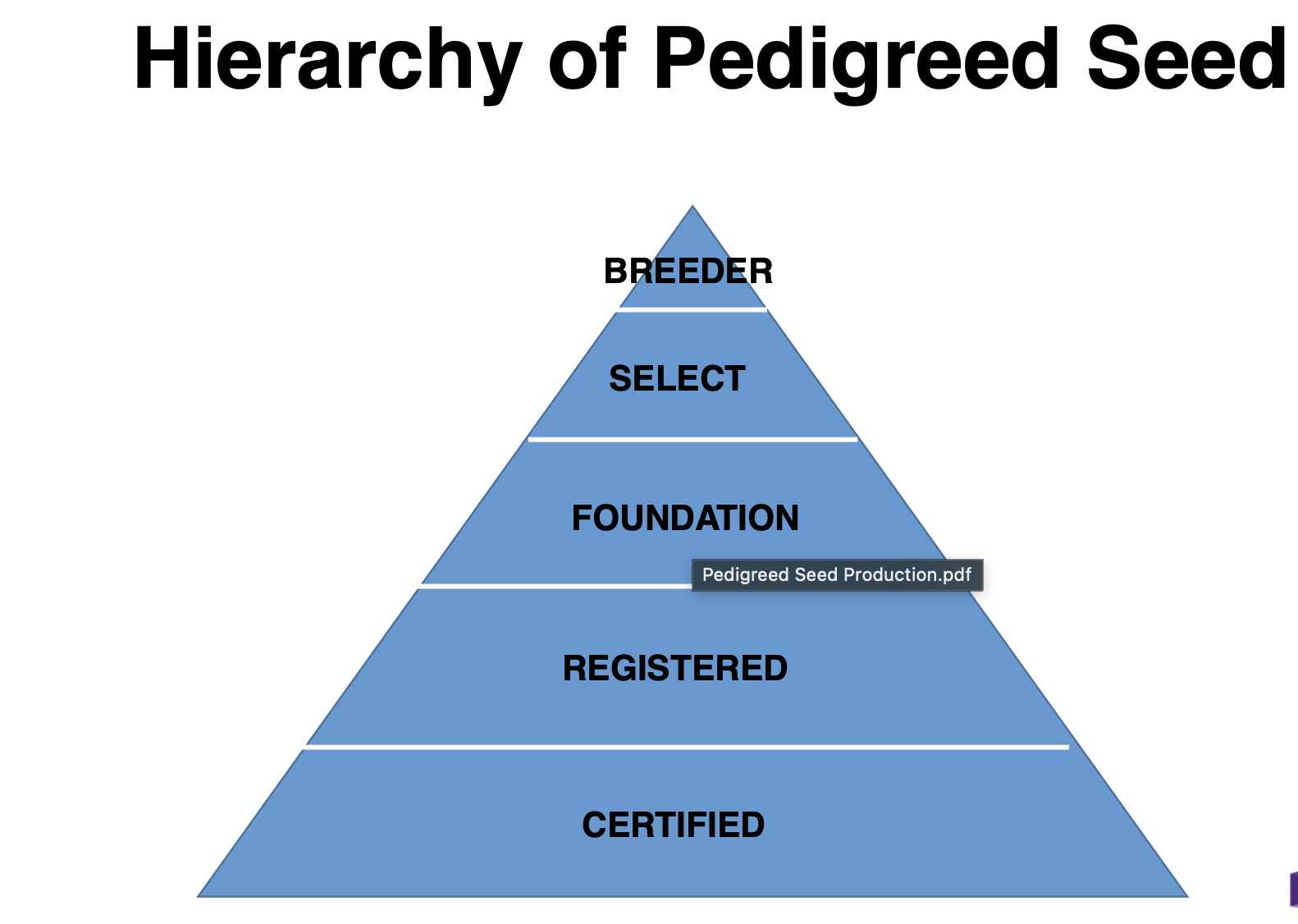
Hierarchy of Pedigreed Seed
Classification: The hierarchy consists of five classes of seed: - Breeder Seed: Original seed that comes directly from the breeder. - Select Seed: Produced from Breeder Seed, ensuring quality and varietal identity. - Foundation Seed: The next step in the hierarchy, produced from Select Seed. - Registered Seed: Produced from Foundation Seed, allowing for larger areas and slightly relaxed regulations. - Certified Seed: Produced from Registered Seed, further ensuring purity and quality.
Regulation
Canadian Seed Growers Association (CSGA) - Pedigreed seed growers must be members of the CSGA. - Focuses on the production, use, and education related to pedigreed seed production. - Governed by strict federal regulations: - General regulations applicable to all seed types and specific regulations tailored for particular crops. - Referenced documentation: SEED_20-071_CANADIAN-REGULATIONS-AND-PROCEDURES-FOR-PEDIGREED-SEED-CROP-PRODUCTION.pdf.
Select Seed Production
Generational Restrictions: Typically involves 5 generations of seed production.
Field Size: Generally limited to less than 1 hectare.
Monitoring: Fields are closely monitored with regular scouting to observe: - Mutations, - Presence of other crops, - Diseases, - Weeds.
Roguing: Any plant not meeting breeder specifications is removed and disposed of to ensure varietal purity.
Production of Foundation, Registered, and Certified Seed
Process: Same basic production process is followed for Foundation, Registered, and Certified seeds across different generations: - Generally, only one generation is allowed for each class. - Certain crops, such as canola, may skip the Registered class due to high cross-pollination rates.
Regulatory Differences: Depending on the seed class: - Larger crop areas are permissible, - Isolation distances are reduced, - Levels of strictness for purity checks are slightly relaxed.
Pricing Dynamics: The market price decreases as seed quantity increases in each class.
Practices in Pedigreed Seed Production
Field Scrutiny: Land designated for pedigreed seed production must be thoroughly examined for: - Volunteer crops, - Diseases from previous years.
Isolation Requirements: Fields must be isolated from similar crop types by distances ranging from several to tens of meters to prevent cross-pollination.
Inspections: CFIA (Canadian Food Inspection Agency) authorized inspectors must verify the purity and condition of the seed before harvest: - Inspections ensure compliance with CSGA standards; - Seed is analyzed for: - Weed seeds, - Other crop seeds, - Disease, - Germination rates.
Common Seed
Definition: Seed that is produced from Certified Seed but no longer maintains pedigreed status.
Legal Restrictions: It is illegal to sell this seed by its variety name. It is sometimes referred to as “Bin Run” seed, indicating its non-certified status.
Crop Variety Selection
Overview of Crop Variety Development
Current Research Focus in Variety Development
- Aim: Improve crop capabilities to help producers yield quality, productive crops. - New varieties encompass a “package” of traits essential for growth and marketability including:
- Yield
- Biotic factors:
- Disease resistance
- Insect resistance
- Tolerance to environmental factors such as:
- Heat
- Drought
- Salinity
- Quality factors related to end-use
Yield Considerations
Yield as Priority
- Yield is a major priority in crop variety selection.
- Potential Limitations for Selection:
- Varieties that are later maturing may not be selected despite higher yields.
- Varieties lacking adequate disease resistance may be overlooked.
- Varieties without appropriate protein content or quality are also disqualified.
Importance of Variety Names
Role in Production, Sales, and Marketing:
- Variety names provide assurance that seed has been legally acquired and comes from a known source.
- The variety influences the crop class and grade, which subsequently affects the price and handling.
- Mix of the same variety and grade from various farmers handled by grain companies. - Varieties are marketed based on:
- Crop type, class, variety, grade, and quality
- Classes Definition: Groups of varieties with similar end-use characteristics relevant to processors.
Definition of a Seed Variety
Seed Variety Characteristics:
- Defined as populations of plants with consistent distinguishing characteristics that are retained upon reproduction.
- Certification Requirements:
- Must be distinguishable, uniform, and stable when reproduced.
- Intellectual Property Protection:
- Must be unique or distinct to qualify for protection.Crop Kinds and Varieties:
- Examples include different crop kinds such as oats, canola, barley, and wheat.
- Varieties are smaller sub-groups within these kinds, retaining the same defining features upon reproduction. - Example Barley Varieties: AC Metcalfe, Celebration.
Variety Naming Conventions
Naming Structures:
- Variety names can consist of words, numbers, letters, or combinations thereof.
- Examples include: AC Metcalfe, AAC Brown 120, CDC Adamant VB, Derby, CDC Impress, WestLin 60.
Trade Facilitation through Varieties
Significance of Variety Names in Trade:
- End-use characteristics are demanded by buyers, with variety names ensuring the maintenance of these traits through the supply chain.
- Variety names play a crucial role in Canada's quality assurance framework for grain marketing.
Selection Considerations for Varieties
Evaluating Seed Choices:
- Significant variety data is crucial for growers.
- Data evaluation should include:
- Local site data, climatic zones, and over several years for reliability.
- Assessments from small plot and field-scale trials across various agronomic and environmental conditions.
Yield Testing and Performance
Yield as a Key Factor:
- Yield is a fundamental consideration; trials are conducted by universities and organizations to ensure reliability and scientific rigor.
- Adjustments must consider climate variability over years.
Factors Influencing Yield Potential
Key Considerations in Yield Potential:
- Climatic factors
- Geographic conditions
- Herbicide tolerance
- Disease management
- Agronomic/special traits
- Days to maturity
- Lodging scores
- Disease tolerance levels
- Yield values
Yield Comparison Data
Canadian Prairie Spring Wheat - Yield Comparison:
- Relevant metrics and statistics comparing various wheat varieties.
| Variety | Years Tested | Area (%) | Yield (%) | | ------- | ------------ | -------- | --------- | | AAC Brandon | 3 and 4 | 100 | 100 | | AAC Perform | 1 | 113 | 113 | | CDC Reign | 4 | 106 | 106 | - Notable variations in yield capacity depending on testing locations and years.
Growing Season Considerations
Matching Crop Varieties with Growing Seasons:
- Provisions must ensure that selected varieties correspond with the variable growing seasons in the prairies. - Climatic variance can significantly influence crops' maturity timing.
Testing in Soybean Varieties
Maturity Variation and Yield for Soybean Varieties:
- Overview of yield performance relative to days to maturity among leading varieties with comparative data provided in a tabular format.
Canola Performance Trials
Test Results Overview:
- Data highlights from various seasonal cropping zones based on performance trials in canola. - The average yield data summarized across different distributors and varieties is critical for seed selection processes. - Considerations regarding herbicide and resistance traits can affect seasonal yield outcomes.
Pest and Disease Management
Importance of Pest and Disease Resistance:
- Varietal resistance profiles play a role in yield outcomes and need to align with local pest and disease challenges. - Crop rotation practices influence pest profiles and therefore must be considered in variety selection.
Crop Growth Habit Considerations
Impact on Harvesting:
- The growth habit of crops can be determinate or indeterminate with significant implications for harvest timing and effectiveness. - Considerations for plant height, standability, and resistance to sprouting or other potential quality-affecting factors are vital for speculating harvest yield.
Chapter 9: Improving Plants
All slides, genotype/phenotype, mendelian genetics, breeding goals, how many generations do breeders take varieties to to get uniform genetics of elite plants?
how is hybrid canola created
CRISPR
Hybridization
GM crops - why?
agrobacterium
gene gun
Mutagenesis
Outline
1. Reproduction in plants
2. Mendelian genetics
3. Plant breeding
4. Breeding self-pollinating plants
5. Breeding cross-pollinating plants
6. Genetic transformation
7. Traditional breeding vs. genetic engineering
8. Breeding and marketing modern plant varieties
Key Concepts
Chromosomes control inheritance.
- Chromosomes organize genes that dictate traits in organisms.Mendel’s laws are the basis of plant breeding.
- Mendel's principles of inheritance are foundational to understanding genetics in plant breeding.Sexually reproducing plants are self- or cross-pollinated.
- The pollination method influences genetic variability and breeding techniques.Collection, selection, crossing, evaluation, and introduction are the main steps of breeding.
- These steps guide the breeding process toward developing desirable plant varieties.Gene transformation allows transfer of one or several genes.
- Genetic engineering can introduce specific traits more accurately than traditional methods.
Crop Improvement
Fundamental aspect of the development of modern agriculture.
- Advances in crop improvement methods have drastically enhanced agricultural efficiency.Significant advances during the twentieth century due to the rediscovery of Mendel’s principles.
- This has led to more informed breeding practices and better crop yields.Half of yield gains in major cereal crops arise from genetic improvement.
- Illustrates the impact of genetics on agricultural productivity.Agricultural biotechnology includes scientific techniques to create or modify plants.
- This encompasses both traditional breeding and modern genetic engineering methods.
Reproduction in Plants
Occurs via seeds formed from the fusion of male and female reproductive parts (gametes) found in the flower.
- Essential for genetic diversity and adaptation.Self-Pollination
- Pollen is transferred to the stigma within the same flower.
- Does not require another plant for seed formation.Cross Pollination
- Pollen fertilizes the ovule of another plant.
- Required for strict cross-pollinators to ensure genetic diversity.Some crops can be both self and cross-pollinated.
- This flexibility can influence breeding strategies and genetic outcomes.
DNA, Chromosomes, and Genes
Cell nucleus contains chromosomes that control inheritance.
- Chromosomes are carriers of genetic information.Chromosomes are made of DNA organized into genes.
- DNA structure is essential for the proper functioning of living organisms.Genes determine the metabolic activities of cells.
- Each gene can influence different traits such as growth, resilience, and reproductive capabilities.Genes composed of nucleotides dictate the sequence of amino acids during protein synthesis.
- The specific order of nucleotides forms the genetic code.
Chromosome Number and Meiosis
Meiosis is a type of cell division that reduces the genetic content by half.
- Critical for producing gametes for sexual reproduction.Chromosomes occur in pairs.
- Most plants are diploid, having two copies of each chromosome.Polyploids are species with more than two copies of each gene.
- These can lead to increased size and robustness in plants.Alleles are different forms of a gene.
- Genetic variation arises from the combination of different alleles.
Mendelian Genetics
Laws of Inheritance based on predictable behavior of chromosomes and gene transmission.
- Three main laws: - 1. Genetic characters are controlled by two alleles. - 2. One allele determines the observed phenotype. - 3. Random selection of one chromosome for gametes.Mendel’s Laws:
- Law of Dominance and Uniformity: - Dominant alleles mask the effect of recessive alleles in the phenotype. - Law of Segregation: - Alleles segregate during gametogenesis, with offspring inheriting one allele from each parent. - Law of Independent Assortment: - Different gene alleles assort independently during gamete formation.
Mendel’s Experiments and Outcomes
Mendel crossed homozygous pea plants, observing patterns of inheritance.
- Example:
- Green pods (GG) crossed with yellow pods (gg) produced F1 generation: all green (Gg) due to dominance of G.
Plant Breeding
Practiced since the domestication of crops by selecting desirable plant types from the wild.
- Guided by the principle of “like breeds like.”Over centuries, farmers selected seeds from superior plants leading to the development of various cultivars.
Current crops often differ significantly from their wild ancestors due to selective breeding.
Goals of Plant Breeding:
- Yield: A complex quantitative trait influenced by various factors. - Quality traits: Including characteristics of starch and protein content. - Harvestability and Persistence: Adaptations to enhance survivability and ease of harvest.
Norman Borlaug & The Green Revolution
Norman Borlaug & The Green Revolution
• Who: American agronomist, known as "father of the Green Revolution." Won Nobel Peace Prize in 1970.
• Goal: End world hunger through better crops.
• What was the Green Revolution:
• Time: 1940s-1960s.
• Major increase in global food production.
• Focused on developing countries (Mexico, India, Pakistan).
Key Innovations
1. High-Yielding Varieties (HYVs):
• Developed dwarf wheat varieties.
• Why dwarf: Shorter plants don't lodge, put more energy into grain instead of height.
2. Disease Resistance:
• Bred wheat resistant to rust diseases.
3. Breeding Techniques:
• Used crossbreeding and selection.
• Did "shuttle breeding" (growing crops in different locations/seasons).
Stacked Hybrids (Canola Example)
• Definition: Canola hybrids containing two herbicide tolerances in one plant.
• Benefits for farmers:
• Better weed control flexibility.
• Helps manage herbicide resistance.
• Improves crop rotation planning.
• How they are used: Farmers don't mix both herbicides; instead, they spray one or the other depending on weeds, or use them sequentially (e.g., glyphosate first, Liberty later).
• 3 examples of spray programs for dual-trait canola:
1. Pre-seed + In-Crop Program: Pre-seed burndown with tank mix partner, then in-crop spray (glyphosate or Liberty) early.
2. Sequential Spray (Liberty then Glyphosate): First pass Liberty, second pass glyphosate for regrowth.
3. Same product twice (based on weed pressure): E.g., glyphosate then glyphosate again, or Liberty + tank mix partner then Liberty again.
egume Inoculation
Overview
Legume inoculation is integral for effective nitrogen fixation in legume crops.
This document discusses the process, importance, types of inoculants, and best practices for successful legume inoculation.
Nitrogen Fixation
Definition:
- Nitrogen Fixation refers to a symbiotic interaction where both the Rhizobium (a type of bacteria) and the plant benefit from the relationship.Process:
- Rhizobium enters the root hairs of the plant, inducing nodule formation.
- The plant provides energy and nutrients for the Rhizobium.
- The Rhizobium converts atmospheric nitrogen from the soil air around the roots into a plant-usable form.Conditions for Maximum Nitrogen Fixation:
- Supply of soil nitrogen is low.
- High nitrogen levels can lead to low nodulation or low nitrogen fixation.
- Adequate moisture and temperature for normal seedling development are necessary.
Inoculants
Definition:
- Inoculants are commercially prepared sources of Rhizobia introduced into the soil or applied to seeds to enhance nitrogen fixation.Reason for Use:
- Soils may have naturally occurring Rhizobia, but they may not be present in adequate concentrations or the appropriate species for effective nodulation.Application Methods:
- Inoculum can be applied directly to the seed before planting.
- Alternatively, inoculum can be metered into the seed furrow during planting.Types of Inoculants:
- Manufacturers offer mixed-strain or single-strain inoculants tailored for specific legume crops.
- The best strains are selected based on their ability to nodulate the particular crop.
Ensuring Rhizobium Survivability
Challenges for Rhizobium:
- Rhizobia can die if exposed to high temperatures, drying winds, or direct sunlight.Storage Recommendations:
- Inoculants should be stored in a cool, dark place prior to use and must be applied before the expiry date.Application Recommendations:
- Following the application of inoculants to the seeds, it is essential to plant them into moist soil as soon as possible.
- Mixing inoculants with granular fertilizer is not recommended. - Inoculants can be sensitive to some seed-applied fungicides; if a fungicide is used, it must be applied to the seed first, allowed to dry, and then the inoculant should be added.
Formulation of Inoculants
Types of Inoculants:
- Liquid:
- Advantages: Convenience, better application rate control.
- Disadvantages: More susceptible to environmental conditions and fungicides damage prior to seeding.
- Usage: Predominantly applied to seed, with some registered for in-furrow application. - Powder/Peat:
- Advantages: Durable, less prone to desiccation and damage than liquid formulations.
- Usage: May require a sticker; adhesion to the seed improves if the seed is slightly damp during inoculation. - Granular:
- Advantages: Least affected by dry seedbeds and fungicides; less prone to damage during exposure.
- Usage: Applied directly in the furrow.
Inoculant Performance
General Performance:
- All formulations perform equally well under ideal conditions when applied properly.
- Under adverse conditions, performance generally ranks as: Granular > Powder/Peat > Liquid.
Inoculation Recommendations
Frequency of Inoculation:
- Inoculation is necessary every time a legume crop is seeded, even though Rhizobium can survive in the soil for years.
- The quantity may not be sufficient or may not consist of the applicable species for optimal results.Yield Impact:
- Research has shown a significant yield response to inoculated legume crops.
Checking Nodulation
Recommended Examination:
- After 3-4 weeks of growth, check the pulse crop for nodulation.
- To check, dig up a plant with a shovel and gently rinse off the soil in a bucket of water.
- Avoid pulling up the plant directly from the soil as the nodules are delicate and may be removed with the soil.
Locating Nodules
Location Based on Application Method:
- With seed-applied inoculants, nodules will typically form on the primary root near the crown.
- With soil-applied inoculants, nodules can be found on primary or secondary roots.
Active Nitrogen Fixation
Indicators of Active Fixation:
- When nodules are cut open, they should display a pink or red interior.Interpretation of Findings:
- A lack of nodules indicates that Rhizobium did not infect the pulse plant.
- A lack of pink color indicates that Rhizobium is not fixing nitrogen (nodules may appear green or cream-colored).
Nitrogen Fixation Dynamics
Synchronization with Plant Growth:
- Nitrogen fixation operates in tandem with the growth phases of the plant.Nutrient Supply Timings:
- Supplying nitrogen to the crop is critical during the rapid vegetative growth phase.
- Nitrogen fixation typically declines as plants transition to pod formation and seed development.
Tillage and Seeding Approaches
Soil Organic Matter
Soil Organic Matter (Mg/ha): A measured parameter indicating the amount of organic matter present in the soil, which is crucial for soil health. - Trends in Soil Organic Matter Content: Figure 8.1 illustrates the changes in organic matter over time since the start of cultivation (Brady, 1999). - Fractions of Organic Matter:
- Active Organic Matter: Decomposing materials that are crucial for nutrient cycling.
- Slow Organic Matter: More stable and decomposes over a longer period, contributing to the soil’s nutrient reserve.
- Passive Organic Matter: Does not decompose quickly and serves as a long-term reservoir of nutrients.
Conventional Tillage Systems
Involves multiple tillage operations:
- Overview: Includes fall and spring tillage and potentially a harrowing operation.
- Soil Exposure: Land often left exposed over winter, leading to potential erosion.
- Soil Temperature: Darkened tilled soils tend to warm up faster in spring. - Seedbed Objectives: Aiming for a firm, smooth seedbed to promote good seed-to-soil contact.
Advantages of Conventional Tillage
Weed Control: Physically kills most weeds present in the field.
Disease Mitigation: Incorporates stubble and leaf-borne fungi into the soil, thereby reducing diseases in subsequent crops.
Insect Management: Insect eggs are exposed to desiccation or predation, reducing pest populations.
Nutrient Mineralization: Increases the mineralization of soil nitrogen, enhancing crop nutrient availability.
Soil Warmth: Tillage dries and warms the soil surface, allowing for earlier access in the spring.
Fertilizer Incorporation: Facilitates the incorporation of fertilizers and pre-emergent herbicides, promoting uniform application.
Seedbed Uniformity: Produces a uniform seedbed for planting.
Disadvantages of Conventional Tillage
Erosion Risk: High susceptibility to soil erosion, especially under adverse weather conditions.
Soil Moisture Loss: In dry years, conventional tillage can exacerbate soil dryness.
Organic Matter Reduction: Results in a loss of organic matter, which diminishes water and nutrient holding capacity.
Increased Costs: Higher machinery and fuel costs associated with frequent tillage operations.
Direct Seeding
Technique Description: Only tillage performed occurs at the time of seeding, maximizing surface residue retention until then.
Equipment Used: High disturbance seed openers are utilized for effective seedbed preparation, managing residue, and controlling weeds, disturbing over 40% of the soil surface.
Fall Applications: Occasionally, anhydrous ammonia is applied during fall with minimal soil disturbance.
Straw Management: Heavy harrows may be used to redistribute and break down straw after seeding.
Minimum Tillage
Technique Characteristics: Involves reducing one or more tillage operations compared to conventional methods.
Disturbance Level: Low disturbance seed openers disturb less than 40% of the soil surface.
Zero Tillage/No-Till
Overview: Crops are established in undisturbed soil, minimizing soil disturbance to less than 35% of the surface.
Seeding Process: Seeds and fertilizers are placed directly into the stubble via narrow knife or disc openers.
Fall Fertilization: Occasionally, fertilizers are applied in the fall, while heavy harrows may assist in straw management.
Prevalence: Zero tillage practices have been increasingly adopted across prairie regions.
Advantages of Reduced Tillage
Operational Efficiency: Allows for a single pass for seeding and fertilization, resulting in significant savings in time, labor, and equipment maintenance.
Enhanced Organic Matter: Less disturbance in residue promotes slower decomposition and increases the organic matter in soil.
Improved Water and Nutrient Retention: Increases the soil's ability to retain water and nutrients.
Erosion Reduction: Presence of standing stubble reduces erosion and helps trap snow for moisture conservation.
Moisture Conservation: Cover on the soil decreases evaporation rates and sustains moisture levels.
Weed Seed Exposure: Weed seeds remaining on the soil surface face harsher environmental conditions, leading to lower infestations.
Disadvantages of Reduced Tillage
Residue Management Challenges: Improper management can reduce seed-to-soil contact and impede seed germination and early growth.
Soil Warming Delays: Soil residue can slow down warming in the spring, potentially affecting planting schedules.
Water Retention Issues: Especially in wet conditions, soil can retain too much moisture, making fields overly saturated for planting.
Herbicide Resistance Risks: Heavy reliance on herbicides may contribute to developing herbicide-resistant weed populations.
Field Rutting: In wet conditions, fields do not allow for timely operations, leading to challenges in field rutting and maintenance.
Summerfallow
Description: A practice previously common for water conservation and weed control, which results in increased yields when compared to stubble crops.
- Original Assumption: Initially thought that crop yield improvements were due to water conservation from no crops being planted.
- Actual Benefit: Later investigations concluded that the primary advantage was the additional mineralization and availability of nitrogen to plants.Disadvantages:
- Prone to erosion and loss of organic matter.
- Increased fuel and equipment costs associated with maintaining these practices.
Harvest Management Practices
Combine Performance: For optimum performance, ensure combine chopper functions effectively; keep knives sharp.
Straw Management: Strategies to manage wet straw and optimize cutting performance. - Cutting Width Spread: Stubble should be spread to approximately 70% of the cut width to ensure effective coverage (e.g., a 30 ft cut should spread straw across 21-24 ft). - Chopper Types: Fine cut choppers may be beneficial but require additional horsepower. - Baled Straw Opportunities: Retaining more straw for baling can capture additional benefits, including trapping snow for moisture.
Fall Management Practices
Applications: Using liquid hog manure in the fall can accelerate straw decomposition.
Stubble Height: Should align with the shank spacing of seeders to optimize planting and moisture retention.
Heavy Harrows: Set up to work vertically to minimize bunching of straw.
Harvesting the Crop
Overview of Harvesting
Harvest signifies the completion of the crop production cycle, typically referring to the seed harvest.
The primary aim of harvest and storage systems is to maximize the harvest yield.
At the point of physiological maturity, the grain has achieved maximum dry matter accumulation, meaning it reaches peak development and nutritional content.
The harvest of crops provides commodities that are key for marketing and generating income for farms.
Physiological Maturity and Seed Development
Physiological maturity marks a stage where the seeds are usually around 90% water content.
As the seed matures and accumulates nutrients, its moisture content steadily decreases.
Even after reaching physiological maturity, seeds are not sufficiently dry for storage; significant moisture loss is still essential before they can be stored.
Timing of Harvest for Cereal Crops
To assess maturity in cereal crops, cut a seed in half and examine the placenta tissue at the endosperm region: - Not Mature: The tissue appears green, indicating that nutrients, proteins, and starch are still being deposited. - Mature: The tissue turns brown and becomes non-functional, with typical moisture content ranging from 30-35%.
Swathing can only occur once seed maturity is confirmed.
A method to check harvest readiness involves testing kernel hardness; if a fingernail can barely dent the pericarp, the crop is ready for harvest.
Moisture content standards for harvesting: - Oats and malt barley: 13.5% - Wheat: 14.5% - Feed barley: 14.8%
Timing of Harvest for Brassica Crops
In Brassica crops, the leaves die before pods, which remain chlorophyll-rich (green).
Swathing should be based on the maturity of the main stem: - Wait until 60% of seeds on the main stem have changed from green to either brown or black. - Seed color changes can progress at a rate of 1-3% each day.
Pods mature from the bottom upwards; hence the least mature seeds will be located in the top pods.
Harvesting ideally occurs when seeds exhibit about 40% moisture content.
Early swathing may result in small seeds and a higher likelihood of having green seeds mixed in.
Harvest Moisture Content for Canola: About 10% moisture.
Canola Swathing Techniques
Canola is unique among crops because its quality remains high even if it rains after swathing.
A light rain (up to half inch) can aid in curing straw and seed, which minimizes the green seed count and supports slower drying.
Swathing can take place in light to heavy rain to mitigate seed shattering losses, particularly when crops are fully ripe.
However, swathing should be avoided during very hot weather due to rapid drying which enhances shattering risk.
Harvesting Field Peas
Often, field peas undergo straight cutting or desiccating because of varied maturity within crops.
Swathing is occasionally performed, but swathed crops are prone to wind and moisture damage.
Opt to swath when the crop has turned a yellow-tan color, as seeds will typically possess 20-25% moisture. - Color Progression: - Bottom third of the vine: Ripe - Middle third: Yellow - Upper third: Turning yellow
Ripe pods should contain peas that are difficult to dent with a thumbnail yet separate easily under pressure.
Additional Considerations for Field Peas
Some upper pods may exhibit a lime green shade and have a wrinkled, veined appearance.
If using desiccants, allow further maturation compared to swathing.
The lower third of pods should mature, and peas should rattle inside.
Combining should commence once moisture falls to 18-20% to prevent peeling and splitting.
Storage moisture should be maintained at 16%; crops are easily split below 14% moisture.
Drying Grain Before Harvest
Water loss from drying grain occurs through two main processes: - Whole Plant Transpiration: Loss of water vapor from the whole plant. - Direct Evaporation: Water evaporating from the grain's surface.
For effective water loss, moisture must move from the grain through its coverings or husks.
Increased temperature, airflow, and reduced relative humidity collectively enhance water loss and speed up the drying process of both plants and seeds.
As seed moisture decreases during drying, the moisture loss rate slows down significantly.\
Swathing Procedures
Swathers are specifically designed to cut crops at predetermined maturity stages and lay them onto stubble, which supports air circulation around them.
The ideal stubble height is around 1/4 to 1/3 of the original crop height. Taller stubble can cause the swathed crop to settle on the ground while shorter stubble can lead to extensive straw processing, although some farmers choose to bale it for livestock feed.
Swathing Implementation
Swathing is generally performed under the following conditions: - Crop maturity is uneven. - Chemical desiccation is either not desired or unavailable. - Risk of crop shattering is present. - There is a heavy green weed infestation. - Sawfly infestations are noted.
Swathed crops typically require 7-10 days for drying, depending on the ambient heat and humidity.
Prolonged periods of damp, cool weather can lead to the growth of mildew or sprouting.
Harvesting a Swathed Crop
[No details provided, merely referenced]
Advantages of Straight Cutting
One major advantage is the ability to cut higher, thereby reducing the amount of material processed through the combine, leading to a more efficient harvest.
Combining Process
Combining encompasses multiple operations using a single machine, which include: - Cutting the crop. - Gathering the crop. - Threshing (separating the grain from the plant). - Cleaning the grain post-threshing.
The grain is gathered into a hopper within the combine.
Subsequently, it is mechanically transferred to transport vehicles.
Grain residue, including straw, leaves, and stover, is expelled from the rear of the combine, with the option to spread or form windrows for baling.
Detailed Mechanics of the Combine
Crop stalks are laid on a table where a screw-type auger or canvas shifts them towards feeder chains.
These chains then transport the material to a threshing cylinder where a revolving drum rubs the flowers against a graded concave plate, effectively separating most kernels.
The grain drops to a grain pan and subsequently onto a louvered sieve, while straw is propelled upward onto an oscillating straw walker to separate any remaining grain.
Often, straw is chopped upon exiting the combine and spread via spinners as widely as possible.
The grain is shaken across multiple sieves, utilizing airflow from below to eliminate lighter chaff (such as lemma, palea, and glumes), which is expelled from the rear of the machine, while heavier grains fall through adjustable sieves to move into an auger that directs them to the grain hopper atop the combine.
Drying of Grain for Storage
Grains are usually marketed based on specific bushel weight and moisture levels, making moisture management crucial for optimal storage.
Methods to reduce moisture include: - Field Drying: Cost-effective in energy use but may lead to increased crop losses. - Artificial Drying: Including aeration techniques and the use of grain dryers. This method incurs higher costs but is especially effective for high-value crops.
Aeration Techniques
[No details provided, merely referenced]
Grain Dryer Methods
[No details provided, merely referenced]
Grain Storage Essentials
Key goals in grain storage should focus on: - Maintenance of quality attributes such as color, purity, and odor. - Preservation of viability for planting purposes.
Factors affecting storage losses include temperature, moisture levels, and storage duration.
Fungi represent the most common cause of loss during storage, with insects and rodents also posing significant threats.