PSY 201 Textbook notes
Chapter 1
1.1 What is Psychological Science?
Psychology- the study of thoughts, feelings, and behavior
Psychological science- the study of mind, brain, and behavior.
Mind- mental activity (thoughts, feelings, and perceptual experiences (senses))
Brain- Biochemical interactions within (hormones, neural activity, neurotransmitters)
Behavior- the observable actions of individuals
1.2 Critical Thinking in Psychology
One of the hallmarks of a good scientist—or a savvy consumer of scientific research—is amiable skepticism. This trait combines openness and wariness. An amiable skeptic remains open to new ideas but is wary of new "scientific findings"
Critical thinking- questioning and evaluating information using well supported evidence, which leads to more informed conclusions and decisions.
CORRELATION ≠ CAUSATION
1.3+1.4 Obstacles of critical thinking
Confirmation bias- the tendency to search for, interpret, and remember information in a way that confirms one's preexisting beliefs, potentially skewing analysis and understanding.
When people hear a study that fits their belief, it tends to be better accepted. opposite is true when it contradicts their belief.
Heuristics- mental shortcuts taken to reach an answer quicker, lots of room for error. “jumping to conclusions”
Availability heuristic- Making assumptions based on the information available (ex: global warming rise, pirates decline, pirates decline=global warming)
Hindsight bias- the tendency to see events as having been predictable after they have already occurred, leading individuals to believe they could have foreseen the outcomes.
People are often blissfully unaware of their weaknesses because they cannot judge those weaknesses at all
This lack of self-awareness can lead to overconfidence in one's abilities and hinder personal growth.
Overconfidence can result in poor decision-making and an inability to recognize opportunities for improvement.
open vs closed mind
Dunning-Kreuger effect- a cognitive bias where individuals with low ability at a task overestimate their ability, while those with high ability may underestimate their competence.
1.5+1.6 Origins of Psychology
Psychology originated with the ancient philosophers (ex Confucius looking into human development, education, and interpersonal relationships)
Wasn’t until 19th century when scientists began to use scientific method to study mind, brain, and behavior
Mind/Body problem- are they two individual entities that interact, or is one merely a product of the other?
This philosophical debate has significant implications for understanding consciousness, as it influences how we view mental processes in relation to physical actions.
1500 Da Vinci challenged doctrine by dissecting bodies to make art anatomy more accurate. Most of his conclusions were inaccurate, but his work represents an early attempt to link brain’s anatomy to psychological functions
Rene Descartes promoted the theory of dualism, positing that the mind and body are fundamentally different substances that can interact. "I think, therefore I am," emphasizes the mind's distinct nature from the physical body.
Nature/Nurture argument- the debate over whether genetics or environment plays a more significant role in shaping an individual's behavior and personality.
Aristotle and Plato began the discussion, in which Aristotle emphasized the role of nature by asserting that knowledge comes from experience, whereas Plato argued for the importance of innate ideas and the soul's pre-existence.
William James argued that trying to study the individual components of the mind was as useless as trying to understand houses by studying individual bricks
In A System of Logic, John Stuart Mill further explored the interactions between nature and nurture, suggesting that while inherited traits influence behavior, the environment significantly shapes how those traits are expressed.
Functionalism- a theory in psychology that focuses on the purpose of mental processes and behaviors in adapting to the environment, emphasizes the role of mental states in achieving goals.
Stream of Consciousness- as described by James, reflects the continuous flow of thoughts and feelings, further supporting the idea that individual experiences shape psychological development.
William James moved psychology past the Mind/body debate by focusing more on the function of the brain itself and its stream of consciousness.
Mary Whiton Calkins studied memory and developed a paired-association technique, becoming first female president of the APA
Natural Selection- features that are better suited for the environment pass down whereas features less so are not.
1.7 Diversifying The Field
Over time, the once male dominated field has seen significant contributions from women and diverse groups, fostering a richer understanding of psychological theories and practices.
The creation of the internet has made research and information more accessible, however it gets easily muddled in “pop psychology” , which can misrepresent the findings of legitimate studies and dilute the importance of rigorous scientific inquiry.
With more accessible research comes more psychologists who want to specialize in specific “departments” of psychology, allowing for further research
Clinical psychology- A branch of psychology that focuses on diagnosing and treating mental, emotional, and behavioral disorders, employing a variety of therapeutic approaches and evidence-based practices.
Cognitive psychology- A field that studies mental processes including perception, memory, reasoning, and problem-solving, aiming to understand how people think and learn.
Cultural psychology- A subfield that examines how cultural factors influence psychological processes, emphasizing the role of culture in shaping thoughts, feelings, and behaviors.
Developmental psychology - The study of how and why human beings change over the course of their life, focusing on various stages of growth from infancy to late adulthood and the psychological factors that influence these changes.
Health psychology- A field that explores how biological, social, and psychological factors affect health and illness, aiming to promote well-being and understand the psychological impact of chronic conditions.
Industrial/Organizational Psychology- A subfield that applies psychological principles and research methods to understand behavior in the workplace, aiming to enhance employee performance, satisfaction, and overall organizational effectiveness.
Close relationships psychologist- A specialist who studies how interpersonal relationships and social connections impact emotional well-being and mental health throughout various life stages.
Social-Personality psychologists- individuals who examine how personality traits and social contexts influence behavior, emotions, and thoughts, often exploring the dynamics of individual differences and situational factors.
1.8 Latest Developments in Psychology
Advances in technology have led to new methodologies for data collection and analysis, enhancing the accuracy of psychological research.
Increasing emphasis on mental health awareness in workplaces has spurred initiatives for better psychological support systems.
EEG- Electroencephalography, a technique used to record electrical activity of the brain, is becoming increasingly popular in psychological studies to understand cognitive processes.
fMRI- Functional Magnetic Resonance Imaging, a neuroimaging procedure that measures and maps brain activity by detecting changes in blood flow, is also gaining traction as a valuable tool for investigating neural correlates of behavior.
Epigenetics- The study of changes in gene activity that do not involve alterations to the genetic code itself, which can influence an individual's response to environmental stressors, including those related to mental health. (ex: Kids who grow up in calm, nurturing homes may develop different stress-response patterns than kids in stressful environments, because stress-related genes are marked differently.)
1.9 Psychology as a Data Science
Behaviorism- the study of observable behavior and the role of the environment in shaping behavior, focusing on how external stimuli can influence actions and reactions without delving into internal mental states.
George A. Miller was a prominent psychologist known for his research on cognitive psychology, establishing the center of Cognitive Science at Harvard University
Big Data Approach- the use of vast datasets to identify patterns, draw insights, and make predictions within psychological research, allowing for more robust analyses and understanding of complex behaviors.
Data Ethics- the principles guiding the responsible use of data in research, particularly concerning the privacy and consent of participants, ensuring that data is handled transparently and ethically throughout the research process.
Replicability- the ability of a study to come to the same conclusion if repeated (ex: classical conditioning lemonade powder in AP Psych)
Open Science Movement- a revolutionary movement to improve methods of research more transparent by documenting field studies and sharing data among researchers
1.11 Levels of Analysis
Biopsychosocial- the 3 levels of analysis that help us understand complex behaviors and mental processes by considering how each level interacts with one another.
Biological level: Examines the physiological and genetic influences on behavior, such as brain structures and neurotransmitter functioning.
Psychological level: Focuses on individual thoughts, feelings, and behaviors, incorporating cognitive processes and emotional responses.
Social level: Considers the impact of social environment and cultural context, including family, peer relationships, and societal norms.
By crossing levels in this way, psychologists are able to provide a more complete picture of mental and behavioral processes.
1.12 Science of Learning
Distributed practice- practicing and reviewing material over spaced intervals rather than in a massed fashion enhances retention and understanding, allowing information to be consolidated more effectively in long-term memory.
Massed practice- “cramming” information into a short span of time, which often leads to poorer retention and understanding of the material compared to distributed practice.
Retrieval-based learning- the process of actively recalling information from memory, which strengthens the neural pathways associated with that information and improves long-term retention.
Elaborative investigation- thinking through why a fact is/isn’t true and connecting it to existing knowledge, which promotes deeper understanding and enhances memory retention.
Interleaved practice- integrating different topics or subjects during study sessions, which helps improve problem-solving skills and enhances the ability to transfer knowledge to new contexts.
1.13 Applied Psychology
Psychology is relevant to most careers, as it helps individuals understand human behavior, motivation, and interpersonal dynamics. Whether working directly with people or shaping products and information, a grasp of psychological principles can enhance communication, problem-solving, and overall effectiveness. Psychology majors are employed in diverse fields, with opportunities for growth expected to increase.
Chapter 2
2.1, 2.2, 2.3 Scientific Method
Science has 3 primary goals: description, prediction, and explanation.
Empirical research- data collection analysis, in depth understanding of phenomena to support or refute theoretical claims. This process allows for systematic observations and testing of hypotheses.
Research- involves collection, analysis, and interpretation of data (measurements gathered during research)
The scientific method- systematic procedure followed in experiments and investigations to ensure replicability
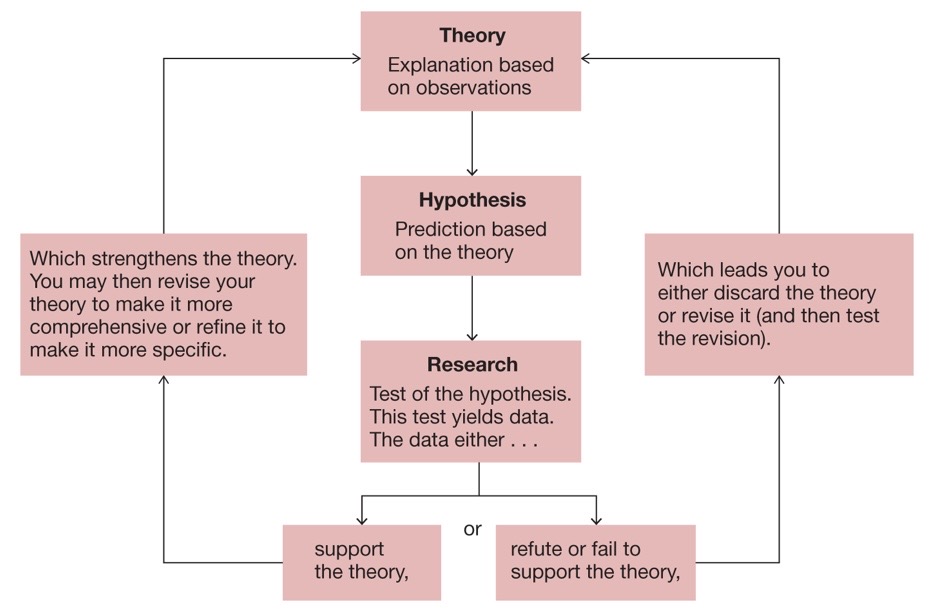
All good theories should be testable and falsifiable, allowing researchers to confirm or disprove their validity based on empirical evidence.
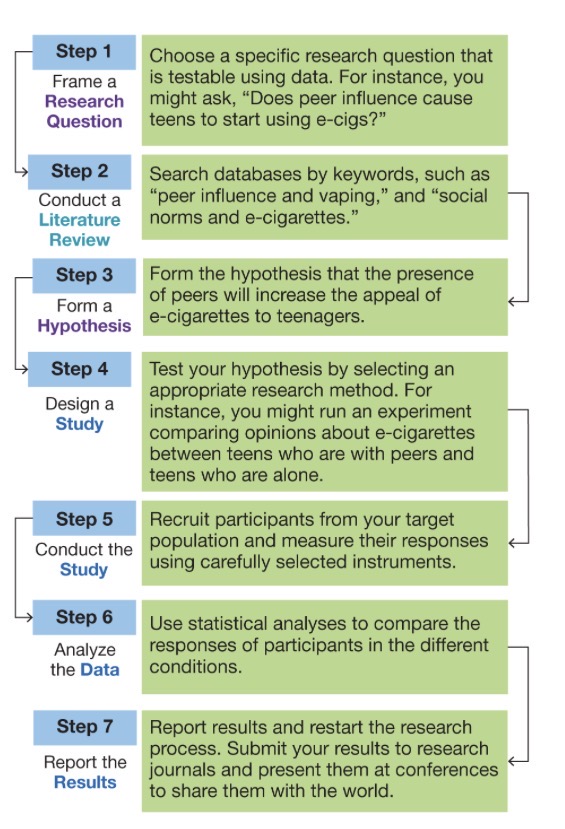
Replication- Repeating study to see if results are similar (increases validity of the data)
Studies don’t always replicate. sometimes studies fail to replicate because the theory is wrong and the original study was a false positive, which occurs when the hypothesis is false but the study produces trustworthy results by chance (ex video games produce and encourage violent behavior)
before the scientific method, scientists would have smaller study samples (more false positives) and would often ignore data that did not work.
Meta analysis- Proven to be best research method, which is comprising data from other studies to support your own.
2.5, 2.6, 2.7 Studies in Psychological Research
Descriptive research- a method that provides a detailed account of a phenomenon, using observations, case studies, or surveys to gather rich information without manipulating variables.
Case study- an in-depth examination of an individual or group, often used to explore complex issues or unique cases, providing insights that may not be captured through other research methods.
Its important to note that not all studies are generalizable
Observational studies- research methods that involve systematically watching behaviors in their natural context, allowing researchers to gather data without interfering with the subjects.
Participant observation- a type of observational studies where the researcher becomes actively involved in the daily lives of the participants, gaining a deeper understanding of their experiences and behaviors from an insider's perspective.
Naturalistic observation- a method of observing subjects in their natural environment without manipulation or control by the researcher, which helps minimize the influence of observer bias.
Self report- a data collection method where individuals provide subjective assessments of their own thoughts, feelings, or behaviors, often used to gather personal insights that might not be observable directly.
Often less respective and potentially unreliable due to biases, self-reports can lead to inaccurate data if individuals do not provide honest or consistent responses. Even if people are 100% truthful, its still hard to measure because everyone has a different scale and threshold.
Correlational studies- studies how variables relate to each other without manipulation or experimentation
Scatterplot- simplified way to view correlation, varies in strength (how close plotted data falls to one another) and direction (positive/negative)
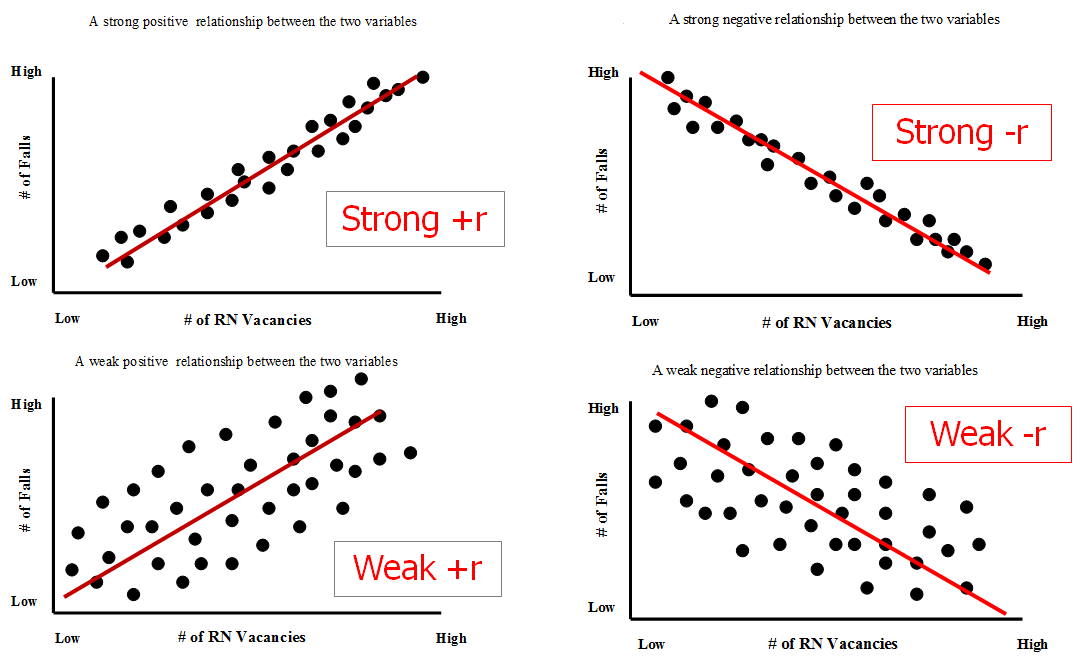
Correlation coefficient- a numerical measure of the strength and direction of the relationship between two variables, ranging from -1 to +1.
Third variable problem- an error that correlational studies cant address, its when a third variable is involved in the two studied causing an alteration of data results.
Experimental method- a research method that manipulates one variable to determine its effect on another variable, allowing for causal conclusions.
Independent variable- the variable that is manipulated or changed in an experiment to observe its effects on the dependent variable. it “produces change in” the dependent variable.
Dependent variable- the variable that is measured or assessed in an experiment to see how it is affected by changes in the independent variable.
Control group- a group of participants that does not receive the experimental treatment, serving as a benchmark to compare the effects of the independent variable on the experimental group.
Confounding variable- any factor other than the independent variable that may influence the dependent variable, potentially skewing the results of the experiment.
2.8, 2.9, 2.10 Methods and Ethics in Psychological Research
Random Assignment- assigns participants to IV/DV or control
Population- the group of people selected for the study
Sample- the people assigned to the non-control group
Culturally sensitive research- takes different ways of life into account and factors this information into the data (like the pain tolerance study in psych, with members of an African tribe reporting less pain than a group of people from New York city. A factor may be that its part of the tribes culture to get many piercings and painful bodily procedures, therefore their tolerance is likely higher than the average urban American)
Most studies in Psychology can never happen because the research requires to break one of the 5 basic ethical principles, which include informed consent, confidentiality, deception, debriefing, and the right to withdraw.
Sometimes random experiments will take place without knowledge, however they aren’t harmful nor life altering. (like how some people get an instagram update and some don’t, meta is testing peoples responses to the update to see if it should be rolled out to everyone)
2.12, 2.13, 2.14 Data Analysis and Evaluation
Construct Validity- how much does the experiment measure what it was intended to measure?
External Validity- how much can the data be generalized to a larger population?
Internal Validity- how strong is the data between the two variables, excluding confounding variables?
Reliability- stability and consistency of a measure over time
Accuracy- how error free is the data?
Descriptive statistics- overall summary of the studies results, highlighting basic patterns
mean- average
median- the middle value in a data set when the numbers are arranged in ascending or descending order.
mode- the most recurrent value in a data set.
Standard deviation- a measure of the amount of variation or dispersion in a set of values, indicating how much individual data points deviate from the mean.
Inferential statistics- estimation of how likely the data is due to chance rather than showing true difference in the population