Topic2: Current and Circuits
Definitions/Important terms
Current - The movement of electrons in a circuit
*e- flowing through a coil produces a magnetic field
In depth: The amount of charge or e- that passes a point per second
Current(I) is measures in amperes(A) using an ammeter connected in series circuit
Electrical Energy - Energy due to the movement of charge(e-)
Mechanical Energy - Energy due to movement or position of an object
Chemical Potential Energy - Energy stored in the bonds of a molecule
Ex) battery acid
Energy Sources(batteries)
Batteries create voltage
Voltage - which is the amount of electrical potential energy per unit charge available for doing work
Voltage is what causes the movement of e- and creates a current
Measures in volts(V) with a voltmeter which is connected parallel in the circuit
Resistor - Any device in a circuit that disrupts e- flow, generating heat(thermal energy) or light
Ex) light bulb, toaster stereo, and even a wire
Resistance is measured in ohms with an ohmmeter
Relationship between elections in a coil(electric field), magnetic fields(magnets) and motion
*look at image in notes, pg 13
As long as we have 2/3, we’ll get the 3rd
Simple motors
Function - Converts electrical energy into mechanical energy
*Look at diagram in notes, pg 13
As current flows through the coil, a magnetic field is generates(induced magnetic field)
This magnetic field interacts with the permanent magnet, causing the coil to rotate
When there is no current, there is no magnetic field, but the coil will continue to spin due to momentum
*Look at diagram in pg14
How to strengthen simple motors:
Increasing the # of coils
Increasing strength of magnets
Changing shape of magnets
Increasing the voltage supplied
Wrapping current carrying wire around a piece of metal
Generators
Function - Convert mechanical energy into electrical energy
opposite of a motor
*Diagram of pg 13
AC vc DC
Alternating current(AC) - e- flow in both directions in a circuit
Anything that plugs into a wall, a generator
Direct current(DC) - e- flow in one direction in a circuit
Batteries, solar panels
Circuits
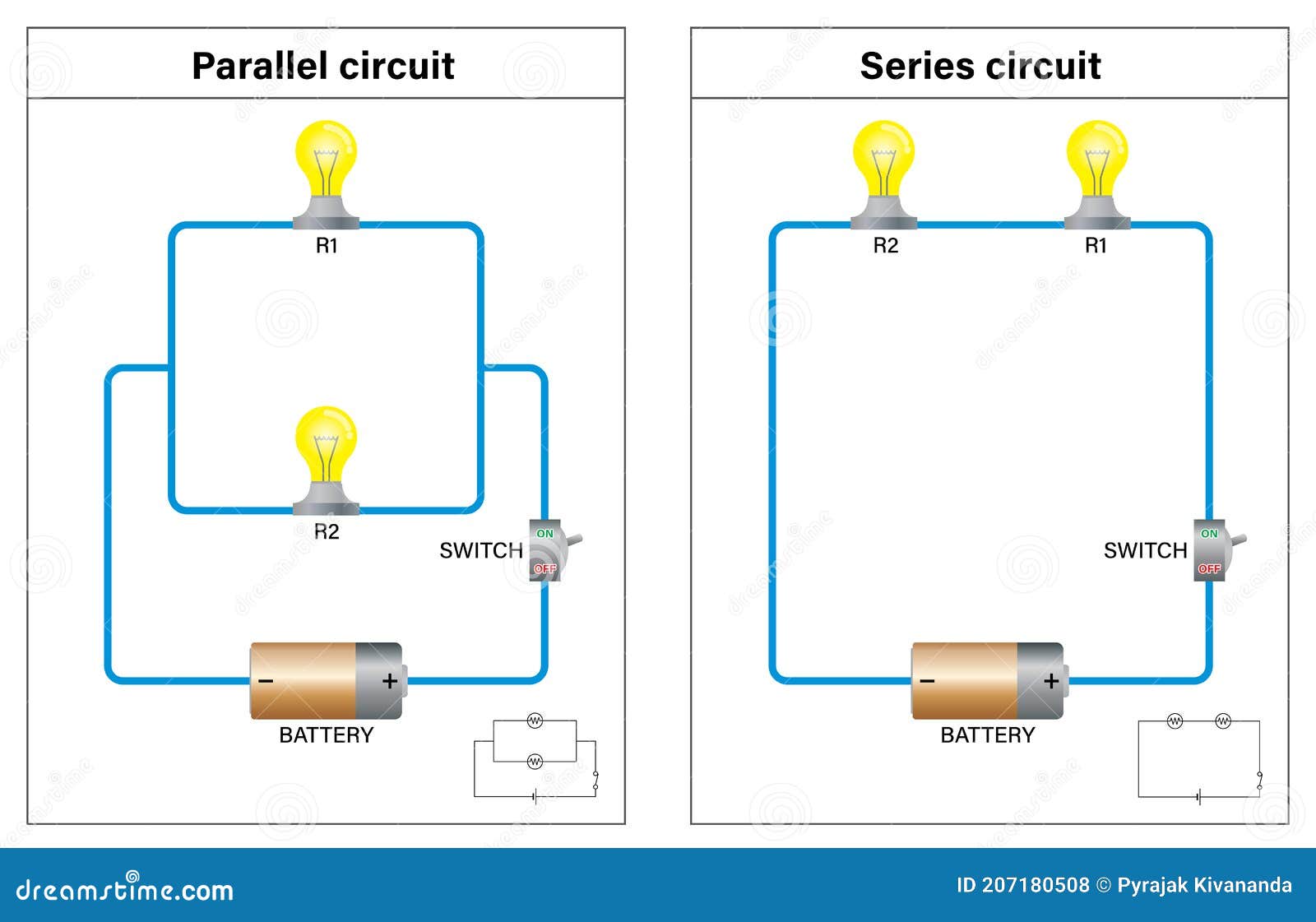
Parallel
There are loops within a loop(multiple pathways for current to flow)
Ex)Car/home, powerbar
Series
One single loop(one pathway for current to flow)
Ex) Christmas lights
When one burns out, they all go out
Symbols
*Refer to notes for symbols
Component | Function |
Wire | Passes current from one part of a circuit to another |
Wires joined | Connects wires or components |
Switch | Allows current to flow only when the switch is in the closed position |
Cell or DC power supply | Supplies electrical energy to a circuit in the form of direct current
|
Battery | Supplies electrical energy to a circuit to form a direct current |
Resistor | Resists the flow of electric current |
Lamp | Converts electrical energy into light energy |
Voltmeter | Measures voltage
|
Ammeter | Measures electric current
|
Ohmmeter | Measures resistances |
Fuse | Safety device that breaks an electric circuit if the current exceeds a safe level |
Summary of circuit characteristics
Series circuit | Parallel circuit | |
Current through each resistor | Same through every resistor | Varies depending on the resistor |
Voltage through each resistor | Varies depending on the resistor | Same through every resistor |
Total resistance through the circuit | Higher than in parallel | Lower than in series |
What happens when one resistor fails? | All the others go out | The rest still work |
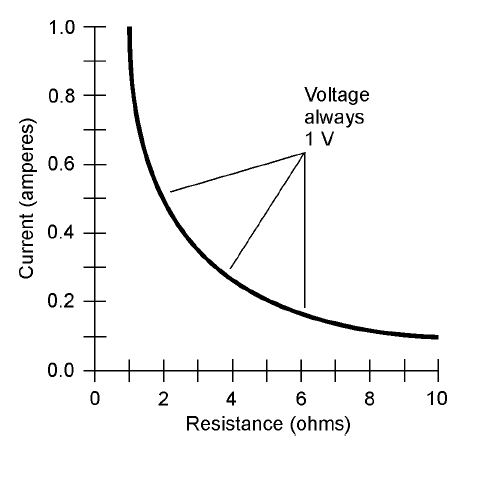
Ohm’s Law - V=IR
If resistances stays the same, current and voltage both increase
If voltage stays the same, current increases and resistance decreases
Simply: current is directly proportional to voltage(linear increase) and inversely proportional to resistance(exponential decrease)

Power and Energy
Power - can be defined as the rate of doing work or transforming energy
measures in Watts(W) or J/s
Transmitting Electrical Energy
The current passing through the transmission lines is usually AC
Why?
To help conserve power, but to reduce energy loss over long distances
We want to decrease resistance and current(e- create heat)
And increase voltage during transmission
Voltage in power liners must be high to be efficient, but is too high for most household appliances
*see diagram pg 22
Transformers - used to change voltages(and current) of electricity being delivered to our homes
Transformers may be:
Step us - increasing voltage(at generating plant)
Step down - decrease voltage(at home)
*See diagram in pg 23
Primary coil receives an input voltage
Where electricity comes from
Secondary coil supplies output voltage
What uses electricity
An alternating(AC) entering the primary coil will produce a changing magnetic field
This changing magnetic field produced by the primary coil is magnified by the iron core
The changing magnetic field induces an alternating(AC) in the second coil
*Electron DO NOT travel through the iron core
Transformers: Step up vs Step down
Both conserve power
Step up
Voltage increase
Secondary coils increases
Current decreases
Ns>Np
Vs>Vp
Is<Ip
Input
Step down
Voltage decreases
Secondary coils decreases
Current increases
Ns<Np
Vs<Vp
Is>Ip
Output
Type of transformer | Number of secondary coils | Number of secondary coils | Secondary voltage | Secondary current | Secondary power |
Step up | Fewer | more | increase | decrease | stays the same |
Step down | More | less | decrease | increase | stays the same |