chapter 12: ecology of group living and social behaviour
group living
3 main ecological factors fro evolution of social behaviour
where they give birth - e.g. seal colonies
where they forage - e.g. deep sea / sperm whales: baby sitting
what they eat - abundant food (e.g. fin whales that feed on euphasiid (krill) prey)
benefits of living in groups
predation risk
individual avoidance at sea
elephant seals avoid killer whales by diving deep
nearshore dolphins, baleen whales hide in river mouths or surf zones or kelp beds
pigmy and dwarf sperm whale - reddish cloud to confuse predator
predation risk most important factor to build groups
dilute predation risks fro individuals, e.g. mixed dolphin groups
warning / alert others / defend against predators (e.g. sperm whales “margarite formation”)
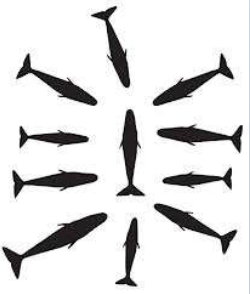
non-socially transmitted parasites: dilution effect (cookie cutter sharks)
cooperative feeding (killer whales, humpback whales, dolphins cooperate with fishermen…)
environmental factors 8keep warm, protection …)
forced aggregations: when resources are clumped
individuals do not necessarily benefit from each other’s company
examples: belugas gather in warm tidal creeks during annual moult or pinnipeds are forced together on small haul out places
costs/risks of living in groups
risk of transmitting parasites socially (e.g. bacteria infections, parasite fish)
competition for limited resources (share food, haul-out places, mates…)
philopatry (the behaviour of remaining in, or returning to, an individual’s birthplace)
natal philopatry → returning to birth place, extreme in pinnipeds - territory of male northern fur seals rarely shift more than 10 m
sexually dimorphic philopatry: to avoid inbreeding (e.g. sperm whales - male dispersion)
“sexually” over here means that the males and females return to their birthplace differently
females return to their natal area
males disperse more widely, leaving their natal area to breed more elsewhere. This helps avoid inbreeding and increases genetic mixing
but most aquatic marine mammals have huge home ranges that overlap many conspecifics: differs between geographic and social philopatry
geographic philopatry → the tendency of animals to return to or remain in a specific geographic location for critical life events such as breeding, pupping, or nesting
social philopatry → the tendency of animals to remain within or return to their natal social group or social structure, rather than a geographic location
some geographic but not social philopatry:
bottle nose dolphins remain in their natal home range but rarely interact with their maternal relatives
both geographic and social philopatry:
killer whales - no dispersion of either sex, they interact with their relative throughout their life - but mate outside their kin group
social marine mammals
interactions, relationships, and social structures
affiliative (friendly) behaviour
strengthen bonds
mend damaged bonds
reduce tension
need service from another
dolphins / sperm whales
rub body parts, mutual stroking, fin touching, “greeting ceremonies” in killer whales, synchrony
but also skin / parasite removing
aggression, agonistic displays and dominance
growling, open mouth, head jerking, lunging, charging another
sounds: ‘pop’ sounds in dolphins, growls in seals
‘toothrake’ marks from fights (male beaked whales, narwhal 3 m tusk (but mostly sensory organ), elephant seals)
headbutting (bottlenose dolphins, pilot whales)
but most non lethal, except infanticide / killing of harbour porpoises by bottlenose dolphins
agonistic interaction not necessarily aggressive
sociosecual behaviour
non-receptive sexual behavior
common in marine mammals: fur seals, baleen whales, toothed whales, manatees… for communication, relationships, bonding…
dolphins - bonobos
role dominance or affiliative behaviour / greeting, forming social bonds, conflict resolution and post-conflict reconciliation
alliances in male bottlenose dolphins - dominance /affiliative
test the social bonds
immature animals ‘play or practice of herding others’
female social structures
1. matriarchal groups
female leader in a groups with group members that are relatives and non-relatives
few examples in humans: the Mosuo culture, which is in China near Tibet
bonobos female groups within a fission-fusion society (type of social organisation where the size and composition of animal groups change overtime depending on factors like food availability, social needs, or reproductive status), sons inherit the status of their mothers, often life-long bonds
2. matrilineal groups
offspring line from one female, several matrilines can be in a group, that are either related (sister groups e.g. killer whlaes, pilot whales) or not (e.g. sperm whales and elephants)
example:
matriarch A has two daughter B and C
B has offsprings and eventually creates her own matriline
so B is the matriarch of her line
however B still has a matriarch, that is A
the same can happen with C forming another matriline.
this is how there can be multiple matrilines in a matrilineal group
3. matrifocal /matrilineal groups
one matriline with a female and her offspring, no offspring dispersal by neither gender: Bisexual philopatry - killer whales (single matrilines) and pilot whales (multilevel matrilines)
bisexual philopatry → both males and females of a species remain in or return to their natal area or group
matrifical groups → the social structure of a species group revolves around the mother and her offspring. the mothers are the cores of the group. They can help other whales take care of their offspring if the parent has to leave for a little to forage.
so a species can be both matrilineal and matrifocal
in summary:
matrilineal = who you’re related to through your mother
matrifocal = who the group revolves around socially - the mother(s)
bonding startegies in odontocetes
females bonded, males rove alone
sperm whale (elephants)
females: matrilineal (ca 10 individuals) stable groups in tropical areas but can split after 5-10 years (not all females are related)
cooperative offspring care, babysitting, communal feeding (allomothering)
males: bachelor groups / old males solitary
migrate away from females to higher latitudes to feed
mature later than females (delay breeding to become larger to compete with others)
rove alone around females, but bonds among younger males possible
roving male allinaces, weak female-female bonds
bottlenose dolphins and bottlenose whale:
fission-fusion societies (change in size and composition)
male-male bonds can last for a lifetime
male allinaces work alone or with other alliances to capture females
as strong as mother/offspring bonds
social female bonds - looser nertwork among several females
roving with natal kin
bisexual bonds in killer whales and pilot whales
matrifocal units (killer whales: 2-9 individuals, 1-4 generations mother and offspring; pilot whales: 60-200 animals, multi-level sister group)
natal philopatry of both gender
bonds between mother and sons strong
bonds between brothers - scouting/mating
bonds between sisters/mothers - offspring care
adoption of non-related animals
killer whales accept non-related animals, even feed them when ill or incapable. Special case in Norway an adopted orphaned handicapped female born 1995 seen with more than 5 different groups
crippled bottlenose dolphin was seen with sperm whales
iceland 2023: killer whales raised a long-finned pilot whale calf - adoption or abduction?
ecological factors in evolution of bonding strategies
females bear cost of parental care
female reproductive and bonding strategies determined by access to food and saftey from predators (some cases males: infanticide)
female philopatry (non social factors such as resource distribution and prey behaviour or social factors such as cooperative defence of offspring or resource
bisexual philopatry due to low cost of locomotion - large home and feeding ranges in which they encounter other non related mates, e.g. killer whales and pilot whales
cetecean offspring are followers, not tied to a breeding site
male mating and bonding determined by distribution of females but also presence of predators: bottlenose dolphins in scotland dont form alliances, shark predation is low compared to australia, where they form allinaces