COMM1170 Week 1
Resource Based View (RBA) of the Firm
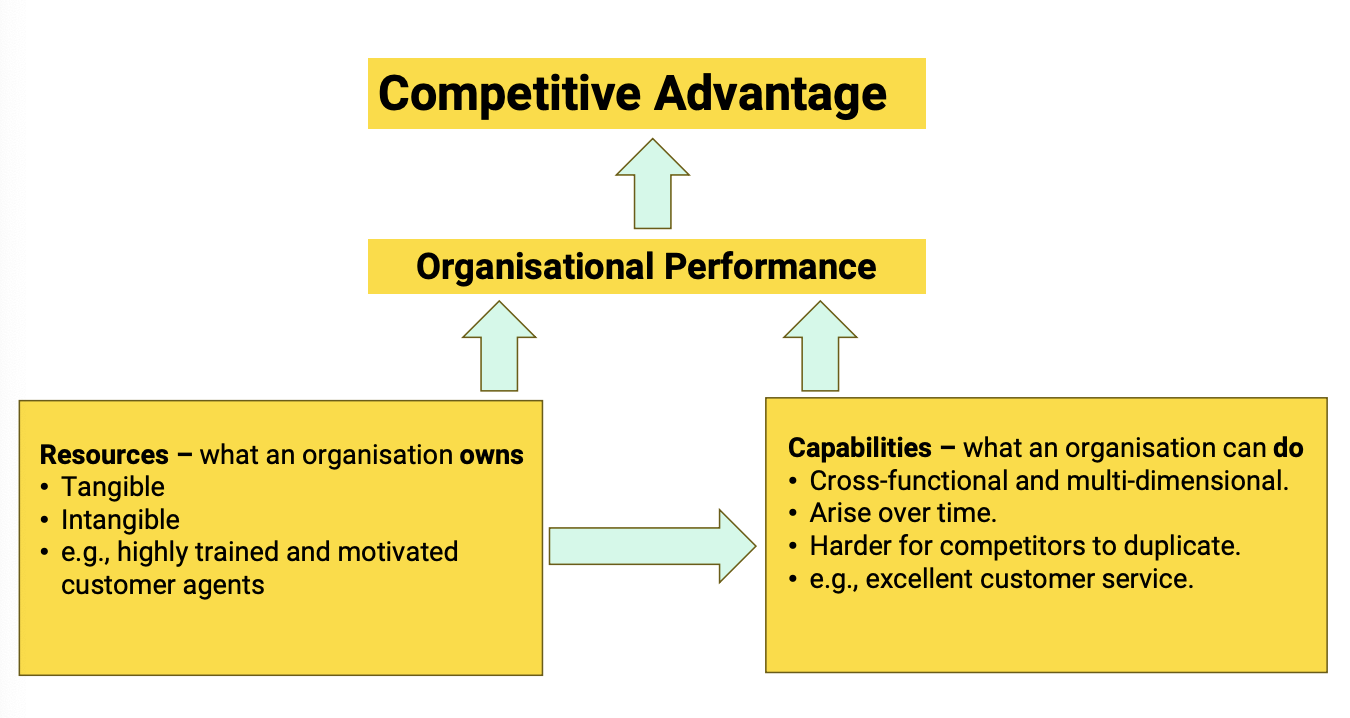
Focus on an organisation's internal resources
Organisations utilise their internal resources to implement value-creating strategies
An organisations resources and capabilities are competitive assets and a source of competitive power in the marketplace
Sustained Competitive Advantage
Sustained Competitive Advantage: A firm has sustained competitive advantage when it is implementing a value creating strategy not simultaneously being implemented by any current or potential competitors, and when these other firms are unable to duplicate the benefits of this strategy
Sustained Competitive Advantage - 3 Strategic Approaches
Operational excellence: Providing customers with reliable products/services at competitive prices and delivered conveniently (eg. cost efficiency, efficient internal business processes)
Customer intimacy: Personalisation of solutions and service to meet differing customer needs (eg. detailed customer knowledge with operational flexibility so they can respond quickly to almost any need, customizing produce to fulfill special requests)
Product/service leadership: Firms strive to produce a continuous stream of innovative products/services and permanently look for new solutions to their customers' problems
RBV: Strategic and Operational Leaders
Strategic (boss)
Broader, longer term focus (3-5 years of planning)
Identify, acquire and develop the resources. Explore opportunities to create new resources or capabilities that can provide a competitive edge
Make decisions that shape competitive strategy, resource allocation priorities, market entry or exit decisions, mergers, acquisition and partnerships
Operational (managers):
Short term focus (days to months) on execution of the organisations operations
Managing and deploying the existing resources effectively
Make decisions to optimise resource allocation and implement standard operating procedures (eg. streamline processes, control costs and increase productivity
5 Phases of Organisation Life Cycle
Startup
Growth: either grows or fails
Maturity: dangers are stagnation, bureaucracy and failure to innovate
Decline: growth and innovation slows, creating diminishing returns
Renewal: can take many forms such as a change in reorganisation in the right direction, merger, acquisition or sale.