Neurobiology III
Action potential refractory periods
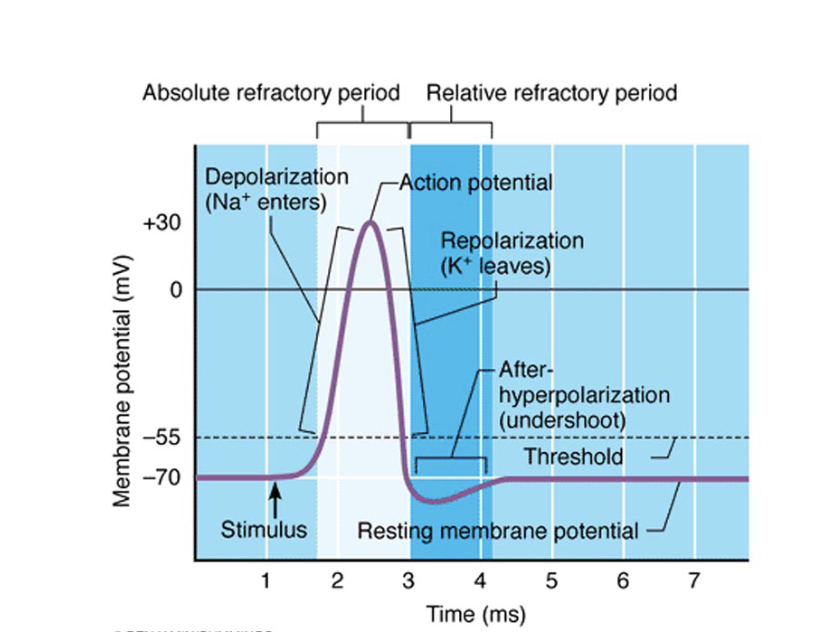
Absolute refractory period
Unable to generate another action potential, regardless of the strength of the stimulus.
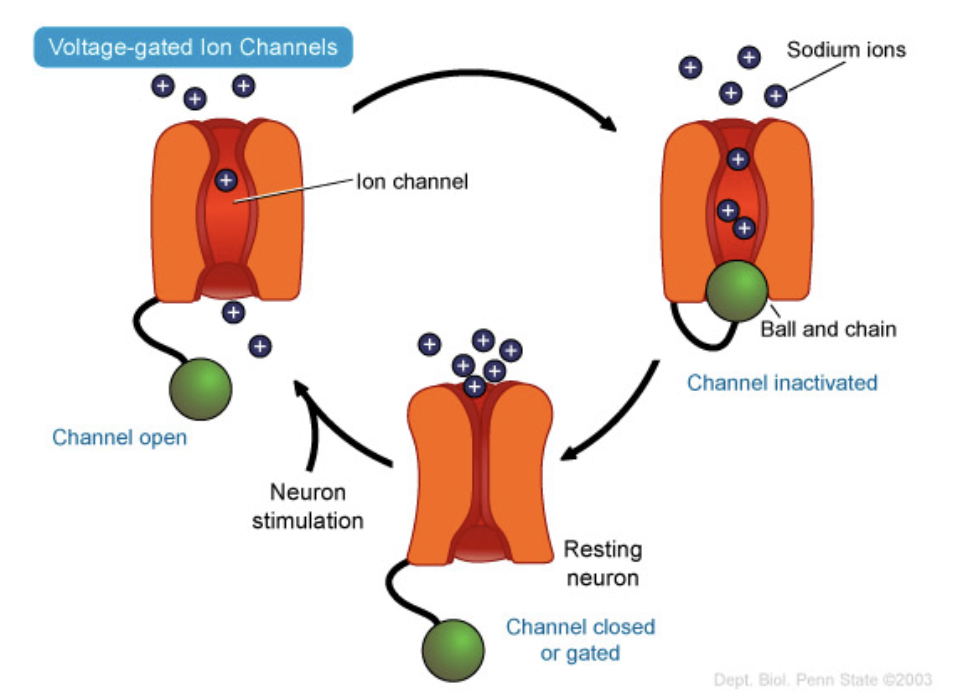
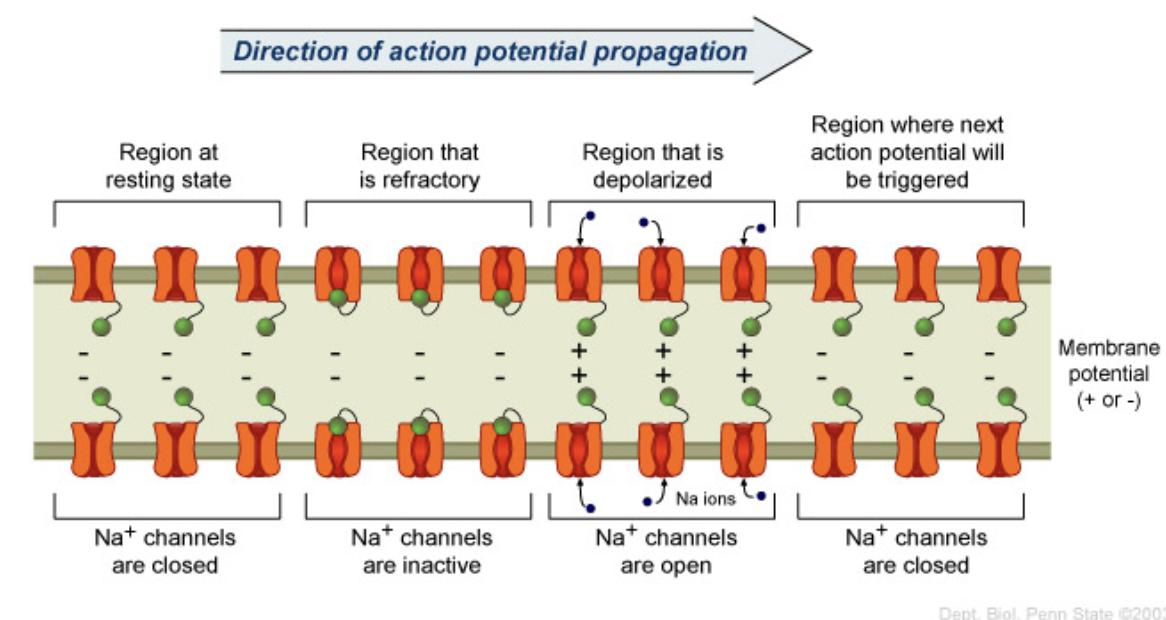
This is due to the inactivation of voltage-gated sodium channels.
starts with the initiation of the AP until the end of the Na+ channel inactivation
Relative refractory period
immediately following the absolute refractory period during which a stronger-than-normal stimulus is required to generate an action potential.
the membrane potential is hyperpolarized and it takes more depolarization to reach the threshold for firing another action potential.
the voltage-gated potassium channels are still open, causing hyperpolarization of the neuron.
Na+ channels are ready to depolarize but K+ are still open
Voltage gated Sodium channel during absolute refractory period
Propagation of an action potential
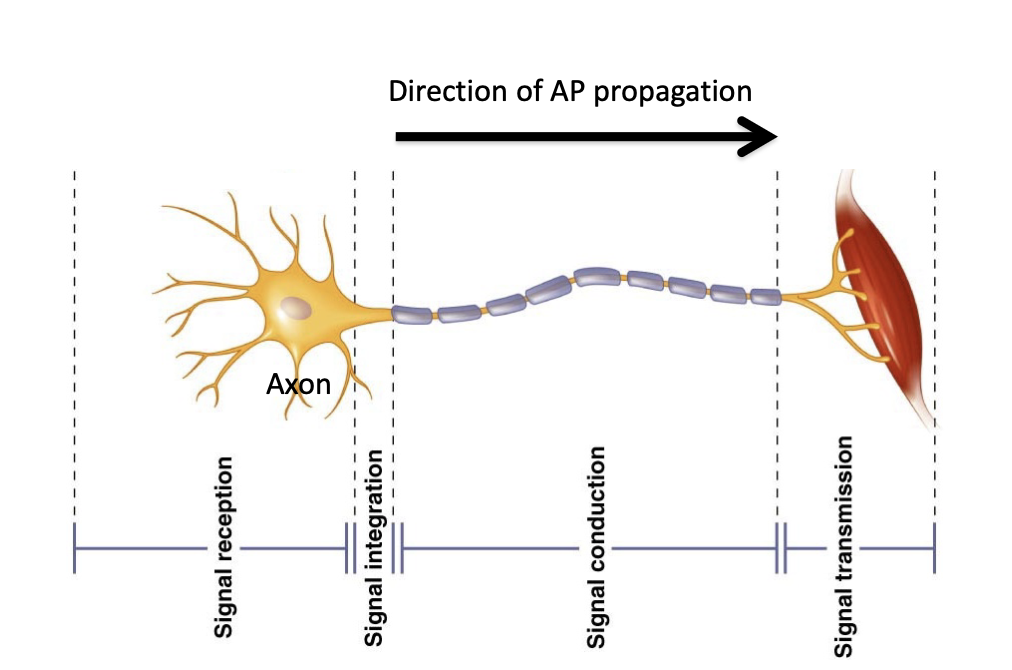
When curent flows into the neuron, it flows passively in both directions.
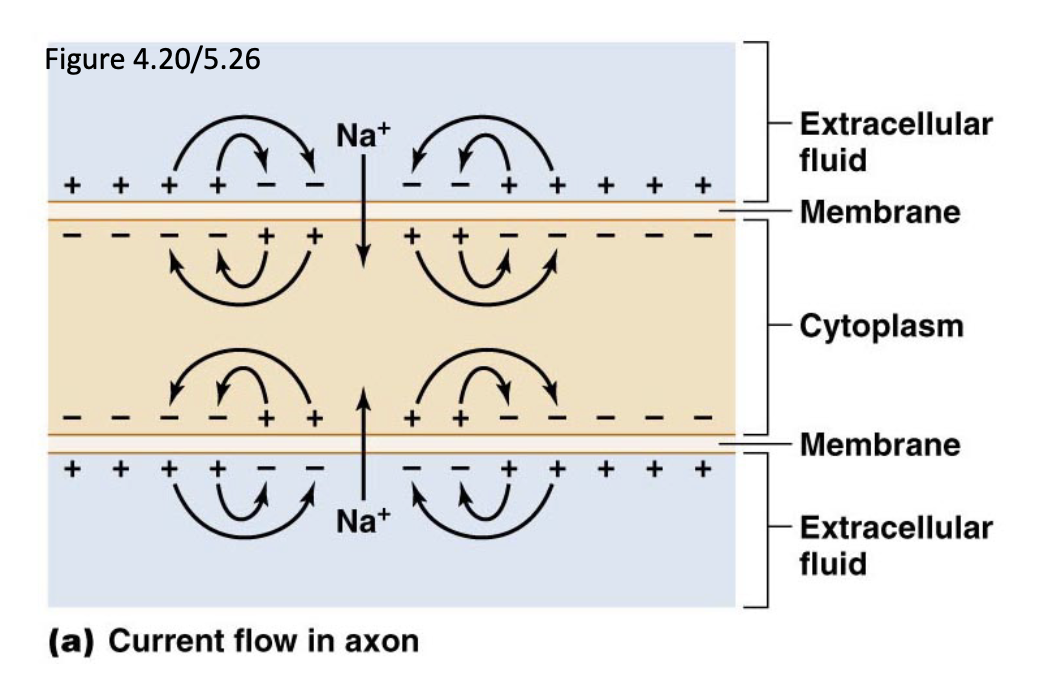
When Na+ flows into the neuron, positive current flows passively in both directions but APs are conducted in one direction
inactivation gate of voltage gated Na+ channels ensure unidirectional APs
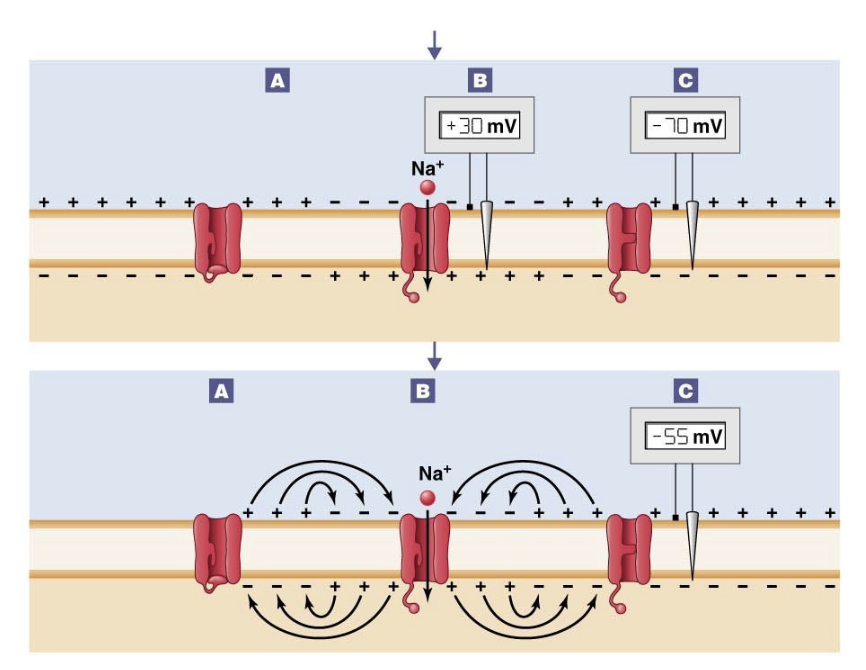
Propagation of an action potential along an axon
Stimulus strength is encoded by AP frequency
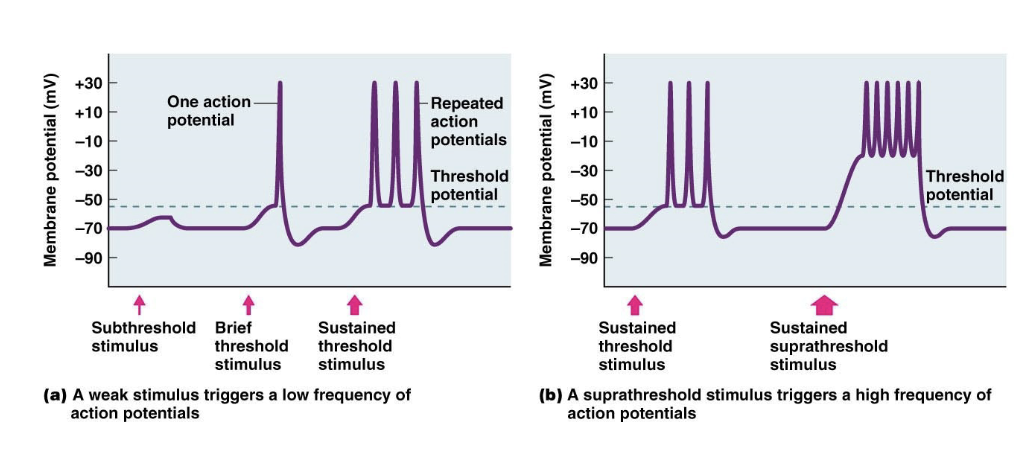
Stronger the stimulus, the higher frequency of action potentials
Strong sustained depolarization is necessary for high frequency APs
Transmission of signals between neurons
Neurons transmit their signals at electrical or chemical synapses
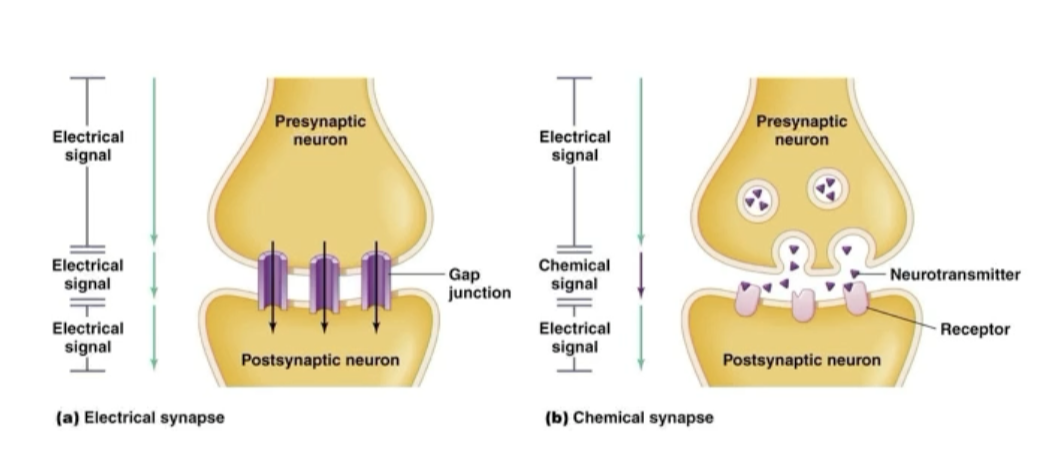
Synaptic vesicles release neurotransmitter by exocytosis
Voltage gated Ca2+ channels open in response to AP-induced depolarization
increased intracellular Ca2+ facilitates neurotransmitter release
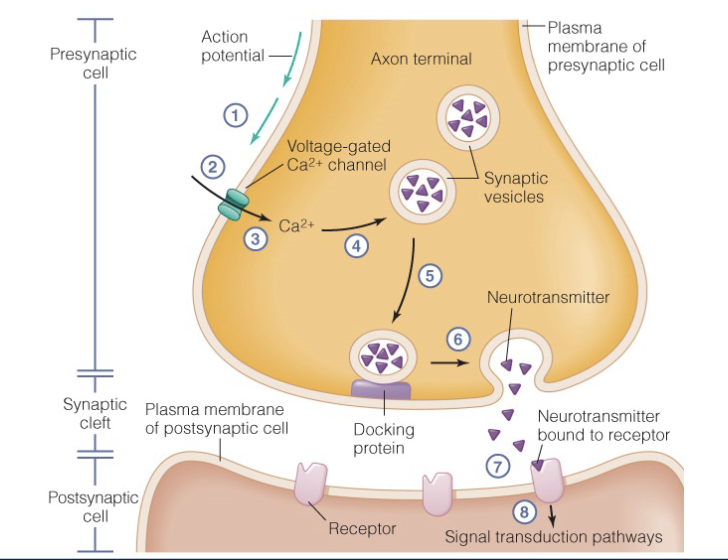
Neurotransmitter
synthesized in neuron
released at pre synapse following depolarization
bind and cause effect at post synapse
lot of mitochondria in the neuron to make neurotransmitters
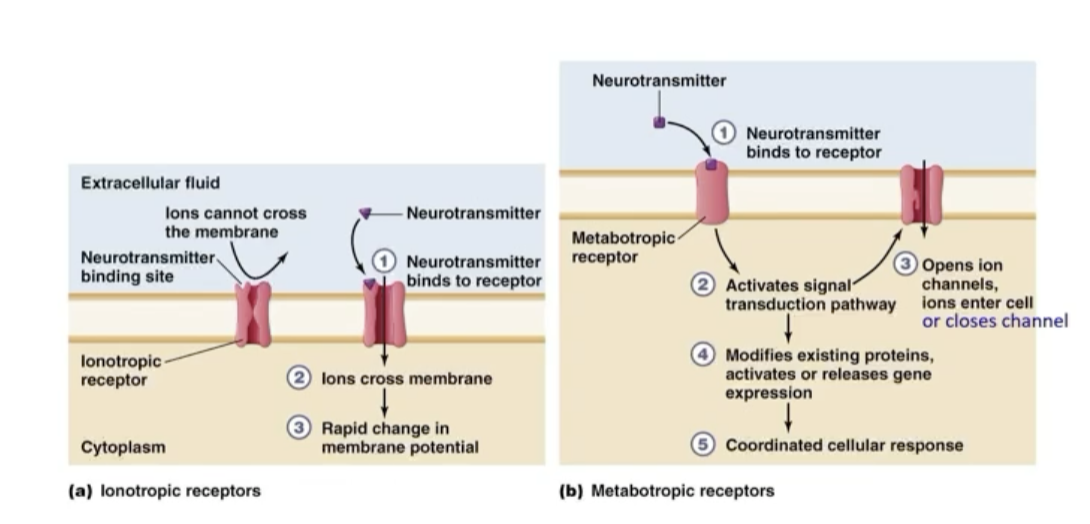
Ionotropic and metabatropic receptors
Ionotropic
directly open ion channels upon binding with a neurotransmitter. They mediate fast synaptic transmission in the nervous system.
When a neurotransmitter binds to an ionotropic receptor, it causes a conformational change that allows ions, such as sodium (Na+), potassium (K+), or calcium (Ca2+), to flow through the channel. , resulting in the generation of an electrical signal.
Examples of ionotropic receptors include nicotinic acetylcholine receptors and NMDA receptors.
Metabatropic receptors
activate intracellular signaling pathways through G-proteins. They have a slower response time but can produce longer-lasting effects.
Metabotropic receptors play a role in various physiological processes, including neurotransmission, sensory perception, and regulation of mood and behavior.
Examples include GABA-B receptors, dopamine receptors, and serotonin receptors.