biology
bio notes
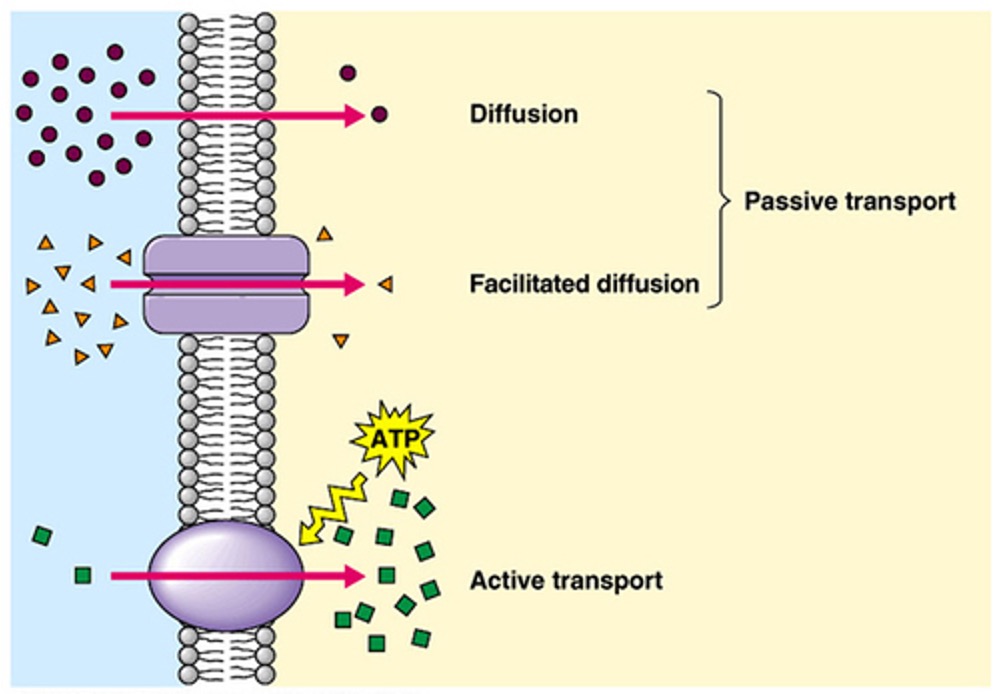
active transport - - requires energy from organelles to go to the enge of the cell to release. uses energy to push energy up, when energy falls (is low in a gradient) atp pushes it to get to a high concentration. to do this they need carrier proteins. sodium potassium pump. only sodium can come up, sodium enters, potassium leaves,
exocytosis (exiting cytosis) is for bulk transport of material, - pancreatic cell cell
pancreatic cell example > pancrease creates insulin, insulin needs to getout > bulk transport uses exocytosis to leave
endocytosis 3 forms> phagocytosis, pinocytosis, recptor-mediated endocytosis
phagocytosis - allows us to intake molecule very quickly and destroy it
pinocytosis - wantin to take in a large amount of smaller molecules. e.g. kidey cells use nthis to take what they need
recptor-mediated endocytosis - iron
important
Transport Tree
1. Transport
A. Active Transport
Sodium-Potassium Pump
Carrier Proteins
Endocytosis
Phagocytosis
Pinocytosis
Receptor-Mediated Endocytosis
Exocytosis
B. Passive Transport
Diffusion
Assisted Diffusion
Osmosis
diffusion high to low
osmosis high to low
active transport low to high
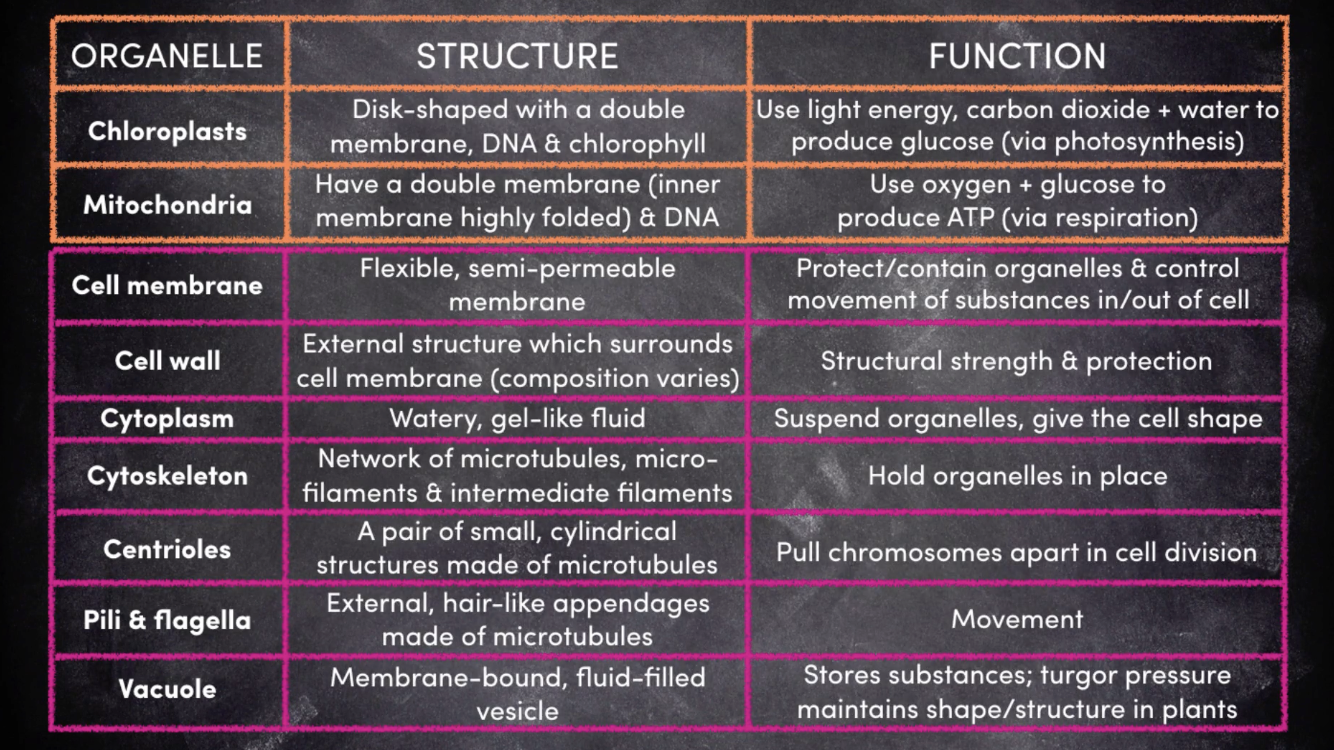
organelles -
chloroplast: only found in plant cells, disk sah3d, own dwn and pack with chlorophyll, capture light energy
mitochontria: found in plant and animal cells, powerhouse of cell, double membrane, their own dna, perform chemical respiration: combine oxygen with glucose to create ATP, number of mitochondria in a cell depends on how much energy the cell needs
cell membrane: aka plasma mebrane, separates cell conetnts from outside envuronemtn, semi permeable (holds organelles togther)
some cells have cell walls: found in plant, fungal asnd prokaryotic cells, just an external strucutre which surroundsd the cell membrane, gives structure
cytoplasm: waterly cell like f¥luid inncell, fills up cell and gives shape, organelles are held in this
cytoskeleton - holds organelles in place - network of microtubes, microfilaments and intermediate filaments
centrioles: pair of small cylinderia structures, made of microtubes, involved in cell division where they pull chromosomes apart
pili & flagella: small ahir like appendages amde of microtrubials, used to help the cell get around, flabella is longer verion of pili
vacuole - membrane bound vessicle, filled w water, main role is to store substances
Compare the rough endoplasmic reticulum and the smooth endoplasmic reticulum.> Both the rough ER and smooth ER are networks of flattened, interconnected membranes. However, the rough ER has many ribosomes attached to it, whereas the smooth ER does not. In the rough ER, proteins are made by the ribosomes. In comparison, the smooth ER makes lipids.
Explain how the Golgi body can produce a lysosome and define any key terms.
The Golgi body is an organelle made up of stacked membrane sacs, and its job is to process and package substances that the cell has made.
A lysosome is a smaller membrane-bound sac that contains digestive enzymes, which are needed around the cell to break down other substances, such as cellular waste material and foreign particles.
After processing a digestive enzyme, the Golgi body's membrane pinches off around the enzyme to form a vesicle with the substance inside. This vesicle is a lysosome. The lysosome can then transport the packaged substances to specific locations in the cell.
fluid mosaic models - current accpeted model for the cell membrane
> states that the cell membrane are phospholipid bilayers > 2 layers of phospholipid molecules
lipid = fat
anything that hates water is hydrophobic, hydrophilic loves water
within the phospholipid bilayer, there are: carbohydrates called glycoprotein is attached to a protein and glycolipid if attahced to a lipid , cholesterol, proteins
active transport requires ATP to work
goes against the concehntration gradient
uses carrier proteins to function
why are cells mso small? it might seem like a simple question but why are they microscopic?
Efficiencies - cells need to be efficient
surface - area to volume - cells on a great workout plan
+ surface area to volume! cells need to be able to have the right amount of surface area to volume ratio in order to take in and remove molecules efficiently. if a cell is too big, then its Surface area: volume ratio reduces
surface area = SA: V = 6 + 1 = 6:1
to2cm cube = sufac e area = 6x2x2 = 24cm3
volume = 2x2x2 = 8
24:8
=3:1
and 3cm cube =sa = 6x3x3 = 54
v = 3x3x3 = 27
= 54:27 = 2:1
cells need enxymes
enxymes are essential macromolecules that just act as a catlyst (stimulant) which helps to speed up multiple chemical reactions
> theyre needed to ensure that cells can function properly, especially when creatiing energy (mitochondria) and the process of digestion (lysomes)
> The enzyme lowers the amount of energy needed to activate the reaction.
cells need energy, energy comes from the food we eat, in the form on “sugars”, when food enters the body, food is broken down through the body for cells to use, without energhy cells wont survive.
sucrose is madfe up of glucose and water scrose is a substrate. and sucrase is an enzyme
in food, needs enzymes to break it down to be digested and used
enzymes 2 models
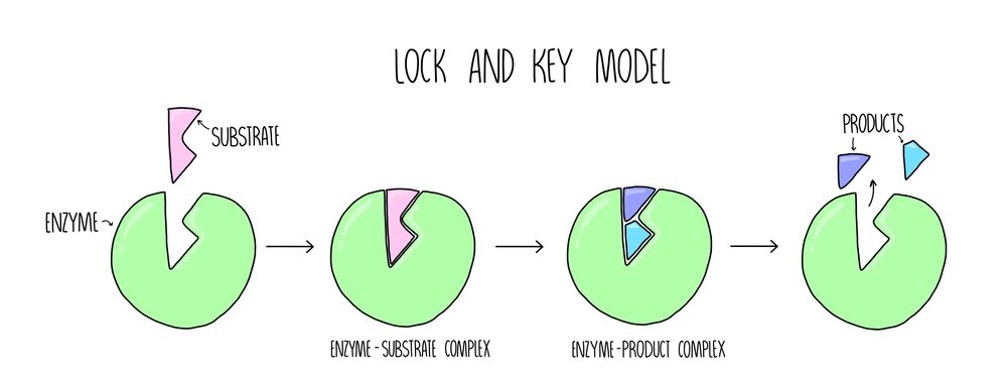
lock and key model
>was propsed first: substrate is the only key that fits into the right lock (enzyme has a ridged structure)
induced fit model
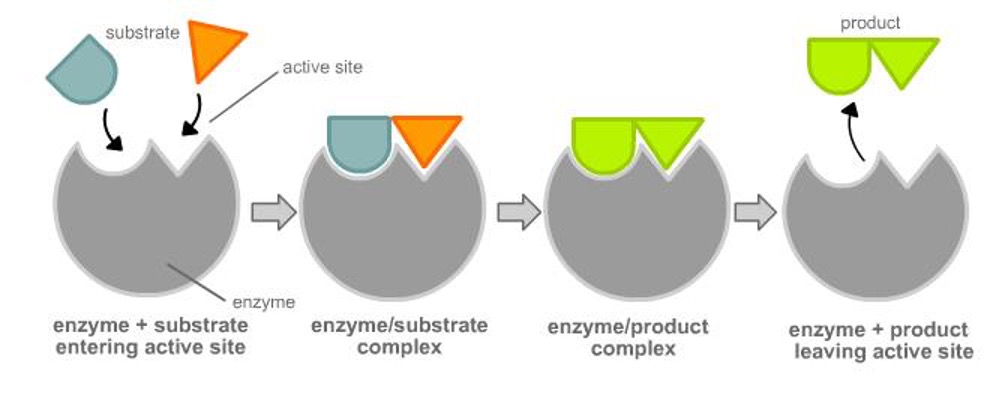
newer model which shows protein as more fluid, changing its shape slightly when substrate contact occurs
enymes
enzymes new relationship or break up
catabolic reactions, involve a breakup where the substrate break up into 2 products
anabolic reactions, involve a new relationship, two substa¥nces form together called a substrate
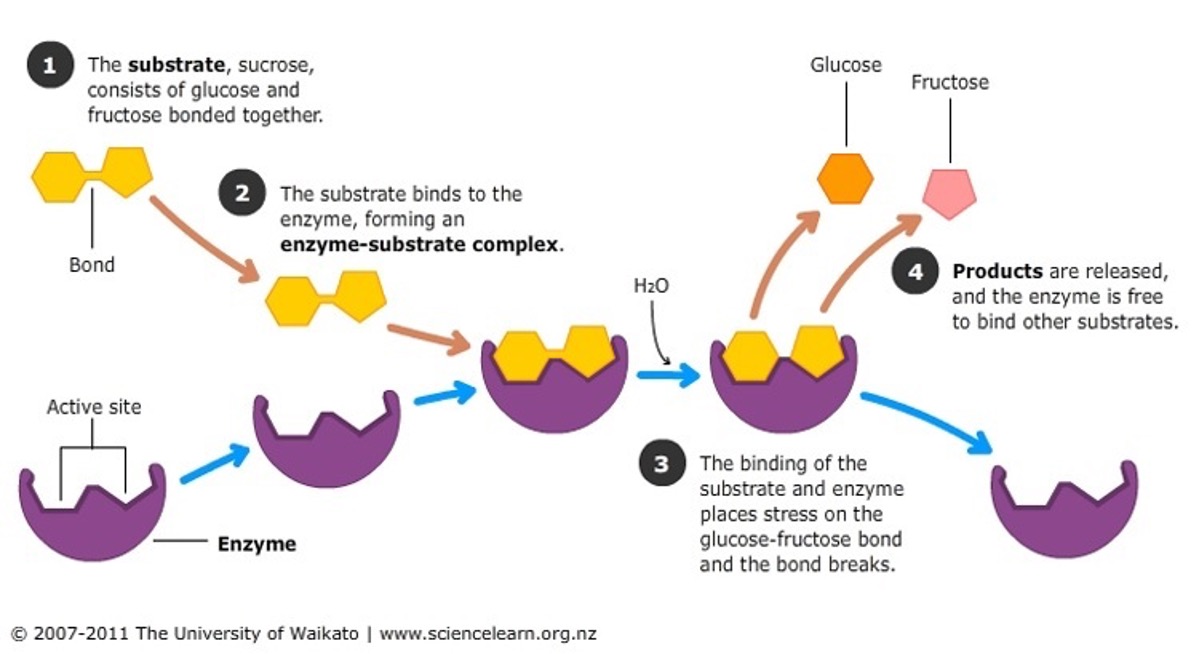
1.Receptors in the enzyme can recognise the substrate e.g. the substrate sucrase will only work on sucrose
2.The enzyme first binds to a substrate (glucose, protein, starch etc) in an area called the active site (a pocket)
3.Substrate is then sped up and turned into the products – the end result of a chemical reaction
4.The products are released and the enzyme is ready to start again!
during aerobix respiration, cells produce alot of hydrogen peroxide to get rid of it cells use catalyst enzymes
enxyme conditions
two main things that affect enzyme activity within cells: temperature and PH
within these two areas enzymes have optimal condition
The concentration of the substrate also affects the enzyme activity.
temperature will increase molecule movement and faster enzyme activity, however, past a certain temperature the bonds of enzymes will be affected and become denatured (loses its shape and unable to break down substrates). Optimal temperature is based on the specific enzyme e.g. in humans its 35 to 40 0 C and up to 70 0 C in bacteria within hot spring
Different enzymes have different optimum pH levels, same goes with temperature. But all enzymes operate on the same saturation point rules
substrate concentration
when substrate concentration increases, so does the enzyme activity.
Substrate concentration refers to amount of the substrate within the solution/molecule.
stauration point is the limit where all enzymes are wokring at there maximum point
high temperatrues denature (break) proteins
what are inhabitors > a molecule that binds to an enzyme and blocks its activity.
coenzymes and cofactors assist an enzyme to enhance function
what are coenzymes> Coenzymes are organic substances, such as vitamins. Unlike enzymes, coenzymes are not proteins. Coenzyme molecules bind to enzyme active sites when the substrate molecules bind, and assist in catalysing the reaction occurring.
what are cofactors > Cofactors are inorganic substances, such as magnesium (Mg2+) and iron (Fe2+). Cofactors bind to enzymes. This binding can stabilise the enzyme or substrate, or can directly assist in the reaction occurring.
Describe how substrate concentration affects enzyme activity.
covalent bonds are stronger than ionic bonds
Organelle Roles in Protein Production and Transport
Ribosomes – Assemble the proteins destined for secretion.
Endoplasmic Reticulum – Attachment of carbohydrates to the proteins and packaging of the glycoproteins into transport vesicles.
Transport Vesicles – Bud off the ER and move substances to the Golgi apparatus.
Golgi Apparatus – Receives and transports vesicles from the ER. Modifies, stores, and transports molecules for export around or from the cell.
ATP, Cotransport, and Glucose Transport
Why is ATP required for membrane pump systems to operate?
ATP provides energy to move ions against the concentration gradient.
It also changes the shape of the carrier protein to facilitate ion transport.
Explain what is meant by cotransport.
Cotransport occurs when two ions move together.
Sodium ions move back into the cell and bring glucose molecules with them.
How is cotransport used to move glucose into the intestinal epithelial cells?
Epithelial cells require additional glucose to transfer into the bloodstream.
Cotransport helps meet this higher glucose demand.
What happens to the glucose that is transported into the intestinal epithelial cells?
Glucose enters the bloodstream and is distributed throughout the body.
4o
What is the purpose of exocytosis?
used to carry out waste, maintain homeostasis, exporting large proteins (bulk transport)
Outline what occurs during exocytosis
. insulin 1. - the ribosome reads the code (mRNA) for insulin and makes the protein
2. the protein travels through the ER (endoplasmic reticulum)
3. a transport vesicle forms around the protein and it travels along the golgi apparatus
4. the GA processes the protein and then puts it into a vesicle
5. the protein leaves the cell by exocytosis (through the cell membrane).
Name two examples of exocytosis with cells
synapse - theres a gap where exocytosis is occuring
synpases between the nerve cells use EXO to signal each othwe.
other cells use exocytosis to rid of waste after breaking down molecules for food.
Transport Mechanisms and Energy Requirements
Glucose Transport and Active Transport
What happens to glucose after being transported into intestinal epithelial cells?
Glucose is transported into the bloodstream and distributed around the body.
Types of Active Transport:
Sodium-Potassium Pump uses primary active transport.
Sodium-Glucose Symport uses secondary active transport.
Types of Transport Mechanisms
Passive Transport (No Energy Required)
Facilitated Diffusion
Osmosis
Diffusion
Active Transport (Energy Required)
Pinocytosis
Phagocytosis
Exocytosis
Ion Pump
Matching Transport Mechanisms to Processes
Capture and destruction of a bacterial cell by a white blood cell → Phagocytosis
Secretion of digestive enzymes from pancreatic cells → Exocytosis
Uptake of extracellular fluid by liver cells → Pinocytosis
Movement of water into the cell → Osmosis
Moving H+ against the concentration gradient → Proton Pump
Summary of Energy Requirements
Passive transport requires no energy (includes diffusion, facilitated diffusion, and osmosis).
Active transport requires energy (includes protein pumps, phagocytosis, pinocytosis, and exocytosis).