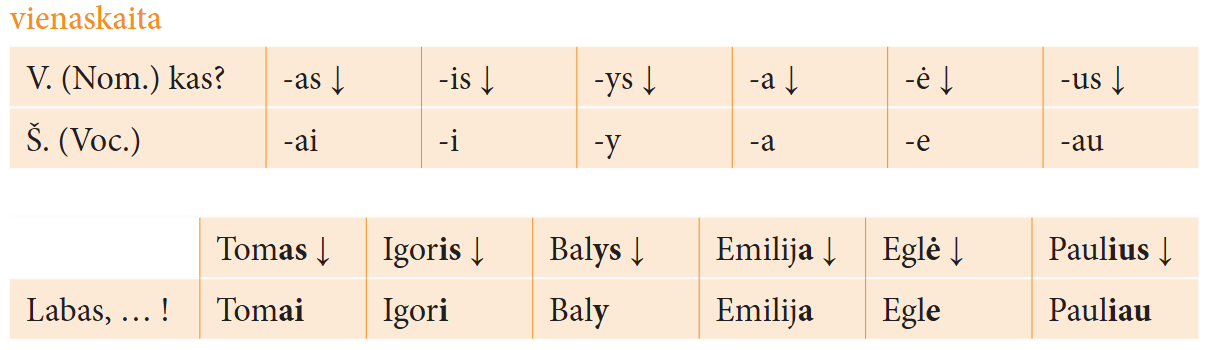
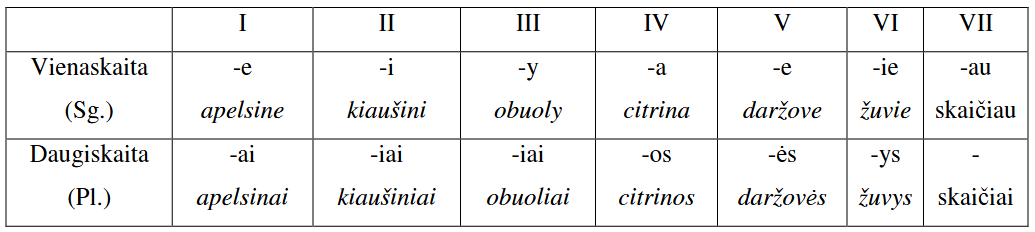
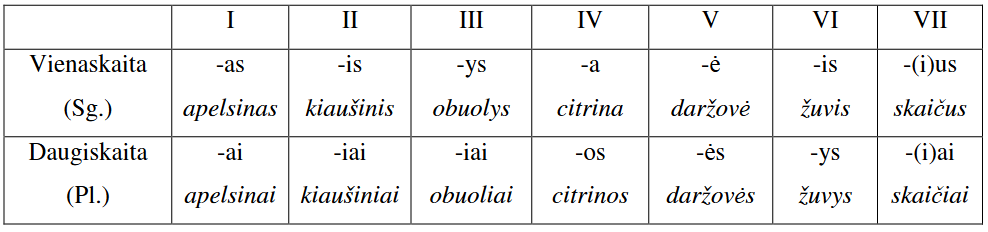
Lithuanian cases
Vardininkas - kas? (who?) - nominative case, usually marks the subject of a verb (vaikas miega - a child is sleeping) or state (šuo yra gyvūnas - a dog is an animal)
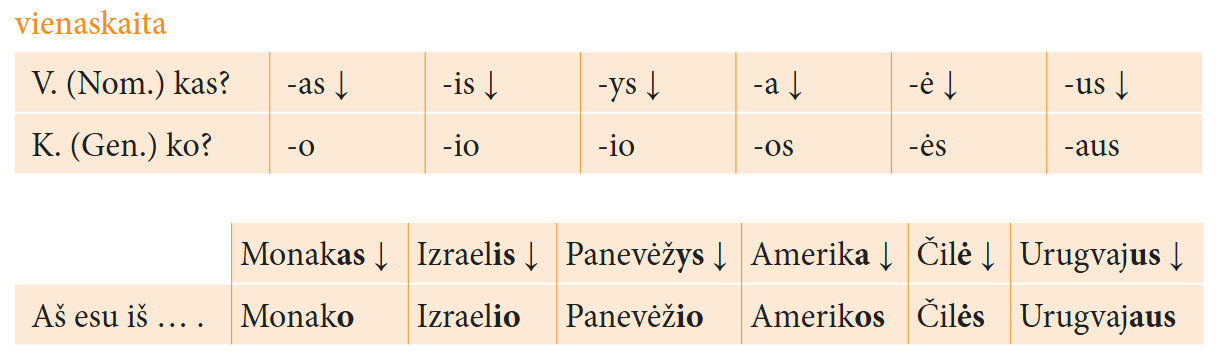
Kilmininkas - ko? (whose?) - genitive case, indicates possession, is used to say where someone is from (iš kur? - iš Portugalijos)
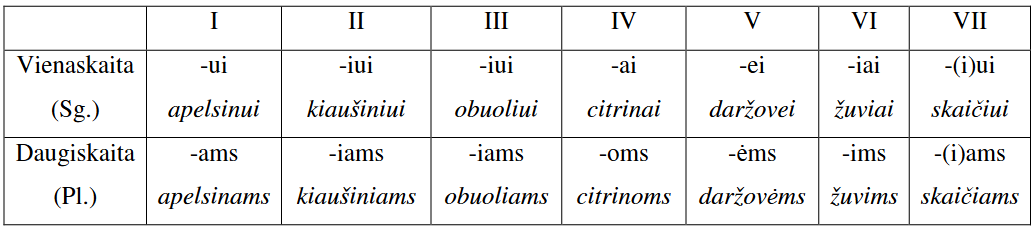
Naudininkas - kam? (to/for whom?) - dative case, indicates the recipient of an action (He bought a gift for me - Jis man nupirko dovaną), used with specific verbs like reikėti (to need) (She needs help - Jai reikia pagalbos) and patikti (to like) (I like this movie - Man patinka šis filmas)
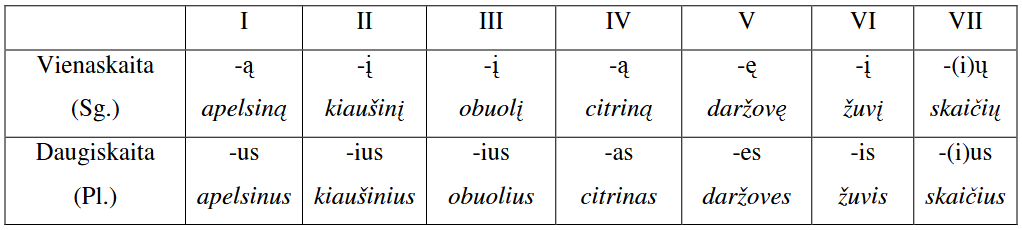
Galininkas - ką? (whom? what?) - accusative case, used with verbs of action such as pirkti (to buy), skaityti (to read), mylėti (to love) example: I am reading a book - aš skaitau knygą
expresses duration or specific time - example: visą dieną (all day), kitą savaitę (next week)
indicates movement towards a destination - example: Aš einu į universitetą - I am going to University
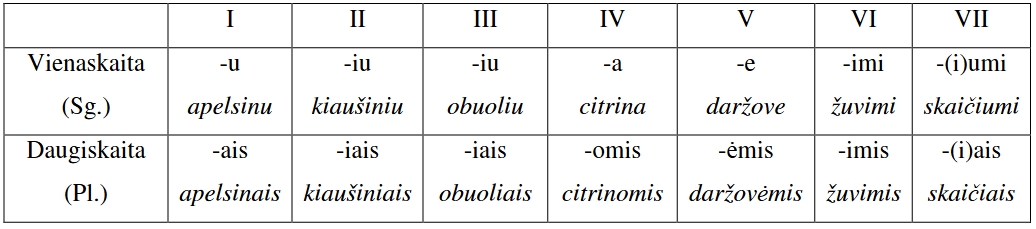
Įnagininkas - kuo? (with what? with who?) - instrumental case, used to indicate that a noun is the instrument or means by or with which the subject achieves or accomplishes an action (Aš rašau pieštuku - I am writing with a pencil)
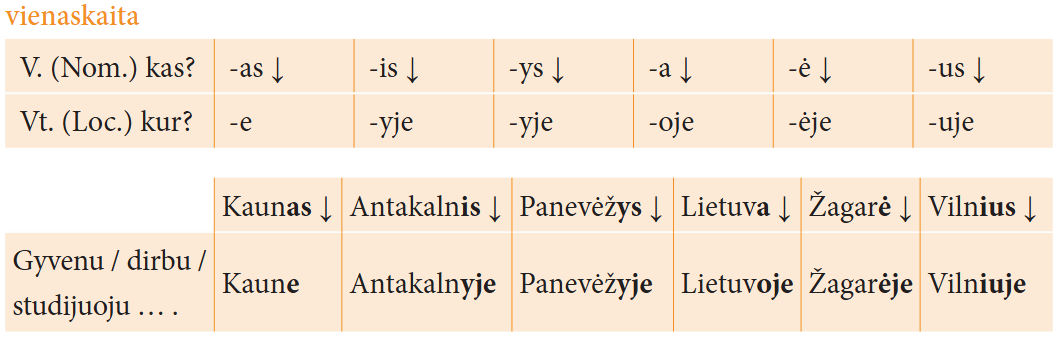
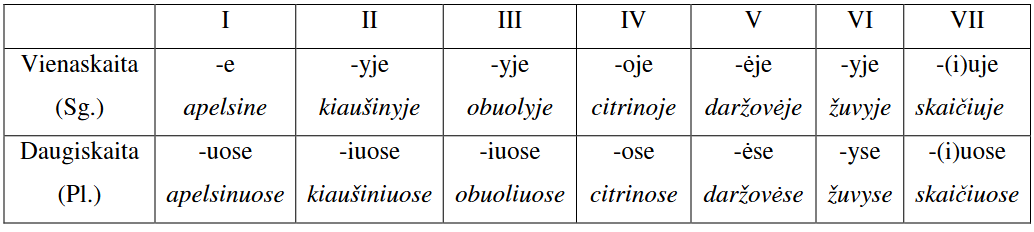
Vietininkas - kur? (where?) - locative case, used to denote place (Jie gyvena Lietuvoje - They live in Lithuania)
Šauksmininkas - exclamatory case, used to address somebody (Labas, Egle!)