Animal behavior
Anthropomorphism (giving human traits to a non humans)
Brains are shaped by natural selection, experiences, nutrition, etc
Behaviors evolve. Whatever behaviors help animals to survive and reproduce are the ones that are passed down and become common
over time, pleasure and pain centers have evolved to promote behaviors that are helpful in survival and reproduction
evolution is a genetic change, so the only behaviors that can evolve are those influenced by genetics, but it turns out that many behaviors are partly genetic
One way to tell if a behavior is genetically influenced is if an animal seems to know what to do without being taught
ex: monarch butterflies knowing where to migrate
flight pattern is coded in the base sequences
Researchers have shown that a behavior can change by altering a single gene
one mutation where a male fruit fly will hop on a female to mate, but does not hop off after it is done (mutation is called stuck)
Alleles can effect hormones, hormones effect urges, and urges can sway behaviors
urges try to lead an animal towards reproductive success (fitness)
fitness = # of surviving offspring that an individual makes
every individual uses behaviors that try to maximum its own personal fitness
Proximate causation = explains how all the different organs (muscles, nerves, glands, etc) are working to cause the behavior. has to do with explaining how a behavior is triggered in terms of physiology
Ultimate causation = why a behavior helps fitness. this is more about adaptation (why did it evolve?)
One way for an animal to consistently do the helpful behaviors is for evolution to hardwire those behaviors into the brain so that the animal instinctively does the right thing
some behaviors are like this, they are called fixed action patterns (instinctive and inflexible)
ex: goose sitting on her nest. if one of her eggs rolls away, she will stand up, reach out her bill and use it to roll the egg back into the nest
this is fixed because if you take the egg and place it in front of her , she will continue to do the motion of rolling until her bill is all the way back to her chest
Learning action patterns = behaviors that aren’t automatic, you can change them
only way to tell if an animal has learned is if there’s a change in behavior as a result of experience
One type of learning is conditioning: an animal develops a learned response to a specific stimulus (used in animal training) and animals playing (kitten plays because it’s fun and it’s hunting practice)
Social interactions
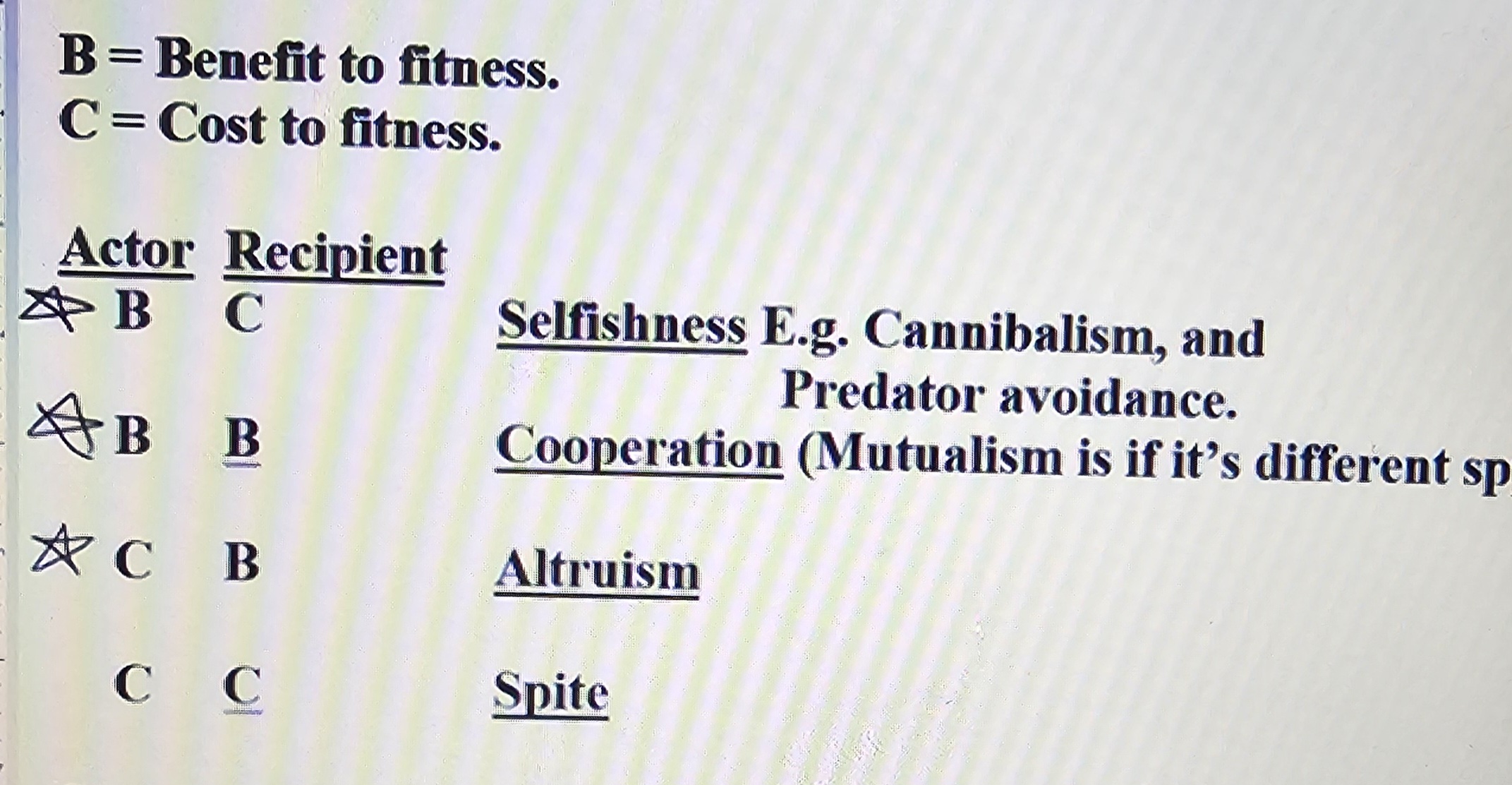
Reasons for altruism:
kin selection (e.g. bees, ants, termites - most are sterile)
an individual can pass on their genes by helping to raise a relatives offspring cause they share many genes
Maximize “inclusive fitness” = your kids + r (# of extra kids you help a relative raise)
r = degree of relatedness to the parent you’re helping
r = ½ for parent and child and siblings
r = ¼ for grandparent and grandchild and aunt/uncle to niece/nephew
r = 1/8 for first cousins
ex: beldings ground squirrels
if one ground squirrel sees a predator approaching, they make a alarm call, all of the other squirrels hide
when male ground squirrels reach adulthood, they go find a mate somewhere else
when females reach adulthood, they stay and wait for a male from another colony (females are more likely to give alarm calls)
ex: richardsons ground squirrels
both sexes stay close to home when they become adults
both give alarm calls
reciprocal altruism
actor that is sacrificing for the recipient, and later the recipient sacrifices for the actor
ex: vampire bat
go to non relatives and share food by throwing up blood in their face
Mating behavior
Sexual selection: variation between individuals in terms of their ability to gain access to mates
often one sex invests more in terms of time and energy in each offspring
investment = carrying pregnancy, making milk, incubating eggs, etc
The “slacker” is free, has more time and energy to focus on quantity of mates
has time to compete more during courtship
Strategies include:
be more showy (ex: bright feathers, singing)
male knife fish display with electric pulses; males jam each others signals
fights with members of the same sex
competing sex has a higher mortality rate
lily trotter male incubates eggs and feeds chicks (female sometimes smashes eggs)
The sex that invests more, focuses on quality
Strategy includes:
more picky
ex: hanging flies: females choose the male that brings the biggest food gift
Pair bonded relationships: monogamous
both sexes are similar in showiness and aggression
Elephant seals
They are the biggest of all seals, they swim down the waters of canada to breed
During the winter breeding season, the males arrive first in order to compete (sort out the best man)
vocal competition
males can recognize each others voices
if they are equally matched, they will fight by crashing down on each other
Youngest males get forced to the edges of the island cause they’re not mature enough
Females arrive a few weeks after, they try to find a safe place to give birth to the seal pup that they conceived last season
moms milk is 50% fat, which allows the seal pup to get bigger
The fat baby seals that stole milk are called “double mother sucking super wieners”
alpha males lose the most weight