RKKX124 SU 1.2
Why do people join groups?
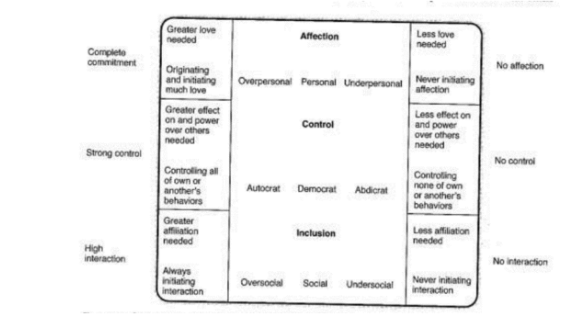
FIRO THEORY
Humans have basic needs that groups can satisfy.
Each person has a need for:
Inclusion: The need to belong and be accepted.
Control: The need to influence others and be influenced; to have a say.
Affection: The need for closeness, warmth, and personal connection.
Group compatibility on these needs affects:
Group cohesion and effectiveness.
How people behave in a group.
Communication between group members to aid cohesion, effectiveness and behaviour in the group.
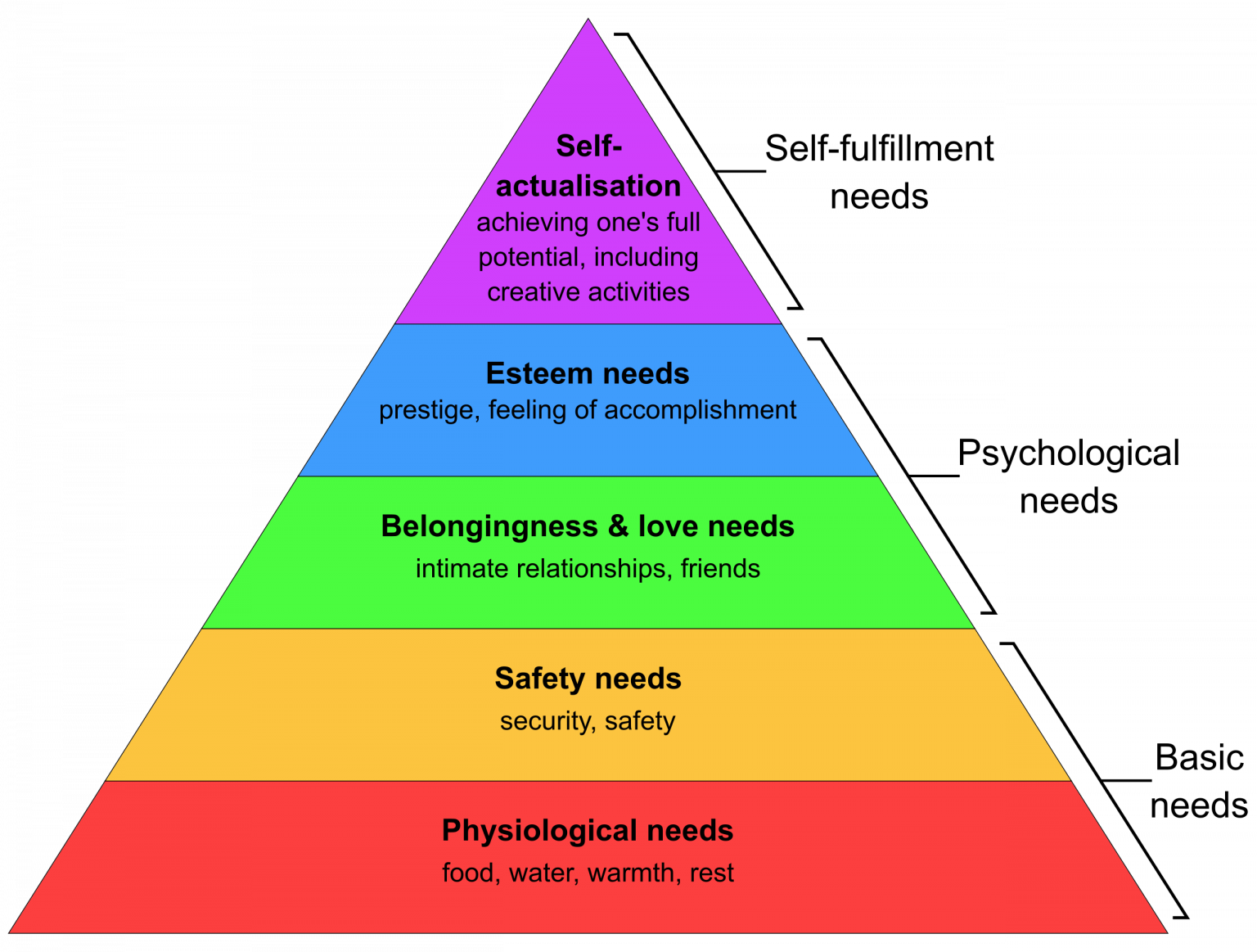
Maslow's Theory
Key ideas:
Needs are in a hierarchy; lower-level needs must be satisfied before higher-level needs become salient.
People are drawn to specific groups based on how well those groups satisfy their needs.
Factors of Attraction
Physical attraction: People are often drawn to others they find aesthetically pleasing, though this can be subjective and may not be the sole determinant for group membership.
Proximity: Geographical or physical closeness increases the likelihood of interaction and the formation of groups. Those who are near each other are more likely to join a common group.
Similarity: Individuals tend to be attracted to others who share similar values, beliefs, attitudes, interests, or backgrounds. This shared ground can foster understanding and a sense of belonging.
Complementarity: While similarity is important, sometimes people are attracted to others who possess characteristics that complement their own, such as someone who is a good listener being attracted to a good talker. This can create a balanced and effective group dynamic.
Cost-benefit analysis: People implicitly weigh the potential rewards (benefits) of joining a group against the potential negative consequences (costs), the pros and cons of joining the group. If the perceived benefits (e.g., social support, achievement of goals) outweigh the costs (e.g., time commitment, effort), attraction to the group increases.
Welcoming environment: Groups that create an open, inclusive, and supportive atmosphere are more attractive to potential members. A perception of acceptance and belonging is a strong draw.
Group Development
Definition: The Group Development means forming the association of people to work as a group toward a common goal; interdependent roles; and the performance/execution of one affects the whole. (Also called team building or team development.)
Group Development: Sequential Stage Theories
Tuckman's Model of Group Development:
Forming – Team members meet, establish ground rules, and begin to understand their roles.
Storming – Conflicts arise as personalities clash and power struggles surface.
Norming – The group starts resolving differences and develops stronger cohesion.
Performing – Members work efficiently toward goals with trust and collaboration.
Adjourning – The team disbands after achieving its objectives, often with reflection or celebration.
Fisher’s phases of group development:
Orientation Phase – Group members get to know each other and clarify the task at hand.
Conflict Phase – Differences in opinions emerge as members debate ideas and approaches.
Emergence Phase – The group begins to find common ground and develop shared understanding.
Reinforcement Phase – Members affirm decisions, strengthen cohesion, and commit to the group’s outcomes.
Group Function
A successful group reaches its own goals while enabling individual members' goals at the same time.
Three strategies:
Identify group & individual goals.
Work towards group and individual goals.
Provide information.
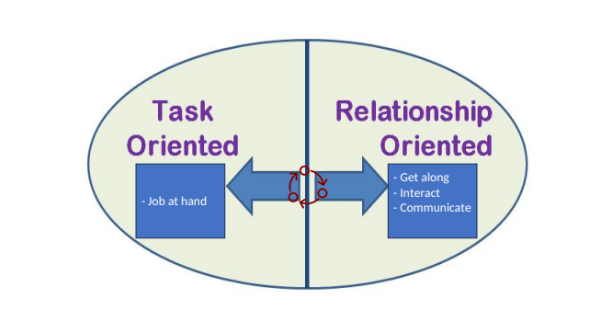
Task and Relationship Dimensions
Norms
What are norms: Standards or rules that help determine which behaviours are appropriate vs. inappropriate.
Descriptive norms: Norms describing how people regularly behave in specific situations.
Perceptive (Perceived) norms: Norms that people think exist or follow without establishing them formally.
Identifying and Developing Norms
Norms can be explicit (listed in a group handbook, minutes of meetings) or implicit (unwritten/unspoken).
Developing norms often happens early (storming) and gradually through norming as group members accept or reject norms; individuals bring prior experiences (what worked/didn’t).
Factors affecting conformity to norms include:
Explicitness/implicitness of the norm
Punishments
Responsibility and obligation to follow norms
Development of group identity
Individual qualities
% of others in the group who conform
Desire to remain a member of the group
Status within the group