Social Psychology
Social Psychology
The scientific study of how society affects the way individuals behave, think and feel.
Jane Elliot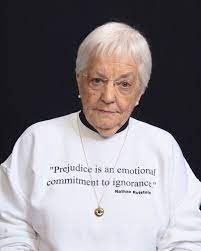
An educator whose famous Blue Eyes/Brown Eyes exercise showed social psychologists (and her students) the impact that racism has on education and how social psychology can be applied to real-world situations.
Social Cognition and Perception
Cognition: basically thought processes therefore, social cognition is the way people think in the context of society.
This could mean the way society influences the way we think, but more often it refers to the way that we make sense of the world around us
First, we perceive the world around us, and then we make sense of it through thought.
(01:10) - The Self in a Social Context
Another theme in social psychology is that of the “self” in a social context.
That is, how we define ourselves and how others define us. Someone says to you, ‘Tell me about yourself.’ What do you say? How do you interact with others?
Attitudes and Persuasion (08:43)
The next major theme in social psychology is attitudes and persuasion. This is straightforward: It covers the way we feel and think about people and situations and the ways humans are persuaded to think or believe in things.
Topics in attitudes and persuasion include things like how our emotions affect our attitudes and how we can be persuaded to believe things.
Group Decisions (08:43)
Prejudice: A Psychological Perspective (12:45)
Ingroups: A social group formed when its members identify with one another
Outgroups: A social group toward which an individual feels disrespect or opposition - sometimes treated badly by the group.
The Nature of Prejudice (16:45)
According to psychologist Gordon Allport “Hostility toward outgroups help strengthen our sense of belonging, but it is not required… The familiar is preferred. What is alien is regarded as somehow inferior, less ‘good’, but there is not necessarily hostility against it… (Allport: 1954, p42)
Allport recognized that attachment to one group does not necessarily mean hostility toward another. However, he realized that ingroups require something that differentiates them from other groups that indicates who is "in" and who is "out". This differentiation, definition, involves defining who is not, and ingroups therefore imply outgroups.