Microbial Ecology
Overview of Microbial Ecology
Microbial ecology studies the relationships and interactions between microbes in various environments, often focusing on their roles in health and disease, ecological balance, and environmental processes.
Microbial Species in Various Human Ecosystems
Human Microbiome: Includes significant microbial populations located in diverse environments of the human body
Microbial Ecosystems on Earth
Microbial ecosystems contribute significantly to global ecological processes including:
Oxygen cycles
Carbon cycles
Nitrogen cycles
Sulfur cycles
Studying Microbial Diversity
Bacteria have very limited diversity in morphology
Morphology alone not useful for bacterial identification
Bacteria have tremendous metabolic and genetic diversity
Methods of Identification:
Culture-based methods: Traditional approach using various media like Gram staining, MacConkey media, mannitol salt agar, phenol red, etc.
Bacterial species vary in their abilities to use sugar and amino acids
used as traits for bacterial classification
Limitation→ 99.9% of microbes can not be grown in the lab at all
Though 99.9% of microbes haven’t been cultured, we can still study their metabolisms using metagenomics
Ribosomal RNA (rRNA):
Most abundant RNA in the cell
Ribosome: 1/3 protein, 2/3 rRNA
Culture-independent methods:
FISH (Fluorescence in situ hybridization): Targets rRNA rather than rDNA for identifying and quantifying microbes in situ.
Targets rRNA vs rDNA because there are higher levels of rRNA
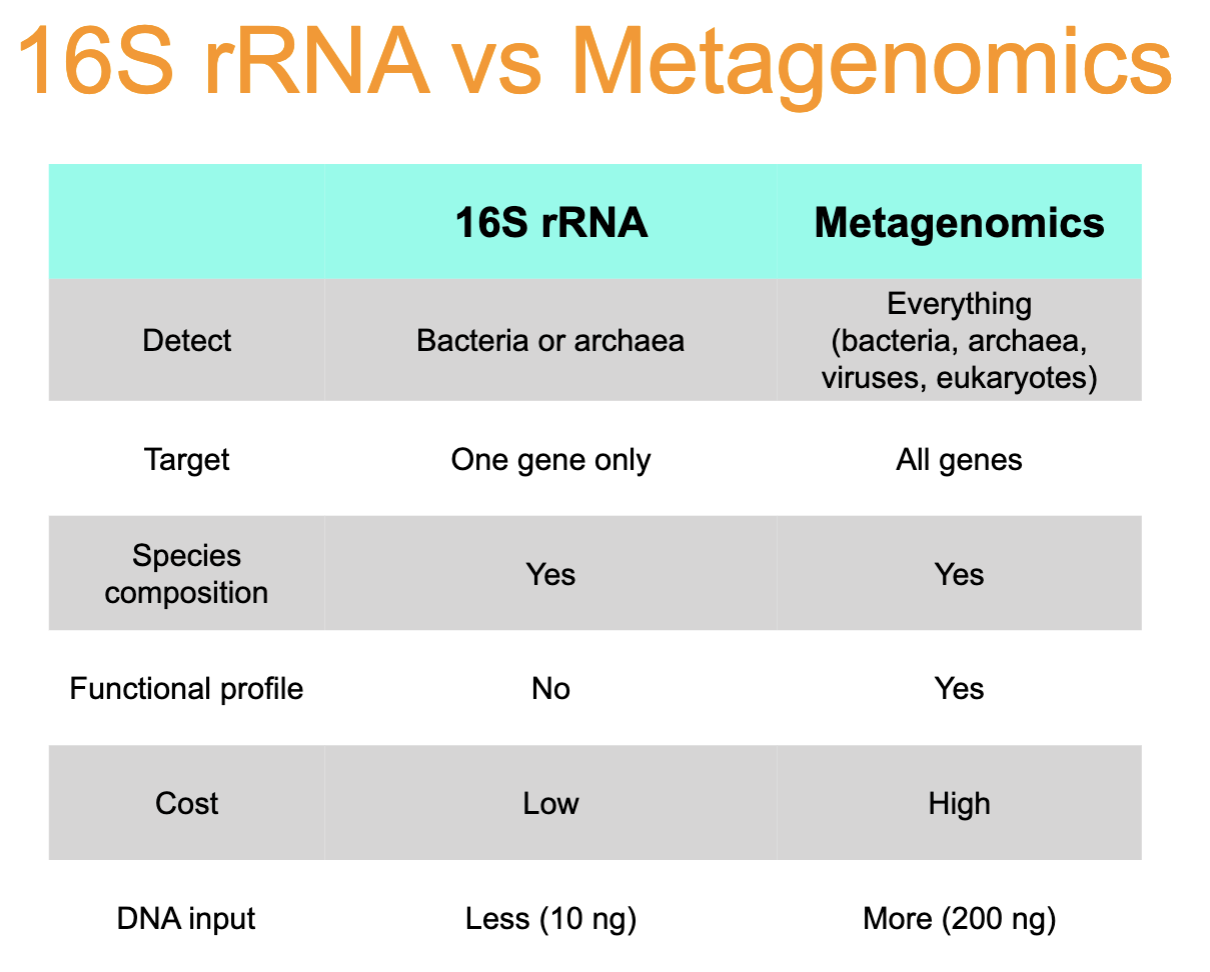
16S rRNA Gene Survey: Amplifies a unique gene segment using PCR, providing a microbial 'barcode'.
16s rRNA is gold standard for microbial diversity studies
Present in every single bacterial cell
Variable and conserved regions
rRNA genes from different bacterial species can be amplified by PCR using the same pair of primers
Bacteria has unique 16s rRNA gene sequences
Mostly sequenced gene
Metagenomics: Allows sequencing of
16S rRNA Gene in Microbial Studies
Most abundant RNA in cells, comprising about 2/3 of ribosome composition.
Contains variable and conserved regions that allow for differentiation among species.
Analysis:
PCR amplification of 16S rRNA enables high-throughput sequencing and comparison with existing databases such as SILVA.
Bacterial community → DNA extraction → Genomic DNA → PCR → 16s rRNA gene → DNA sequencing → Database comparison → tally
Barcoding: Unique sequences of the 16S rRNA gene help classify bacteria into operational taxonomic units (OTUs).
Operational Taxonomic Units (OTUs)
Traditional species concept (reproduction isolation) does not apply to bacteria because bacteria reproduce asexually
Use OTU to approximate bacterial species
If the sequences of 16s rRNA gene of two bacteria are >97% similar, they are considered to belong to the same OTU/species
This categorization reflects functional variations within species, such as different pathogenic or beneficial strains of E. coli (e.g., K-12 vs. O157:H7).
Metagenomics and Functional Analysis
Sequence microbes in their natural environment
Completely bypass the need for isolation and lab cultivation of individual species
The entire community (mixture of microbes) is sequenced at the same time
Use bioinformatics tool to sort them out in silico (on computer), identify the bacteria, and predict their functions
Proteorhodopsin is widely spread in marine bacteria
Light-driven proton pump, serving as a key energy source
Implications of Microbial Diversity Studies
Knowledge about microbial communities has essential implications for human health and environmental sustainability.
Emerging technologies like Next-Generation Sequencing (NGS) enable the rapid identification and understanding of complex microbial ecosystems.
SARS-CoV-2 Sequencing Workflow
Details a multi-step process for extracting viral RNA from samples and preparing it for sequencing, highlighting how metagenomics can shed light on emerging infectious diseases.