CH 4. General Anesthsia
4.1 History and Contemporary Use

Pros and cons of injected vs inhaled anesthetics
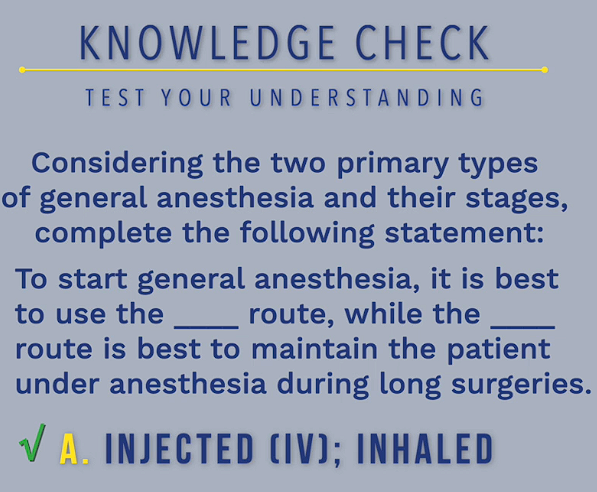
Injected: Acts quick, but hard to determine dosage
Inhaled: easier to control level of anesthesia but long time to reach 3rd stage (surgical anesthesia)
Goal: tune out all sensation for patient
Purpose: used in detailed surgical procedures
Requirements for General Anesthesia
Safe, Transient, and Predictable
Unconscious, amnesia, inhibit reflexes and skeletal muscle
Stages of General Anesthesia
Analgesic
excitement (move thru fast)
surgical anesthesia
medullary paralysis (Too much = bad)
PROTOCOL
Start with small dose of injected
swap to inhaled from sleep to end of procedure
stop inhaled ASAP
Balanced Anesthesia
combination of injected, inhaled, and other drugs for patients; 2 or MORE
4.2 Mechanism of Action & Clinical Implications
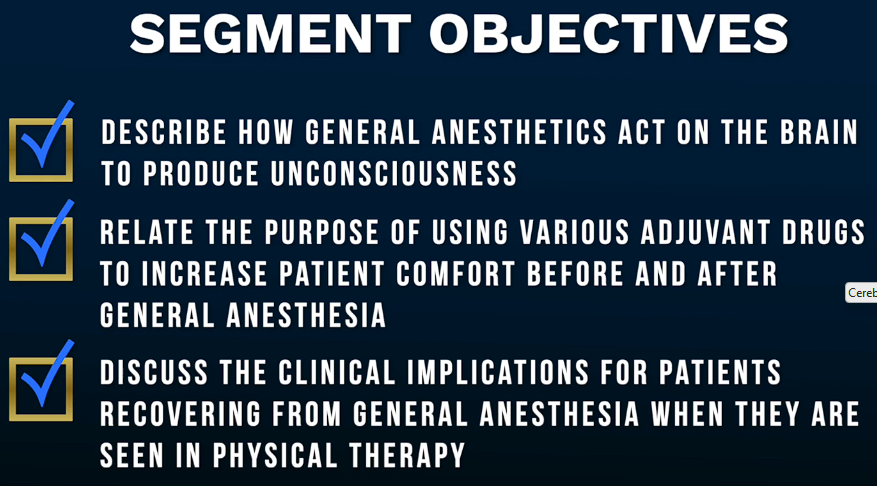
What is mechanism of anesthetic on brain for unconsciousness
bind to receptors to increase inhibition effects or decrease excitation
Purpose of adjuvant drugs for patient comfort before and after anesthesia
increase sedation and reduce nausea
Clinical implications for patients recovering from general anesthesia in PT
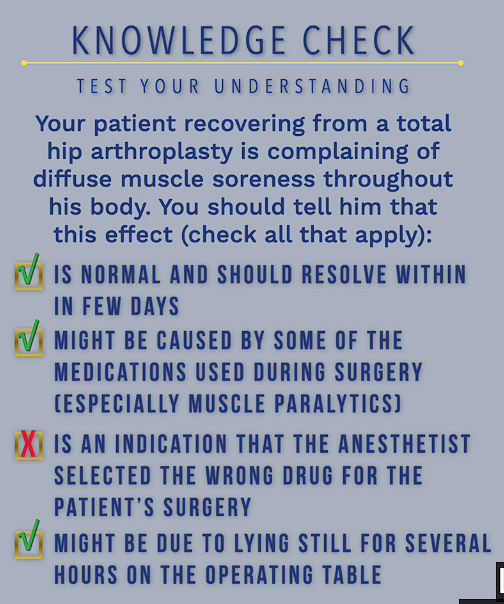
mindful of muscle soreness and cognitive deficits
Mechanism of anesthetics
alter lipid bilayer AND/OR
alter receptors of neurotransmitters (GABA)
increase inhibition (GABA)
decrease excitation (Opioid)
Adjuvants Purpose
relax patients before surgery
reduce nausea, vomiting
Neuromuscular Junction Blockers
Paralyze muscles to prevent complication
why use NMJ blockers instead of higher dose of general anesthesia? —> using too much anesthesia is not safe so NMJ blockers help to reduce dose
why as PT we need to know about pt on NMJ —> cause post op soreness (succinylcholine)
Rare case unable to metabolize and remain paralyzed
Cholinesterase inhibitor (increase acetylcholine)
Sugammadex (inactivate drug)
Dissociative Anesthesia
Patient looks awake but dissociated
Drugs: Ketamine OR Antipsychotic + Opioid
Emergency surgeries, dressing change, diagnostic procedure (colonscopy)
Post-OP effects of anesthesia
Co-morbidities (heart failure, Parkinson’s, Alzheimers) can get worse with anesthesia