5.1: synapses
summary
the connections between nerve cells or nerve and muscle cells are known as synapses, of which there are two kinds: electrical and chemical
chemical synapses make use of NT and receptors to carry a signal from one cell to another
excitatory synapses
involve ligand gated cation channels, that open upon the binding of NT (e.g. glutamate or ach)
to raise the memb potential in the postsynaptic cell
inhibitory synapses
involve ligand gated anion channels, that open upon the binding of NT (e.g. glycine or GABA)
to lower the membrane potential iin the postsynaptic cell
synaptic transmission
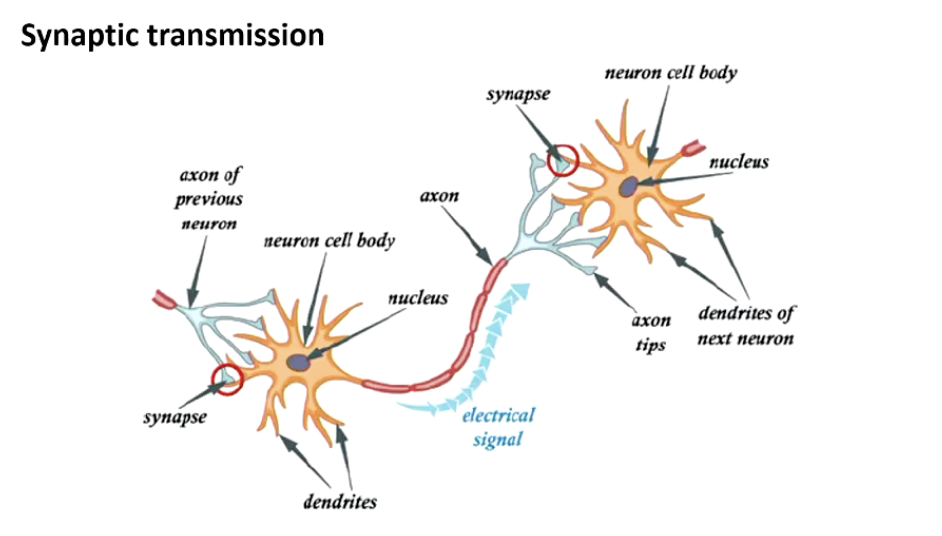
synapse: connection between neurons or between neuron and muscle cell
“war of soups and sparks”: are messages passed between neurons by an electrical or chemical signal?
the revenge of electrical transmission
mostly chemical
but can be electrical
electrical synapse

less common
direct current flow from one cell to another through gap junction channels (connexins)
fast
allow bidirectional transfer (goes both ways)
allow synchonicity
found commonly in the heart
what will happen to the membrane potential of a cell (initially at rest) if we open non-selective ion channels (lets any ion go through) ?
at rest -70
the membrane potential will go up, shift towards 0mv
not much K or Cl will move
like opening a Na channel, Na influx
chemical synapse
most synapses
rely on neurotransmitter release and receptor activation
postsynaptic receptor can gate an ion channel directly or indirectly

how to make chemical synapse quicker (speed up the process)?
make less, e.g. only two chemical synapses from brain to spine to limbs
long axons
anatomy of a synapse
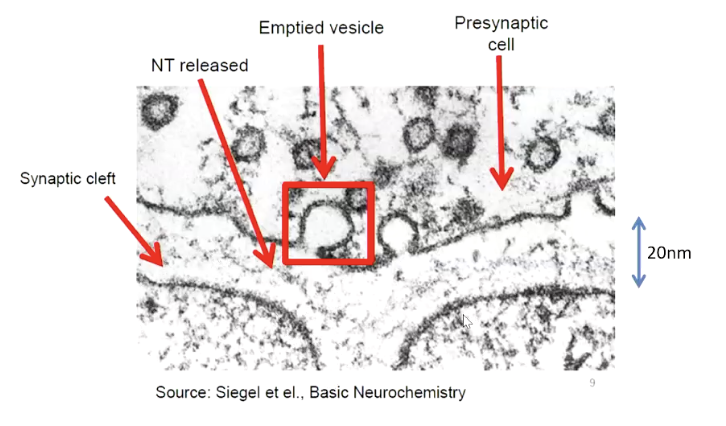
recycling of vesicles and neurotransmitter
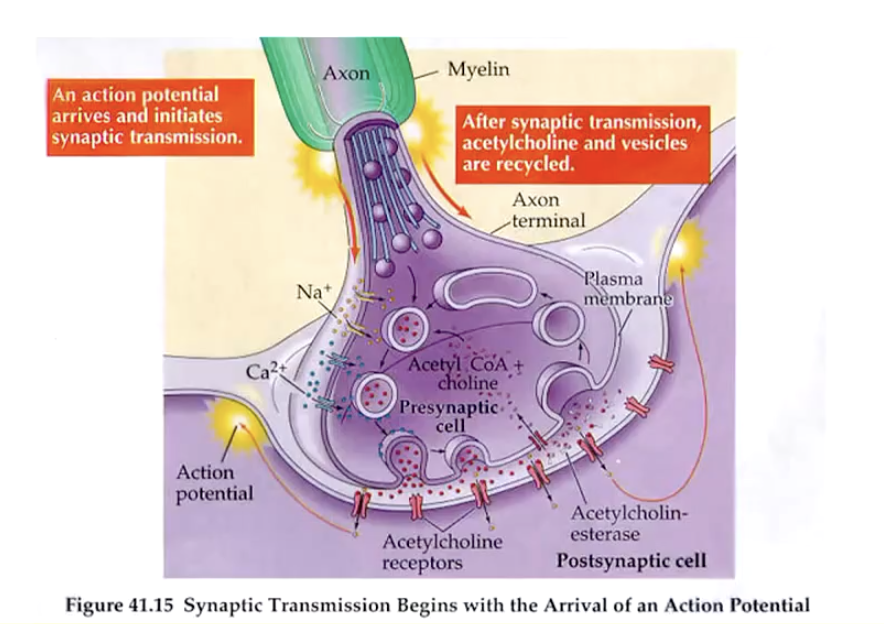
how many different kinds of protein are required for the chemical synapse to function? proteins at the synapse
channels
Ca: Cav
Na: Nav
K: Kv
ligand gated channel: AchR
vesicles
fusion proteins
budding proteins. e.g. clathrin
transporters
NaK pump
Ca pump/secondary active transporter
neutrotransmitter transporters in: plasma memb, vesicle
enzymes
acetyl choline esterase
reform avetyl choline
botox: botulinum toxin (“sausage poison”)
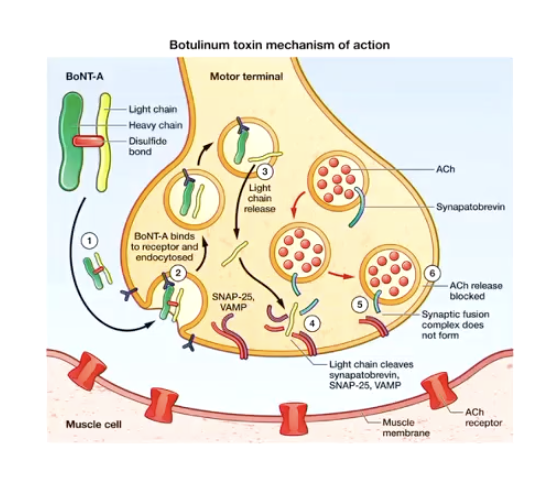

the vesicle won’t release neurotransmitters and not fuse
unable to contract nerves and muscles
lasts about 3 months
causes non funcitonal fusion proteins
how’s it used cosmetically?
very low, non fatal dose
stops muscle contracting locally
excitatory synapse
neurotransmitter release is quantised
cation channels
Na flows in post synaptic cell
depolarises post synaptic cell
ACh
main excitatory NT at neuromuscular junction w skeletal muscle
amino acid NT
main excitatory NT at nerve
nerve synapse
inhibitory synapse
anion selective ion channels
hyperpolarise post synaptic cell
Cl flows in