HCM Wk 1: US Healthcare
Acute Care/Hospital: • Treatment for a short-term illness, injury, infection etc. • Average length of stay 4-5 days • Providers: physician, PA, nurse, PT, OT, MSW etc • Rapid discharge to next level of care makes the PT’s role important for patient/family education and DC planning
Primary Care: • Basic or first-level healthcare • Provider may be primary care physicians • PCP • Pediatrician • Internist • OB/GYN • PCP is often the “gatekeeper” to other specialists including PT • PT’s support primary care teams through examination, evaluation, diagnosis, prognosis, and prevention
Secondary (Specialized) Care: • Specialists who do not have first contact with patients • Cardiologists • Urologists • Dermatologists • Orthopedists
Acute Rehab Hospital: • Provides coordinated rehab, social, and vocational services • Must be able to participate in 3 hours of daily therapy ( combined discipline PT, OT, Speech) • Higher level and can recovery; safe steady home plan • Average LOS is 15 days • Common diagnosis: ○ CVA (high level)○ Post operative ○ Multi trauma ○ Spinal injury ○ Amputation
Subacute Rehabilitation: • Continuous nursing, rehab, and other medical care 7 days per week 24 hours per day; inpatient • Cannot live at home/not safe to go home • Must require skilled nursing (ex: IV ABT) or skilled therapy to qualify • Patients not in acute phase of illness • Must be certified by Medicare and meet qualifications • Limited number of certified beds in each state
Skilled Nursing Facility: • Patients reside in SNF, it is now their home when they can no longer care for themselves at home or have a CG who can do so • State and medicare oversight of care and manage number of beds • 24 hour nursing and aides, recreation, physician providers monthly and prn • Therapy services for decline in function, following a fall, following hospitalization or infection or disease progression.
Therapies will often “screen” patients to determine if appropriately have had a functional decline that would warrant: a SKILLED need.• Therapy funded by Medicare A or Medicare B depending on acuity of situation
• SNF care NOT funded by: Medicare! Funded by Medicaid, private pay, LTC insurance, VA system, etc. • SNF can be respite for family/CGs
Assisted Living/ Independent Living Facility: • Options vary state by state • Private pay (with exception of VA facilities) • Some are a chain (ex: Bridges, Crossings), some are independent • Some larger organizations have full spectrum: Independent Living
Outpatient/Ambulatory Care: • Includes preventive, diagnostic, and treatment services • Medical offices, surgery centers, outpatient clinics • Providers may be physicians, PA’s, nurse practitioners, PT’s or others • Less costly than inpatient care; favored by managed care plans
Home Health Care: • Healthcare provided to individuals in their home • Provided by Home Health Agency • Must meet eligibility criteria ○ Homebound: difficult to leave the home ○ Requires skilled are from nursing, PT, OT, or ST ○ Have physician certification ○ Show potential for progress ○ To be SKILLED have more than housekeeping or maintenance type deficits to remain on program
Birth – to - 3: • Program for children aged birth to their 3rd birthday • For children diagnosed with developmental delays due to variety of diagnosises • Typically services in childs home or daycare center • Focus on education for parents and caregivers • Funding varies by state
School Systems: • PT serves as a consultant to teachers who work with students with disabilities in the classroom • Major goal is the child's function in the school setting • Recommendations are made for adaptive equipment to improve posture, head control, and function
Private PT Practice: • Entrepreneurial PT’s who work for or own a free-standing , independent PT practice • May be cash based or accept insurances • Vary from sports and ortho to diagnosis specific care
Physician Practices: • Physician run outpatient PT practices may employ therapists to work onsite or in close proximity with practices owned by physicians • Local example: Apple PT chain • Close connection between orthopedic providers and therapists increases communication and appointment coordination
• Funded by : private insurance, Workers Compensation (often Medicare not accepted) • Occupational Health • Therapists may work onsite or as consultants • Services funded by employer for prevention, education, equipment modification recommendations • Rehabilitation services may be onsite clinic for work related injuries, management. Can be funded by Workers Compensation, by private insurance, by employer as benefit or by employee
Hospice: • Care available for patients at end of life at home or inpatient settings • Hospice team includes nurses, social workers, chaplains, volunteers, physicians; PT, OT, SLP are optional • Eligibility requirements • Insurance specific • Certification by physician of terminal illness (< 6 months of life) • No further interventions to prolong life/ comfort measures only
Managed HealthCare Organizations: • systems that integrate the financing and delivery of appropriate health care services to covered individuals by means of: • arrangements with selected providers to furnish a comprehensive set of health care services to members; • explicit criteria for the selection of health care providers; • formal programs for ongoing quality assurance and utilization review; • significant financial incentives for members to use providers and procedures associated with the plan
Managed Care: 2 primary types= HMO & PPO, Private
Medicare A: public, acute care setting and limited nursing home coverage and home health coverage
Medicare B: public, outpatient, DME
Medicaid: coverage for economically and medically disadvantaged: blind, disabled, elderly; only public program that covers long-term nursing home stay once personal finances exhausted
Historically 2 Types: HMO & PPO
• Health Maintenance Organizations (HMOs): • pre – paid and in return provide comprehensive services to enrollees. Typically PCP is required to write referrals.
• Preferred Provider Organizations (PPOs): • a third party payer that offers financial incentives such as low out – of – pocket prices, to enrollees who acquire medical care from a preset list of physicians and hospitals. Can be direct access care without referral for some policies
Public Health Insurance: Medicare & Medicaid
Medicare: ○ a uniform national public health insurance program for aged and disabled individuals. ○ Administered by the federal government ○ The largest health insurer in the country
Medicaid: ○ provides coverage for certain economically disadvantaged groups ○ Jointly financed by the federal and state governments ○ Is administered by each state ○ Coverage varies because states have established different requirements for eligibility. ○ Individuals who are elderly, blind, disabled or members of families with dependent children must be covered by Medicaid for states to receive federal funds ○ The only public program that finances long – term nursing home stay
Medicaid Assets: varies from state to state. In most states you can retain about $2,000 in countable assets, and married couples who are still living in the same household can retain about $3,000 in countable assets
Medicaid 5 year rule: When you apply for Medicaid, any gifts or transfers of assets made within five years (60 months) of the date of application are subject to penalties. Any gifts or transfers of assets made greater than 5 years of the date of application are not subject to penalties
Medicaid Spend down: To qualify for Medicaid, often individuals must first complete an income or asset spend down. That means some of the individual's income or assets must be spent – generally on health care and medical-related costs. But you could also spend money on accrued debt, such as a mortgage, a vehicle or credit card balances.
Medicare Part A: • Provides health insurance coverage for inpatient hospital care • Coverage is very limited for nursing home services and some home health services • Funded by a Medicare tax that is similar to the Social Security tax • Must pay a deductible and copay for long-term hospital services • Many Medicare recipients also choose to purchase Medigap insurance, a private health insurance plan offered by commercial insurance companies that pays for medical bills not fully reimbursed by Medicare (see videos for further explanations)
Medicare Part B: • Part B the voluntary or supplemental plan that provides benefits for physician services, outpatient hospital services, outpatient laboratory and radiology services, outpatient PT services, DME. • Financed by monthly premiums by individual (25%) and general taxes (75%). Premiums often withdrawn directly from Social Security pay. • Patient is also responsible for paying a deductible and a co-payment
Uninsured: • Does not mean these individuals are without access to health care services • Receive health care services through public clinics and hospitals, state and local health programs, or private providers • Many large organizations utilize probono services • Medicaid can be retroactive in some cases
Healthcare Reform: 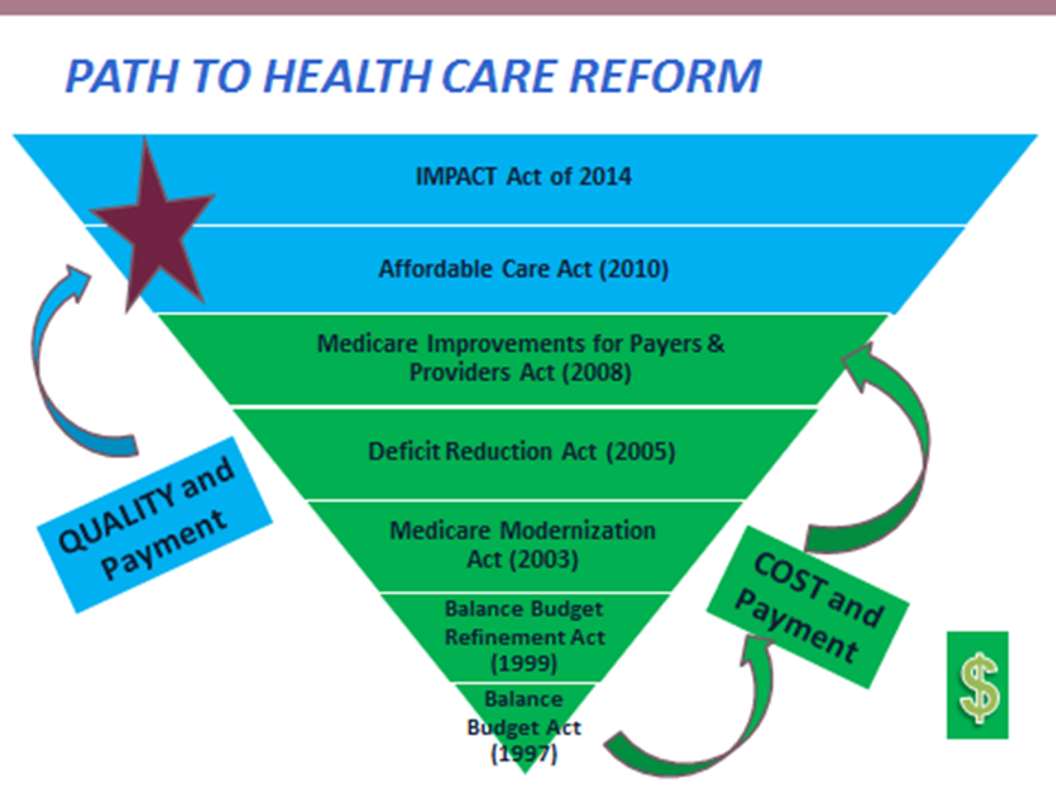
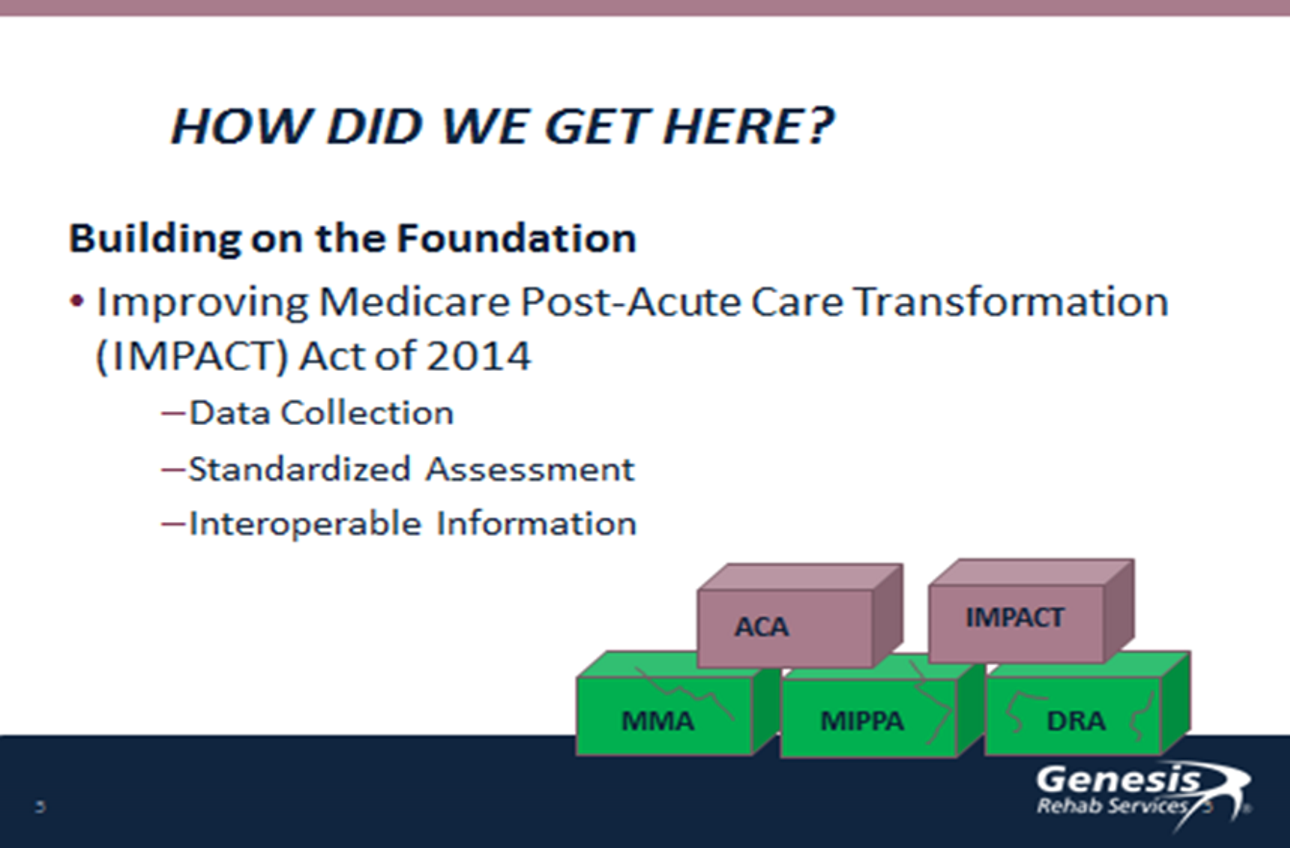
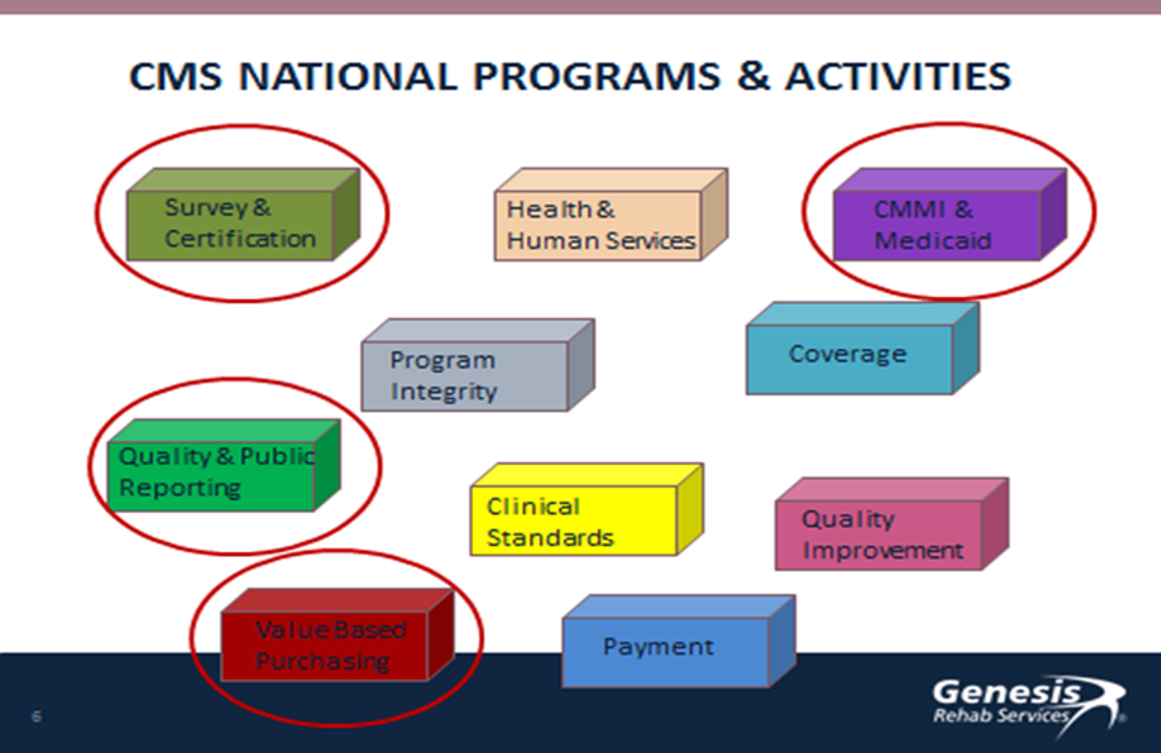
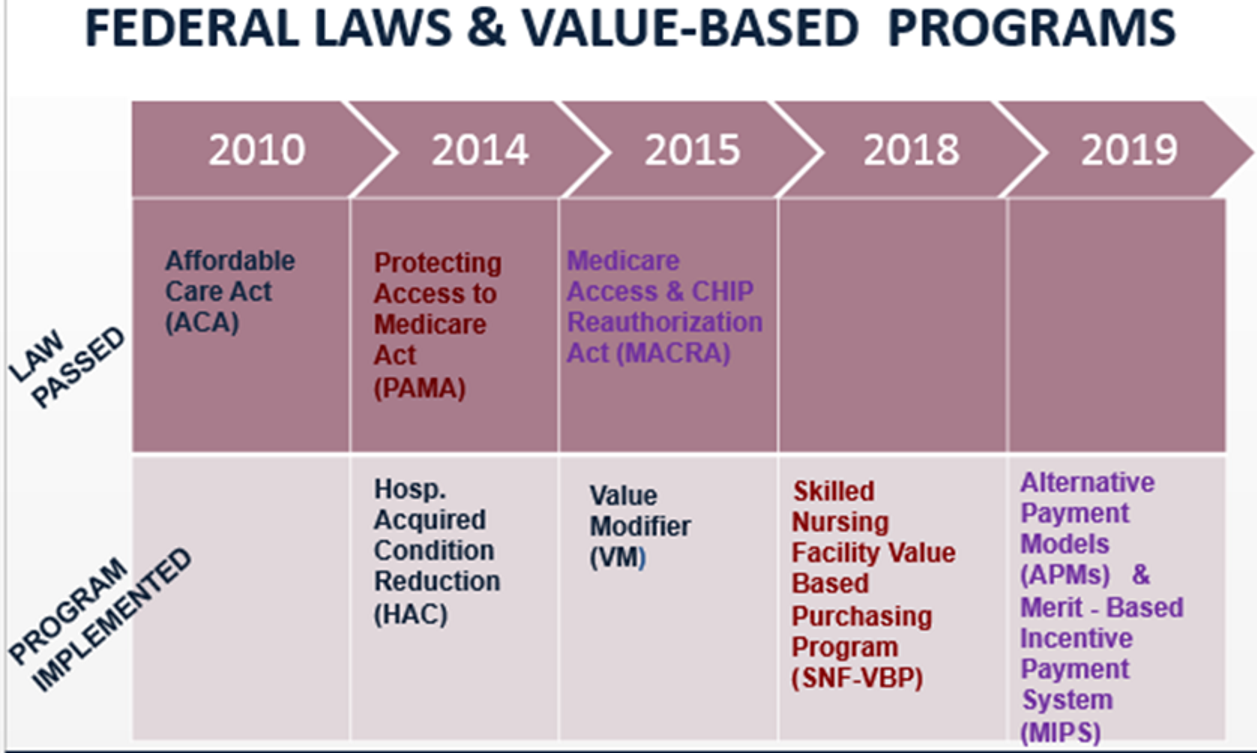
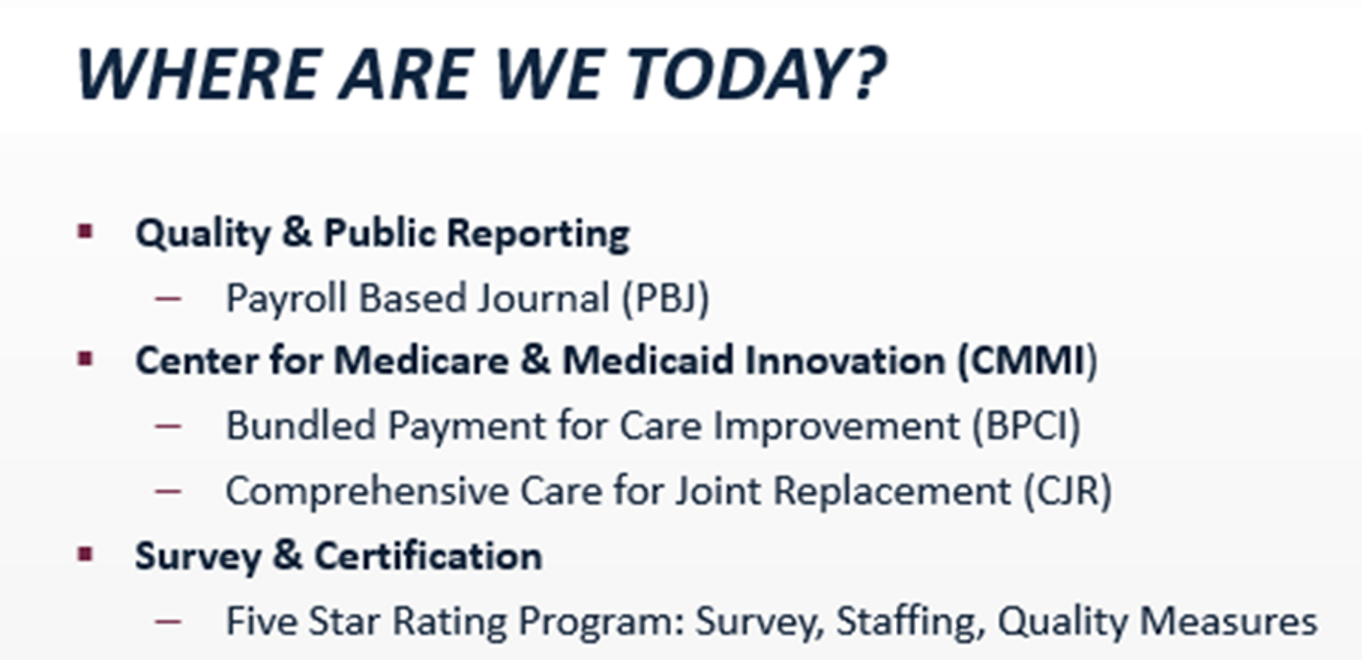
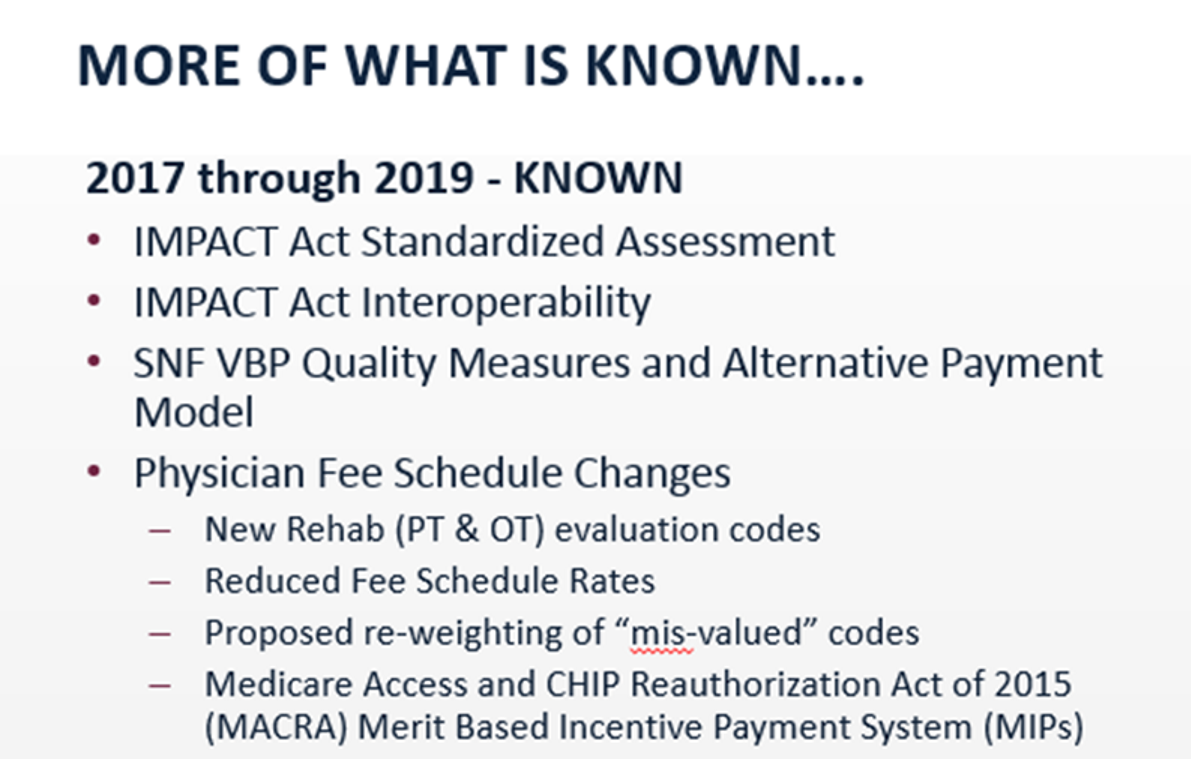
Key takeaways: • Medicare has many programs in place • It takes years for a law to be put into action • Focus has shifted from cost and payment to Quality and payment •
Triple Aim: 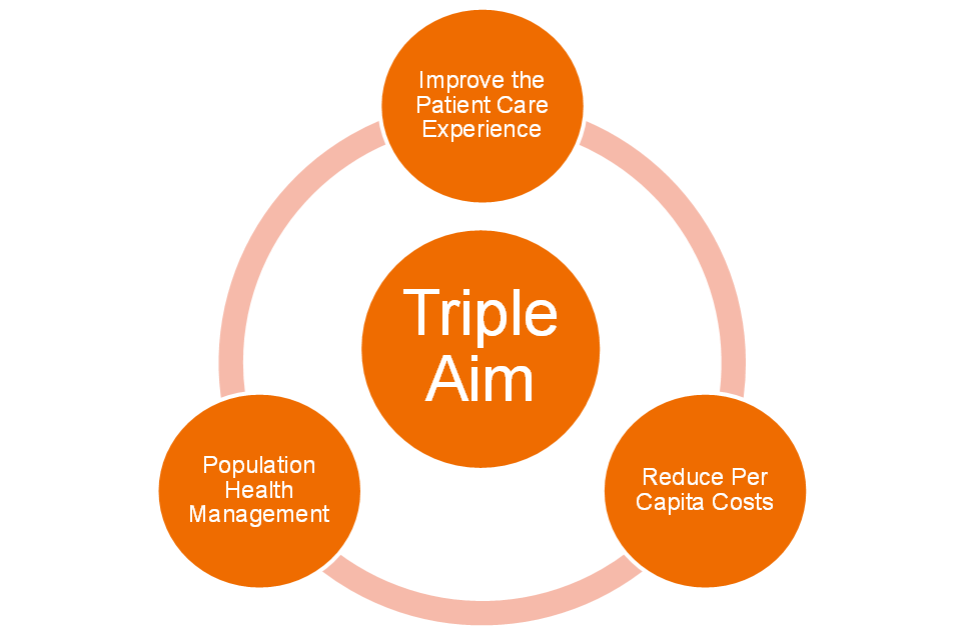
Institute for Healthcare Improvement: Triple Aim objectives:
- Improving the “patient care experience” The sum of all interactions that are shaped by an organization's culture that influences the patient’s perception across the continuum of care
- Population Health Management Keep the patient population healthy while minimizing unnecessary medical interventions/procedures
- Reducing per capita cost of healthcare Reducing the cost of care at the same time as achieving and sustaining optimal outcomes
Value Based Care: Value-based care delivery is an approach to care focused on ensuring that all care is delivered based on an analysis of its overall contribution to an outcome that is meaningful to the patient and family and will result in: • optimal wellness, • functional performance, • chronic disease management, • risk management
Value‐based care delivery serves to meet the objectives: of the Triple Aim for healthcare Value Based Care
In healthcare, value is defined as: outcome over cost. Unless a positive outcome is achieved and the cost of our services can be reconciled with its contribution to the outcome, it does not have value.
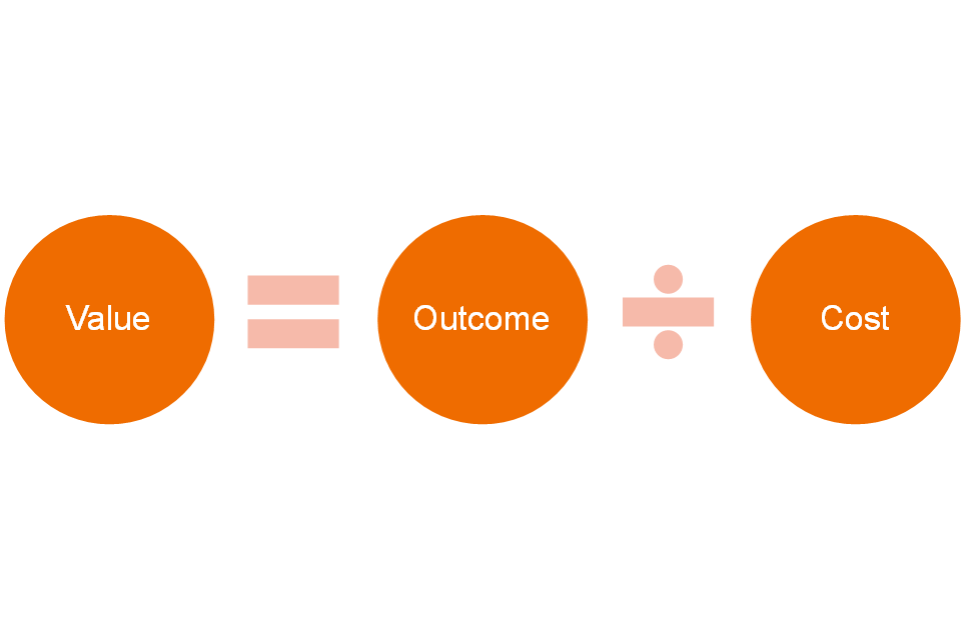
Value: the achievement of positive outcomes with respect to the cost of our services
Responsible stewardship: it is our responsibility to manage our patients’ resources on an individual basis. • Physiologic resources, psychosocial resources, and financial resources. We must be aware of the resources available and support patients in meeting their needs. Cannot consume their resources if we are not producing meaningful outcomes
APTA Code of Ethics
Principle #1: Physical therapists shall respect the inherent dignity and rights of all individuals. (Core Values: Compassion, Integrity)
Principle #2: Physical therapists shall be trustworthy and compassionate in addressing the rights and needs of patients and clients. (Core Values: Altruism, Compassion, Professional Duty)
Principle #3: Physical therapists shall be accountable for making sound professional judgments. (Core Values: Excellence, Integrity)
Principle #4: Physical therapists shall demonstrate integrity in their relationships with patients and clients, families, colleagues, students, research participants, other health care providers, employers, payers, and the public. (Core Value: Integrity)
Principle #5: Physical therapists shall fulfill their legal and professional obligations. (Core Values: Professional Duty, Accountability)
Principle #6: Physical therapists shall enhance their expertise through the lifelong acquisition and refinement of knowledge, skills, abilities, and professional behaviors. (Core Value: Excellence)
Principle #7: Physical therapists shall promote organizational behaviors and business practices that benefit patients and clients and society. (Core Values: Integrity, Accountability)
Principle #8: Physical therapists shall participate in efforts to meet the health needs of people locally, nationally, or globally. (Core Value: Social Responsibility)