LAB TLC NOTEBOOk :(
Objective - (TLC) thin layer chromatography experiment is a technique to seperate chemical mixtures in order to analyze based on characteristics of polarity. The interpretation and visualization of this experiment will be done using both a UV light and iodine chamber. The results documented will then be used to identify unknown compounds with a pure known compound.
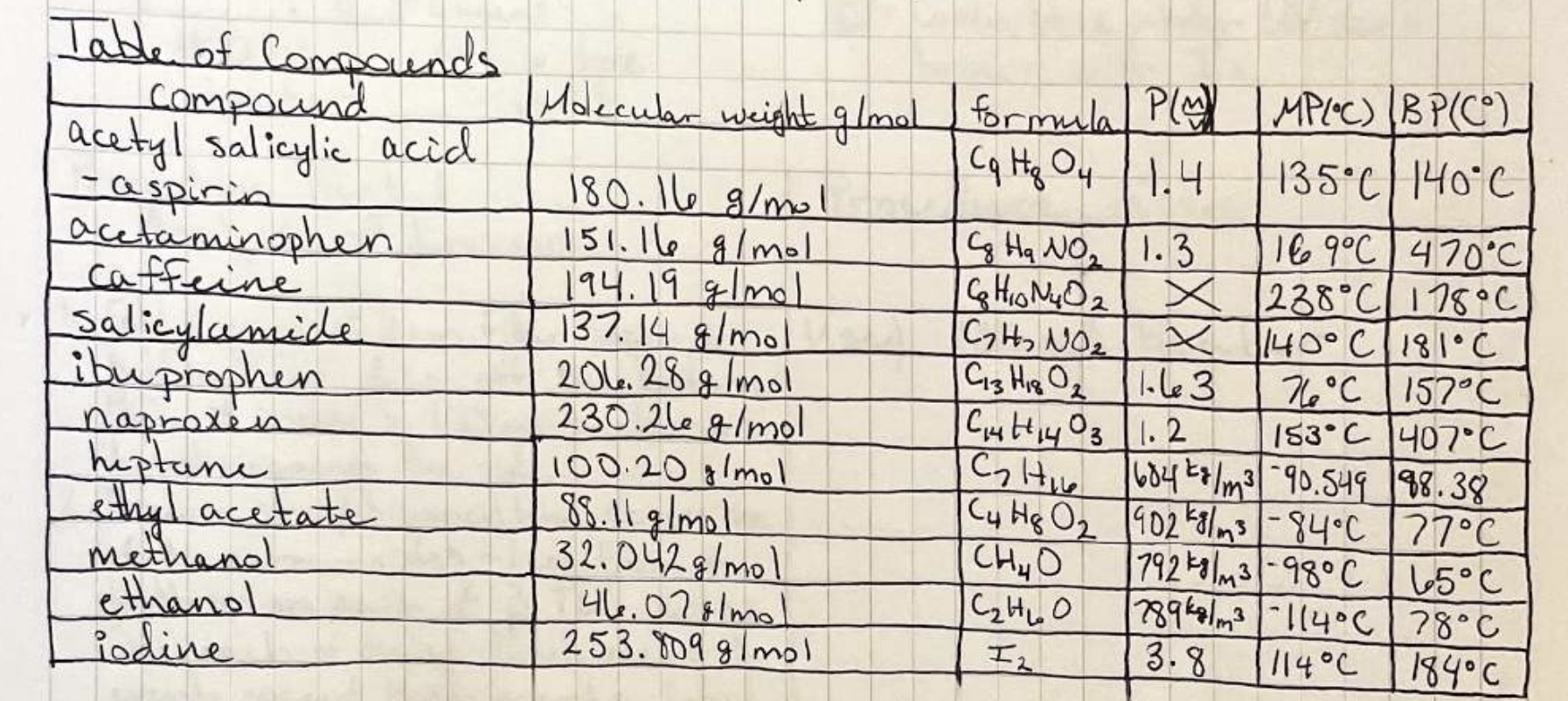
Compound List: + MO + Formula + density + MP + BP
Acetyl Salic Acid(aspirin) = 180.158 g/mol
DRAW APPaRATUS + SET UP
PROCEDURE
Prelab notes - boring caca butt stuff
Chromatography - Seperate chem mixtures between stationary and mobile -
Molecules are in contact with both phases(stationary and mobile)
Molecules with weak interactions with stationary will move quikcly
And molecules with strong interactions with stationary will move slowly -
Faster movement - weaker interaction
Thin layer chromatography thin layer of material
mobile is pulled up the stationary - solvent/analyte
Black ink is placed on tlc plate and then will move to reveal color lol
types of stationary
Normal phase is polar = silica gel or alumina
Reverse phase is non polar - silicagel capped
Polar compounds stick to polar faces and vise versa
MOBILE PHASE FOR TLC
must be readily dissolve analyte not too polar
not oo polar doesnt move too fast or too slow
WRITE IN
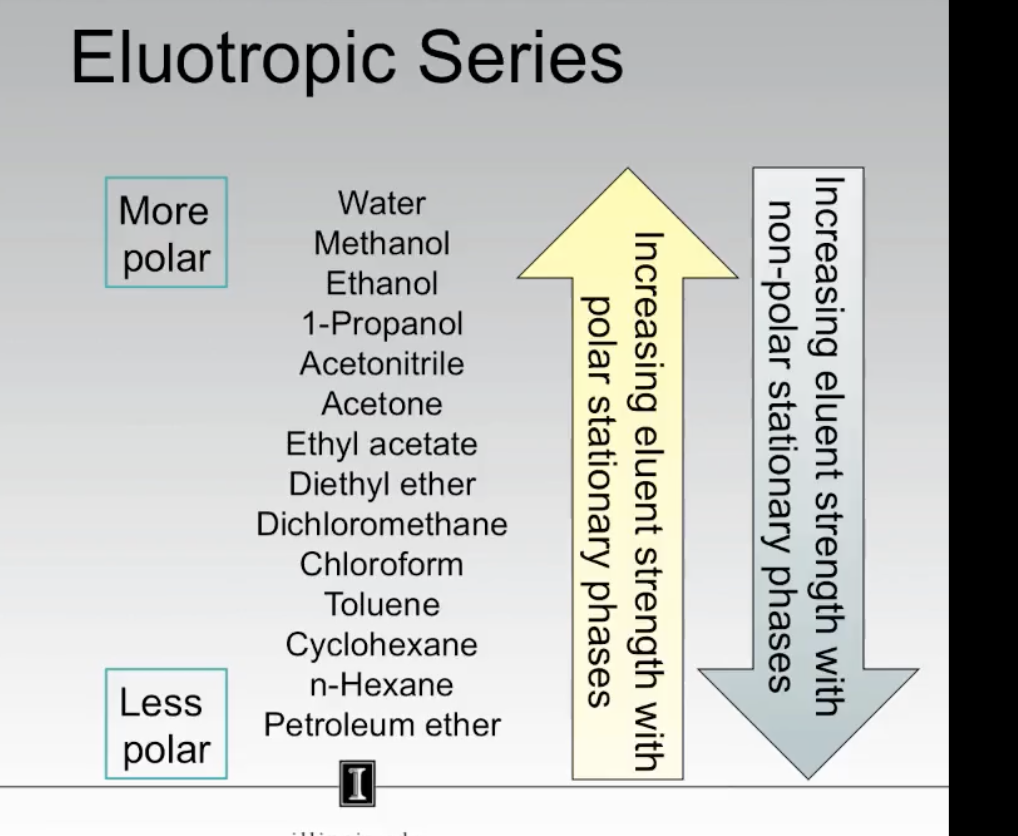
The more similar the analytes are to the stationary the smaller the distace they travel
PRODECURE -
Prepare
get a plate and draw a line at the bottom about a 1cm at the bottom in pencil to avoid contamination. use pencil to draw on plate
add perpendicular has marks depending on samples. one of them can be a reference used to compare.
Spot a small amount of analyte on the hash mark. Small glass capilary and draw a small amount of solution onto the capilary . Not too large
Wait till spots dried and solvents evaporated
Can speed up using an air stream
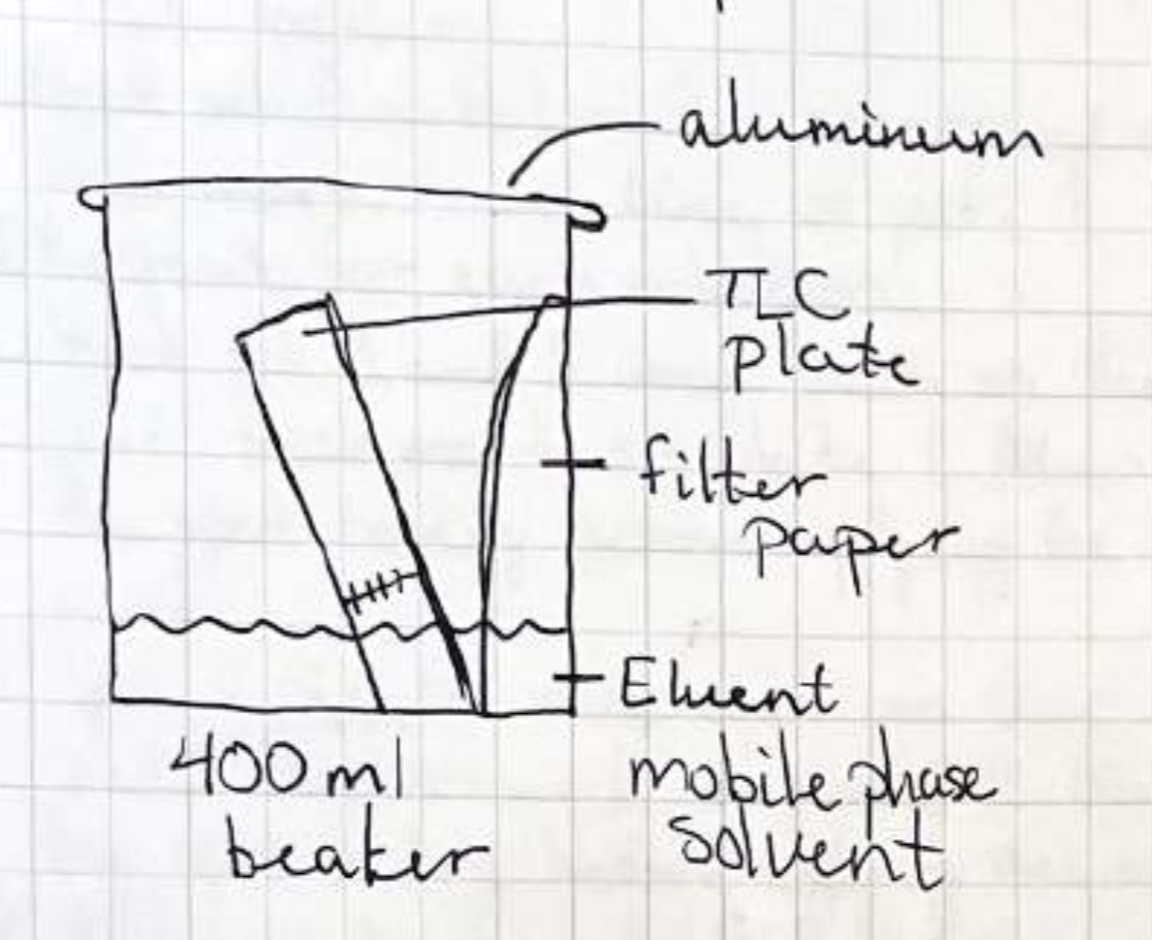
Devloping the plate is next - take a beaker and add .5cm eluent to beaker or jar
Transfer the TLC plate using tweezers
Ensure that the line of the plate is above the solvent to avoid analytes from disolving
Add a filter paper prior to placing tlc plate in the beaker to evoporate some of the solvent
Cover the beaker using alumiun foil.
Wait till solvent has moved up and solvent from will develop whihch is the max distance the thing will travel
Immediately mark the solvent fron with a pencil
Circle any visible spots in pencil after it dries
Place the tlc plate under UV lgith and circle any spots dark or colored in pencil
Place tlc plate into a jar that has idondine I2 in a fume hood carelfuly lower plate into idonde with tweezers
wait till spots turn dark and remove plate and circle spots in pencil quickly
Record a sketch of a TLC plate
and calculation of retention factor Rf

Dont touch the silica gels with bare hands
draw lines lightly
spot small spots of roughly equal size
dont let solvent fron reach the very front of the plate
dont let urself expose to UV
use I1 in fume hoods
Determine purity of a compound
Spot known pure compound
spot same compound of unknown purity
develop and visualize
compare your own sample with a pure one of the same compound;
One spot in ur unknown and one spot in ur pure in the same length will most likely be pure
Prelimary indeitifcation -
Over time we can take the reaction solution and spot it to our pure one. So if we start and uknown and pure one and wait the same time it will travel either same or different length.