Object Recognition
Vocabulary:
Object perception: Obtaining a description of shape, size, and other physical properties
Object recognition: Categorizing an object as a semantic socially accepted term. Difficult due to the large amount of variety within the environment
Template theory: Recognition is done by matching the new things we are seeing with something we have seen before. Compares current short term memory with things stored in long term memory. Stimulus is seen → Memory searched for match → Match found and object recognized. The problems include how there is an implausibly large database of templates for a possible match, it would take way too long. Indicates that if any feature of the image is changed (not exact), recognition is much harder
Structural theory: Recognition is done by forming a structural description of what we are seeing and compare our structural description with the structural description of new things we see
Neural networks: A set of computational nodes, can surprisingly learn object recognition via template theory if exposed to a large database of training images very well. Relies heavily on textures
Geon: A given ‘basic shape’, 36 of them that all objects are composed of, like building blocks. Examples include rectangular prism, cylinder, cone, macaroni. If this is preserved within a partial object outline, the object is better recognized (as humans use geons for basic object recognition)
Recognition by components theory (Geon theory): When an object is observed, it is broken into geons for identification. Humans focus on edges which help define shape. Humans look for concavities to see where geons combine, gives information about how a given object has various geon relations. Recognition is spatial and approximate, good for viewpoint invariance (object is the same from different spatial perspectives) and economy of representation (only need to remember the set of geons). What it cannot explain is how very similar things are told apart (different people’s faces), and explaining objects with abstract and indefinite boundaries, like bushes or a crumpled shirt
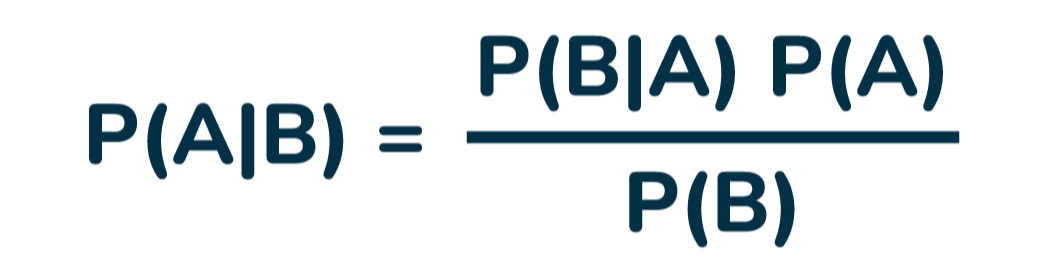
Bayes rule: An approach to explaining how we infer reality from observation. The probability (P) of a structure (S) given an image (I) is modelled by P(S | I), is proportional to (that weird little fish infinite squiggle) the probability of the image (I) given the structure (S), multiplied by the probability of the structure. Overall, this is P(S | I) proportional to P(I | S)*P(S). Overall, the likelihood that an image is produced by a structure is proportional to the probability that that structure would produce that image multiplied by the probability that the structures exists in the world. The thing being estimated is the posterior P(S | I), the likelihood term is how well the seen image is accounted for by the structure P (I | S), and the prior term is P(S), or how likely the structure exists. The prior indicates prior knowledge, posterior is what is happening (temporally)
Accidental viewpoint: The viewpoint that may make a collection of objects appear as something (like a ton of metal scraps looking like a motorcycle, or metal curves appearing as a bike)
To identify a shape
Break it up into parts (geons), done based on concavities on a shape’s outline (like gaps between fingers). A part boundary is drawn between each concavity
Look for local symmetries between local concavities, and draw axial branches (bones), to represent parts of the shape. This creates a graph-like structure. This is done so that if one part branches off another part, movement of the original part will move the secondary part
Humans make errors when the different parts of a shape are out of order (a zebra with a head coming out of a leg), neural networks make errors when textures are disrupted (bear fur on a horse)
There are an infinite number of 3D images that can produce the same projections on to the retina, creating issues with identifying what is being observed within an environment. Choosing randomly of all of the possibilities means we are always wrong (as there are an infinite number), but this isn’t the case as we are normally right or close the accurate. This can be due to context, though this also applies to new objects so there are other factors. There could be a simplicity constraint.