Mutations
‘Mutations’ in biology refers to change from the normal or expected gene. Not all mutations result in a change in phenotype. Of those that do changes can be beneficial, detrimental, or neither - many mutations do not affect an individuals ability to survive
Whether a mutation helps, hurts or does nothing depends on 2 factors:
The organism’s environment
The type/severity of the mutation
Part A: Whole Chromosome Mutation
1. Nondisjuction
Chromosomes fail to separate during meiosis
2nd meiotic division
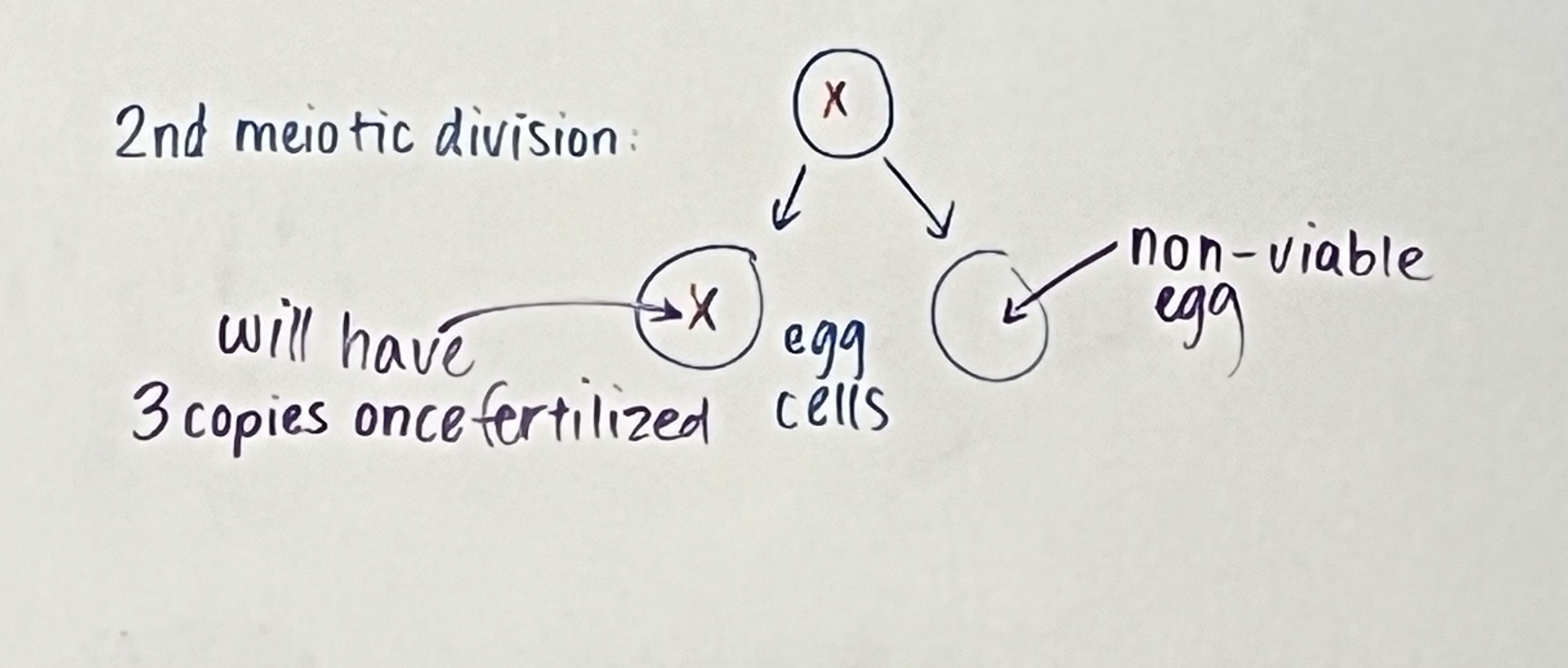 *Note: The non-viable egg is a deletion
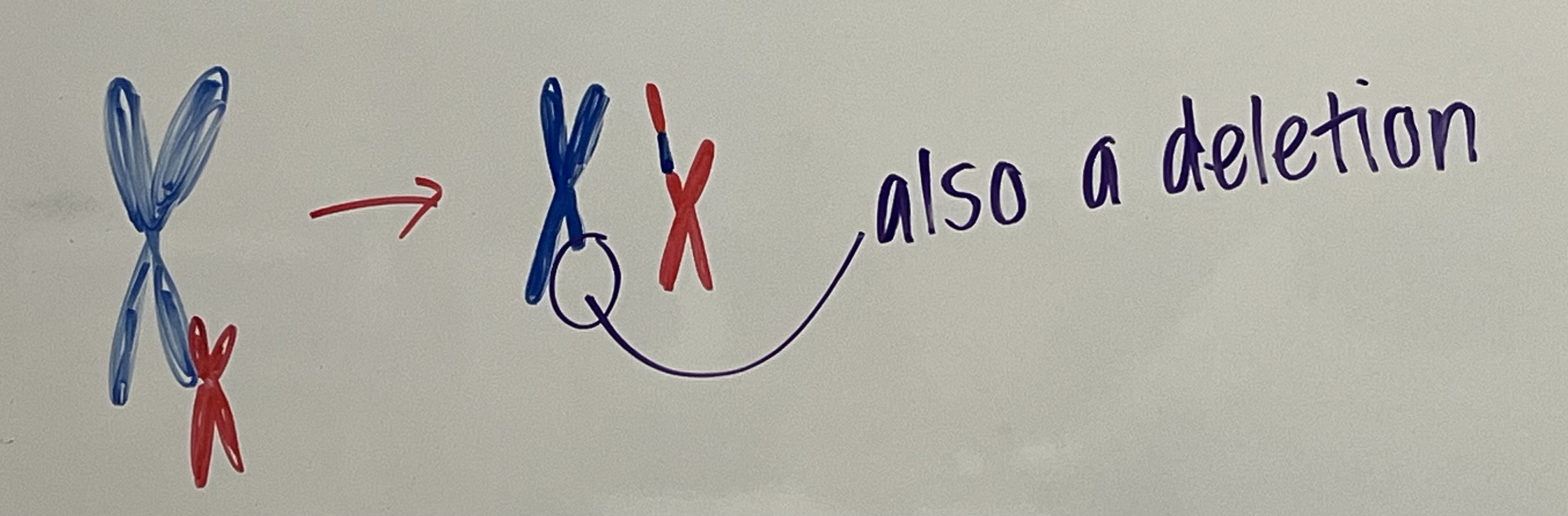
2. Deletion: A sperm or egg cell is missing an entire chromosome
Very severe - usually fatal
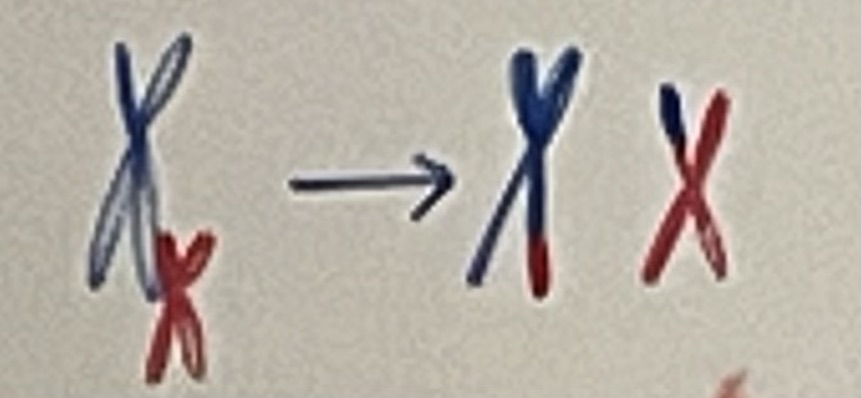
3. Translocation:
A piece of a non-homologous (different pair) chromosome is transferred to another chromosome
they get stuck together during meiosis
4. Insertion
A piece of one chromosome is inserted in a non-homologous chromosome
Nucleotide mutations:
(Zoomed in version, one change that could alter a huge phenotype)
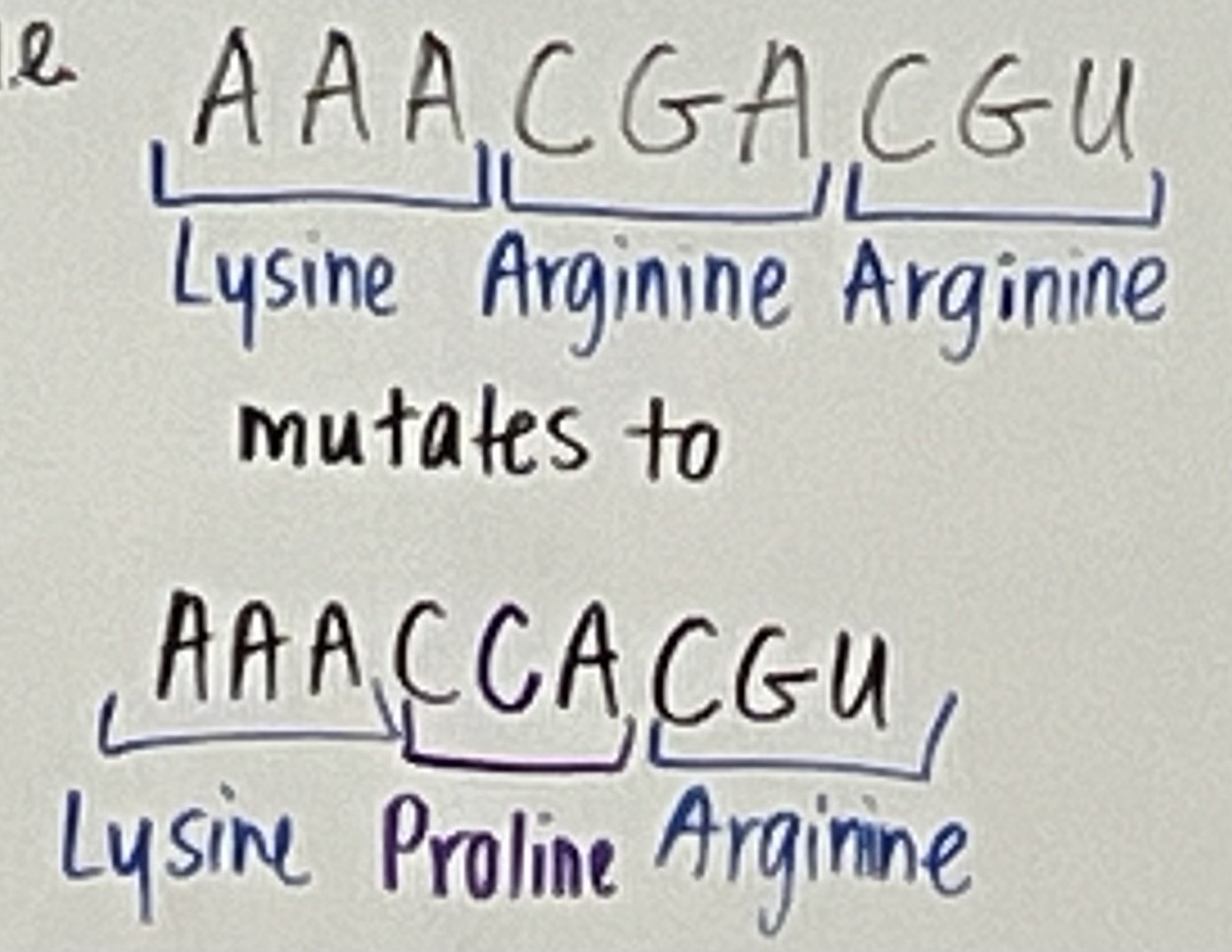
Point mutation - change in a nucleotide that (usually) changes only 1 amnio acid (Most common, having different options, genetically very diverse)
Substitutions
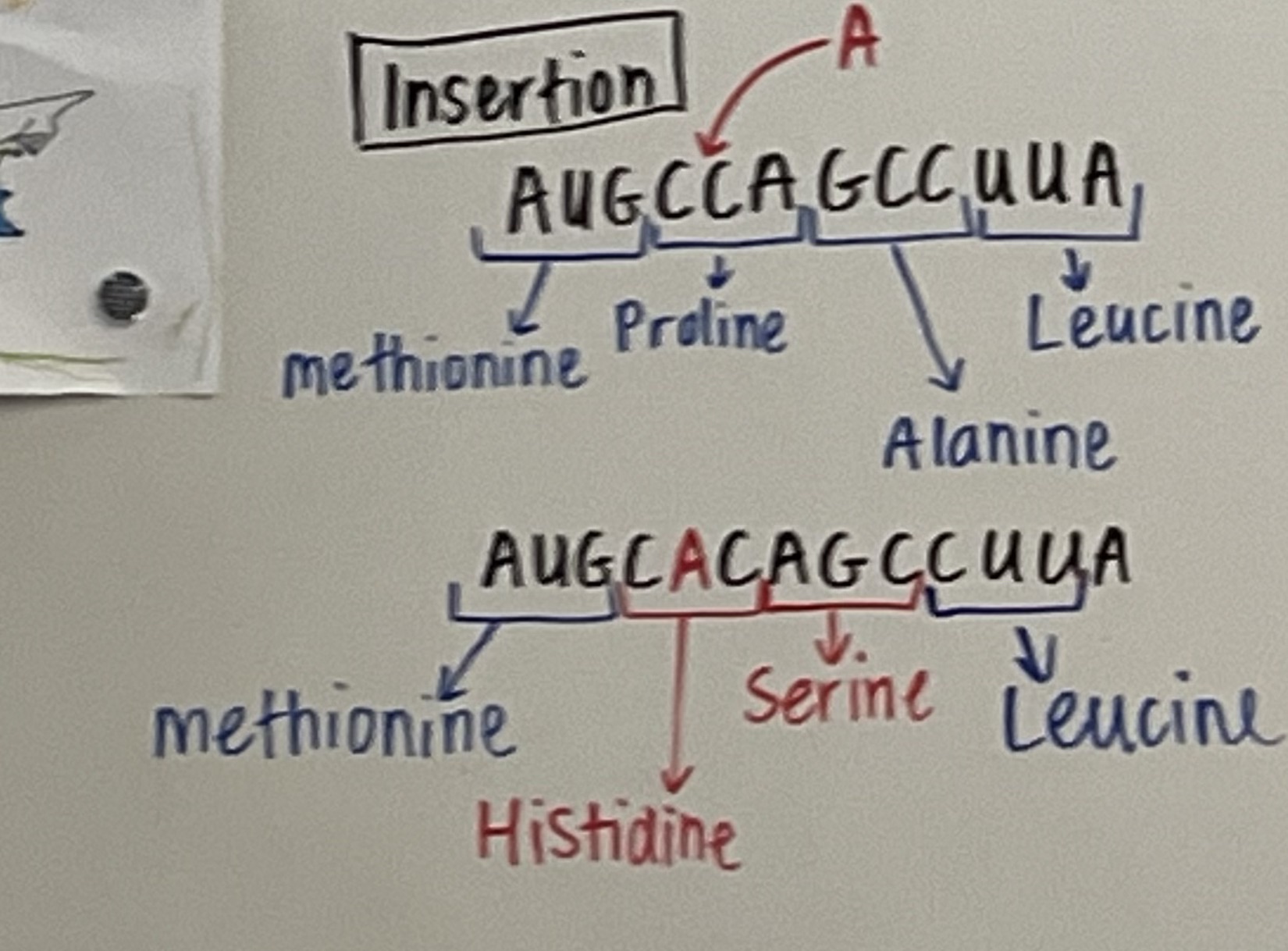
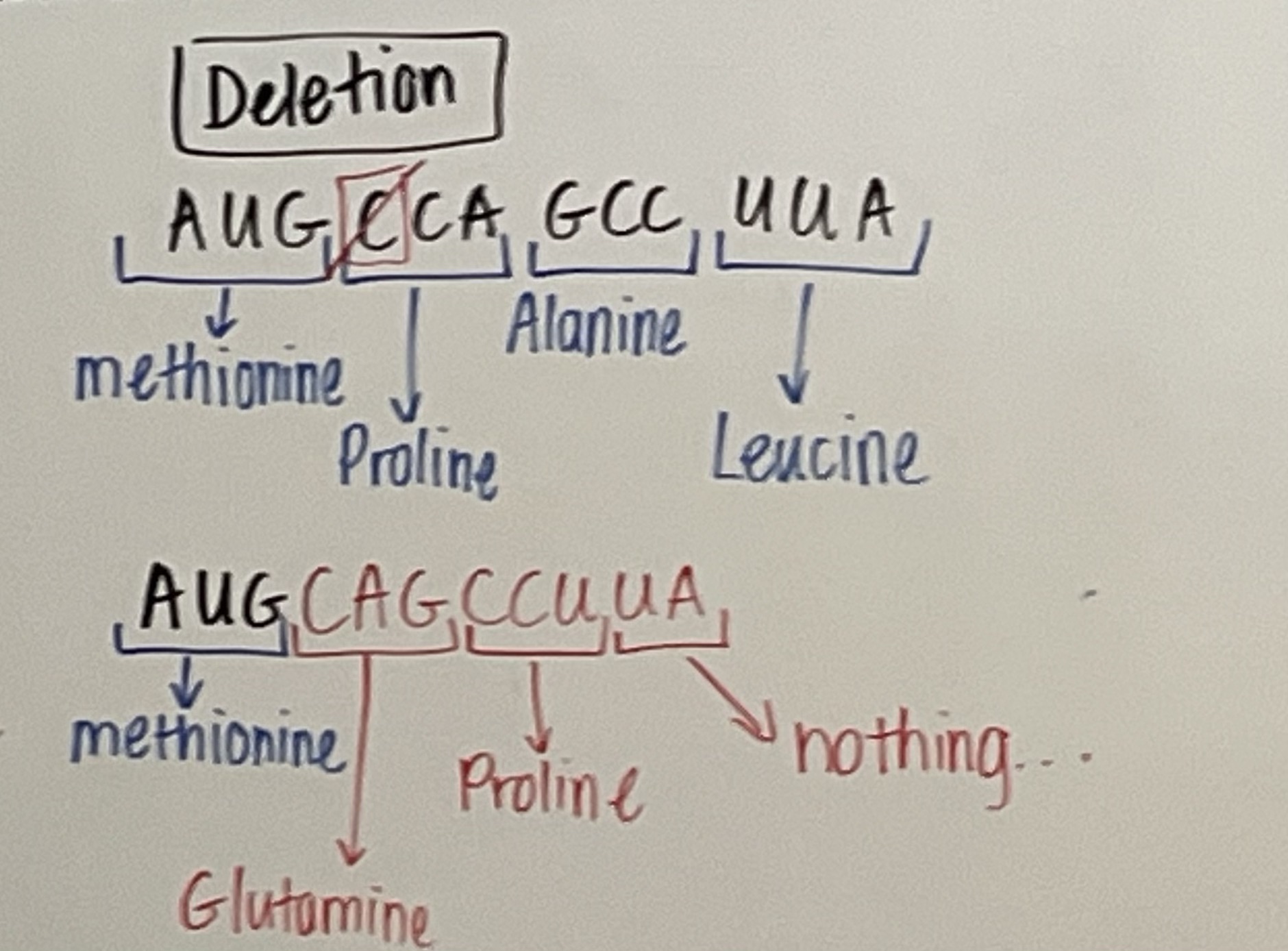
 2. Frameshift mutation - Insertion or deletion of a single nucleotide that changes the way every amino acid after the mutation is read.