Lifestyles
= behav. that symbolizes social position and makes it visible (Ganzeboom)
expresses social stratification
sometimes usual causes like age, gender, education, income are not able to adequately predict behav.
Market research - identifies groups with similar lifestyles
uses lifestyle typology for simplicity (few groups, easy to understand and communicate)
(-) unclear theoretical base, more explorative than explanatory
(-) suggests simple group typology whereas there may be many relevant typologies and fluid boundaries
Stratification research (Ganzeboom, Bourdieu, DiMaggio)
lifestyles = consequence of social position - dif. classes express distinct social position via distinguishable lifestyles
dif. in taste usually learned/socialized in youth
Why do elites participate more in culture?
Status acquisition - elites show “superior” position by displaying taste for complex activities and products; more resources, cultural codes (Bourdieu), money and leisure time are needed to appreciate it
displaying mastership of cultural codes gives social approval and status (lower status ppl wouldn’t know them)
Info capacity - capacity to digest and appreciate complex info, depends on
complexity of activ.
one’s education and training: social background (kids of cultural parents go to certain schools together), selection (smart kids learn more easily to appreciate high culture), instruction (certain schools have museum trips)
Restrictions - time and money
high income → less time
more leisure → less money
online cultural consumption diminishes restrictions
Bourdieu - Status maintenance theory
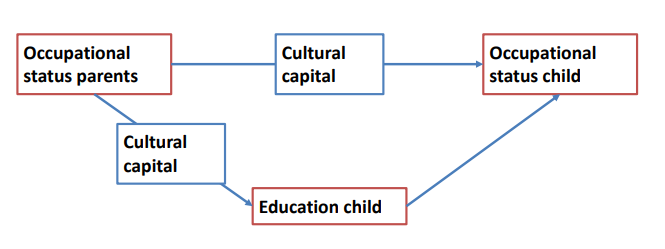
cultural capital: knowledge of codes necessary to interpret and appreciate certain cultural manifestations and be seen doing so
distinction: capactiy to distinguish, discern and notice fine dividing lines
Cultural capital
mastering etiquette → education & skills/ human capital & credentials
kids gain it from family or school - schools also familiarize kids with “the rules of the game” for your social class (e.g. study habits, approaching teachers etc)
legacy admissions to Ivy league colleges
Bourdieu: working class kids lack the “self-assurance of legitimate membership and the ease given by familiarity”
used by elites to overturn general equalization of life chances due to modernization
Habitus
acquired internalized codes of conduct and appreciation in your class-based field
e.g members of dominant class practice aesthetic gaze (one refers to other works not real life; focus is on style, composition, not subject matter) when looking at art to distance themselves from others
Shifting modes of elite distinction (Friedman and Reeves)
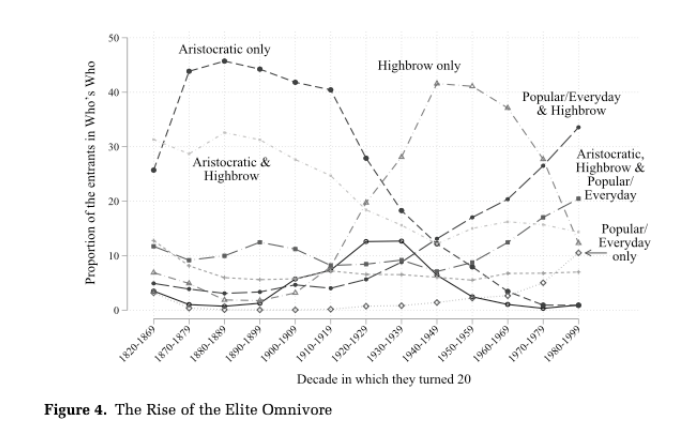
elites try to maintain distinctions by changing activities and being more omnivorous