Market equilibrium
LO:
Explain and illustrate how a market is able to reach equilibrium in respect of price and quantity.
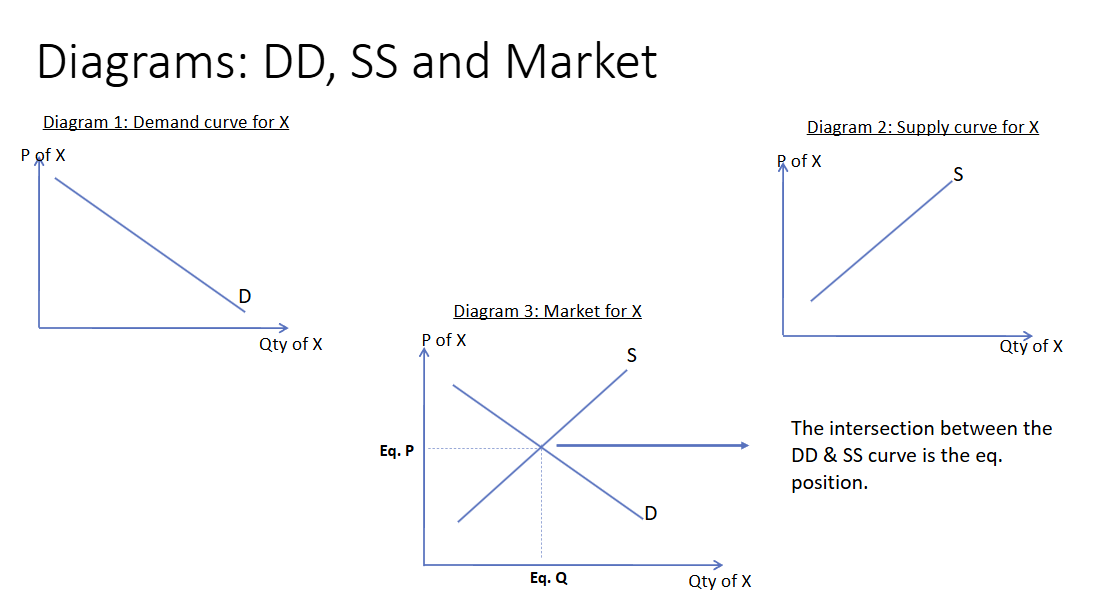
Market: a system in which the interaction between buyers & sellers determines the prices and quantities traded of a product
Market equilibrium: a condition whereby the Qd & Qs in a market are equal
the price at which this occurs is known as ‘equilibirum price’
P Mechanism: the system or process whereby changes in demand and supply determine the price in the marker
Surplus
excess in Qs
e.g. $10 → Qd: 5 units Qs:12 units
not in equilibrium
signals that price is too high
to get rid of excess stock, sellers reduce P
P factor change
What do you think is going to change as e price starts to fall?
Qd increases/dd expands → movement curve downwards
Qs decrease/ss contracts → movement curve downwards
[both follow movement of price]
When P not in equilibrium
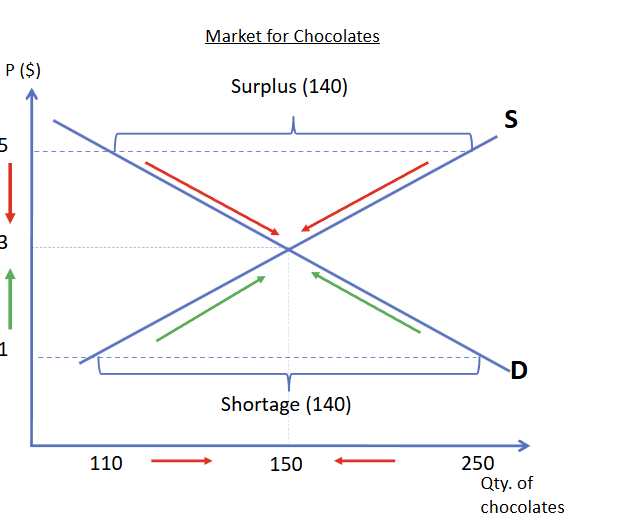
Shortage
excess in demand
$10 → Qd:50 Qs:30
signals price is too low
Sellers will increase price as they are motivated by profit
Qd decrease/dd contracts → movement curve upwards
Qs increases/ss expands → movement curve upwards
Effect of a change of non-price determinant (NPD) on equilibrium
when a NPD changes, it affect the dd or ss of the produce (increase/decrease)
shifts the dd/ss curve
a disequilibrium will occur at the original P
shortage/surplus
disequilibrium will cause either an upward pressure or downward pressure on the P
P of produce start to change
sellers & buyers will then respond to the change in price
end result → new equilibrium price & quantity traded
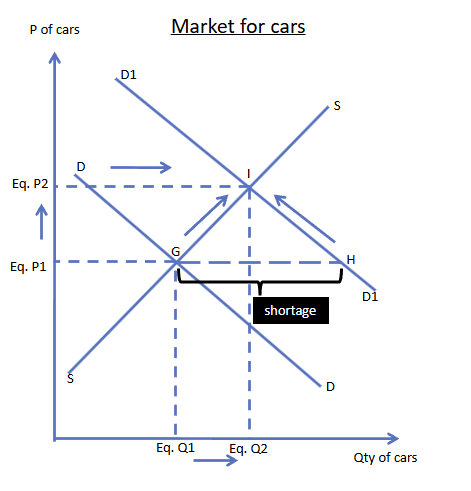
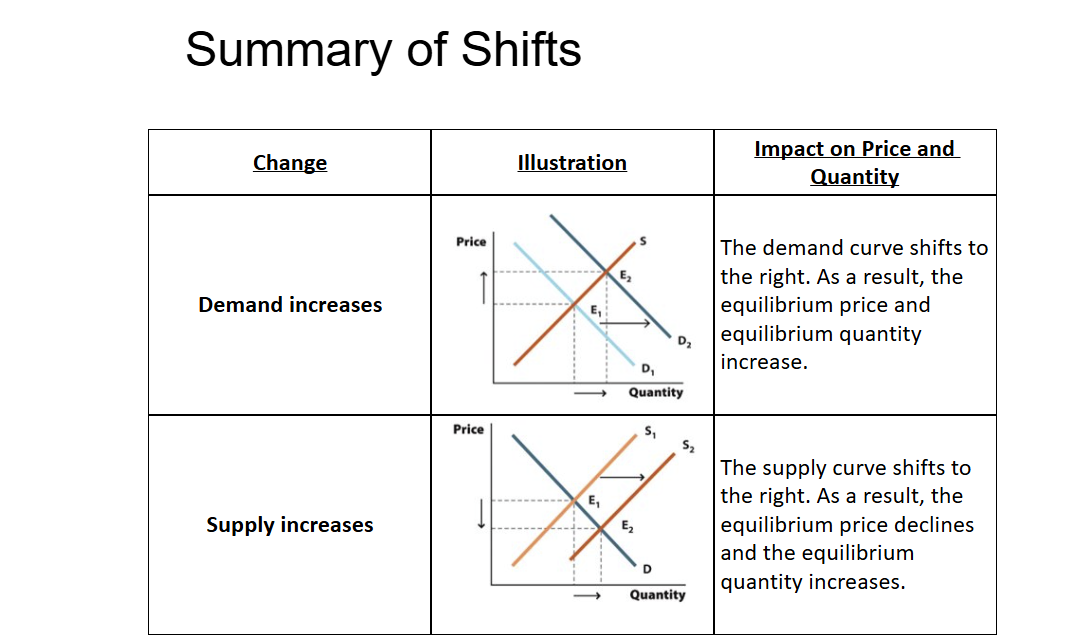
Effect of an increase in DD on eq. P & Q
e.g. if Y level rises, dd increases as consumers have more money
dd curve to shift to the right (D → D1)
at the og P of Eq.P1, shortage of GH
there will be upward pressure of price as firms increase price to earn more profit
P⬆️
DD contract, movement up DD1 SS expands