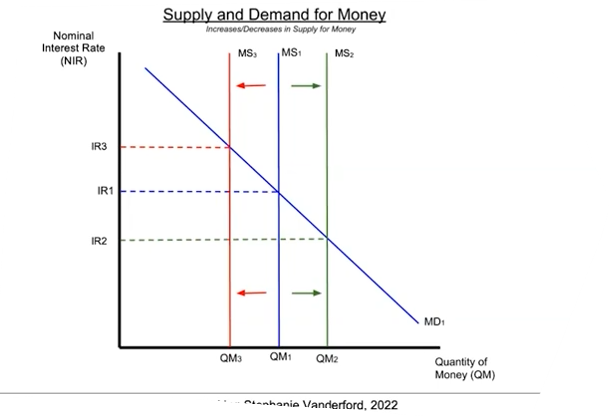
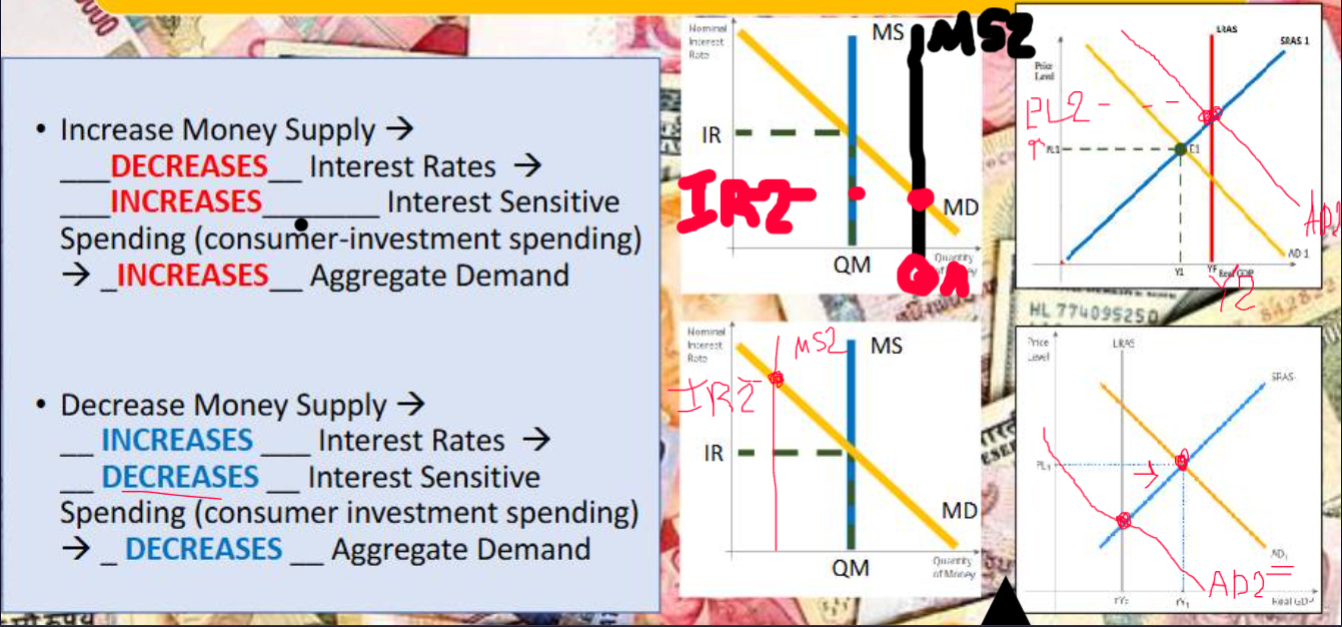
The Money Market
What is It?
The “good“ that is being supplied and demanded is money (M1: currency in circulation, demand deposits, and savings accounts)
Is also known as the liquidity preference model.
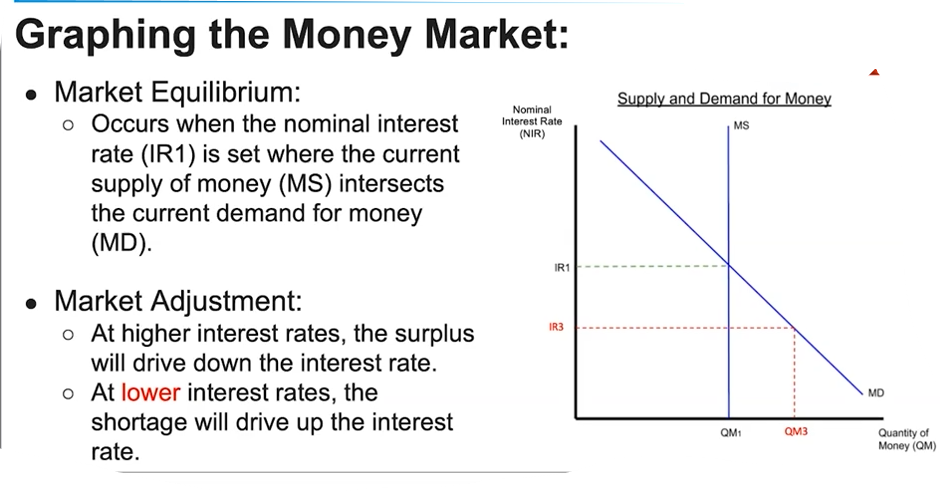
Deals with nominal interest rates because the NIR is the opportunity cost of holding money. it is the price in the money market because it reflects the opportunity cost of holding M1 money. What you give up when you hold money is the opportunity to earn nominal interest rate
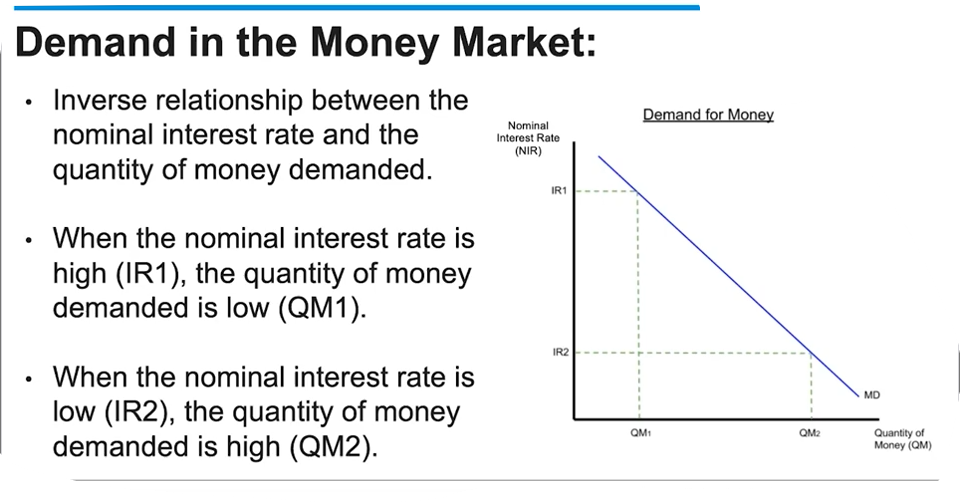
Demand in the money market
represents the relationship between nominal interest rate and the quantity of money people want to hold:
transaction demand (buying stuff)
precautionary demand (unexpected or unplanned expenses; you have the money just in case)
Asset or speculative demand (using money to hold wealth, )
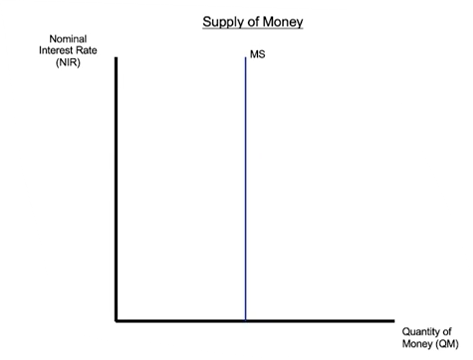
Supply in Money Market
The amount of money people have access to
controlled by a country’s central bank
Is independent of the nominal interest rate
Shifters of Money Supply and Demand
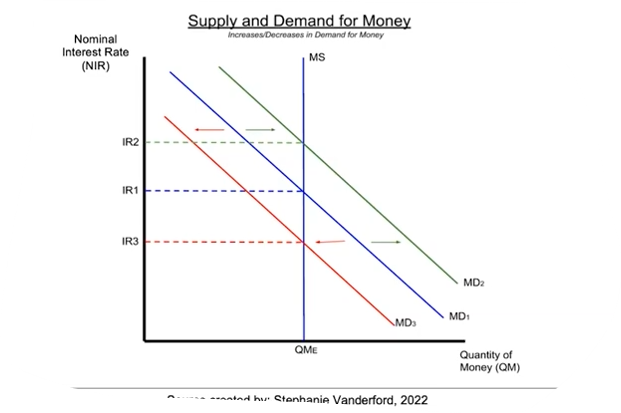
Money Demand Shifters
Aggregate price level: higher prices require more money to make purchases. (direct relationship)
Real GDP (national income): When nation income increase, spending increases, so more money is needed.
Tech: The easier it is to convert less liquid asset into money, the less money is demanded; the availability and cost of using money subs (credit cards) affects money demand.
Money Supply Shifters
Related to monetary policy