L06 Ceramics
Ceramics & Processing
Key Points
Definition: Ceramics are defined as ‘an inorganic, non-metallic solid’.
Types of Ceramics
Natural Ceramics
Stone is the oldest construction material, exemplified by the 5000-year-old pyramids.
Traditional Ceramics/ clay products
Often do not bear significant tensile stress.
Cement and Concrete
Cement consists of a mixture of:
Lime (CaO)
Silica (SiO2)
Alumina (Al2O3)
Sets when mixed with water.
Concrete is a blend of sand and stone held together by cement.
High-Performance Engineering Ceramics
Includes oxides, carbides, nitrides, silicates, used in tools, reactors, etc.
History of Ceramics
Timeline
26,000 B.C.: Discovery of clay with mammoth fat and bone,It can be molded and dried in the sunto form a brittle, heat-resistant material . Birth of ceramic art.
6,000 B.C.: Introduction of ceramic firing in Ancient Greece.The Greek Pottery used forstorage, burial and art.
4,000 B.C.: The discovery of glass in Egypt, primarily for jewelry. It consisted of a silicate glaze over a sintered quartz body
50 B.C. – 50 A.D.: Introduction of optical glass production (lenses and mirrors), window glassand glass blowing production begins in Rome
600 A.D.: Creation of porcelain (first ceramic composite) by the Chinese, utilized in varied applications from electrical insulators to dinnerware. It is made by firing clay with quartz.
1870’s: Development of refractory materials for high-temperature applications. Used in everything from building bricks to steel making furnaces.
Modern Innovations
Breakthroughs
1960: Discovery of lasers and fiber optics technology. Fibre optic cable allows light pulses to carry info with low energy loss
1965: Development of photovoltaic cells for solar energy conversion.
1987: Discovery of a superconducting ceramic oxide, ideal for high-speed computers due to the high critical temp of 92K
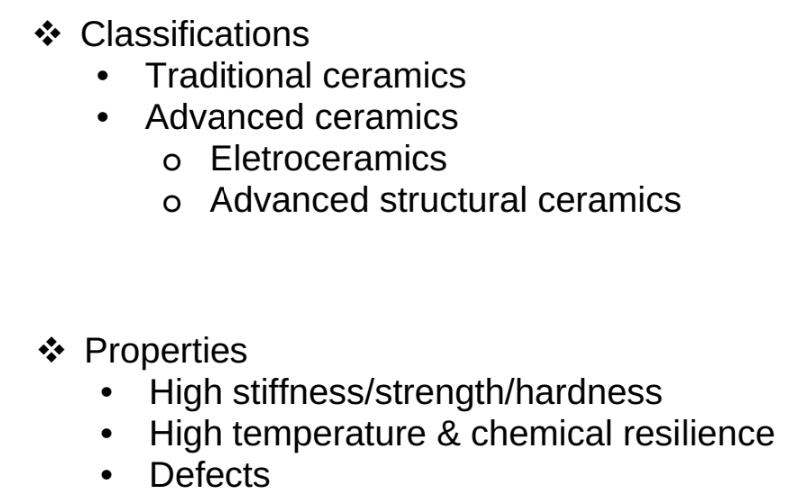
Classification of Ceramics
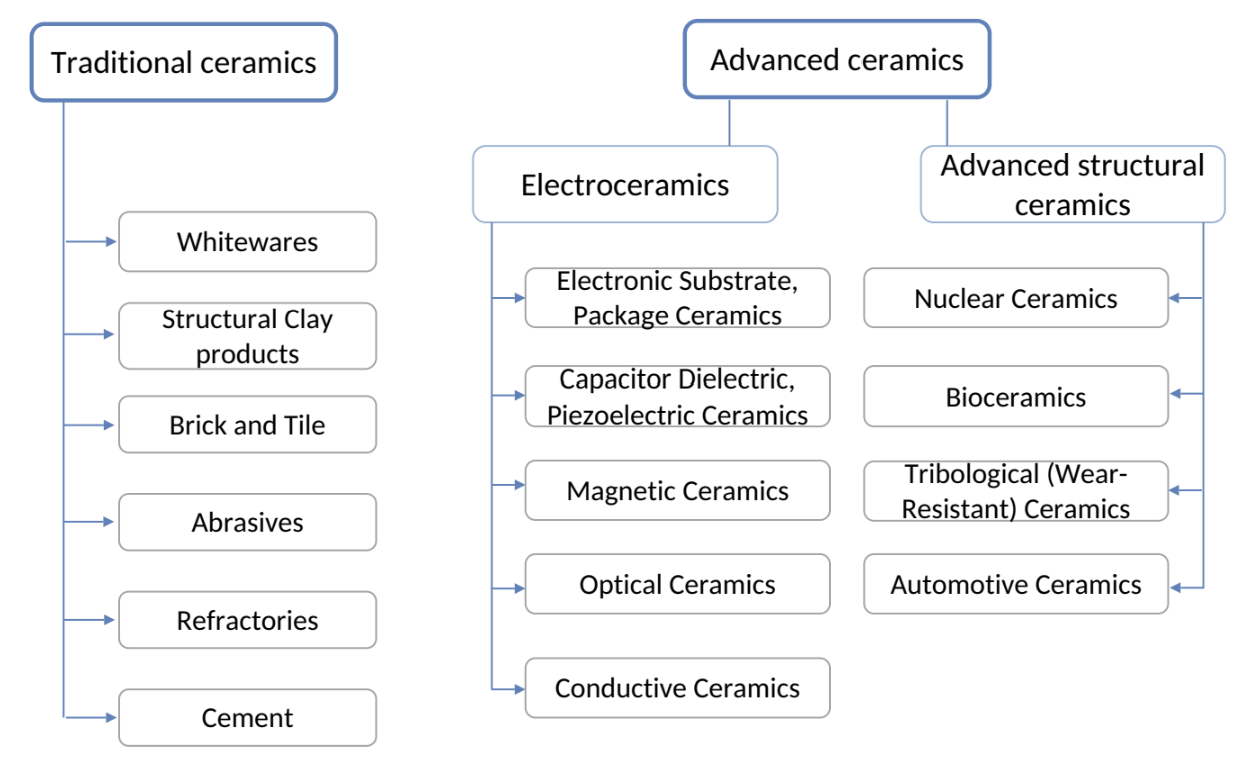
Details on Traditional Ceramics
Components
Composed of:
Clay
Silica (flint)
Feldspar
Characteristics
Includes products for different uses such as dinnerware and roofing.
Advanced Ceramics Properties
Characteristics
Utilized for their unique electrical properties.
Examples include magnetic and optical ceramics, as well as dielectric ceramics.
Features
Provides enhanced mechanical properties under demanding conditions.
Notable applications:
Bioceramics used in hip prostheses.
Tribological ceramics (ballpoint pen tips)
Properties of Ceramics
General Properties
High melting point
Thermally insulating
Electrically insulating
High Stiffness
High Strength
Low ductility
Usually elastic
Very little plastic
Brittle
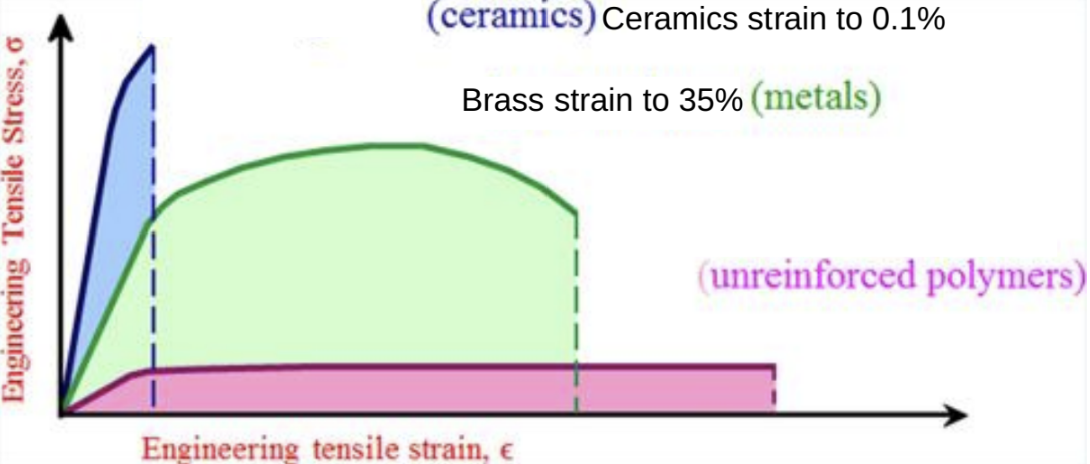
Strength and Stiffness
Mechanical Properties
Ceramics exhibit high stiffness and strength due to strong atomic bonds (ionic & covalent).
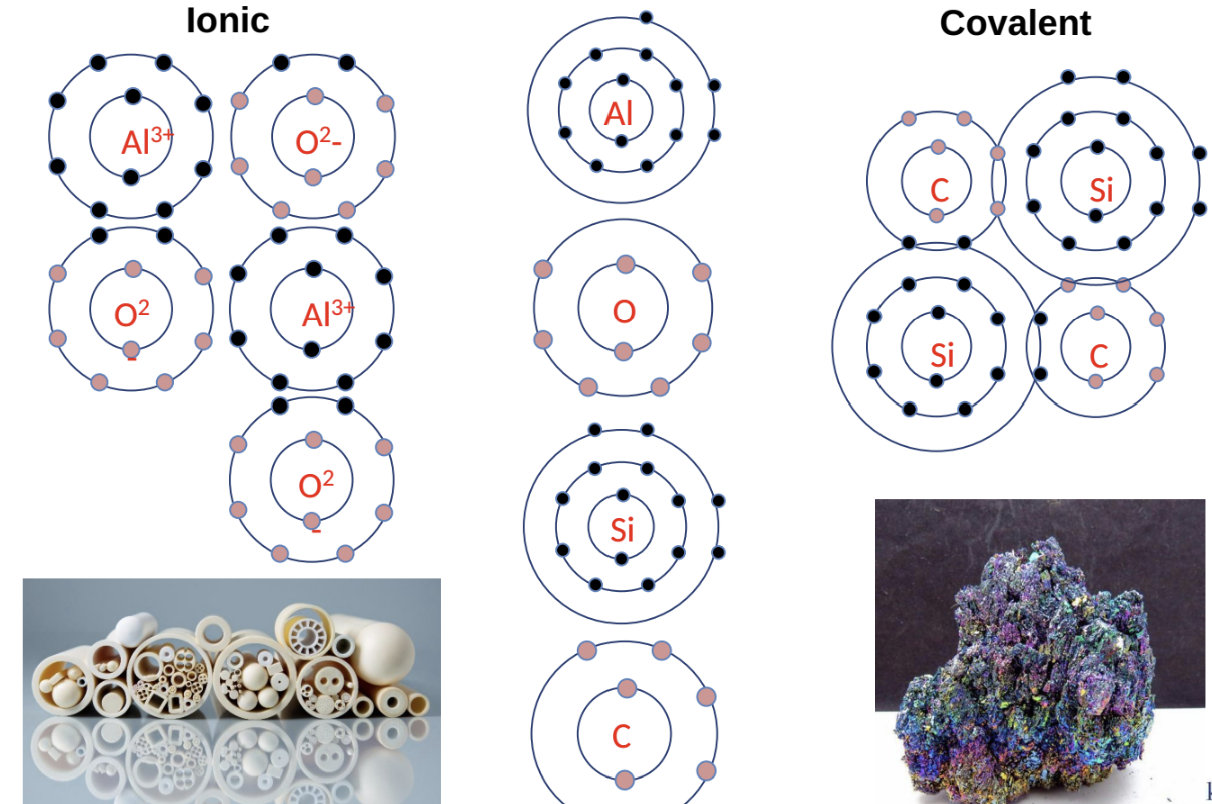
Hardness Characteristics
Applications of Hardness
Ceramics exhibit high hardness and resistance to localised plastic deformation.
Applications include:
Anti scratch coatings•
Wear plates
Artificial hip joints
Valves in water taps
Knives & scissor blades
Bearings
Thread guides in industrial looms
Cutting tools
Ballistic armour
High-Temperature & Chemical Resilience
Thermal Applications
ceramics have high-temperature and chemical resistance:
Thermal barrier coatings in jet engines
Engine cylinder linings
Break disks
Turbocharger rotors
Valves and valve seals in engines
Re-entry shields
Furnace insulation
Chemical glassware
Electrical insulating on national grid
Bonding Structures in Depth
Bond Characteristics
Highlighting how covalent bonds create directional structures while ionic bonds are closely packed for stability, illustrated with examples.
Defects in Ceramics
Flaw Impact on Strength
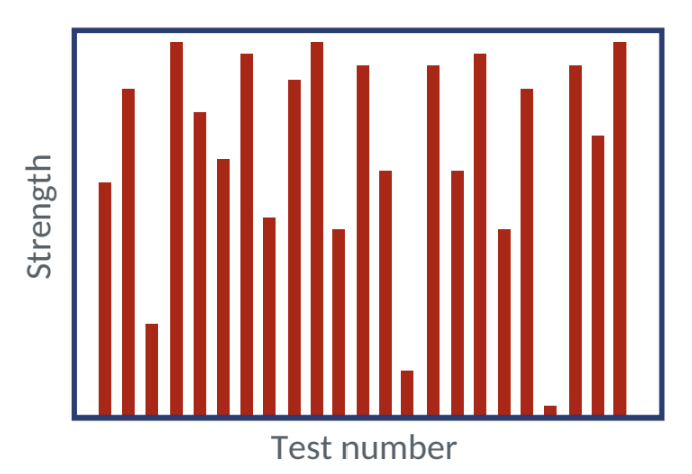
Ceramics inherently contain flaws that concentrate stress, leading to fractures at lower stresses than their theoretical strengths.
Each component has a critical flaw that, when stressed, propagates failure.

These critical flaws typically range from a few micrometres to tens of micrometres, often undetectable by standard non-destructive techniques.
Ceramics fracture rather than yield in response to stress so theoretical strengths can the observe in practice.
Strength prediction for components is challenging due to variability in the critical flaw sizes.
however you can Use of Weibull statistics to estimate the probability of ceramical component survivability under stress.
but other complicating factors are that the strength of ceramic depends on volume under load and time under load.
Summary of Key Concepts
/