Roof Diagrams
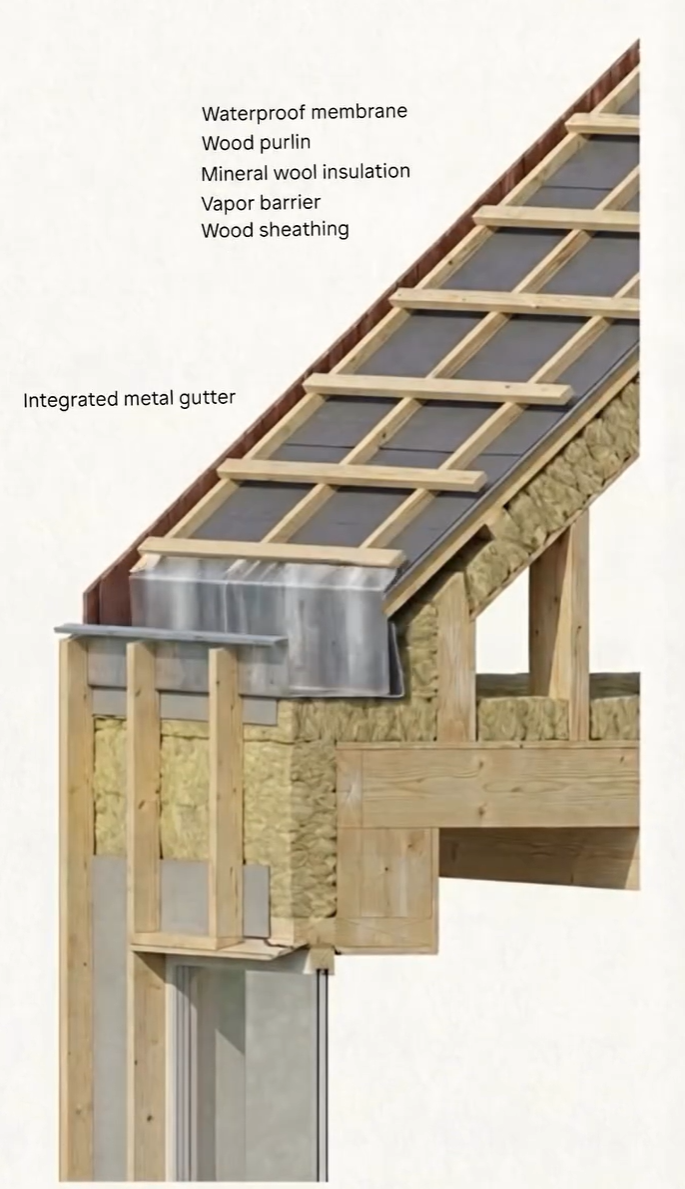
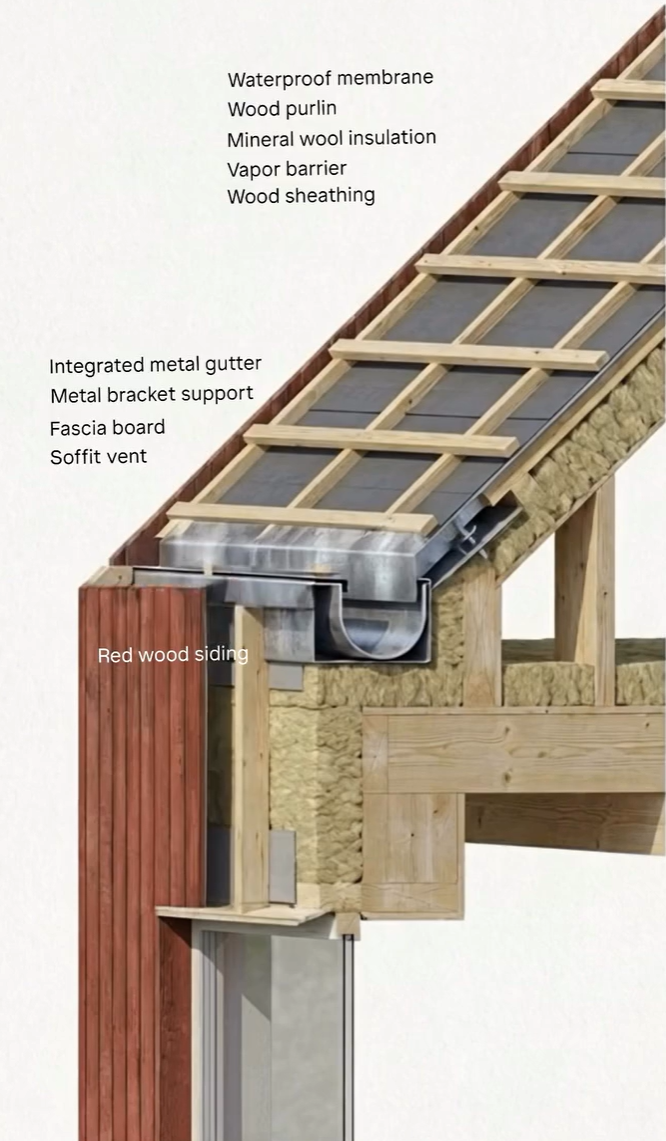
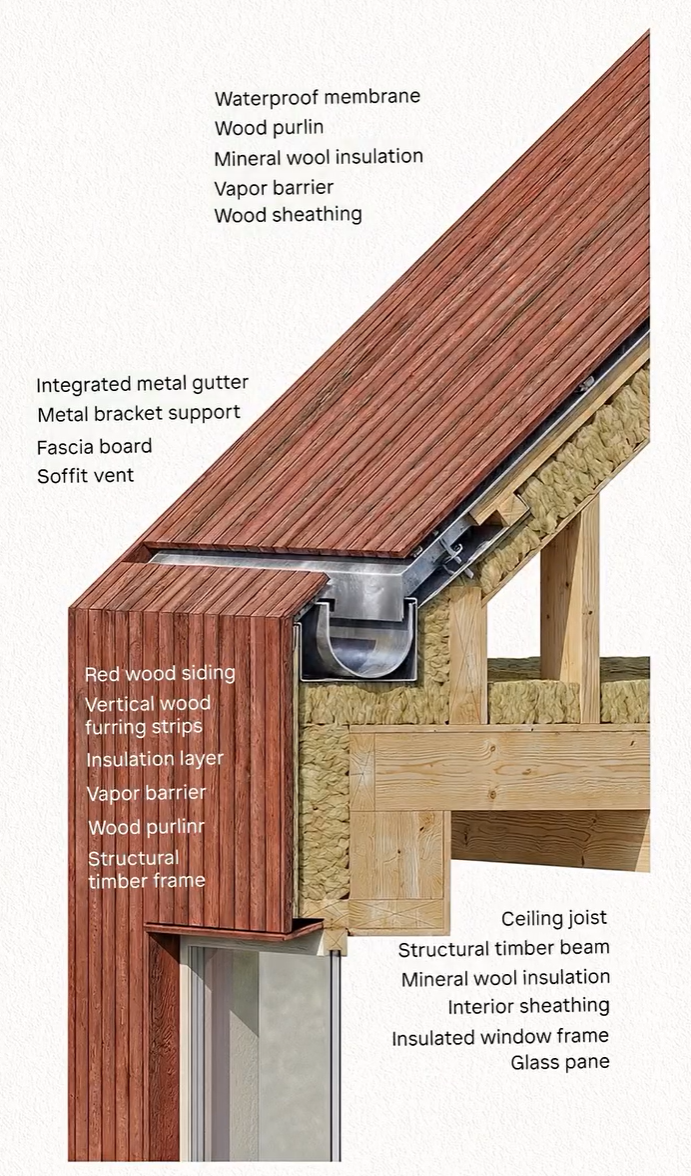
This roof section reveals the complexity behind a seamless, minimalist exterior. From the Red Wood Cladding to the Integrated Metal Gutter, every layer including the Vapor Barrier and Mineral Wool Insulation, is designed for both performance and aesthetics.
Achieving a clean roofline requires precise coordination between drainage and insulation to prevent thermal bridging and ensure long-term durability.
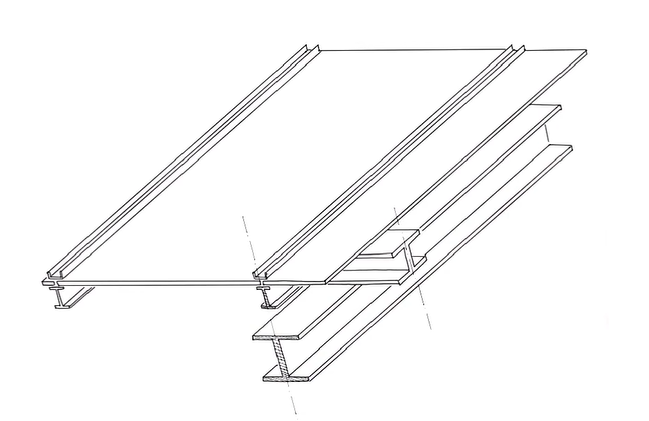
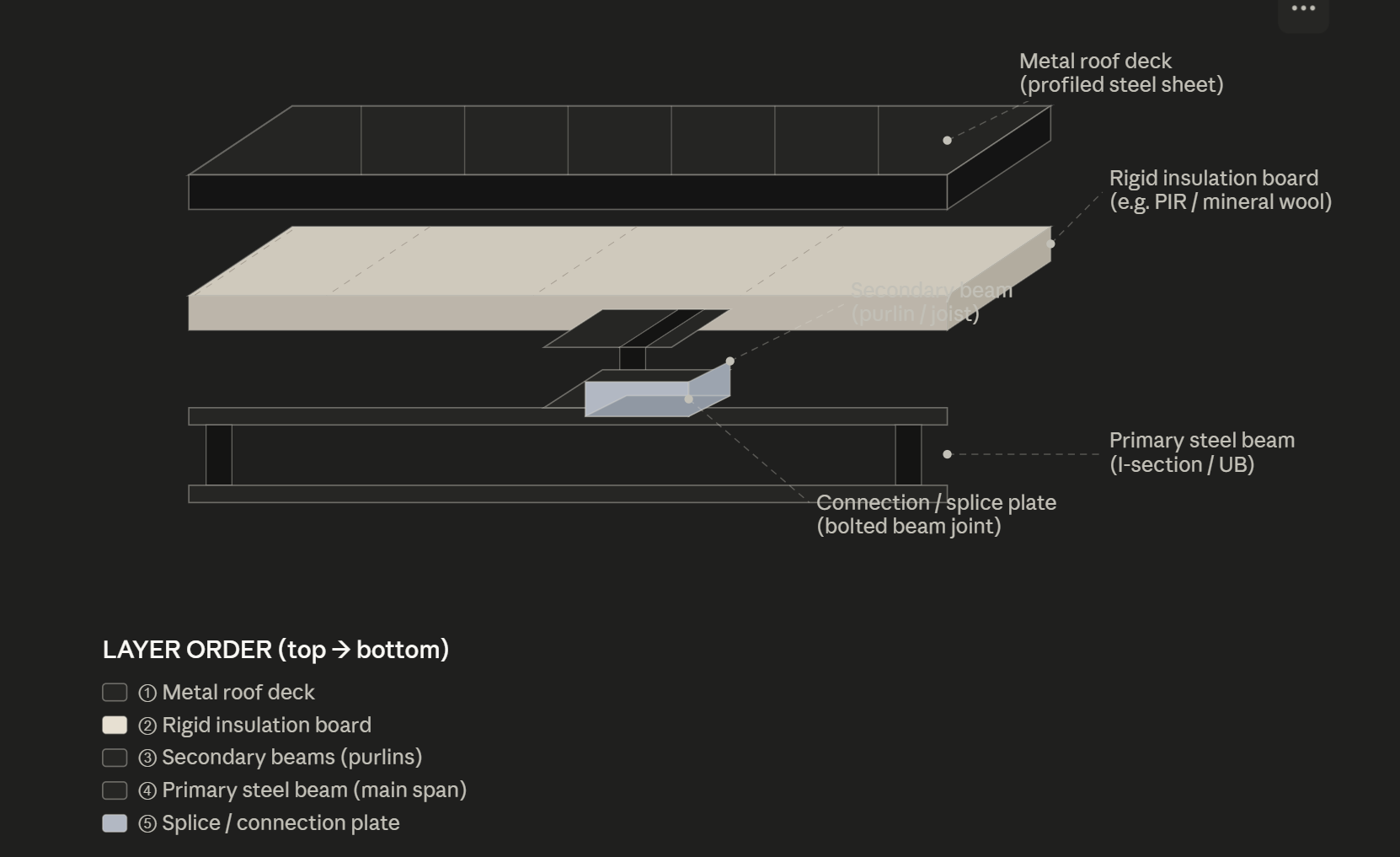
Built-up flat roof system with steel framing
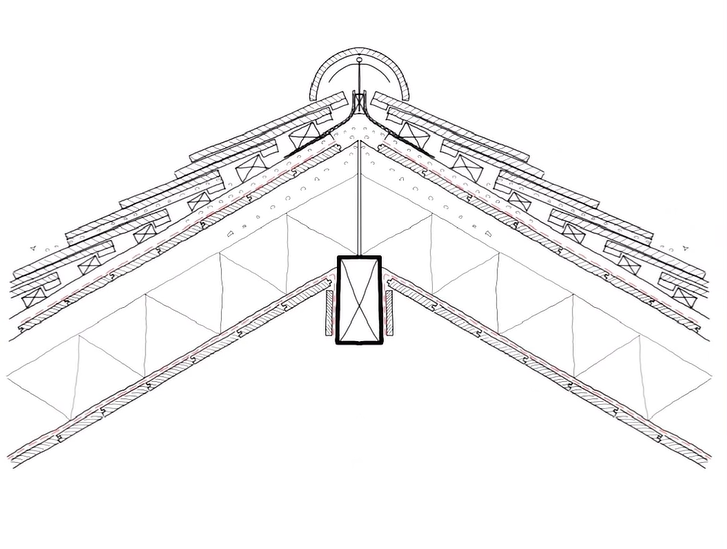
Pitched Roof Rdige section - Timber construction
Structural timber frame — the triangulated webbing pattern (the criss-cross triangles filling the main body of the roof) is a timber truss — likely a Fink or raised-heel truss. The triangulation is what gives it structural efficiency across the span without needing a ridge beam.
Insulation zone — the depth between the bottom chord and top chord of the truss is the insulation cavity. The triangulated geometry suggests between-rafter or between-chord insulation, possibly with a counter-batten layer above.
Sarking / breather membrane — the layer sitting directly on top of the truss top chord, beneath the battens. Keeps wind and rain out while the roof is being built and acts as a secondary defence.
Battens and counter-battens — the rectangular repeating elements running up the slope. Counter-battens create the ventilation gap above the membrane; battens provide the fixing line for the cladding.
Roof cladding — the outermost layer, shown as the top surface. Likely tile or slate given the batten spacing shown.
At the apex you can see a ridge ventilator — the semicircular element at the very top. This allows the ventilated air gap (above the membrane, below the tiles) to exhaust at the ridge — essential in a cold roof or warm roof with counter-batten ventilation to prevent condensation buildup.
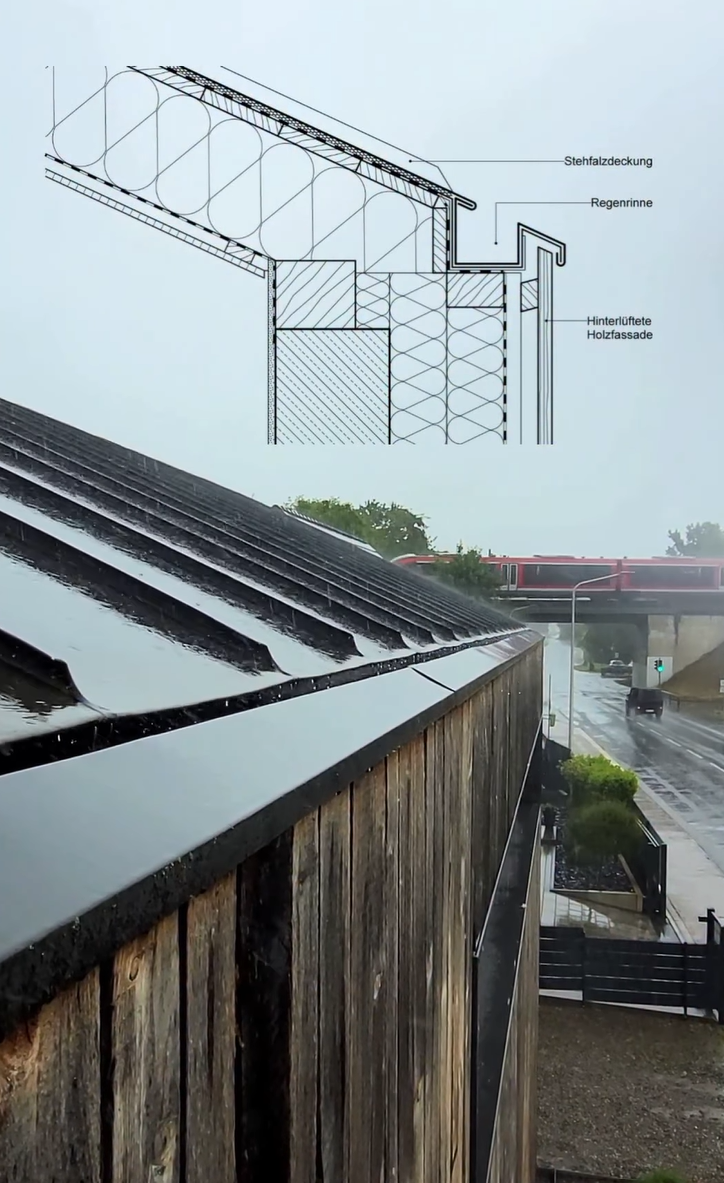
German/Central European Roof
This is a standing seam metal roof (Stehfalzdeckung) meeting a rear-ventilated timber facade (Hinterlüftete Holzfassade), with a box gutter (Regenrinne) at the eaves.
The section drawing reveals a thermal and moisture separation between the roof and wall —the gutter sits in a zone that bridges the two, and the air cavity in the facade continues right up to the eaves. In the photo taken during heavy rain, you can see exactly how the water sheds off the standing seam panels and into that concealed gutter — no drips down the facade, no exposed fixings, clean edge.
Standing seam roof cladding The dark metal panels you can see on the pitched roof. The raised "seams" running up the slope are where adjacent panels lock together without exposed fasteners. Typically zinc, aluminium, or steel. Very sleek, very durable, and a hallmark of contemporary European architecture.
Rainwater gutter You can see in the section how the gutter is boxed into the eaves rather than hung on the outside (as you'd commonly see in the UK or NZ). This is a concealed box gutter it sits behind the fascia line, making the roof edge look razor-sharp and clean from the street.
Rear-ventilated timber facade The vertical dark timber boarding below the roof edge. "Hinterlüftet" (rear-ventilated) means there is a deliberate air gap between the timber cladding and the insulation/structure behind it. This allows moisture to escape, preventing rot it's the correct way to detail a timber facade in a wet climate.