13. Nose
Contents of the Course
Anatomy and Physiology of Nose and Paranasal Sinuses
Disorders of the External Nose and Nasal Vestibule
Nasal Septum Disorders
Miscellaneous Disorders of Nasal Cavity
Allergic Rhinitis
Rhino sinusitis
Anatomy of Nose and Paranasal Sinuses
External Nose
Shape: Pyramidal with the root directed upwards and the base downwards.
Framework: Osteocartilaginous framework covered by muscles and skin.
Upper 1/3: Bony structure
Lower 2/3: Cartilaginous
variations in skin texture:
Upper 1/3: Loose skin
Lower 2/3: Thick, adherent to cartilage, rich in sebaceous glands.
Surface anatomy of the nose
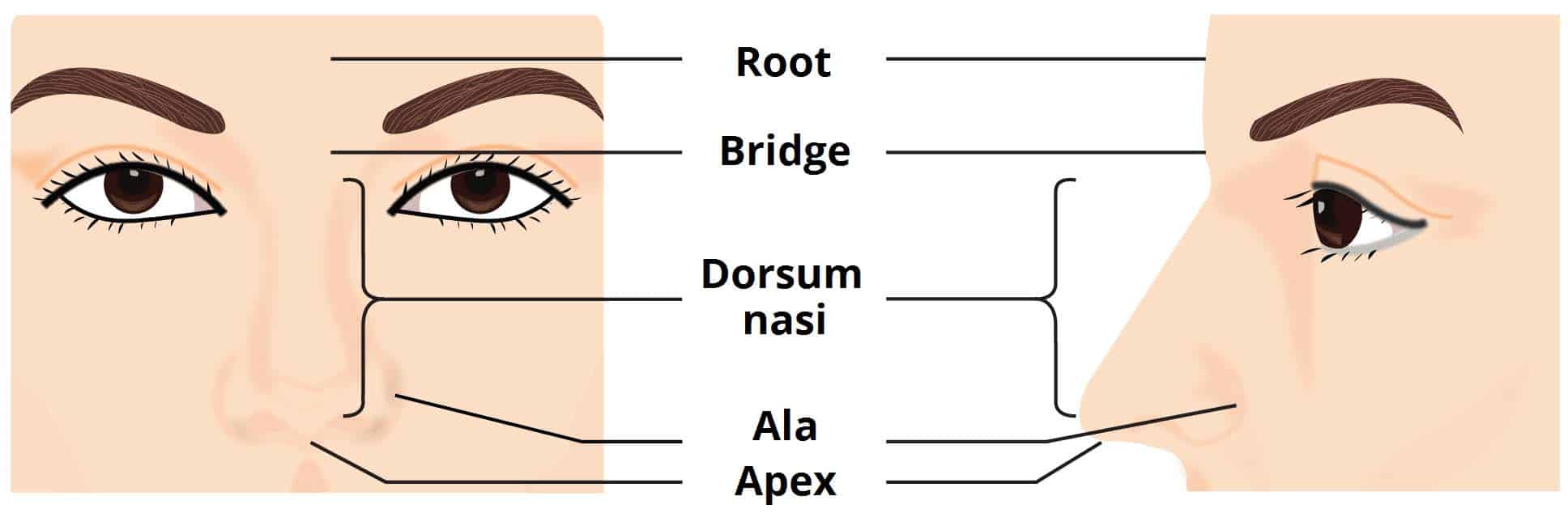
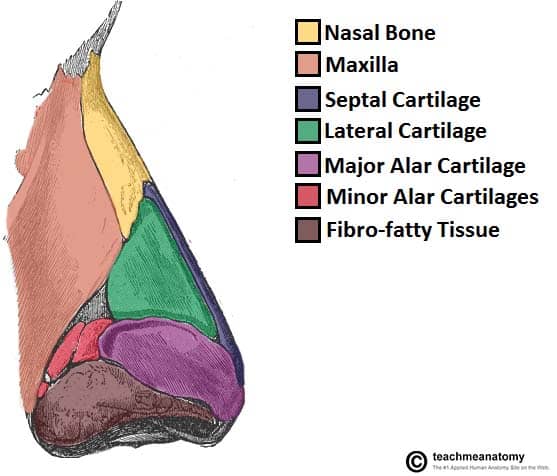
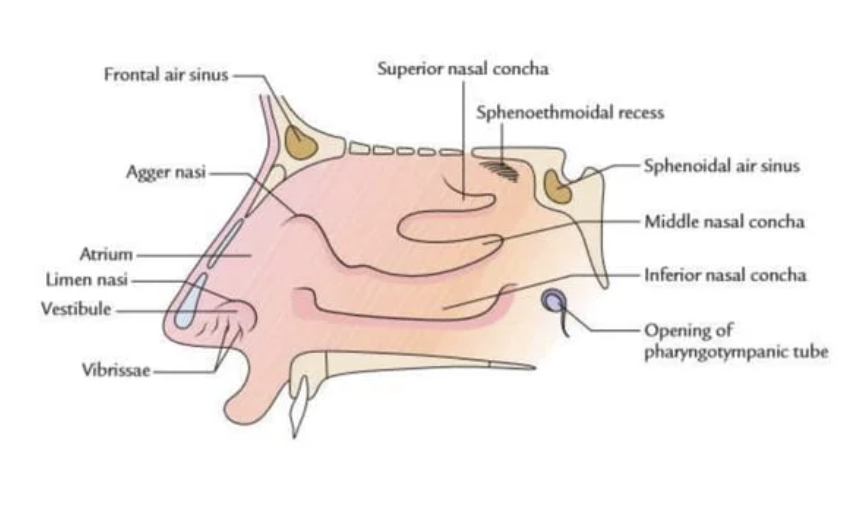
Septum anatomy

Nasal Musculature
Framework covered by 7 muscles controlling facial animation and respiration.
Muscle Groups: Depressors, elevators, compressors, and dilators.
Internal Nose/Nasal Cavity
Division: Right and left nasal cavities separated by nasal septum.
Each cavity communicates with the exterior via nostrils and with the nasopharynx through choana.
Nasal cavity structure:
Skin-lined vestibule
Mucosa-lined proper nasal cavity consisting of:
Olfactory region
Respiratory region
Failure of canalization: Results in choanal atresia.
Lining Membrane of Internal Nose
Vestibule:
Lined with skin, containing sebaceous glands and hair follicles (vibrissae).
Olfactory Region:
Upper 1/3 covered by olfactory epithelium; mucous membrane lighter in color.
Respiratory Region:
Lined by pseudostratified ciliated columnar epithelium with goblet cells.
Nasal Cavity Proper
Each nasal cavity comprises lateral wall, medial wall, roof, and floor.
Medial wall includes the nasal septum, divided into:
Columellar septum
Membranous septum
Septum proper (osteocartilaginous framework).
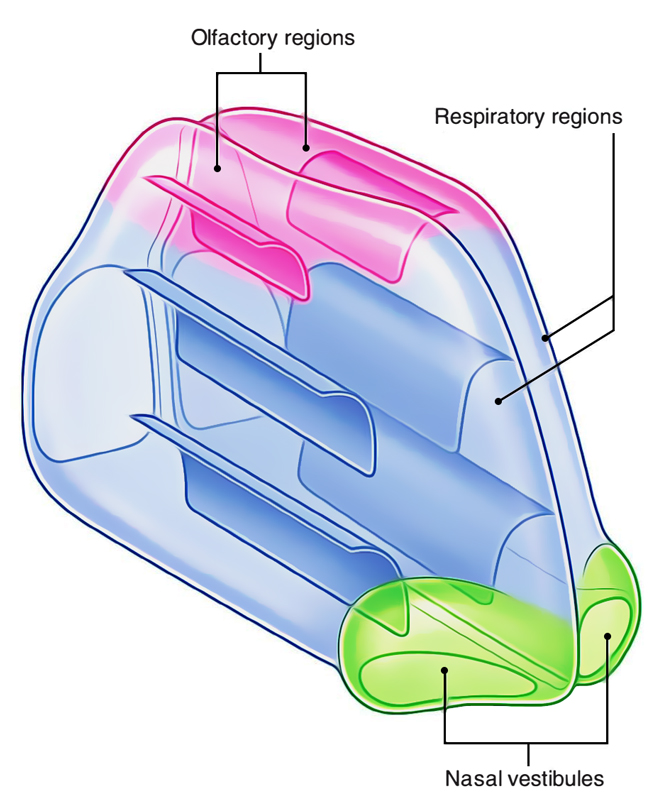
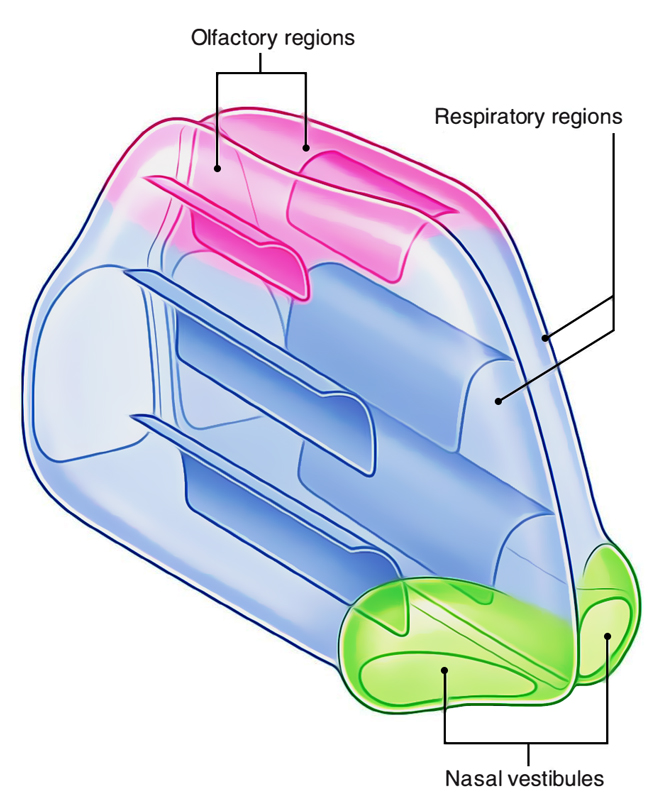
Membranes of internal nose
Vestibule
The vestibule is the initial part of the nasal cavity, located just inside the nostrils, and is lined with skin containing sebaceous and sweat glands and hair follicles.
Respiratory region
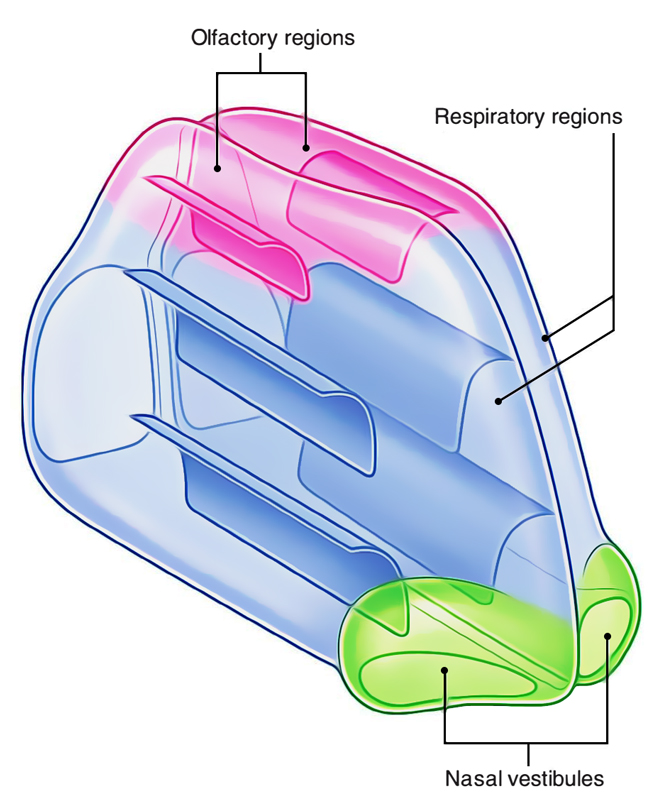
Functions of Nasal and Paranasal Structures
Respiration: Primary function.
Air-conditioning: Involves filtration, temperature control, and humidification of inspired air.
Protection: Safeguards lower airway.
Vocal resonance: Affects sound production.
Nasal reflex functions: Enhances responses to stimuli.
Olfaction: Essential for the sense of smell.
Disorders of Nose
General Disorders
Cellulitis: Infection leading to red, swollen, tender nose; requires antibiotics.
Nasal Deformities: Include saddle nose, hump nose, and deviations; may be due to trauma or congenital factors.
Tumours: Include both benign (e.g., rhinophyma) and malignant forms (e.g., basal cell carcinoma).
Specific Conditions of Interest
Rhinophyma: Hypertrophy of sebaceous glands affecting the lower 1/3.
Nasal Polyp: Non-neoplastic mass; associated with chronic inflammation and asthma.
Rhinosinusitis: Involves inflammation of sinus mucosa; can be acute or chronic.
Allergic Rhinitis: IgE mediated condition with characteristic symptoms; treated with avoidance, medications, and possibly immunotherapy.
Postoperative Complications
Complications post-surgery may include:
Bleeding, septal hematoma, perforation, saddle nose deformity, and cerebrospinal fluid rhinorrhoea.
Conclusion
Understanding the structure and function of the nose and paranasal sinuses is crucial for diagnosing and managing various ENT disorders.