EX 3: Digestive system
A balanced diet is essential for maintaining proper digestive health, as it provides the necessary nutrients for optimal function and energy levels. Incorporating a variety of fruits, vegetables, whole grains, and lean proteins can help support gut health and prevent digestive disorders.
Overview of Nutrition
Nutrition is crucial for animals to meet three fundamental needs:
Chemical energy for cellular processes.
Organic building blocks for macromolecules.
Essential nutrients that cannot be produced by the animal itself.
Essential Nutrients
Definition: Essential nutrients are materials required by the body that cannot be synthesized from simpler organic molecules.
Acquisition: These nutrients must be obtained from an animal’s diet.
Four Classes of Essential Nutrients:
Essential Amino Acids:
A total of 20 amino acids is required by all organisms.
Plants and microorganisms can synthesize all 20.
Animals can produce about half (approximately 10) from their diets; the other half must be ingested.
Sources of complete proteins include:
Meat, eggs, and cheese, which provide all essential amino acids.
Plant proteins are often incomplete unless combined in varied diets; vegetarians can obtain all essential amino acids by eating a varied diet of plant proteins.
Vegans can eat beans, nuts, etc.
Essential Fatty Acids:
Animals can synthesize many fatty acids needed but must ingest certain essential unsaturated fatty acids, which contain one or more double bonds, from their diet.
Common dietary sources include seeds, grains, and vegetables.
Vitamins:
Organic molecules are required in very small quantities.
There are 13 essential vitamins for humans(vitamin C, D, B)classified into two categories:
Fat-soluble vitamins.(A,K,D)
Water-soluble vitamins.(B, etc)
Minerals:
Inorganic substances needed in small amounts.
Iron, potassium, calcium, sulfur, magnesium, etc.
Excessive consumption of certain minerals can disrupt homeostasis, affecting biological balance.
Variation due to Diet
Animals exhibit diverse dietary habits, which can be classified as follows:
Herbivores: Primarily consume plants or algae.
Carnivores: Mostly eat other animals.
Omnivores: Regularly consume both animals and plants or algae.
Many animals, described as opportunistic feeders, will broaden their diets when necessary for survival.
All animals can arrange their diet depending on their needs(Deer ate baby bird)
Dietary Deficiencies
Malnutrition: A failure to obtain adequate nutrition, which can negatively impact health and survival.
Consequences of Deficiencies:
Can result in deformities, diseases, or even death.
In children, a common issue arises when their diet shifts from breast milk to foods low in protein, leading to protein deficiency.
Undernourishment
Defined as an inadequate available chemical energy from the diet.
Consequences an undernourished individual may face include:
Using up stored fat and carbohydrates for energy.
Breaking down muscle proteins for energy.
Experiencing significant muscle mass loss.
Suffering brain protein deficiencies which can lead to death or irreversible damage.
Assessing Nutritional Needs
Insights from epidemiology (the study of health and disease in populations) have contributed to nutritional understanding.
Example: Neural tube defects identified as a result of folic acid deficiencies in pregnant women led to the United States requiring folic acid in enriched grain products since 1998.
Food Processing
1st step-
Ingestion: The act of eating or feeding.
Feeding Mechanisms: Four categories describe feeding mechanisms of most animal species:
Filter Feeders: Sift small food particles from their surrounding medium.(Whales)
Substrate Feeders: Live in or on their food source.(caterpillars)
Fluid Feeders: Suck nutrient-rich fluid from a living host.(mosquitos)
Bulk Feeders: Consume relatively large pieces of food.(Phytons)
2nd step-
Digestion
Definition: The process of breaking food down into molecules small enough for absorption.
Mechanical Digestion: Involves chewing or grinding to increase surface area.
Chemical Digestion: Involves the enzymatic hydrolysis of food molecules, breaking them down with added water.
3rd step
Absorption and Elimination
Absorption: The uptake of small molecules by body cells.
Elimination: The passage of undigested material out of the digestive system.
Digestive Compartments
Most animals have specialized compartments for food processing which reduce the risk of digesting their cells and tissues.
Intracellular Digestion
Food particles can be engulfed by two processes:
Phagocytosis (for solid particles).
Pinocytosis (for liquids).
Food vacuoles fuse with lysosomes containing hydrolytic enzymes to break it down.
Example: Sponges digest food intracellularly.
Extracellular Digestion
Breakdown of food particles outside of cells.
Occurs in compartments that are continuous with the body’s outside.
The gastrovascular cavity functions in both digestion and distribution of nutrients in animals with a simple body plan.
Complex animals possess a digestive tube (complete digestive tract) with two openings (a mouth and an anus).
Alimentary Canal: Includes specialized regions for digestion and absorption—mouth, pharynx, esophagus, stomach, small intestine, large intestine, rectum, and anus.
Mammalian Digestive System
Accessory glands secrete digestive juices through ducts into the alimentary canal which includes:
Salivary glands.
Pancreas.
Liver.
Gallbladder.
Oral Cavity, Pharynx, & Esophagus
Oral Cavity(mouth): The site for initial food processing, where:
Teeth with specialized shapes cut and grind food into smaller pieces. (mechanical)
Salivary glands deliver saliva containing mucus (a mix of water, salts, cells, and glycoproteins) and amylase (an enzyme that breaks down starch). (chemical)
Tongue Movements: Shape the food into a bolus(ball) for swallowing.
Pharynx: The junction leading to both the esophagus and trachea.
Esophagus: Connects the mouth to the stomach; the trachea leads to the lungs.
Swallowing Process
Swallowing causes the epiglottis(flap of skin) to block the trachea, guiding the food bolus via the larynx.
Failure of the swallowing reflex can lead to coughing or choking, as food may enter the windpipe.
Food Movement through the Esophagus
Food is propelled down the esophagus towards the stomach by peristalsis—a series of smooth muscle contractions and relaxations.
Sphincters: Valves that regulate the movement of material between compartments.
Digestion in the Stomach
The stomach serves to store and process food into a liquid suspension called chyme.
Gastric Juice(mixes with food through churning action): Secreted by the stomach and composed of
It kills bacteria and denatures protein
Hydrochloric Acid (HCl): Provides a highly acidic environment (pH ~2), aiding in bacterial destruction and protein denaturation.
Pepsin: A protease that cleaves proteins into smaller polypeptides; activated from its inactive form, pepsinogen, by HCl.
Mucus: Protects the stomach lining from the harsh gastric juice;
Cell Division: New epithelial layers form every 3 days to maintain stomach integrity.
Parietal cells: secrete H+ & Cl- ions into the lumen(cavity) of the stomach
Chief cells: secrete pepsinogen, an inactive enzyme that is activated to pepsin in the presence of gastric acid, aiding in the digestion of proteins.
Mucus: protects the stomach lining from gastric juice
Stomach Dynamics
The stomach muscles coordinate contraction and relaxation to churn contents.
Sphincters regulate the chyme's movement into the small intestine; if the upper sphincter allows chyme to move back up, it results in "heartburn".
Digestion in the Small Intestine
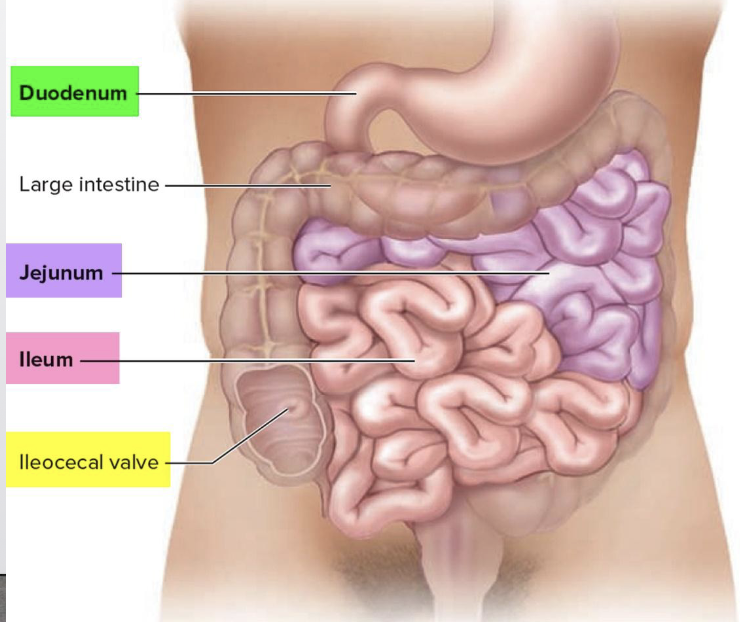
The small intestine is the longest compartment of the alimentary canal where enzymatic hydrolysis of food macromolecules primarily occurs.
The Duodenum: The first segment where chyme mixes with digestive juices from the pancreas, liver, gallbladder, and the small intestine itself.
Digestive Juices from the Pancreas
The pancreas produces digestive enzymes like trypsin and chymotrypsin, activated in the duodenum's lumen. Juices from pancreas helps neutralize the acidic chyme coming from the stomach.
Alkaline Solution: Helps neutralize the acidic chyme.
Role of Bile
Bile contains bile salts essential for fat digestion, produced in the liver, stored, and concentrated in the gallbladder.
Helps break down fats
It also functions to destroy nonfunctional red blood cells.
Absorption in the Small Intestine
The remaining sections of the small intestine (the jejunum and ileum) are primarily devoted to nutrient absorption.
Surface Area: The large surface area is due to villi and microvilli in contact with the intestinal lumen, which significantly enhances nutrient absorption efficiency.
Nutrient transport across epithelial cells can occur via passive or active mechanisms, depending on the type of nutrient.
Emulsification is a critical process in the digestion of fats, where bile salts break down large fat globules into smaller droplets, allowing enzymes to access and digest the fats more effectively.
Fats break down into smaller pieces
Nutrient Pathway
The hepatic portal vein carries nutrient-rich blood from the capillaries of the villi to the liver, where it regulates nutrient distribution, interconverts many organic molecules, and detoxifies numerous organic substances.
Epithelial cells absorb fatty acids and monoglycerides, which are recombined into triglycerides, coated with phospholipids, cholesterol, and proteins to form chylomicrons for transport into the lymphatic system.
Processing in the Large Intestine
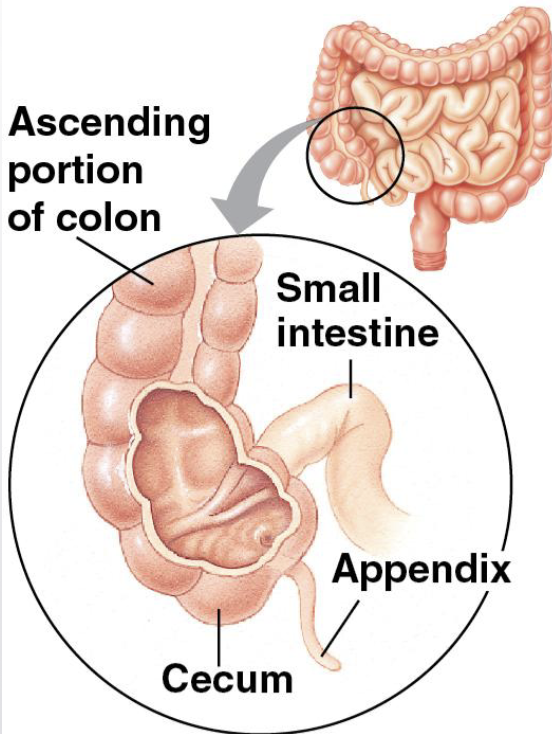
The large intestine marks the end of the alimentary canal, contributing to water recovery initiated in the small intestine.
Cecum: Aids in fermenting plant material and connects the small and large intestines.
Appendix: Has a minor role in immunity.
Colon Functions
The colon recovers water; feces become solid as they traverse it.
The bacterial community present contributes approximately one-third of feces' dry weight.
The rectum stores feces for eventual elimination through the anus, where two sphincters (one voluntary and one involuntary) control bowel movements.
Adaptations Related to Diet
Dentition: The assortment of teeth correlating with diet types reflects specialization in mammals.
Mammals typically display specialized dentition specific for diverse diets.
Non-mammalian ve rtebrates tend to have less specialized teeth.
Stomach and Intestinal Adaptations
Carnivores generally feature larger, expandable stomachs; herbivores and omnivores tend to have longer alimentary canals due to the longer digestion of plant materials.
Mutualistic Adaptations
The coexistence of many bacteria in human intestines is a form of mutualistic symbiosis.
Certain bacteria produce vitamins and contribute to intestinal epithelium development and immune system functionality.
\n
Microbiome Research
The Microbiome is a collection of microorganisms living in and on the body, with research methods including PCR and DNA sequencing identifying over 400 bacterial species in the human digestive system.
Differences in microbiomes may relate to diet, illness, and age.
Health Implications of Microbiome
For example, Helicobacter pylori, an acid-tolerant bacterium, can cause stomach ulcers by disturbing the stomach's health by disrupting other resident bacterial species.
Research into microbiomes has led to therapies for intestinal infections, such as fecal microbial transplantation, where a healthy individual's microbiome is introduced into a patient’s intestines to treat conditions like diarrhea caused by Clostridium difficile.
Evolutionary Adaptations of Animal Diets
Various animal dietary adaptations arise from evolutionary pressures.
Mutualistic Adaptations in Herbivores
Animals consuming primarily cellulose have developed extensive fermentation chambers in conjunction with mutualistic microorganisms that digest cellulose.
Ruminants exemplify this, and some species, like rabbits and rodents, practice coprophagy (the re-ingestion of feces) to recover vital nutrients.
Regulation of Digestion
How an animal obtains nutrients correlates directly with its individual energy needs.
Digestive processes are activated as required in a step-wise manner, regulated by the enteric nervous system, a network specific to digestive organs, alongside the endocrine system that modulates digestion via hormone release.
Regulation of Energy Storage
Energy excess is stored in the body, first in the liver and muscles as glycogen; surplus energy subsequently accumulates as fat in adipose tissue.
Secondly energy is stored in adipose cells
During caloric deficit, the body first uses liver glycogen, followed by muscle glycogen and fat stores.
Glucose Homeostasis
Hormonal Regulation: The function relies on insulin and glucagon's opposing effects to manage the breakdown of glycogen into glucose, focusing on the liver as the main site for glucose homeostasis.
Pancreatic Function: Glucagon is produced by alpha cells, while beta cells produce insulin; insulin promotes glucose absorption from the bloodstream throughout most body cells (exception: brain cells can uptake glucose independently of insulin).
Diabetes
Diabetes Mellitus: A condition marked by either insulin deficiency or reduced cellular response to insulin, leading to insufficient glucose uptake by cells and excess blood glucose that the kidneys may struggle to reabsorb, with sugar presence in urine often being a detection method.
Types of Diabetes:
Type 1 Diabetes: An autoimmune disorder destroying pancreatic beta cells, typically starting in childhood, requiring insulin injections.
Type 2 Diabetes: Characterized by the failure of target cells to respond to insulin due to overweight and sedentary lifestyles, often diagnosed post-40 but increasingly seen in younger populations.
Regulation of Appetite & Consumption
Overnourishment can lead to obesity, which has been linked to an increased risk of type 2 diabetes, breast and colon cancer, and cardiovascular diseases.
Mechanisms of Appetite Regulation:
Ghrelin: Produced in the stomach, this hormone triggers hunger prior to meals.
Insulin and PYY (peptide YY): Secreted by the small intestine to suppress appetite.
Leptin: Produced by adipose tissue, plays a role in satiety and regulating body fat levels.